
Another Black swan event hits the Financial Markets
Attack on Saudi Oil refineries takes out 5% supply of Global crude
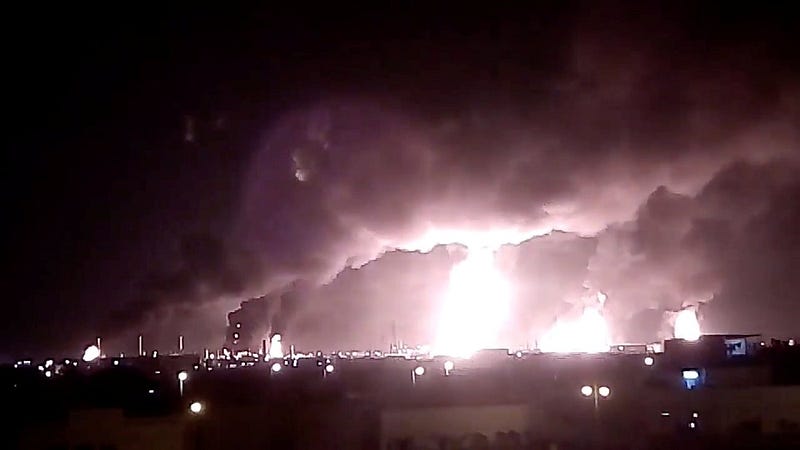
The Global economy which was already reeling from a slowdown resulting from a protracted trade war between the two largest economies has was hit by another Black Swan event yesterday in the form of a drone attack on one of the biggest oil refineries in the heart of the Saudi Kingdom — the second-largest producer of oil & the largest exporter of crude oil.
Just goes to show how fragile our interconnected & intertwined global economy is from supply chain shocks like these. Over the weekend, 10 drones struck at an important Aramco (ARMCO) facility, including the world’s largest oil processing plant and a major oil field forcing the kingdom to shut down half of its crude production. The attack took out 5.7M barrels a day, or roughly 5% of the world’s daily production of crude oil.
The massive disruption sent WTI futures as much as 15.5% higher overnight to $63.34, the biggest intraday percentage gain since June 22, 1998. The estimated 5.7 million barrels a day of lost production is the single biggest disruption on record, surpassing the 1979 hit to Iranian output from the Islamic Revolution, as well as the loss of Kuwait and Iraq supplies during the 1990 Gulf War as reported by Bloomberg.
Most of the global equities posted losses after the event just as they were looking to get back in the rally mode. U.S stocks were reporting double-digit losses at the time of writing. Timing of the incident couldn’t have been worse for the global markets. China had reported the weakest industrial growth of 4.4% over the weekend and now this incident has further jeopardized a global economic recovery or a meaningful rebound in Equities.
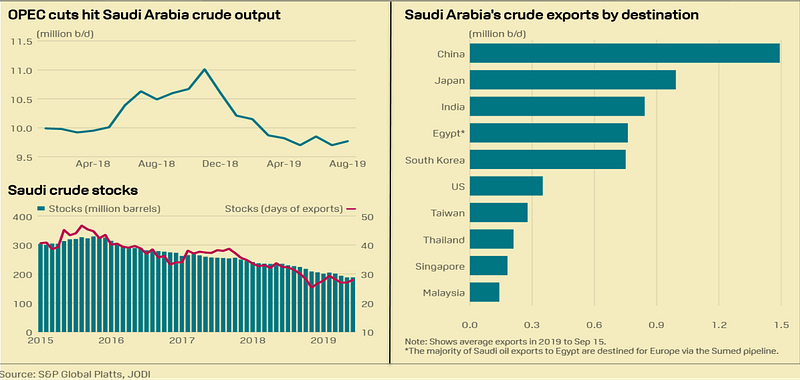
While the Saudi authorities have announced that the fires are now in control, the bigger question remains when this disruption of crude can be restored to global supply chains. While the supplies may turn to pre-attack levels in a few weeks, the attack has highlighted the Saudi Oil infrastructure’s vulnerability. JPMorgan suggests that markets need to price in future vulnerabilities emanating from this vulnerability.
The Saudi authorities have been quiet so far, but the U.S. Secretary of State Mike Pompeo laid the blame squarely on Iran saying there’s no evidence the strikes were carried out from Yemen. The two Islamic nations have been embroiled in a proxy war in the Middle East ever since the Iranian revolution. The U.S President has authorized a release of crude from the Strategic Petroleum Reserve to keep the price of crude in check.
At the same time, President Trump has also signaled that the U.S is ready to act, but he is awaiting a response from the Saudis. If in fact, Iran is blamed for this action officially by the kingdom, this has the potential to transform into a bigger geopolitical conflict which can spiral out of control, considering the traditional hostilities between the U.S/KSA & Iran.


