
ANN vs. CNN vs. RNN vs. LSTM: Understanding the Differences in Neural Networks
Introduction
Neural networks come in various architectures, each designed to handle different types of data and tasks. For students exploring artificial intelligence and machine learning, understanding the differences between these neural networks — Artificial Neural Networks (ANNs), Convolutional Neural Networks (CNNs), Recurrent Neural Networks (RNNs), and Long Short-Term Memory Networks (LSTMs) — is essential. This blog post will provide a clear comparison of these networks, highlighting their unique features, applications, advantages, and challenges.
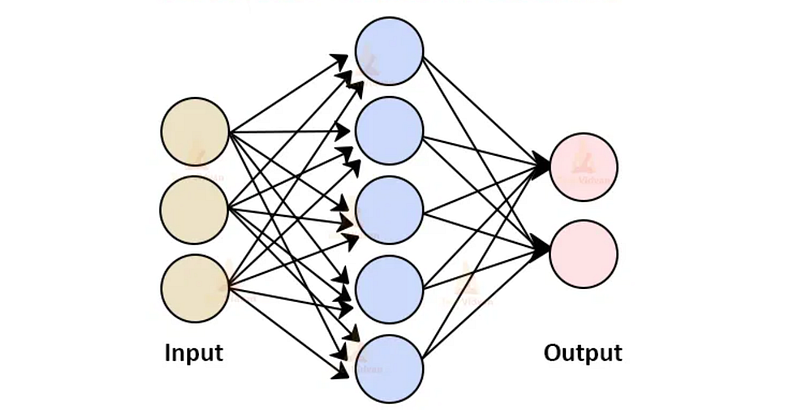
What is an Artificial Neural Network (ANN)?
Definition: ANNs are the simplest form of neural networks, consisting of layers of interconnected neurons that process and transmit information.
Structure:
- Input Layer: Receives input data.
- Hidden Layers: Intermediate layers that transform the input data.
- Output Layer: Produces the final prediction or classification.
Applications:
- Basic image recognition
- Simple pattern recognition
- Regression tasks
Advantages:
- Easy to implement and understand.
- Suitable for a wide range of problems.
Challenges:
- Limited in handling complex data structures.
- Performance depends on the number of hidden layers and neurons.
What is a Convolutional Neural Network (CNN)?
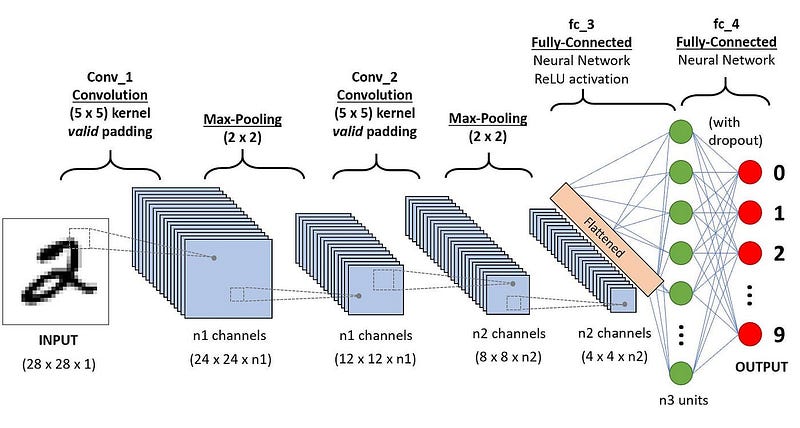
Definition: CNNs are specialized neural networks designed for processing structured grid data like images. They use convolutional layers to detect features.
Structure:
- Convolutional Layers: Apply filters to the input data to create feature maps.
- Pooling Layers: Reduce the dimensionality of feature maps.
- Fully Connected Layers: Connect neurons from previous layers to the output layer.
Applications:
- Image and video recognition
- Object detection
- Image classification
Advantages:
- Excellent at handling spatial data.
- Requires less preprocessing compared to ANNs.
Challenges:
- Computationally intensive.
- Requires large amounts of labeled data for training.
What is a Recurrent Neural Network (RNN)?
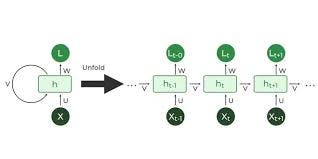
Definition: RNNs are designed for sequential data, where each neuron connects to the next layer and to neurons within the same layer.
Structure:
- Recurrent Connections: Neurons have connections looping back to themselves, allowing information to persist.
- Hidden State: Maintains a memory of previous inputs.
Applications:
- Time series prediction
- Natural language processing (NLP)
- Speech recognition
Advantages:
- Effective for sequential and temporal data.
- Can handle variable-length inputs.
Challenges:
- Difficulty in learning long-term dependencies.
- Prone to vanishing gradient problems.
What is a Long Short-Term Memory Network (LSTM)?
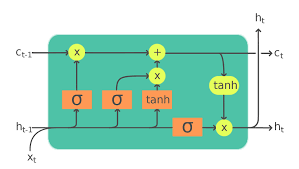
Definition: LSTMs are a type of RNN designed to learn long-term dependencies and retain information over longer sequences.
Structure:
- Memory Cell: Maintains information over time.
- Gates: Control the flow of information in and out of the cell (input gate, forget gate, output gate).
Applications:
- Long-term time series prediction
- Advanced NLP tasks (e.g., machine translation)
- Speech synthesis
Advantages:
- Overcomes the vanishing gradient problem.
- Effective at capturing long-term dependencies.
Challenges:
- More complex and computationally intensive than standard RNNs.
- Requires careful tuning of hyperparameters.
Key Differences Between ANN, CNN, RNN, and LSTM
Data Type:
- ANN: General-purpose, works with a variety of data types.
- CNN: Best suited for spatial data (e.g., images).
- RNN: Designed for sequential data (e.g., time series, text).
- LSTM: Enhanced version of RNN, handles long-term dependencies in sequential data.
Architecture Complexity:
- ANN: Simple, fully connected layers.
- CNN: Convolutional and pooling layers, followed by fully connected layers.
- RNN: Recurrent connections, simple architecture.
- LSTM: Complex architecture with memory cells and gates.
Learning Capabilities:
- ANN: Limited in handling complex data structures.
- CNN: Excels at detecting spatial hierarchies.
- RNN: Good for short-term dependencies.
- LSTM: Superior for long-term dependencies.
Training Challenges:
- ANN: Overfitting and underfitting issues.
- CNN: High computational requirements.
- RNN: Vanishing gradient problem.
- LSTM: Complexity and computational intensity.
Conclusion
Understanding the differences between ANN, CNN, RNN, and LSTM is crucial for choosing the right neural network for specific tasks. Each type of network has unique strengths and challenges, making them suitable for different applications. By mastering these architectures, students can effectively tackle various AI and machine learning problems. Explore these networks, experiment with their architectures, and unlock the potential of neural networks in your projects. Share your thoughts and questions in the comments below, and stay tuned for more insights into the world of machine learning and AI.