
“Anita,” A Middling Caretaker Film: Review
The coming-of-age story of an Argentinian woman with Down Syndrome.
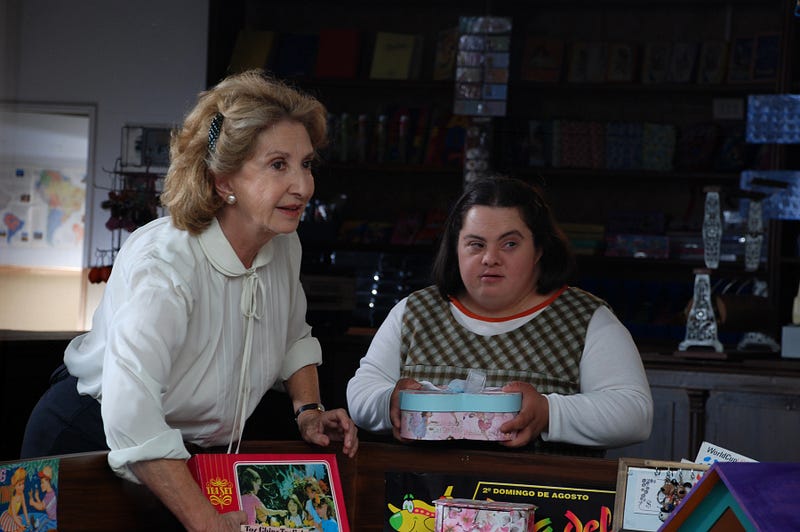
The 2009 film “Anita” follows Anita Feldman, an Argentinian woman with Down Syndrome, who is left to fend for herself after her mother’s death in the 1994 bombing of the Argentine Israelite Mutual Association. After wandering out of the hospital, she gets lost, and is forced to rely on the help of strangers when she is unable to recount her story or get in contact with her family.
The beginning of the film gives us a glimpse into what the dynamic is between Anita and her mother. When her brother and his wife come to visit, it’s clear that Anita’s mother holds significant sway over everyone as the matriarch, not just her child with Down Syndrome. The first few scenes show how regimented of a routine Anita and her mother have — in stark contrast to the aftermath of the explosion, where the big hand on the clock no longer promises anything. One particular detail I appreciated was the absence of any fat-shaming towards the daughter, who gets to eat as much biscuits and hot chocolate as she desires.
The bombing taking place only 15 minutes or so into the film allows for the plot to be centered entirely on Anita, not on her family. This places “Anita” miles ahead of its successors, such as “Untouchable,” “The Theory of Everything,” and “Me Before You,” which lend significantly more screen time to the caretakers than the disabled person, positing them as abled saviors.
In the days following the accident, Anita encounters three different people who take her in: the curmudgeonly Felix, a Chinese family, and a nurse named Nori. While the treatment she receives is varied and difficult to watch at times, there is no excessive cruelty to make us pity her solely for having Down Syndrome. We even get to see the range in which people give her autonomy: Felix, who sits outside of the bath behind the curtain (as opposed to her mother, who watches her), the Chinese family, who puts her to work in the shop in exchange for her stay, and Nori, who leaves Anita to entertain and feed herself while she is at work. One touching scene where Anita takes care of Nori when she injures herself while drunk proves Anita’s caretaking abilities as well.
That being said, the premise of Anita gaining independence falls short. Though the film is centered on her, Anita’s character is not given enough agency to break out of the caretaker genre. Surely Anita remembered the detail that her mother was headed to the AIMA, which would have sparked more urgent assistance had she told anyone she encountered? I suppose the audience could attribute Anita’s lack of street smarts to her mother’s strict control, but that’s not a point the film seems to be deliberately making. Perhaps the storyline would have worked better if Anita had previously had an allowance, her brother’s phone number written down somewhere, or friends with Down Syndrome who she could have banded together with. In this alternative plot, Anita participates in the rebuilding of her world after her mother’s death, rather than her fate resting in the hands of the abled people around her.
All in all, “Anita” deserves credit as a disability film featuring a disabled actress, albeit director Marcos Carnevale played it too safe to really shake things up in the film world when it comes to the way disability stories are told. With some alterations to what seems to be a fictional story, “Anita” has the potential to be a brilliant showcasing of someone with higher support needs still maintaining their agency in the midst of a tragic event.
If you liked this article, feel free to give me a clap, comment, or follow! Thank you so much for reading and supporting my work.


