
ALPHABET TRAVEL CHALLENGE
Angkor Wat — The Heart and Soul of Cambodia
A to Z of my favorite travel destinations — A is for Angkor Wat
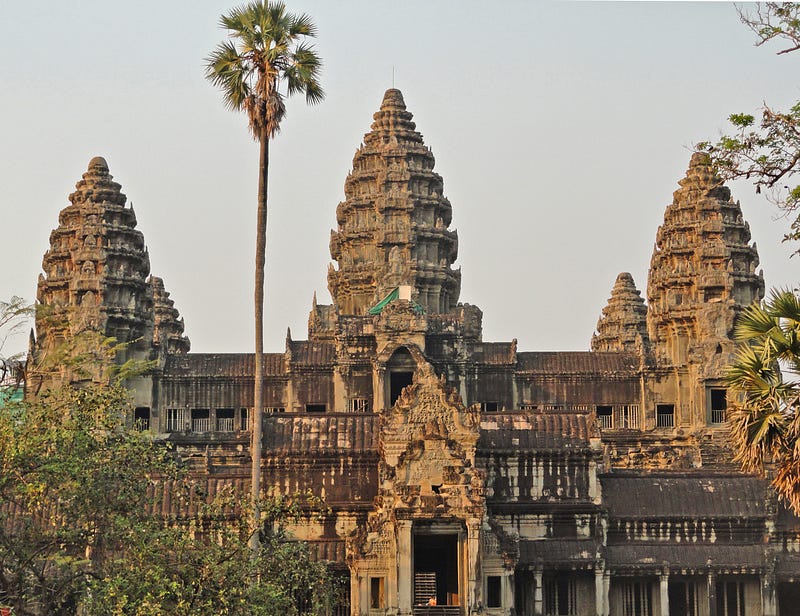
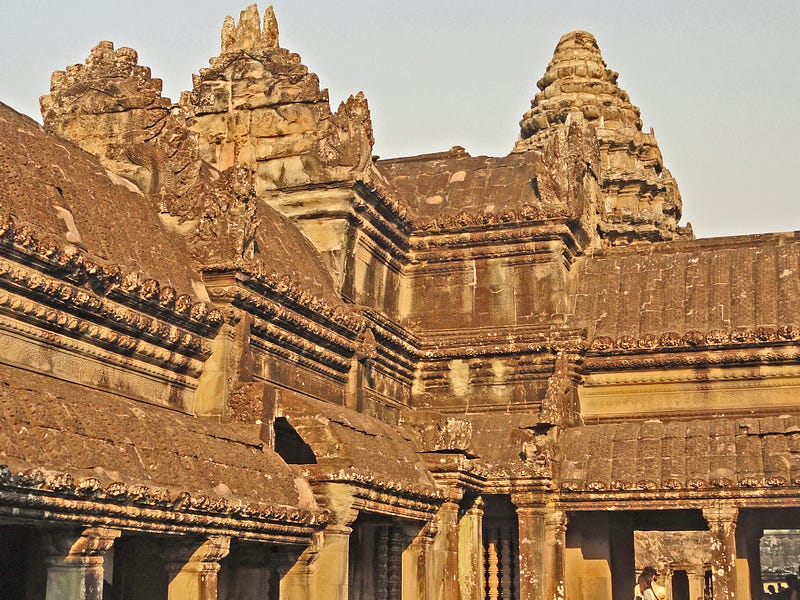
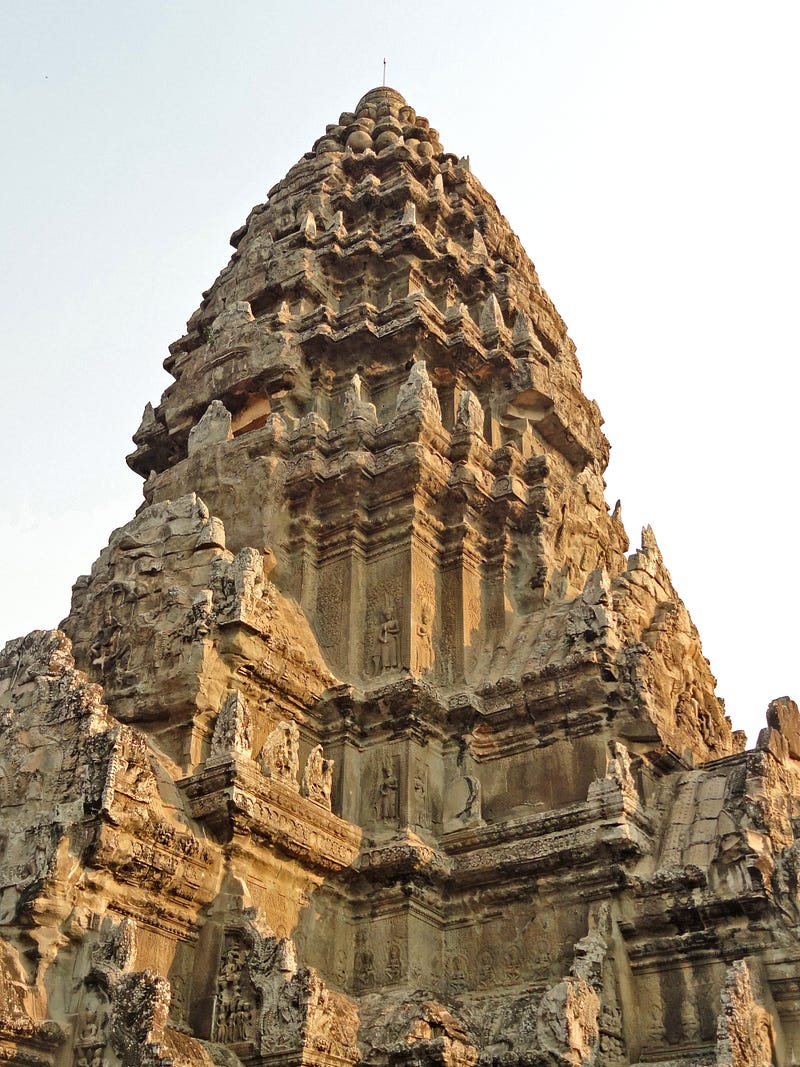
If you squint really hard, you can imagine the magnificence of what was once the capital city for the Khmer Empire, one of the most powerful in the world in the 9th to 12th centuries. You can still see the beauty carved into the stones that create a solemn, awe-inspiring spiritual temple complex.
There are an estimated 1-thousand temples, some elaborate and some nothing more than a pile of rocks, all spread out over 400 acres of forests and farmland, just outside Siem Reap, Cambodia.
These massive ancient temples were part of a Hindu holy site in honor of the god Vishnu. Angkor Wat was built in the first part of the 12th century but was converted to a Buddhist temple near the end of the century. It apparently occurred when the Khmer ruler converted to Buddhism.
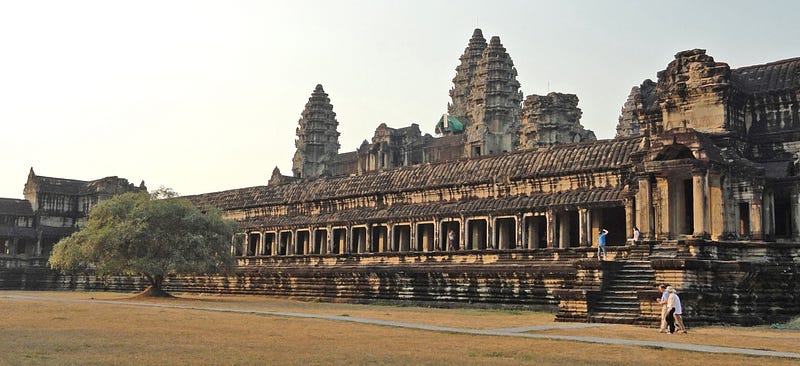
On my first day, I hired a tuk-tuk for just $13 USD for the entire day to transport me from the city of Siem Reap to the Angkor Wat complex.
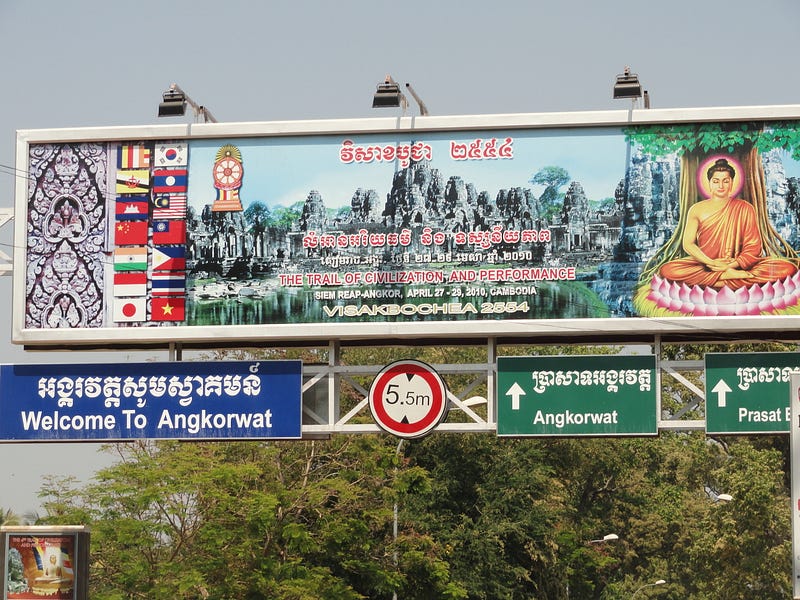
Angkor Thom — Fortified City
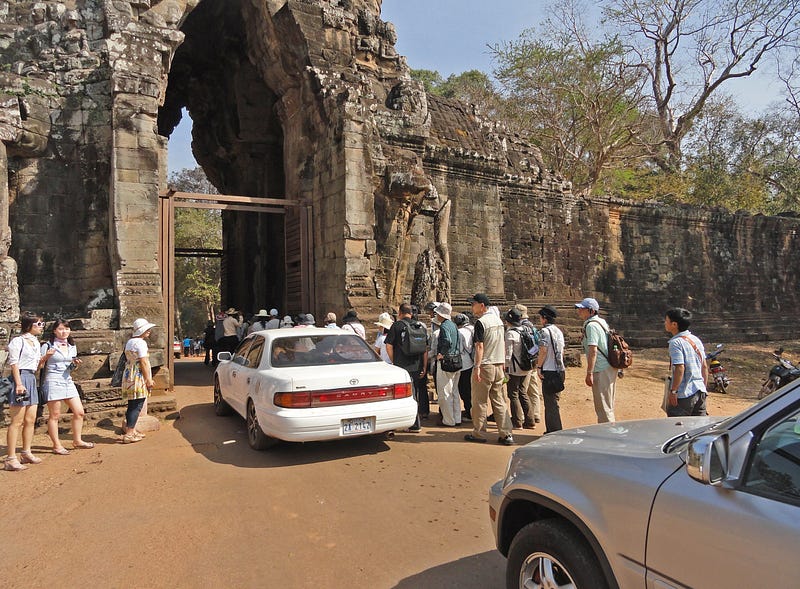
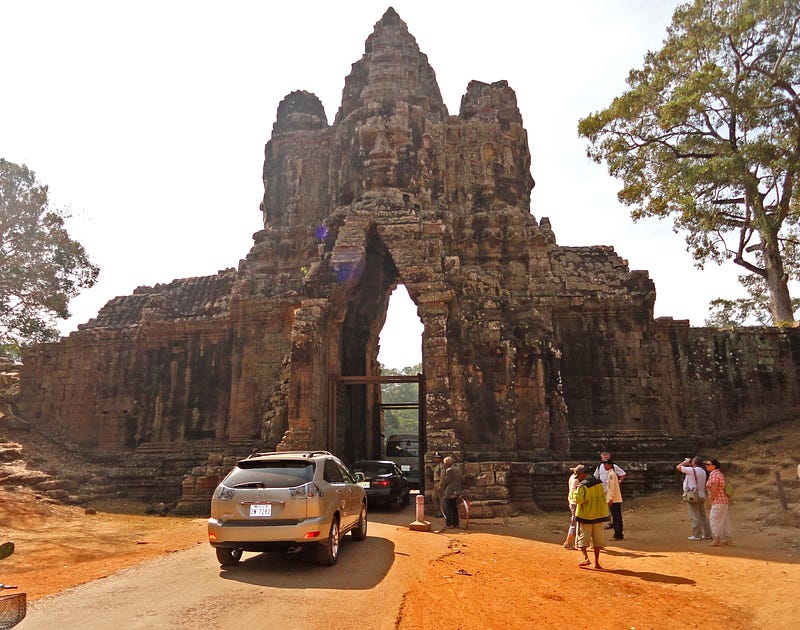
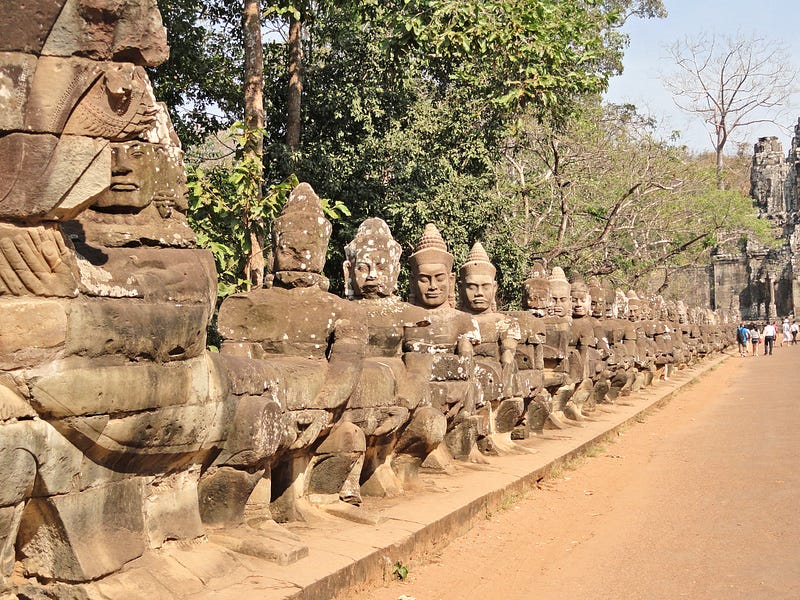
I skipped the massive crowds at Angkor Wat in the morning and made my way to the East Gate, or the Victory Gate, of Angkor Thom. The main gate to the fortified city was built with a high entrance to allow fully decorated elephants to pass through. They are decorated with stone elephants and in front of each gate, there are 108 statues, 54 gods on the left, and 54 demons on the right. 108 is a sacred number in Buddhism, believing that the road to Nirvana is laid with 108 temptations, which devotees need to overcome to reach bliss.
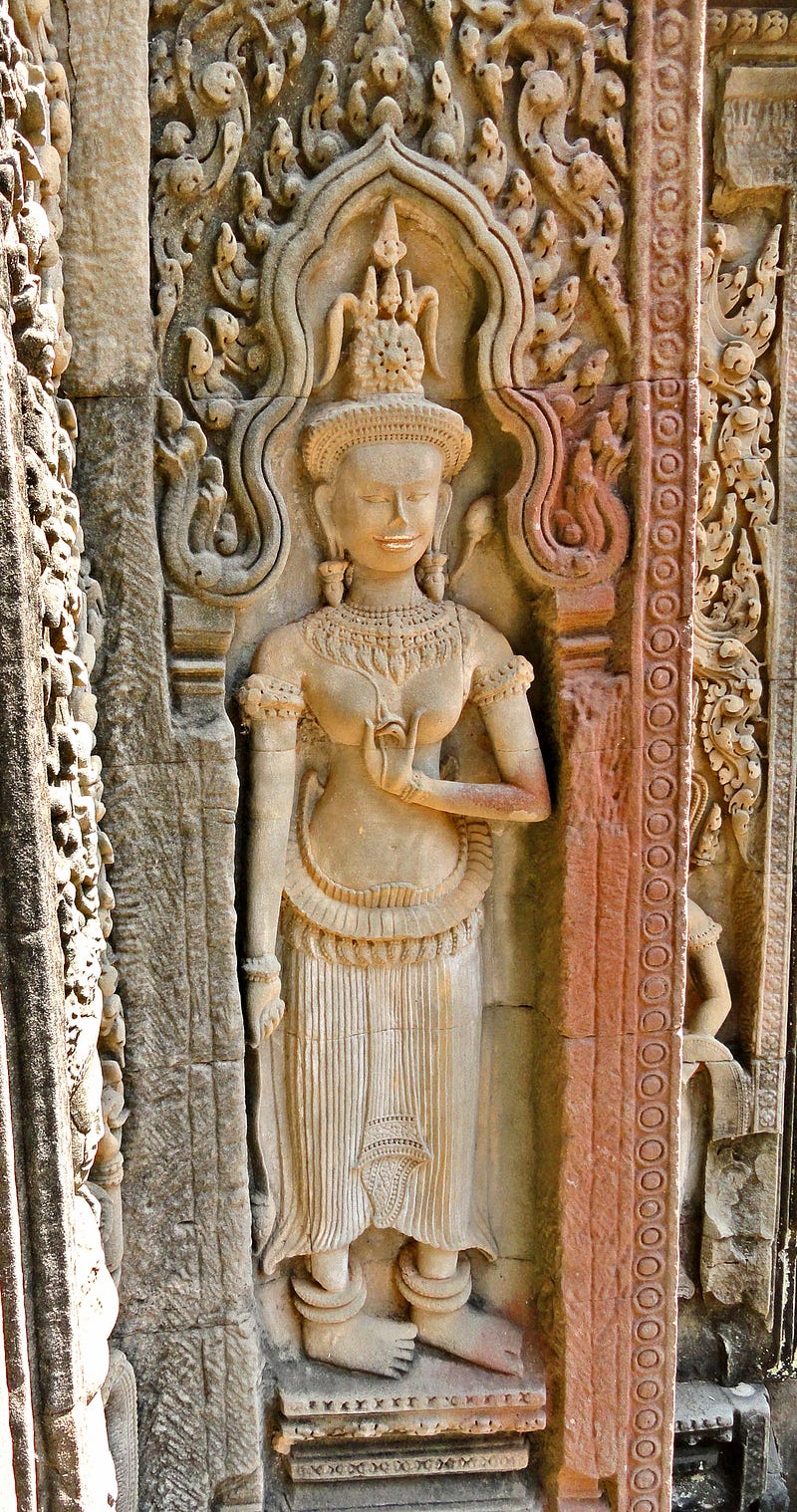
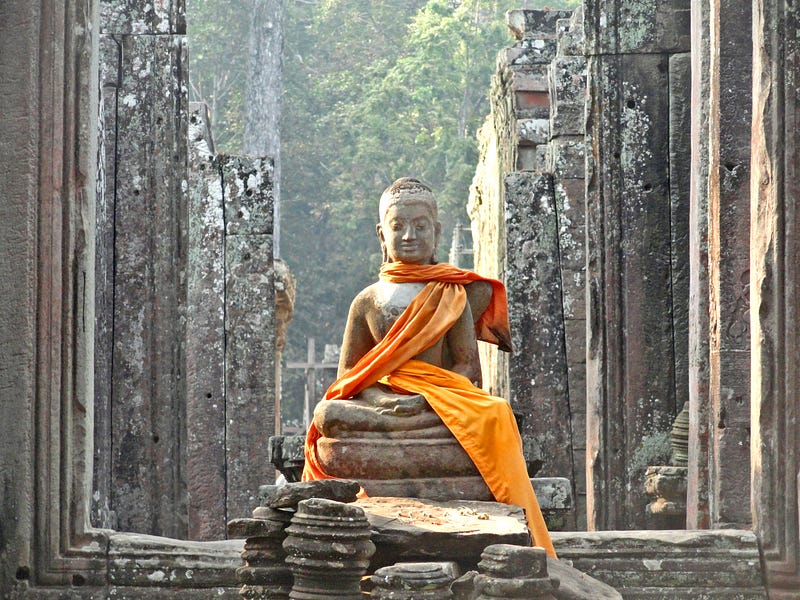
As you enter you are faced with the Bayon Temple at the heart of a complex that features 54 towers, all decorated with the smiling faces of the Buddha of Compassion, along with intricate relief carvings on the stone walls. Inside the stone temples, history was evident all around us, with images of Buddha mixed with those of Apsaras (Hindu water goddesses).
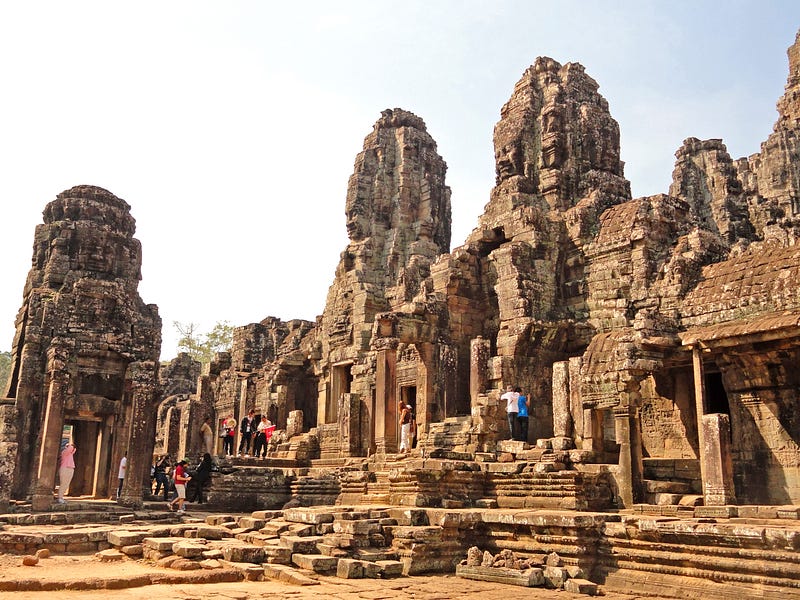
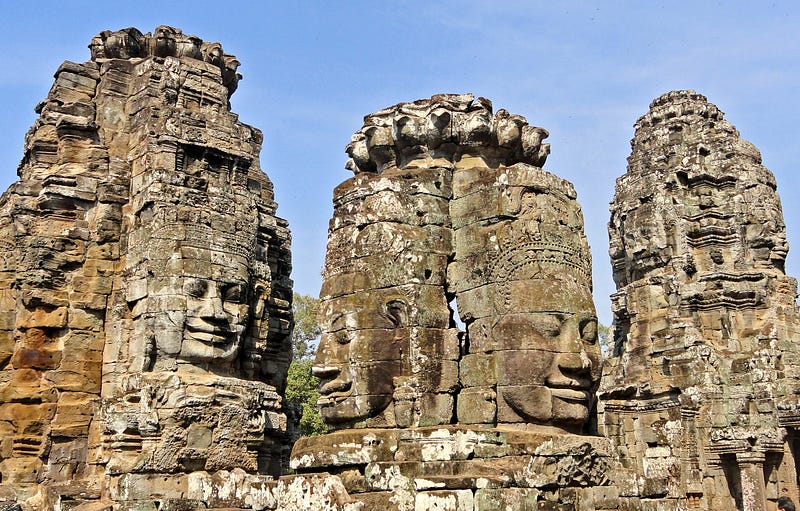
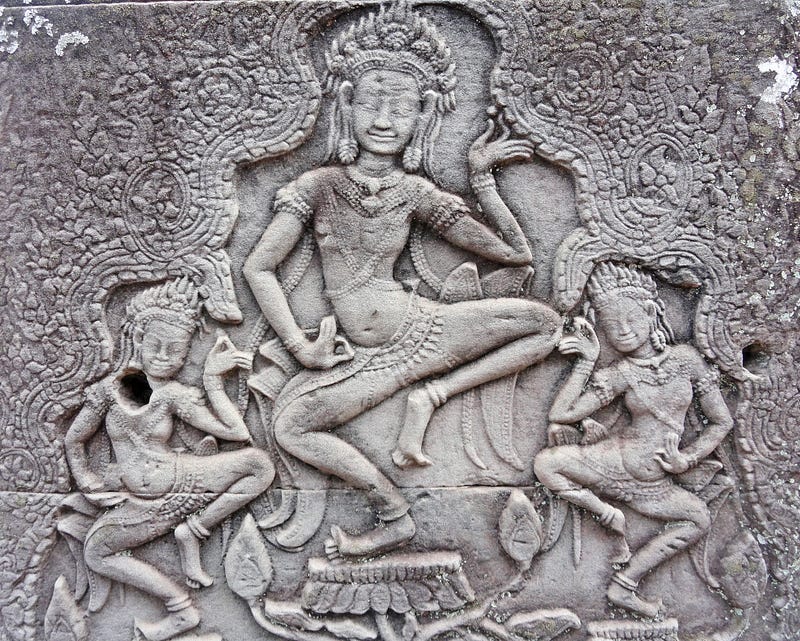
Over the centuries, between war and natural disasters like monsoons, the Khmer city was eventually abandoned although it remained a symbol of its former glory.
Despite that, there is evidence in all of the temples of the levels of vandalism that took place during the Pol Pot regime. In an effort to wipe out religion, religious icons were destroyed, which meant many of the Buddha figures were beheaded and statues had their arms and feet cut off.
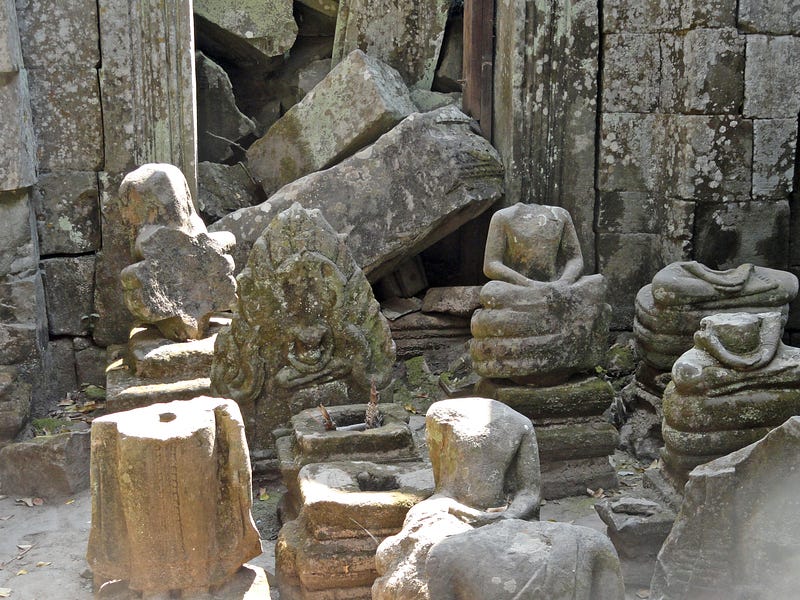
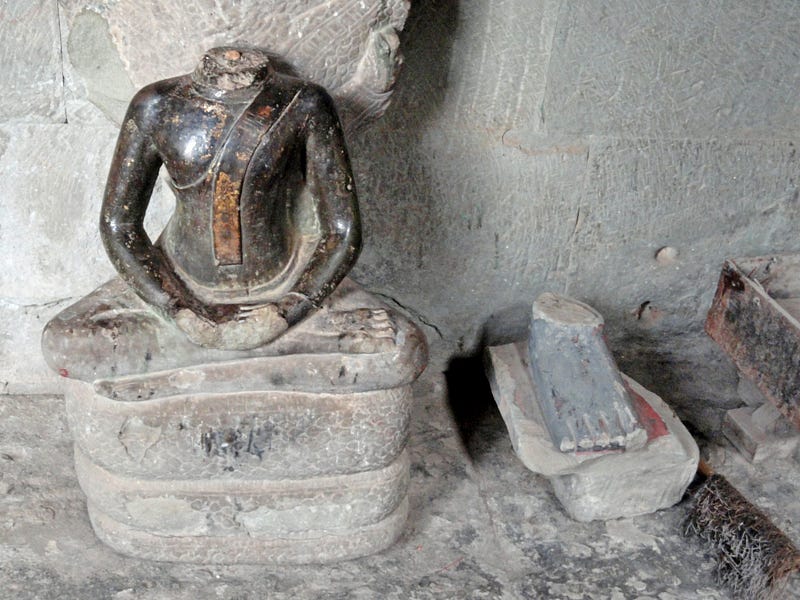
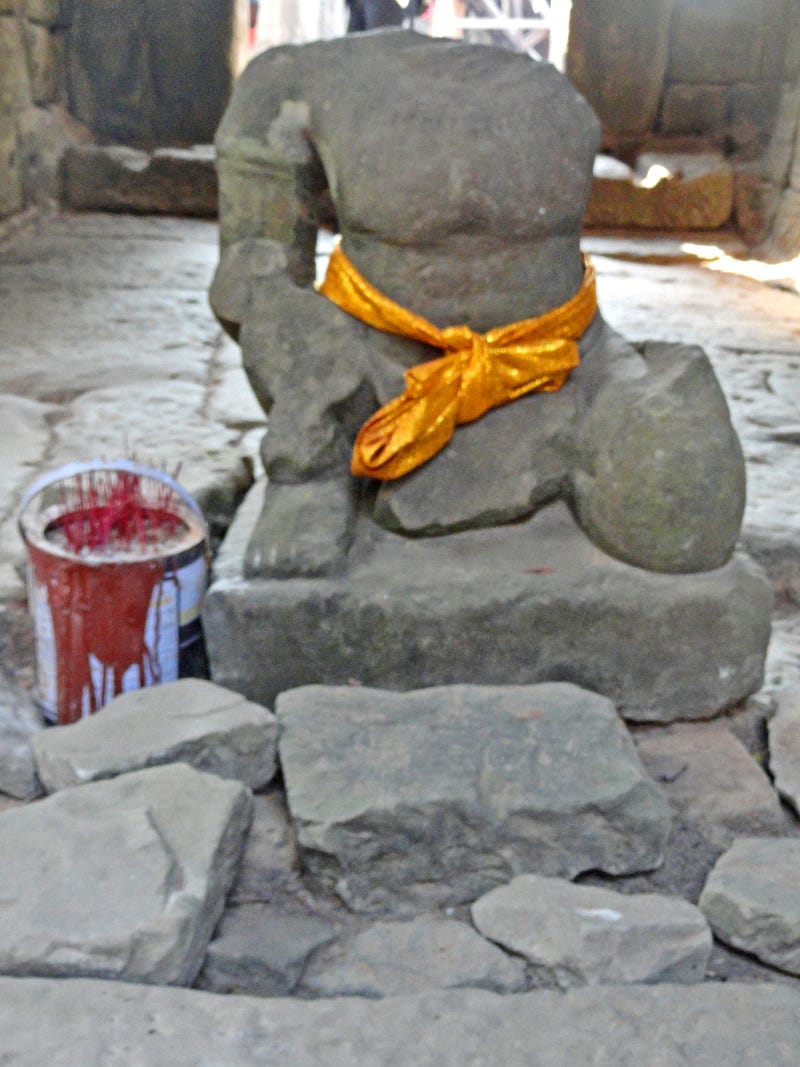
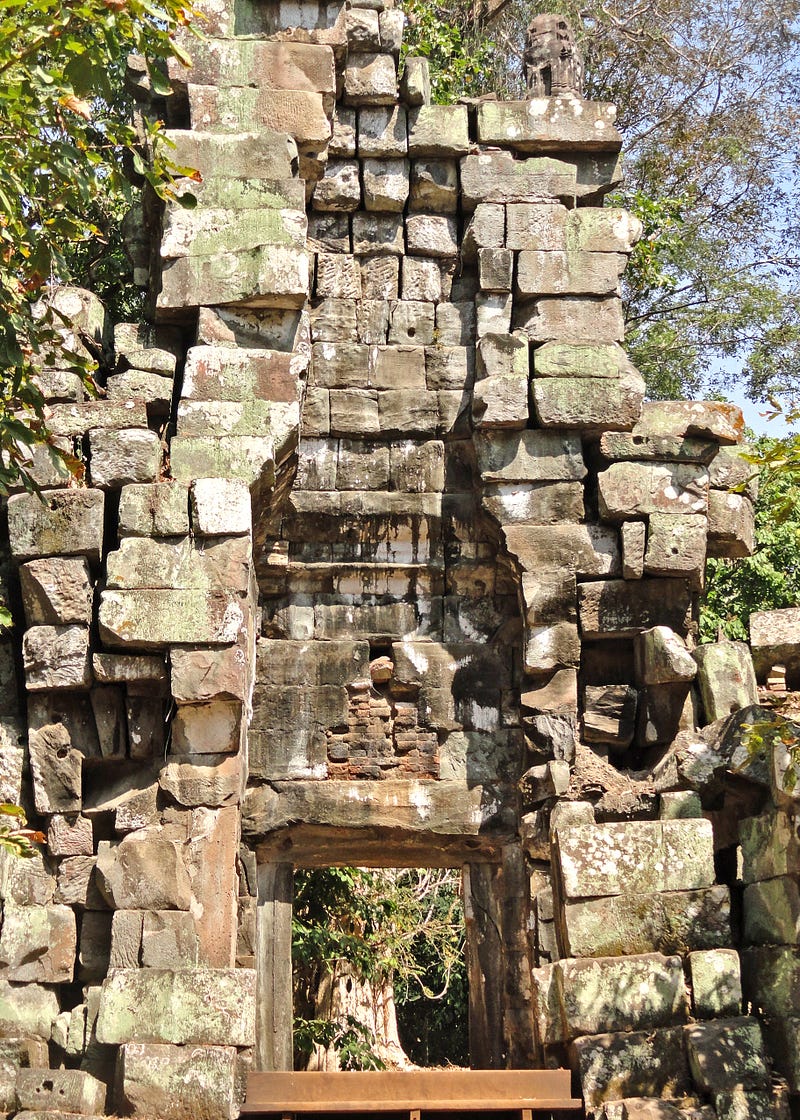
Near Bayon is the Baphuon Temple, which had been carefully disassembled by a team of archeologists for restoration. But when Pol Pot took over, the records were destroyed. Work continues in an attempt to piece it all together again, like a giant jigsaw puzzle. Most of it is still closed off to the public.
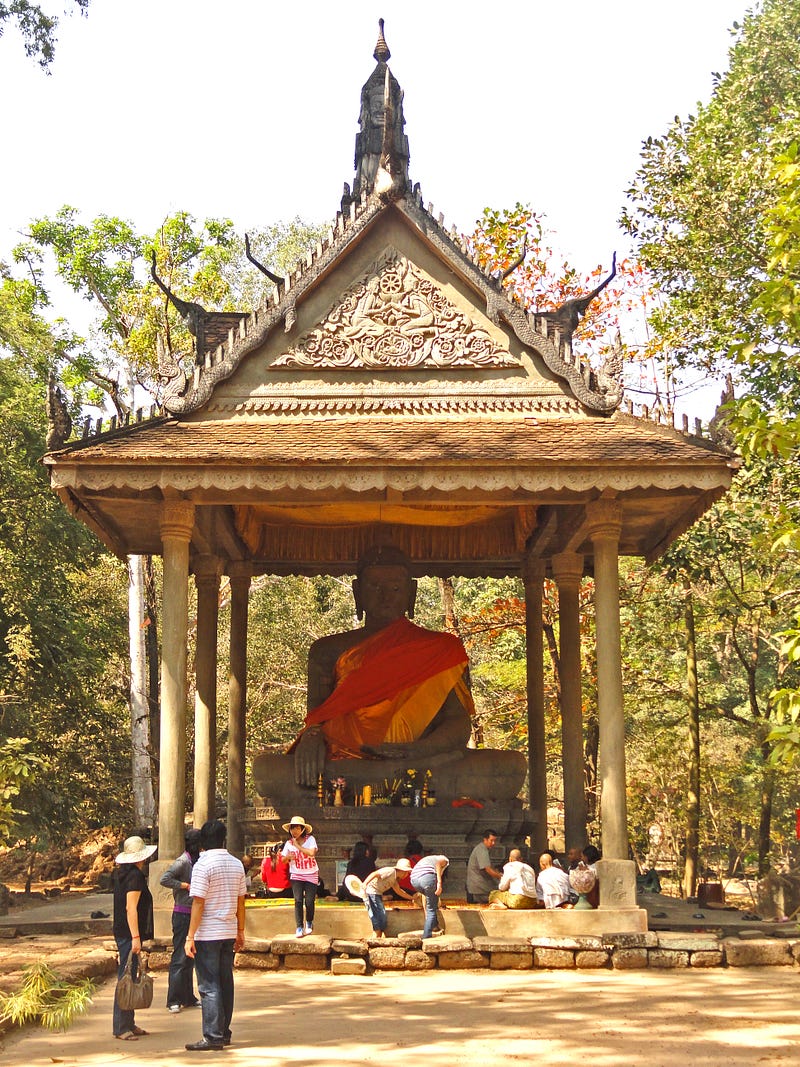
I kept walking in the sweltering (40c) heat, as I made my way to the Terrace of Elephants, once used as a victory stand by the king and dignitaries during public ceremonies. Today it is a place of worship with a large Buddha statue draped in orange cloth.
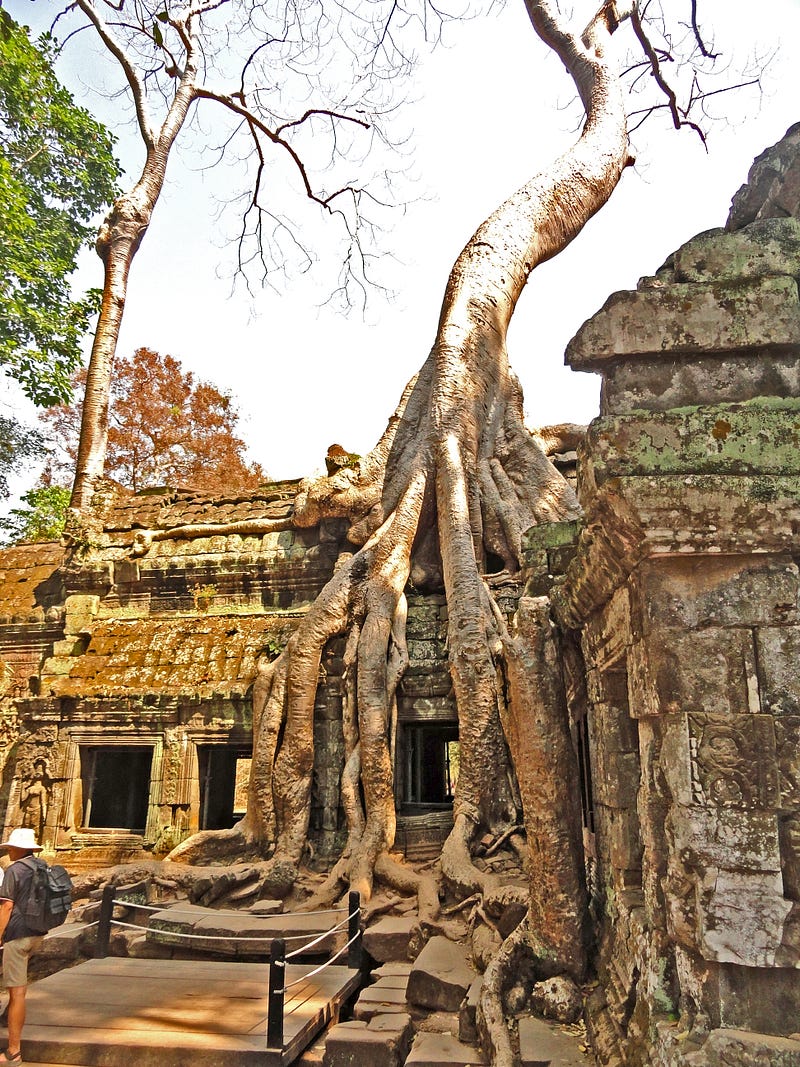
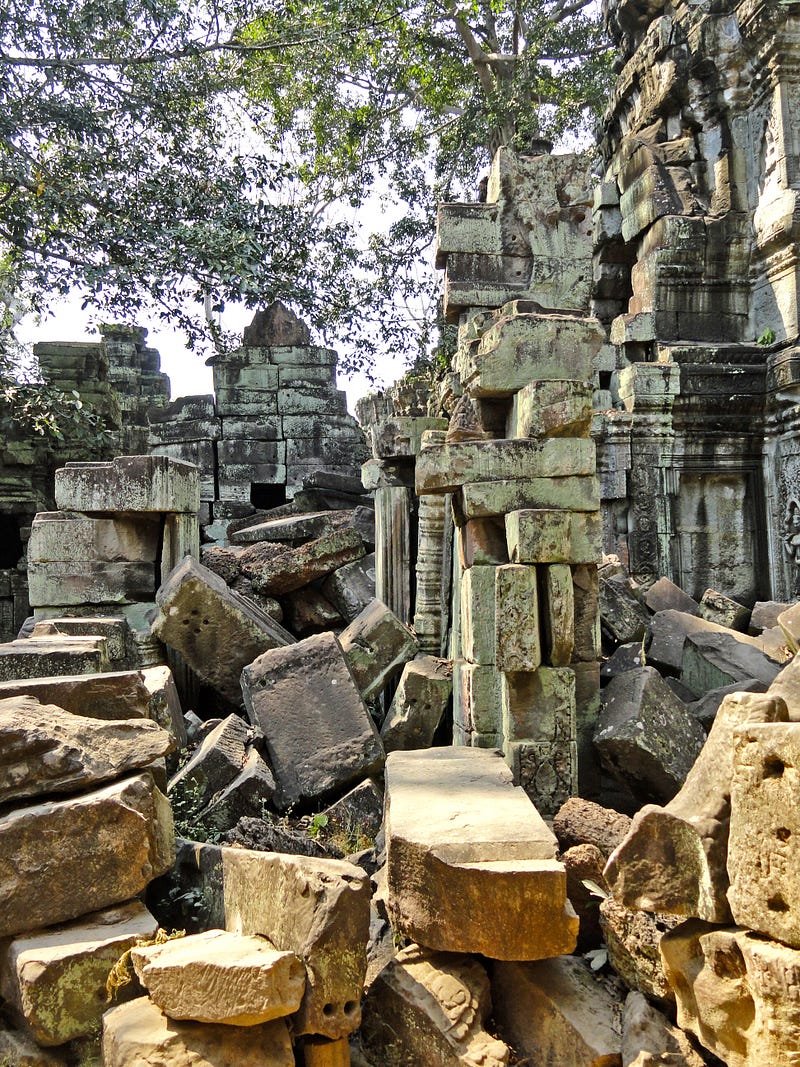
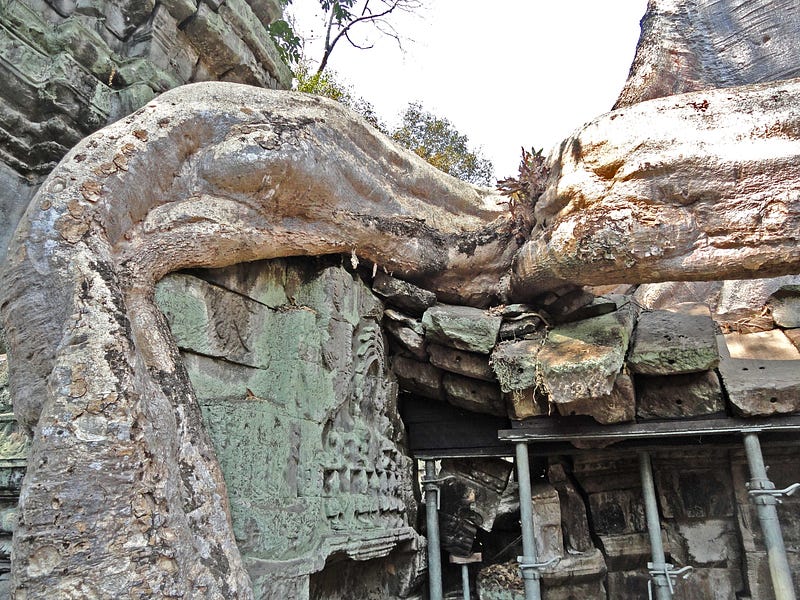
Next is Ta Prohm, a 12th-century Buddhist temple that has been claimed by the forces of nature. Massive trees cascade over the walls as their roots pierce through the stonework which has patinaed red and green from water, moss, and lichen. Many of the passageways are impassable because of the crumbling structure, which was used as the set for the film Tomb Raider.
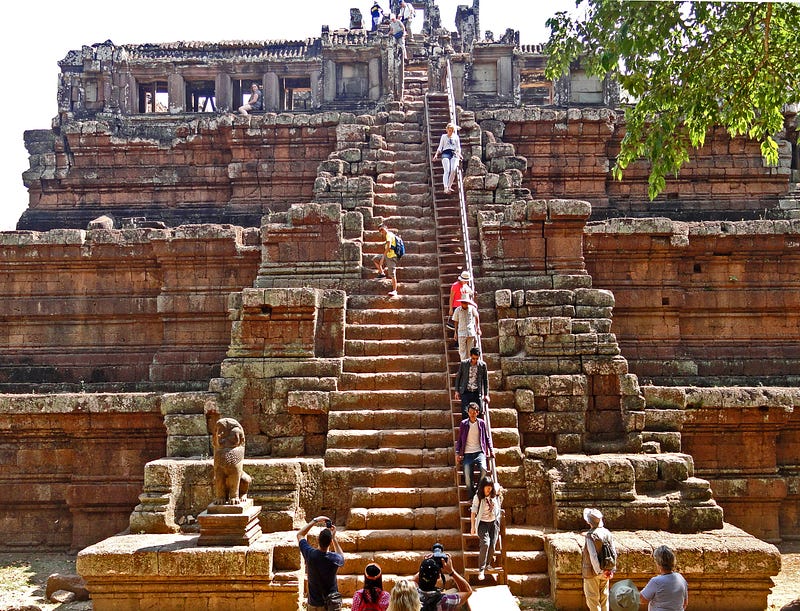
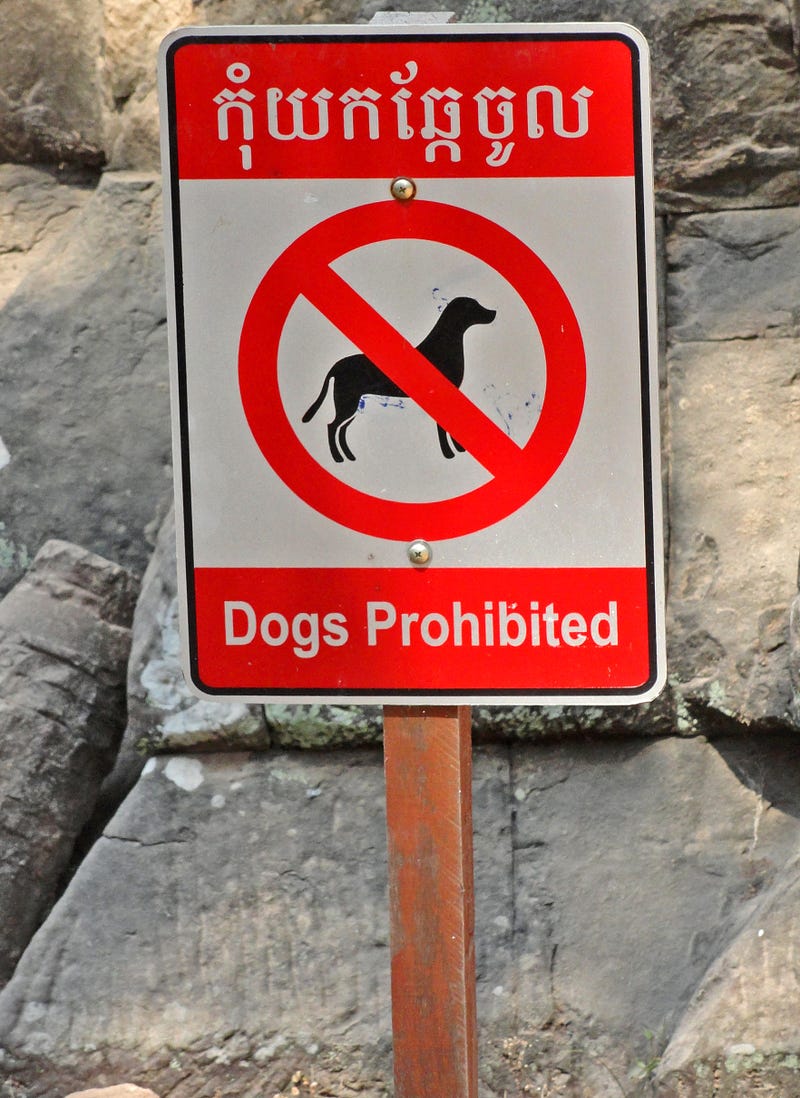
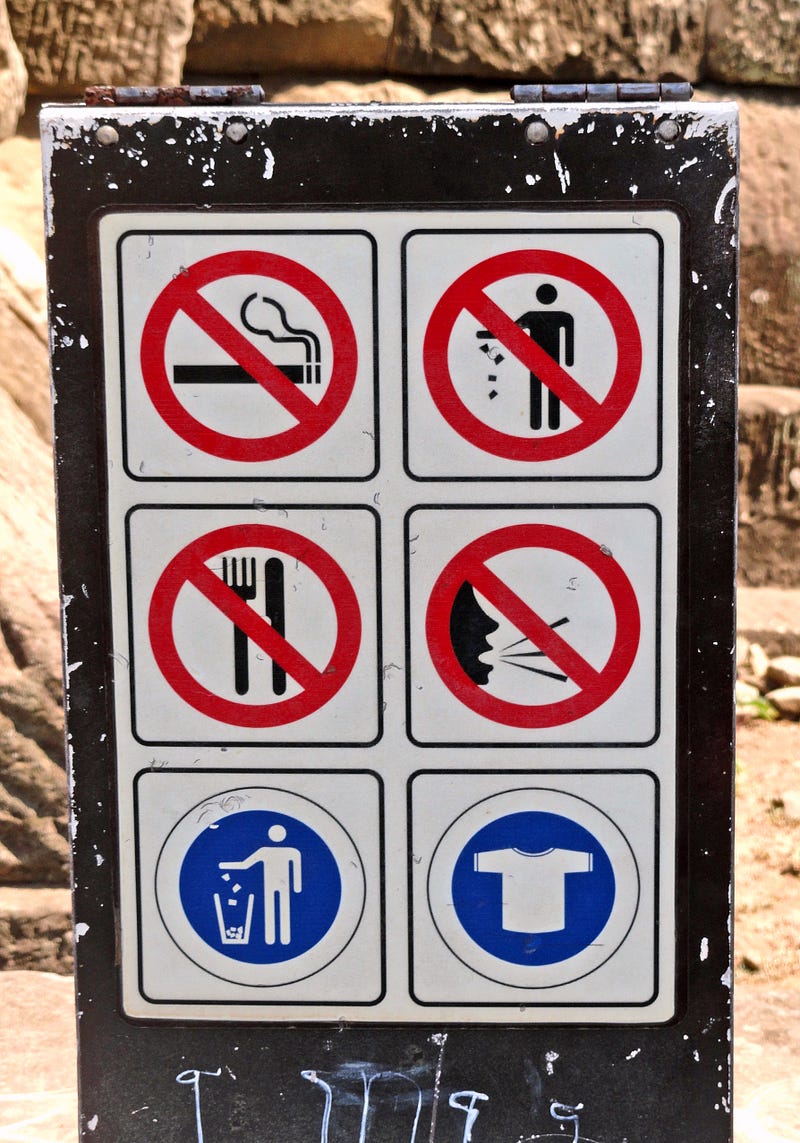
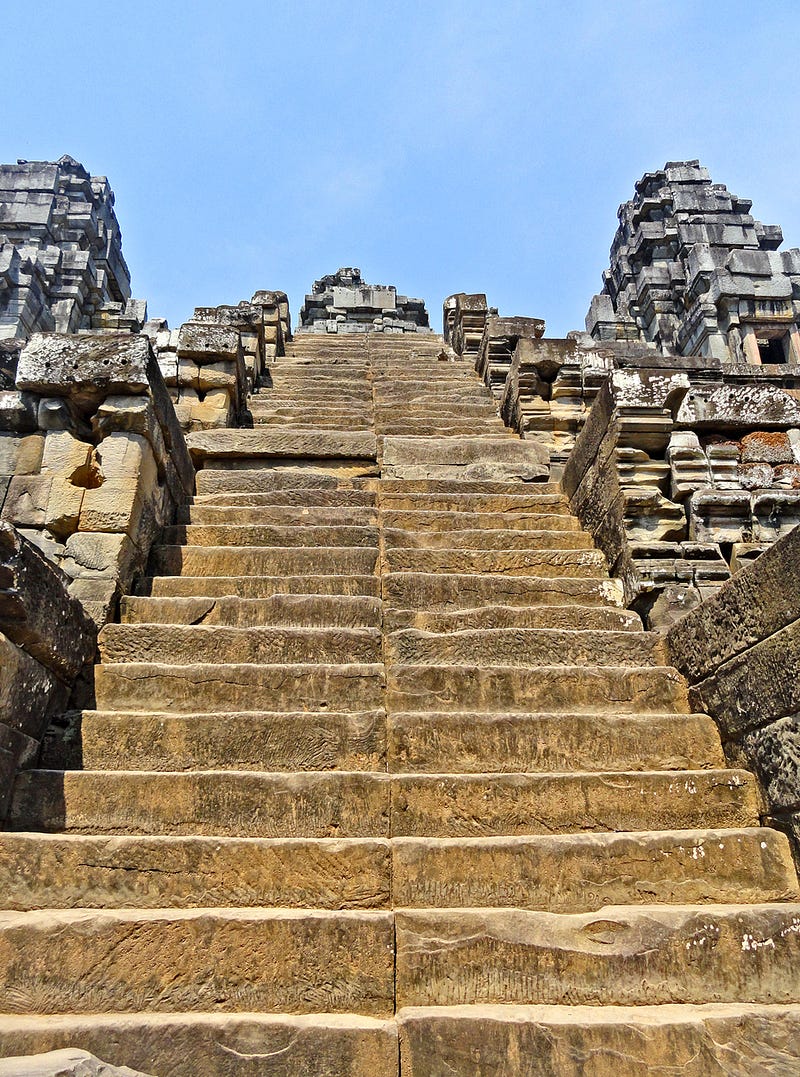
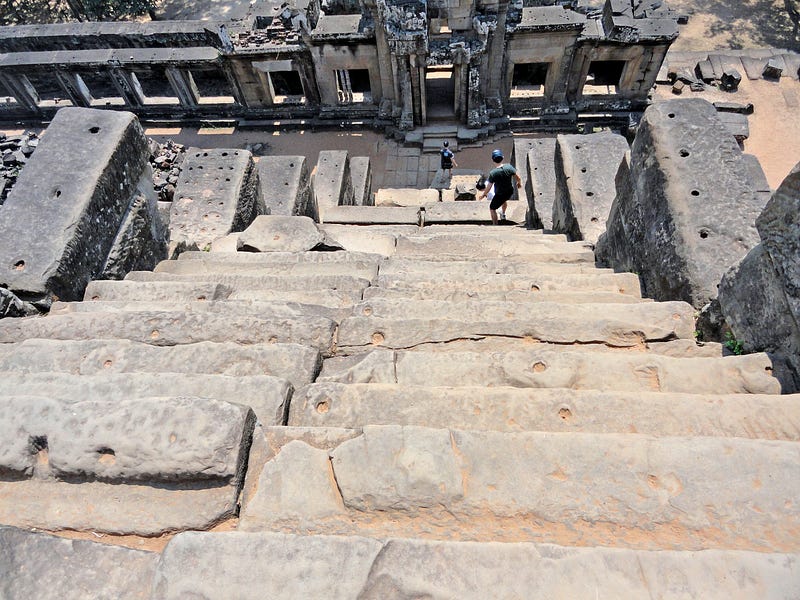
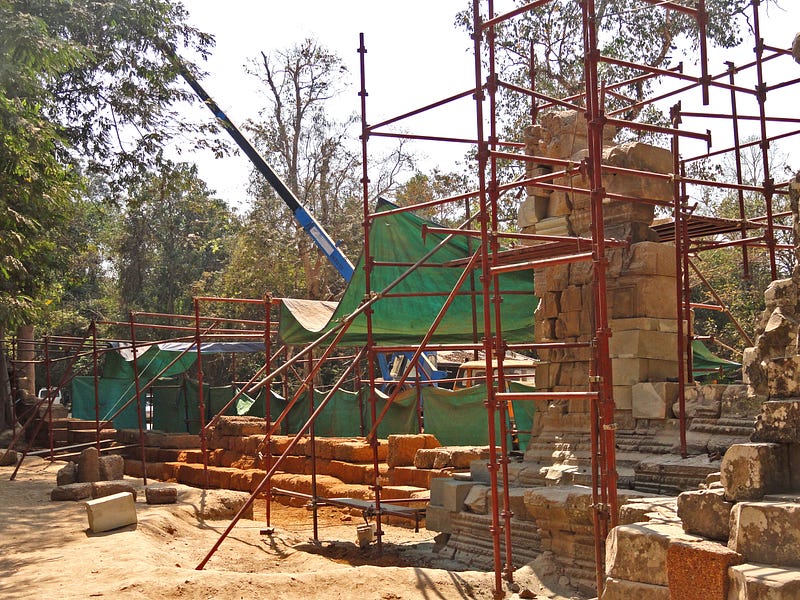
Nearby on the temple circuit is Ta Keo, a massive structure being restored with the help of the Chinese. There are signs out front with the rules… no dogs allowed, no smoking, no littering, no eating, no coughing (this was pre-Covid), and you must wear a shirt. Basically, they want visitors to show some respect, although many tourists ignored most of those rules.
It’s still a work in progress. Hundreds of stairs have eroded over the centuries so it is almost impossible to step up. It’s a hand-over-hand effort similar to rock climbing and it’s a big climb up, with beautiful views from the top, but also a big climb down. And yes, it was absolutely terrifying for someone like me who is afraid of heights.
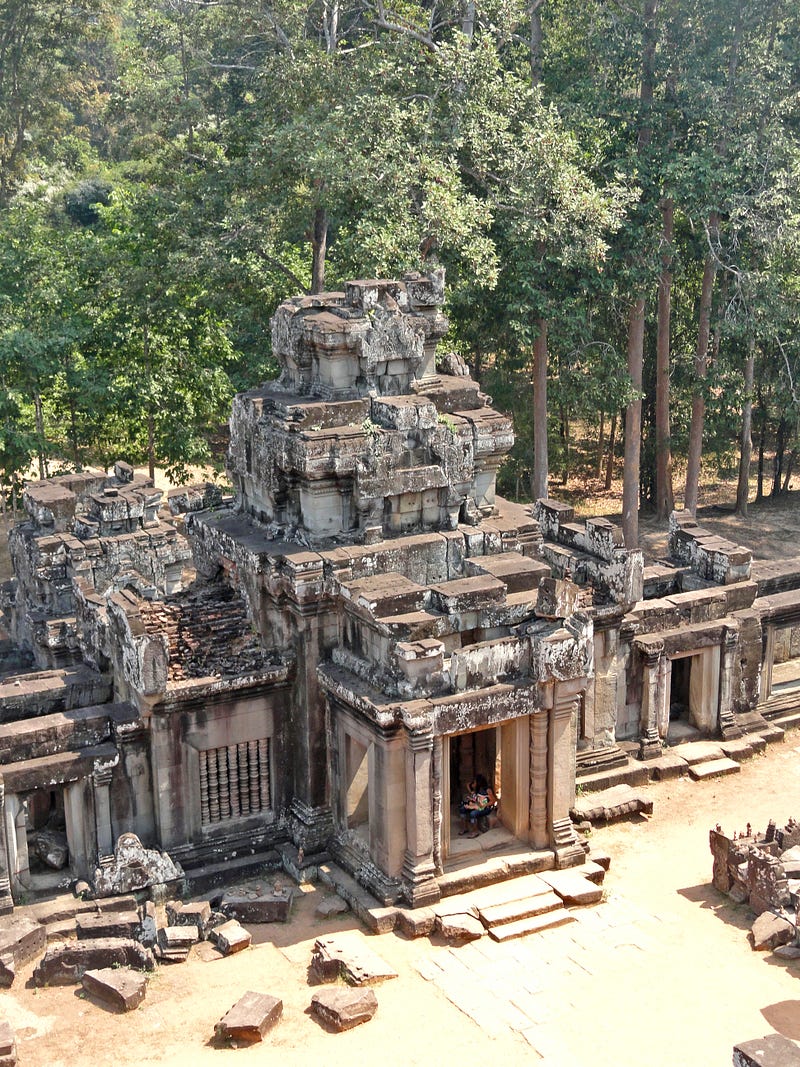
It’s hard to believe that tourists are welcomed to these sites. Some are nothing more than ancient ruins, spectacular and awe-inspiring, but crumbling by the minute. People walk under and around scaffolding at these temples, which in other parts of the world would be hardhat sites, blocked from the general public.
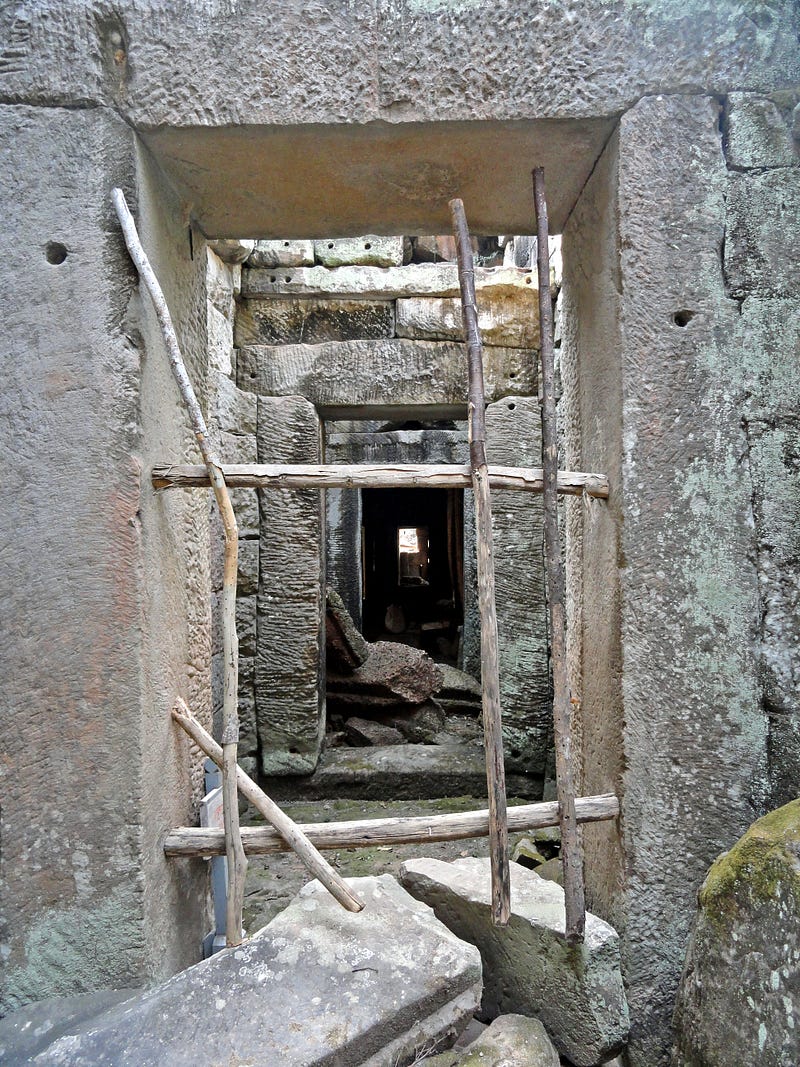
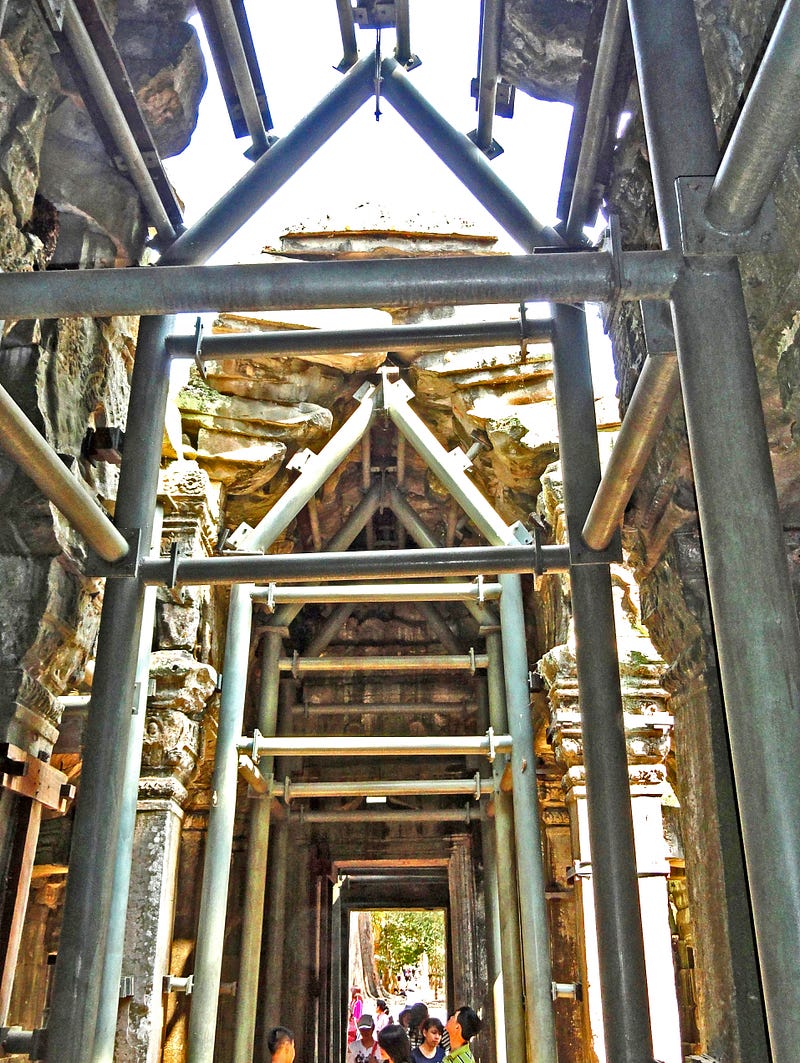
As soon as I entered the temple of Banteay Kdei I was immediately picked up by a tour guide who started showing me all the best vantage points for photos. I should have brushed him off immediately but appreciated his knowledge about the site and we were able to move quickly through the temple. A pretty cheap tour for just $7.
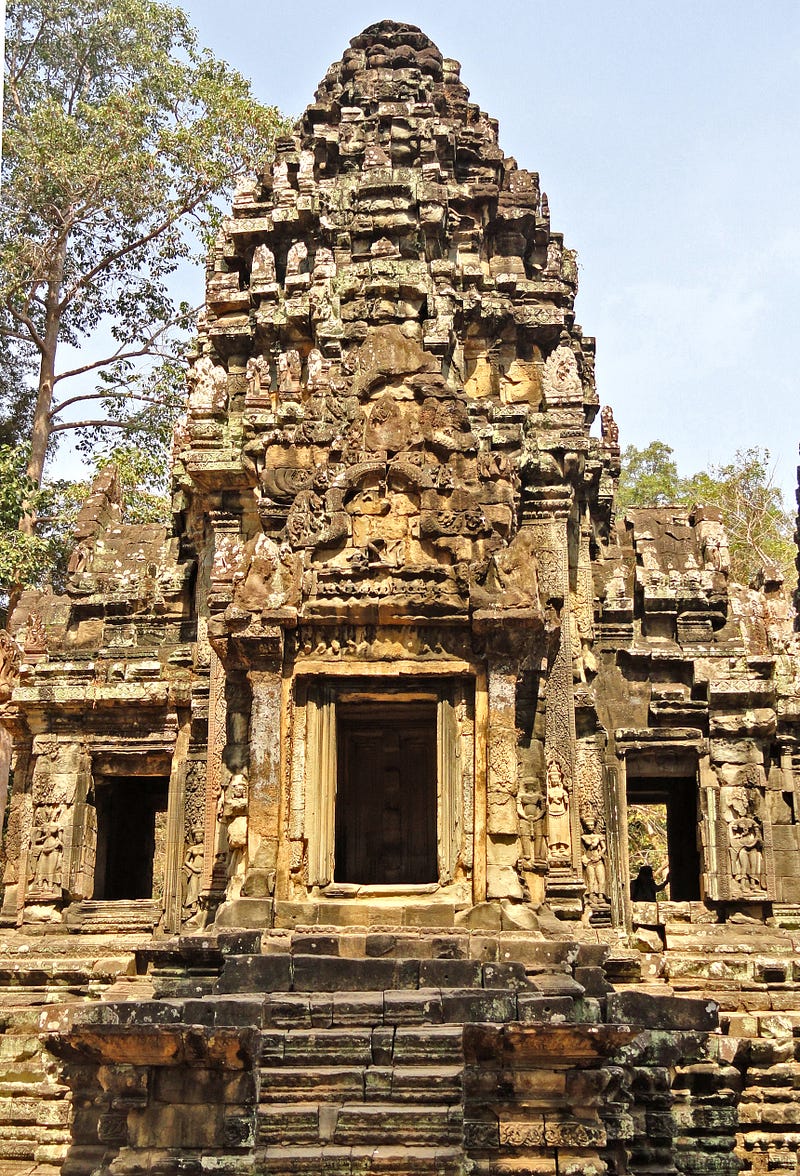
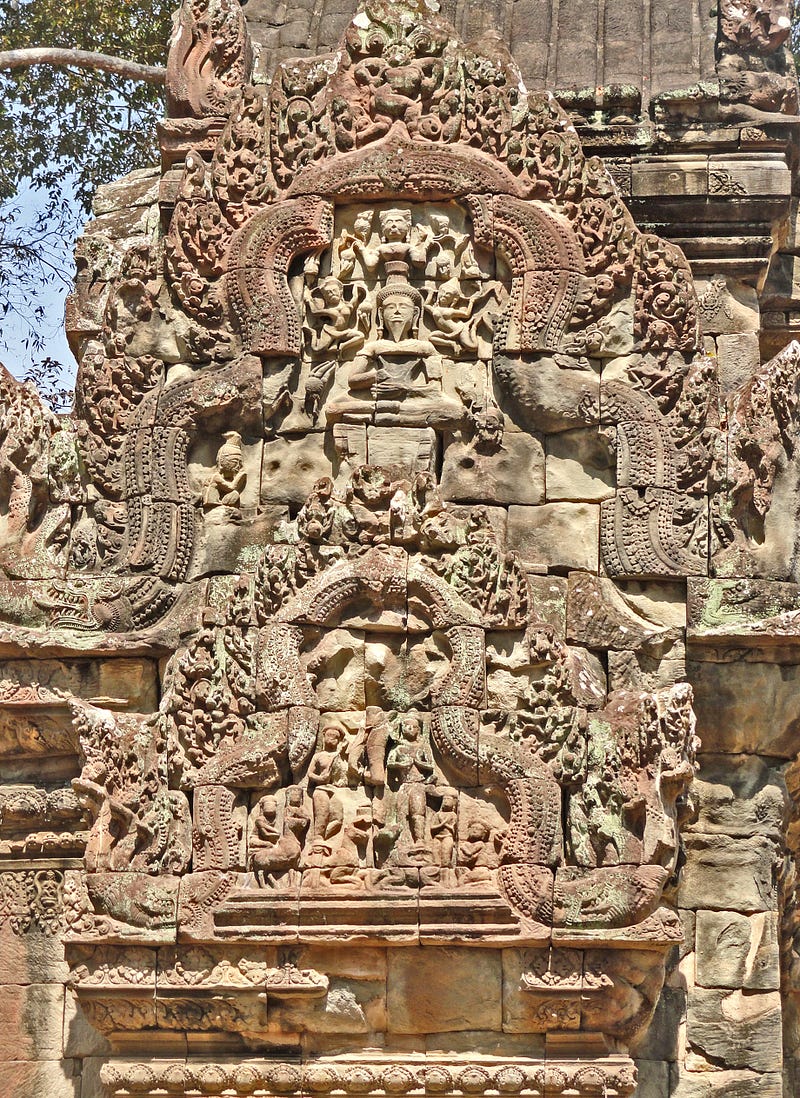
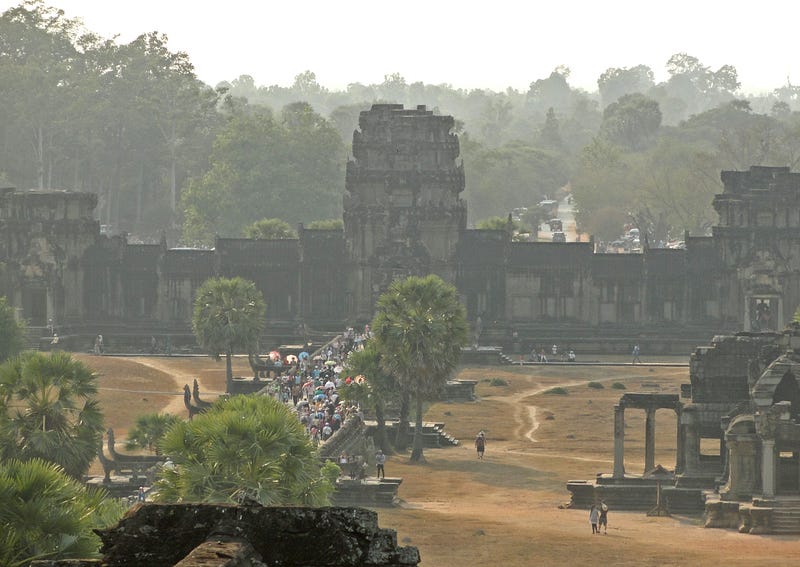
We arrived back at Angkor Wat before 4 pm and while the crowds had thinned out there were still people everywhere.
The temple was built in the 12th century around the same time as Notre Dame. And like the great cathedrals of the world, there are rules to be aware of before you climb the steps of the Bakan Temple. While they are more strict at this site, few visitors respected them.
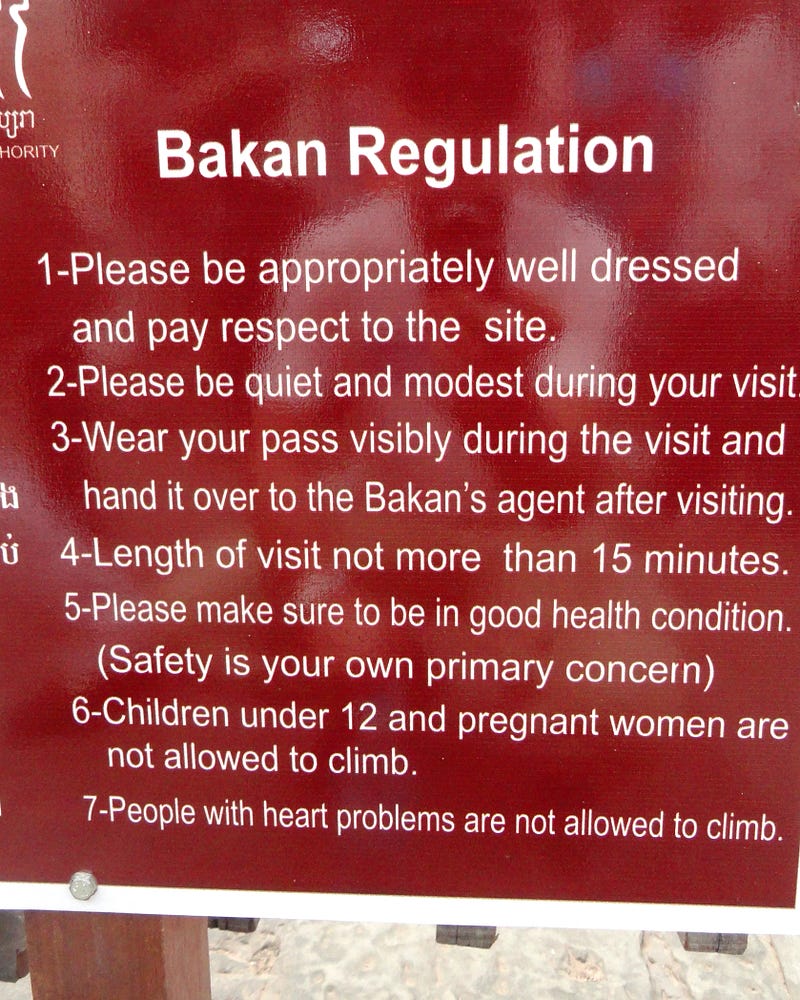
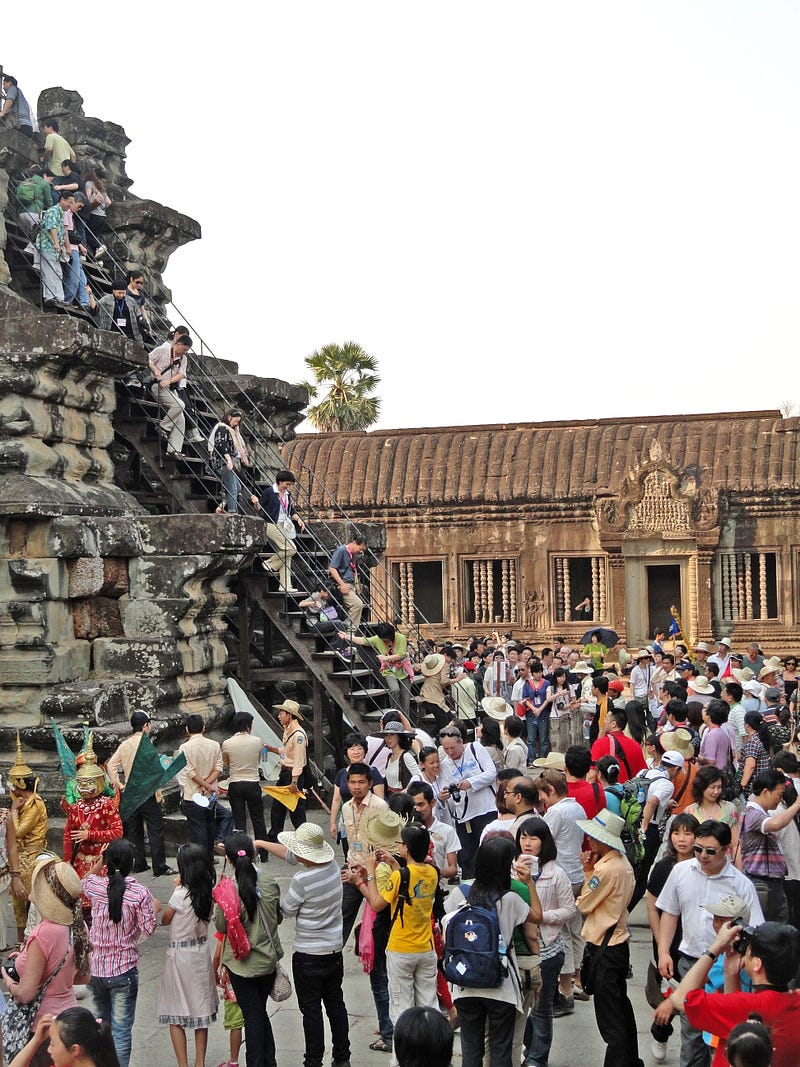
When one young American woman showed up in a halter mini-dress and was handed a scarf by staff, she looked at them quizzically and then put it on her head.
And then there was the one group of tourists who were so loud their voices echoed through the holy site as they continued to dance around for photos and even spit inside the temple. I was shocked that people could have such little respect for another culture.
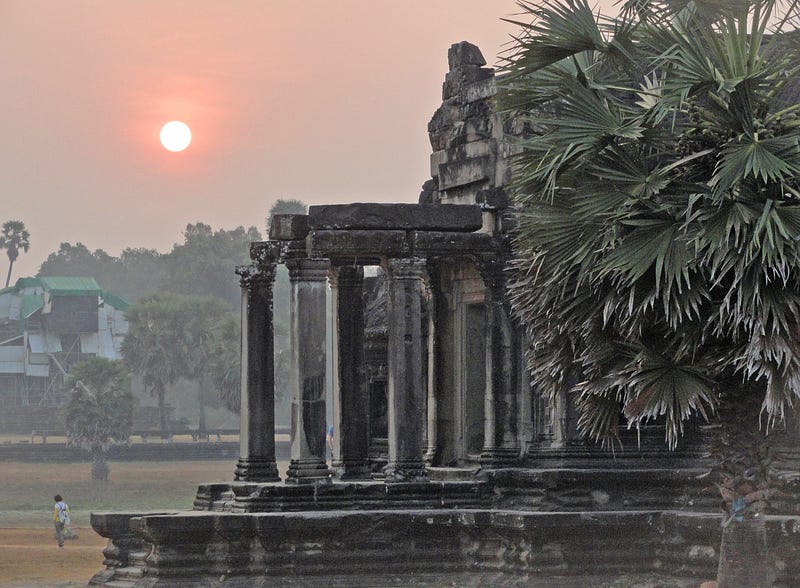
Sunrise Over Angkor Wat
The next morning I set my alarm for 4:30 am to get an early start to see the sunrise over Angkor Wat. My tuk-tuk arrived on time at 5 am. As we drove through the darkness, (there were no street lights here) there was increasing traffic as we approached the temple. But it was a chilly ride. I have only felt intense heat since arriving in Siem Reap so I wasn’t prepared for the morning cold. I wrapped myself in my krama, the Khmer checkered scarf that locals use for everything from protection from the sun (and cold), to a scarf or bandana, and a blanket to sit on while riding in the tuk-tuks.
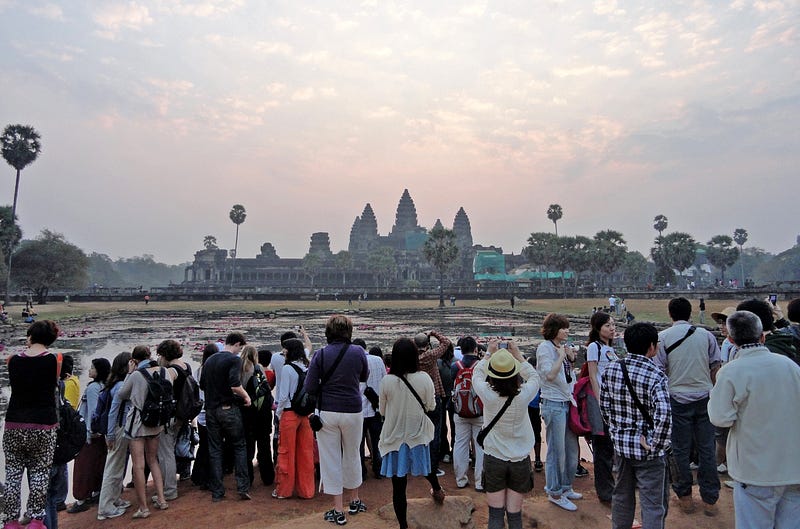
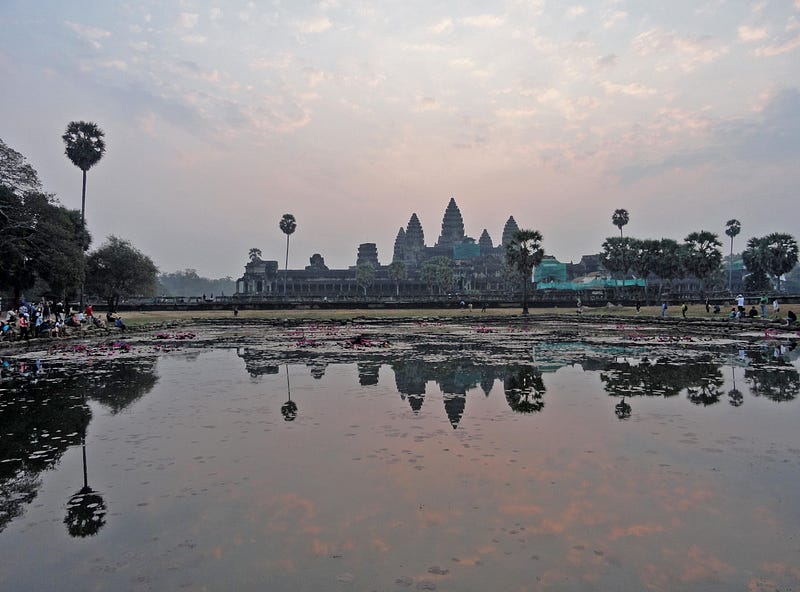
When we arrived at the temple there were crowds of people already there, and a line of traffic trailed behind me. I’m glad I had my pocket flashlight with me, as it was a little tricky making my way to the best viewing site on the edge of a pond with the temple silhouetted in the background. I got there just in the nick of time and had a front-row seat.
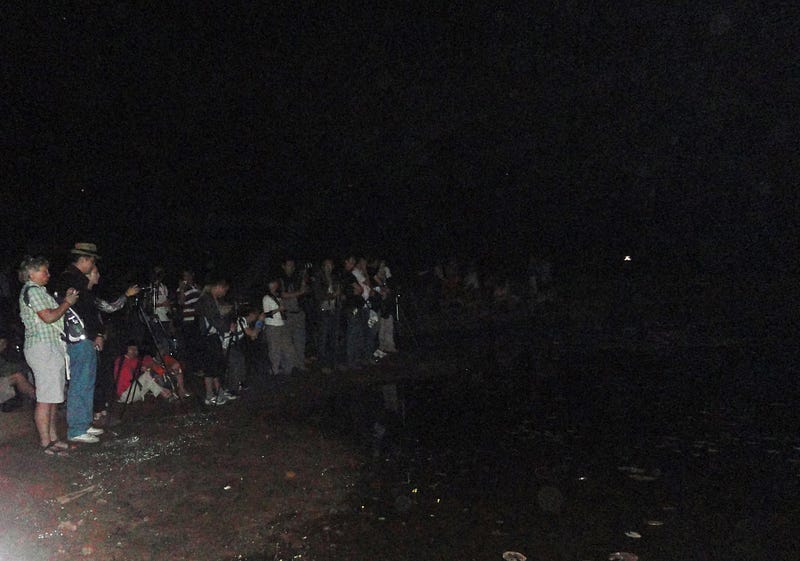
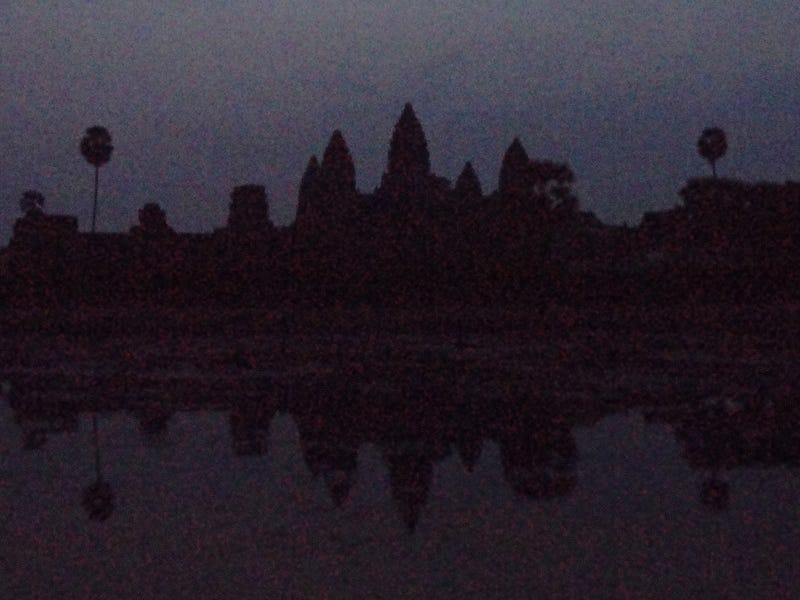
As the crowd waited for the rising sun, kids came by offering us everything from coffee or tea to a full breakfast. Soon the sky gradually started to turn from dark to light, and the temple became more visible across the pond.
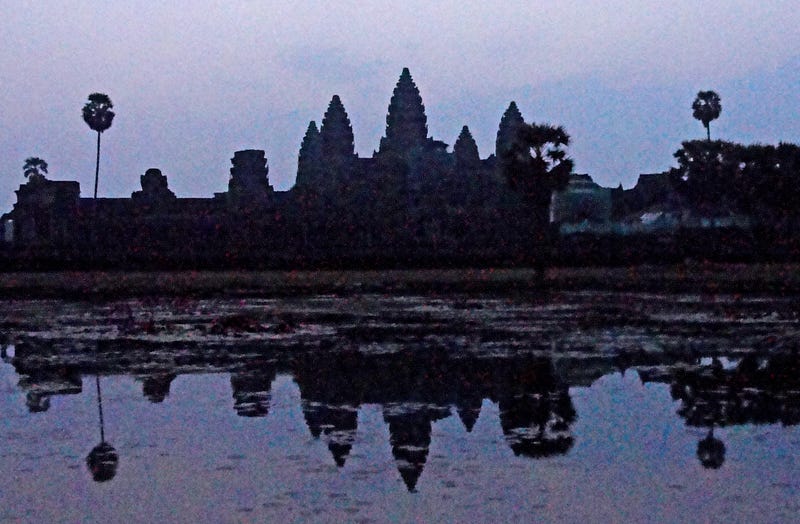
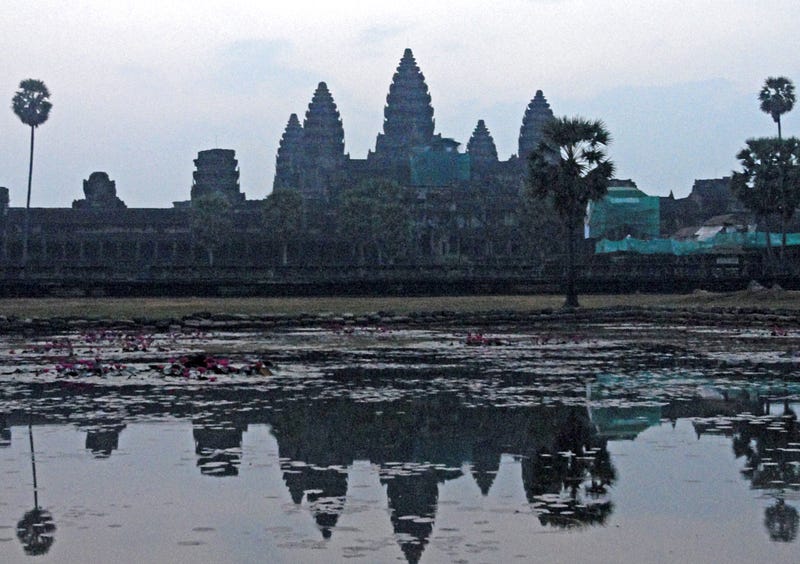
There were hundreds of people spread out around the lake, some there just for the experience, while others were set up with full tripods and expensive camera equipment.
I made my way back to the Bayon Temple at Angkor Thom where the morning light cast shadows over the monuments, highlighting details in the faces of the Buddhas.
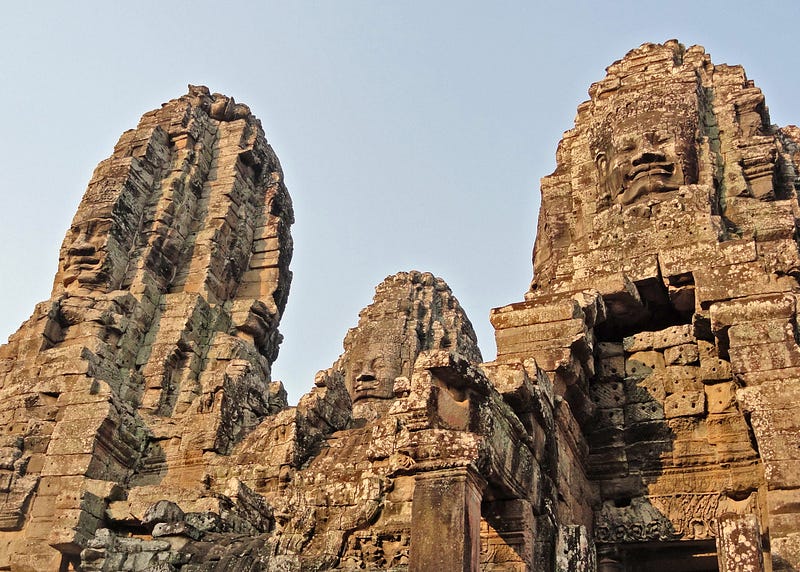
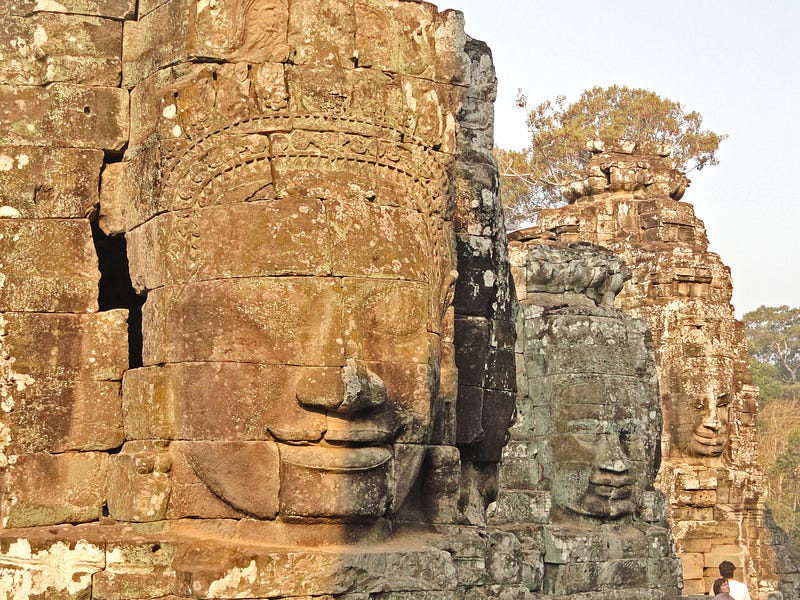
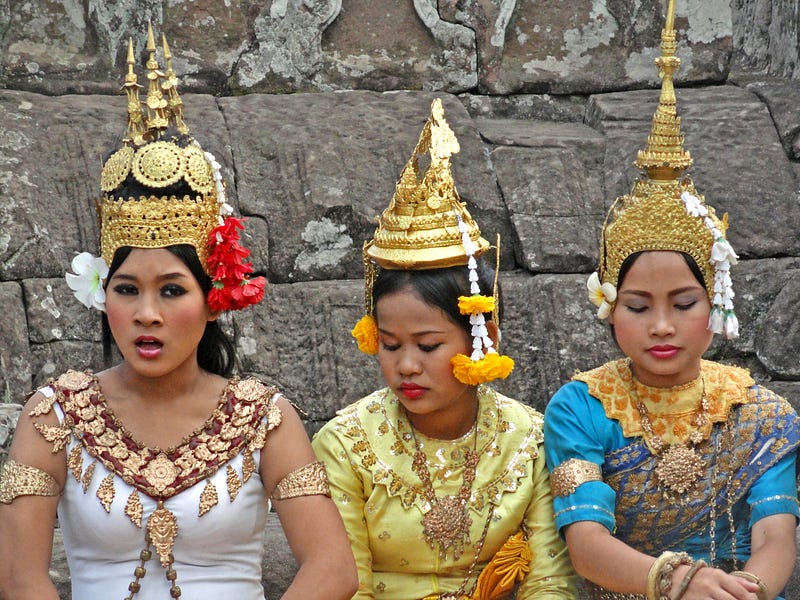
Best of all was the reduced crowd size, only about one-tenth as many people were visiting at that time of the day. I saw a group of traditional Apsara Dancers, appearing bored as they waited for the horde of tourists to descend.
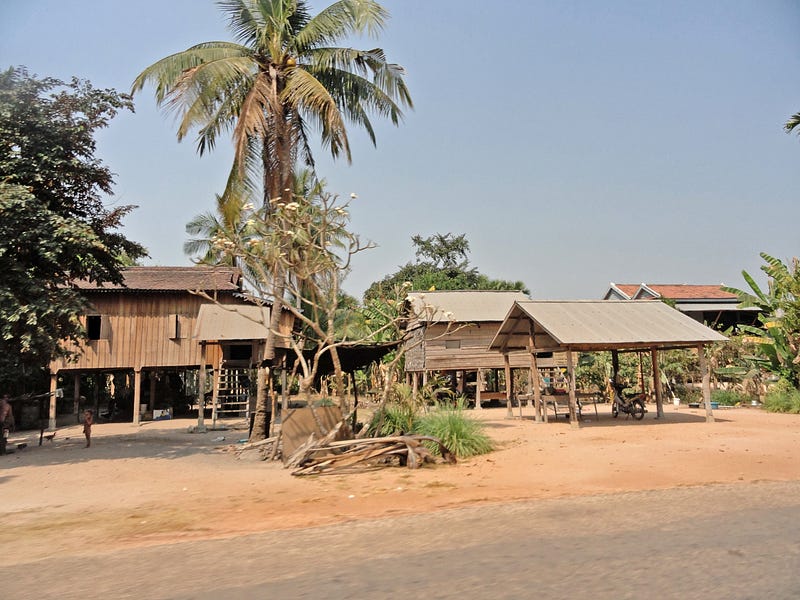
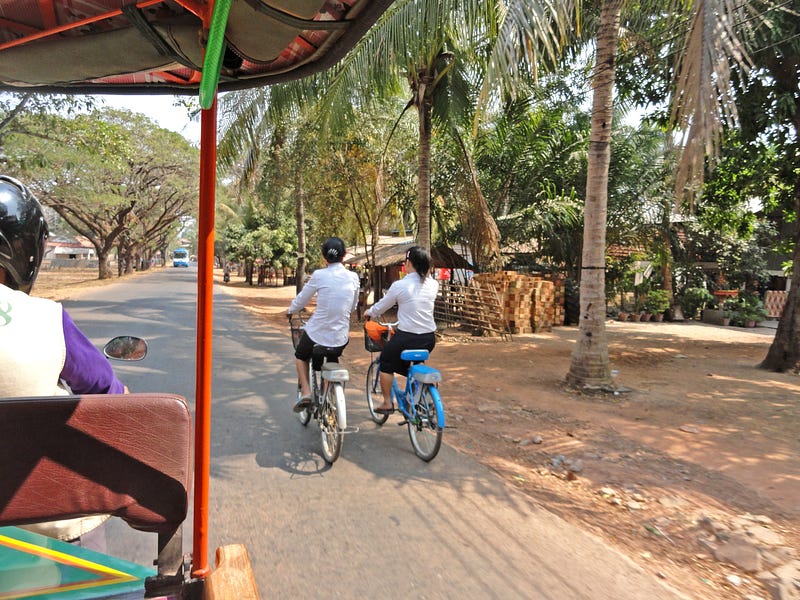
As we drove through the countryside I got a chance to experience some rural Cambodian life. There were villages with houses built on stilts and school children cycling to school.
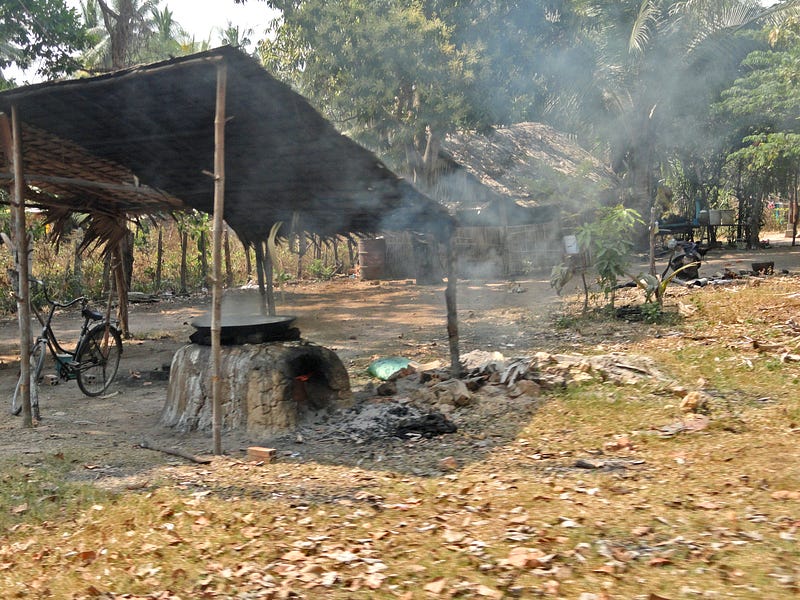
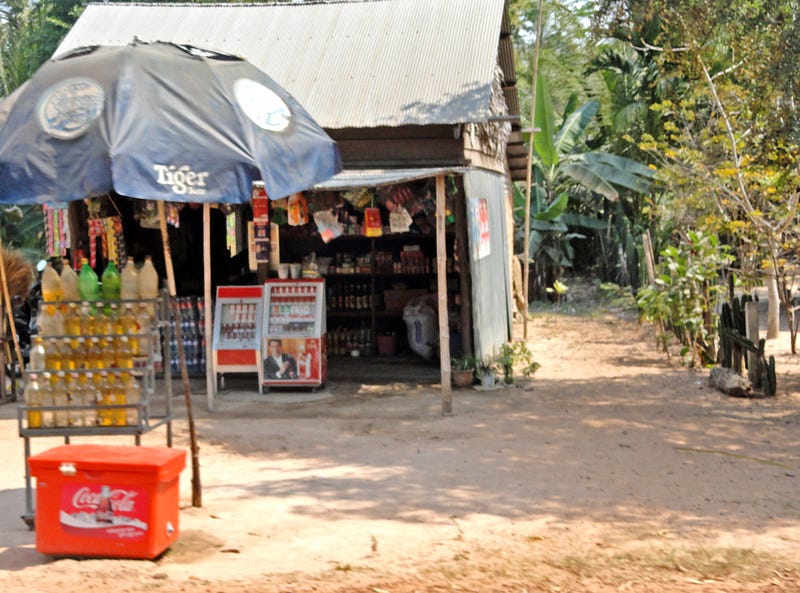
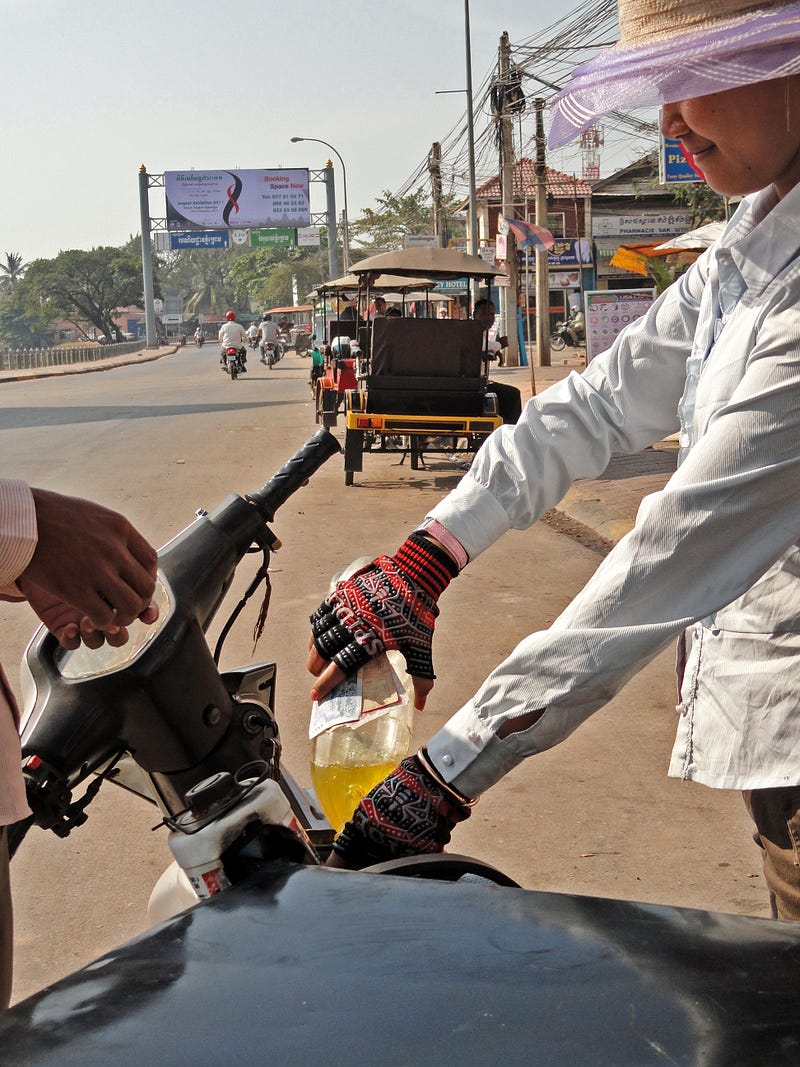
The tuk-tuk needed to refuel so we pulled over to a “service station”, basically a stand with old plastic pop bottles filled with gasoline which the attendant proceeded to pour into the gas tank.
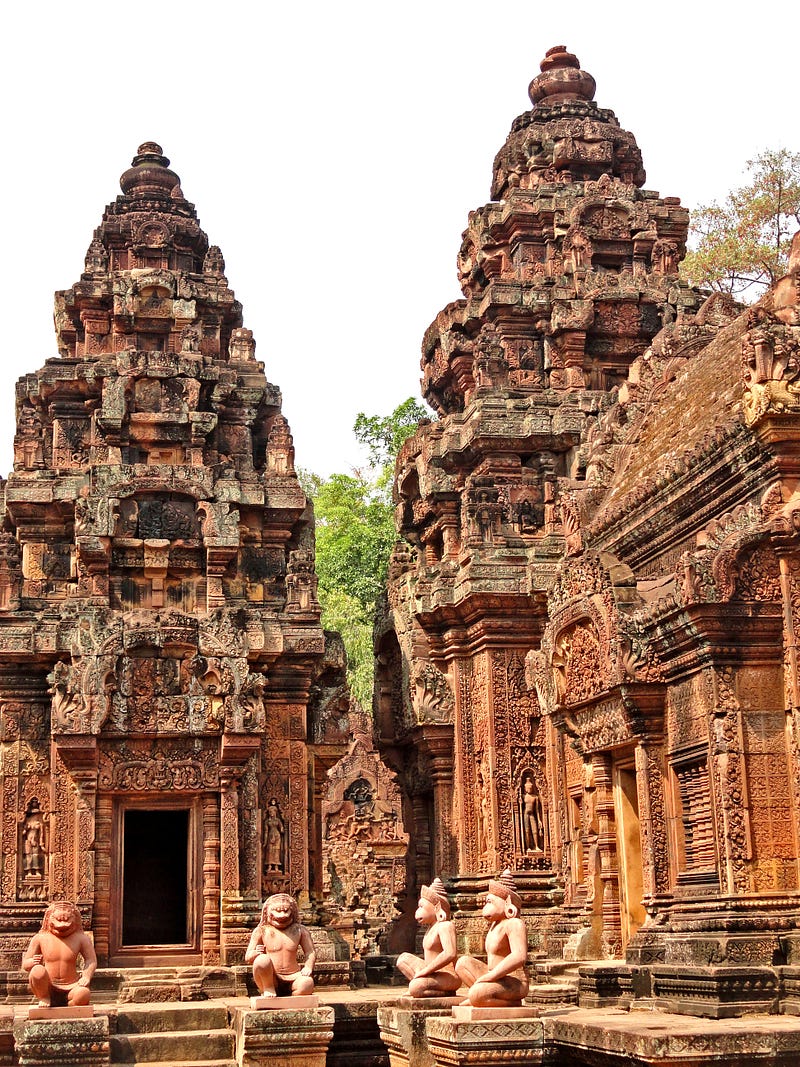
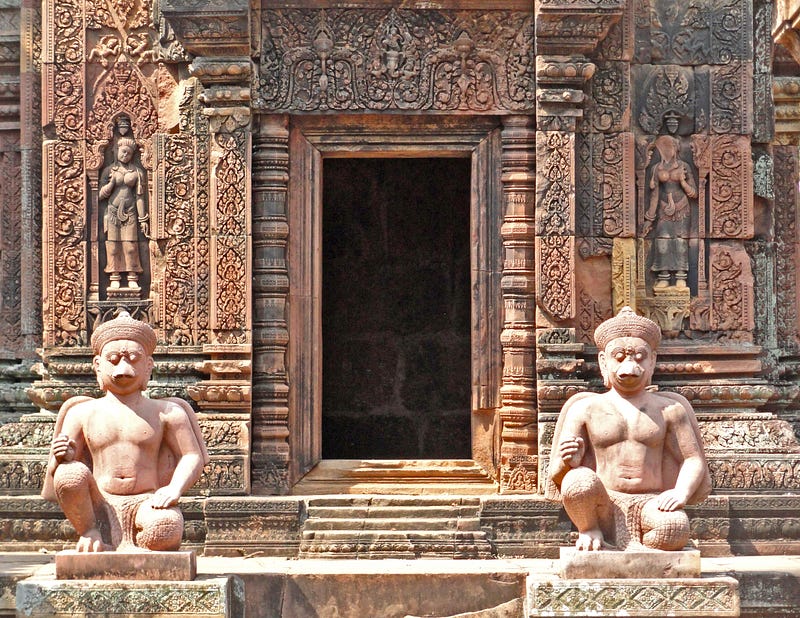
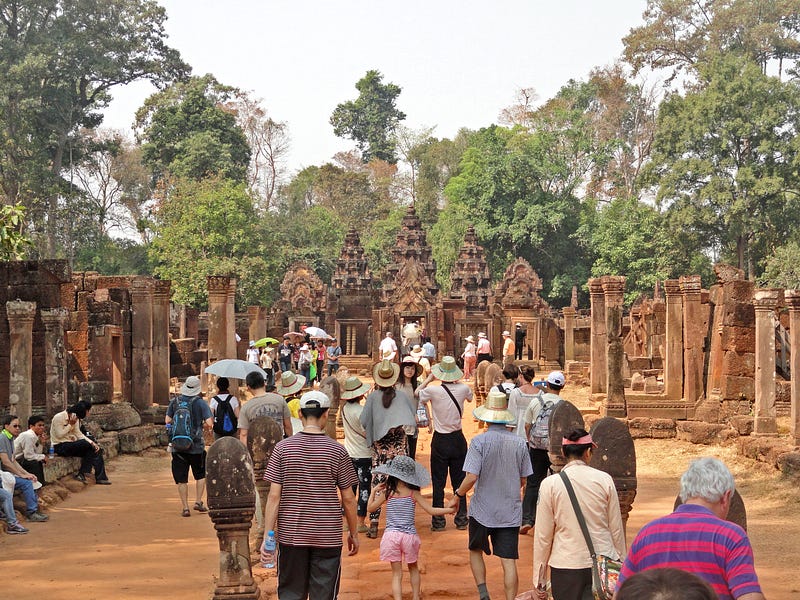
The temple of Banteay Srei is one of the smallest but the intricate detail that has been salvaged is exquisite. It dates back to 967 AD and was commissioned not by the king like the other temples, but by his chief Hindu Brahman advisor. As you move through the passageways you reach the inner sanctuary guarded by kneeling figures with monkey heads.
I learned later, that Banteay Srei was a favorite target of art thieves and as recently as 1995 was the scene of bandit violence. An American woman and her guide were killed on their way to the site, by 5 armed gunmen who ambushed the group. The temple was off-limits to tourists for several years until it was deemed safe again to go back. Restrictions were gradually eased, but for a time it was mandatory for tourists to have an armed escort to take them there. It’s now perfectly safe, as evidenced by the crowds that were there that day.
I’m a little late to the game, but here are a few other A favorites from some Globetrotters writers…
_______________________________________
You could read so much amazing content on Medium and it could be your next step in becoming a writer, for just a few bucks a month. And if you sign up with this link you will also be supporting my writing.