
Two things that happened this morning highlighted anger as a genuine presence in my life and something I want to get underneath. First, driving my son to work is a chore, and I am no ray of sunshine as I grip the steering wheel and roll my eyes at other people’s lack of driving skills. But the anger I felt at the van in front of me when he braked suddenly to turn off at the last moment was extreme. I shouted and banged my hand down on the steering wheel in frustration (while at the same time completely ignoring the fact I was driving too fast and was probably too close to his rear bumper).
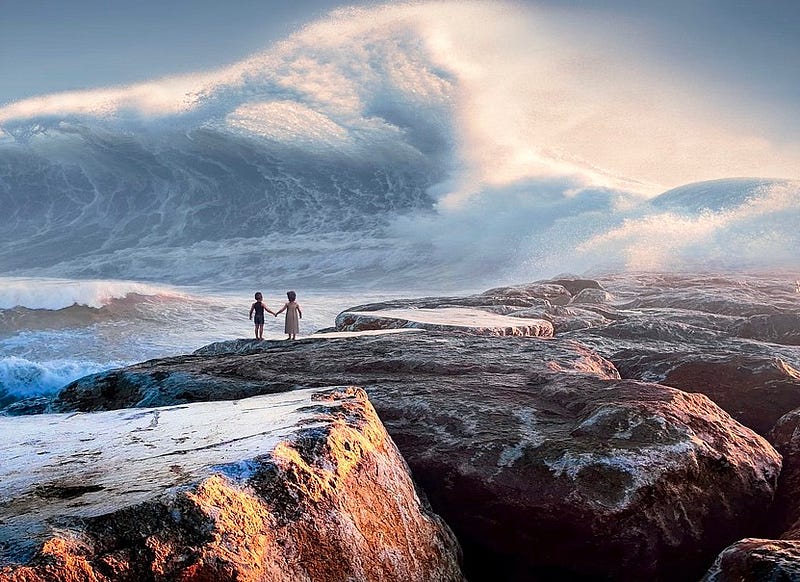
Safely home, I switched on my laptop and checked the news while drinking my first coffee. Obviously, the new normal is to see Vladimir Putin’s face with a scary headline or images of the devastation in Ukraine. But, much like everyone else, I have found myself uncomfortably able to compartmentalize that and read on. But this morning, there was talk of an enormous underwater missile capable of creating a toxic tsunami of over 300 meters in height, which Russia is threatening to fire at the UK.
I live in the relatively small and eminently ‘drownable’ UK, so naturally, this caught my attention. The article explained how the missile worked and was undetectable and, therefore, unreachable by anything the UK or USA could launch to destroy it. And as I read, I could feel myself tightening as the frustration and powerlessness of my situation sunk in.
I should explain that I am a big fan of reflection, getting under the skin of how I feel and why. So this flood of anger needed to be unpicked — and it didn’t take long.
The world is in the grip of a pandemic of anger. After more than two years of Covid, followed by the invasion of Ukraine and the global fallout, everyone is on their last nerve. The constant fear of a virus has largely diminished to be replaced by the ever-present threat of world war three. Frankly, it’s a lot.
On top of all that, the threat of climate disaster and global warming is also frightening for the younger generation. The inspirational determination and bravery of Greta Thunberg bear testament to the strength of feeling and inherent fear that exists in those whose future seems to be threatened by a global catastrophe.
Connectivity and access to news and information at our fingertips further fuel fear and anger. When I was a child, if you wanted to avoid hearing the news, you ensured the TV was off at 6 pm! Today, news and rumors abound. The need for 24/7 news broadcasts and constant website updates means that speculation takes up hours of broadcast time and pages and pages of web space. The New York Times calls this approach ’speculative journalism’ and attributes the rise in prevalence of speculation to the shift from measuring pre-internet news by the day to measuring post-internet news by the minute.
It’s an interesting insight into the shift and why so much news is now required to fill the vacuum created by the world wide web. But it doesn’t help us to reduce the fear that the constant stream of negativity and speculation provokes. And fear seems to be the key when it comes to anger.
According to Psychology Today, when we experience significant and excessive fear, it can shift into anxiety that undermines our ability to focus on the present. This disables our ability to engage in life to the fullest extent. Add to that the fact that fear is seen as a weakness, causing a sense of vulnerability and loss of control, and it’s obvious that anger is the perfect go-to alternative emotion. Anger is energizing and proactive. It conveys power and fearlessness.
And if you combine the constant stream of scary, speculative news (I mean, come on. Do we know for sure that Russia wants to drown the UK in a toxic radiation tsunami?) and the apparent benefits of flipping our fear into anger, is it any wonder we are all just one lousy driving maneuver or tepid coffee away from losing it completely?
Is there an antidote? That’s a much bigger question, which lies in the hands of heads of state, climatologists, virologists, and journalists the world over.
On an individual basis, the best we can do is to increase our awareness of our feelings and manage our fear as best we can. Sure, you might not feel like you’re scared, but just perhaps, if you drill down to the heart of how you feel, there’ll be a little nugget of fear lurking.
And even if you genuinely aren’t scared, remember that many other people are. Anger can’t survive forever, and if we can all practice a bit more patience, tolerance, and empathy for our global predicament, the tide may turn, and anger may dissipate.
References
British Journal of Child Health — Fear of the future: A public health risk. (n.d.). British Journal of Child Health. https://www.journalofchildhealth.com/content/editorial/fear-of-the-future-a-public-health-risk/
Golden, Ph.D, B. (2021, March 20). Fear and Anger: Similarities, Differences, and Interaction. Psychology Today. Retrieved March 15, 2023, from https://www.psychologytoday.com/gb/blog/overcoming-destructive-anger/202103/fear-and-anger-similarities-differences-and-interaction
Wampole, C. (2018, January 22). Opinion | What Is the Future of Speculative Journalism? The New York Times. https://www.nytimes.com/2018/01/22/opinion/speculative-journalism-future.html