
Andy Warhol Wants You to Know: It’s Not More Discipline You Need
What we can learn from artists on how to cope with our much more fluid working life
Andy Warhol, in The Philosophy of Andy Warhol Warhol, debates his assistant, B, in a hotel room in Torino, Italy. B asks him, how does a person become more disciplined? Here is what he says.
“It’s not discipline, B,” I repeated, “It’s knowing what you really want.” Anything a person really wants is okay with me.
“All right. But let’s take champagne. All my life I wanted as much champagne as I could drink, but now that I’m getting all the champagne I ever wanted and more, look what I’m getting — a double chin!”
“You’re also finding out that champagne isn’t what you really want, since you don’t want a double chin. You’re finding out that champagne isn’t what you want, it’s beer you want.”
This year, we have become more Artist than ever before. We find our routines thrown out the window; the separation between where work and life has changed, in some cases, beyond recognition. More spare time during lockdowns leads us to create new daily experiences. How can we best learn from this disruption?
What can we learn from how artists work?
Artists can teach us more about working under uncertainty and danger, instability, and sudden financial changes.
Self-doubt is never far away. Some will face the idea that they are not working at all — or make it a theme of their practice. Many artists feel they have lost their muse — or have been shunted into the outer suburbs of artistic relevance, where one is sent to work for a time as punishment.
Discipline for an artist involves knowing how to evaluate new practices in their field and how they can turn them into a benefit rather than a source of instability.
Here’s three ways artists think differently than non-artists, and how we may apply it to our new normal lives.
1. Productivity
How institutionalized are you by school and work? If you are used to working office hours, for example, you may feel that you are not working if you don’t fit your new day within your usual working hours. It’s hard to shake it.
Most artists do not follow a conventional 9–5 day. The best way to get creative ideas involves periods where work is followed by fallow periods for reflection and imagination. It is in these fallow times where new ideas bubble up.
What can we learn about the new productivity?
Don’t be your own oppressor. Recognize the voice berating you for not working at set times. Write down a new time to sit down and start work at the time you agreed. All you have to do is stick to it.
In a time of significant change, the fallow periods, such as going for a walk or baking some bread, could be the time when new ideas and innovations are born.
2. Value
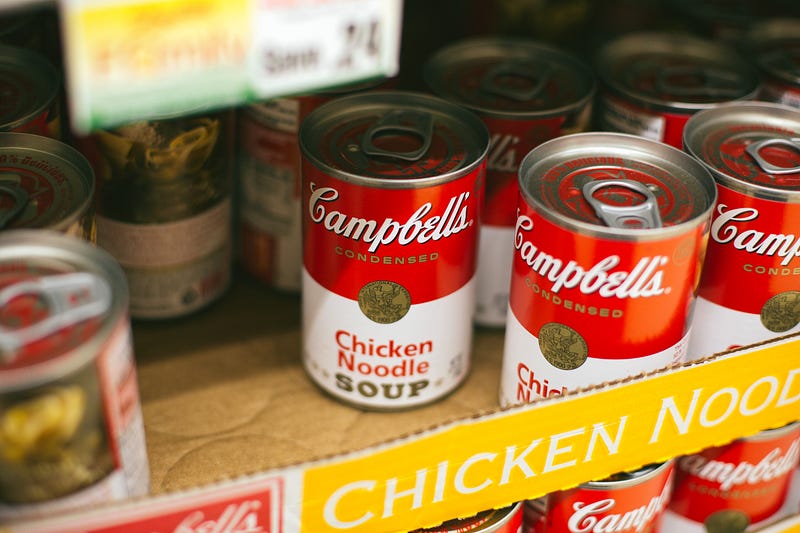
In the Art World, value is measured not by an artist’s input but by their output. In other words, the artwork. Andy Warhol’s screen-prints and film-making explicitly disrupted the notion that artwork is tied with production. Warhol elevated consumer goods such as Campbell’s soup to a high art. One of his 1962 soup cans, not from the main series, was sold for $11.7 million in 2006.
Compare this to the office world, where staying back long hours and even longer meetings are valued. Rather than outcomes, it is about “working”. Art is not measured by the amount of time spent on making it. Value is measured in critical reviews and sales.
What can we learn about what we value?
We all want to believe what we are doing every day is essential. Our mental health needs to know why we are working and what value we genuinely bring to our work. Yet value has been severely disrupted for many industries this year. If you are not an essential worker, life may feel less important (whether that is true or not).
At the same time, even artists have to do tedious, routine work now and again. The main point is to put this tedious work in its place. What parts of your day are precious? Make interruptions impossible and non-negotiable.
3. Uncertainty
We have watched companies, and whole industries, melt down overnight. Other than essential workers, there’s no easy quantifiable way to measure our effect on other people or culture. Especially according to arbitrary financial measurements such as support handouts from the government.
How can we enjoy uncertainty?
As our daily routines become more flexible, it is worth tearing up the old productivity models based on the old models of working. Remember, it’s not about discipline, it is about knowing what you value. It is difficult to learn how to live with uncertainty, especially around money. It is worth developing your own system, regardless if you have a safe job. And anyway, what job is safe if you work for someone else?
So what?
Can we become more productive and at the same time live our lives with more freedom, flexibility, and joy?
Life can be filled with beautiful friends, hobbies, experiences, relationships, activities, delicious food, wine, champagne — the list goes on. Many people fill their lives with clutter that they don’t want, need, or value. Warhol liked to frame all his important moments, good or bad, by asking, “So what?”
Life today is still more factory than Warhol’s The Factory. However, the moment does give us a taste of what we could do with our time. It’s a good time to try new ways of working. What happens when you let go from how you have always done things? You may find the answer is, “So what?”


