ight in the evening before falling asleep.</li></ol><p id="bb29">With point number one, it is important to remember that you must go outside, looking through a window or artificial light is not enough.</p><p id="f625">The direct sunlight sets your internal clock and balances your sleep hormones. It’s important to go outside even if it is cloudy or gloomy, this is because the level of light outside is still orders of magnitude higher than inside.</p><p id="f998"><i>You might want to check out my other article on a similar topic:</i></p><div id="c47e" class="link-block">
<a href="https://readmedium.com/if-you-want-to-feel-energized-do-this-every-morning-ed72d18fd699">
<div>
<div>
<h2>If You Want to Feel ENERGIZED — Do THIS Every Morning</h2>
<div><h3>Channel Your Inner Caveman to Feel Refreshed</h3></div>
<div><p>medium.com</p></div>
</div>
<div>
<div style="background-image: url(https://miro.readmedium.com/v2/resize:fit:320/0*aCkr-3BCC0KFIX6q)"></div>
</div>
</div>
</a>
</div><p id="88c5">It is also incredibly important to stay away from technology in the evening, as the bright light interrupts your circadian rhythm.</p><p id="165c"><b>The Paradox</b></p><p id="e750">You may have noticed something, although your phone or other device is enough to disrupt your sleep at night significantly, it is not anywhere near enough to affect your circadian rhythm in the morning.</p><p id="2e2e">As you can see this pillar of sleep is straightforward, simply reduce your screen time at night and be sure to go outside first thing in the morning. I haven’t found this particularly difficult to implement.</p><figure id="3e53"><img src="https://cdn-images-1.readmedium.com/v2/resize:fit:800/0*XcxGAPib9l31DCID"><figcaption>Photo by <a href="https://unsplash.com/@matteofusco?utm_source=medium&utm_medium=referral">Matteo Fusco</a> on <a href="https://unsplash.com?utm_source=medium&utm_medium=referral">Unsplash</a></figcaption></figure><h1 id="2c60">2. Temperature</h1><p id="d88a">This section is equally as straight forward, but with a counter-intuitive twist.</p><p id="5c12">Put simply:</p><ul><li>An <b>increase</b> in core body temperature causes <b>wakefulness.</b></li><li>A <b>decrease </b>in core body temperature causes <b>sleepiness.</b></li></ul><p id="b72e">Notice how it it’s about the “<i>core body temperature</i>” and not just <i>“temperature”.</i></p><p id="1b39">It’s recommended by some to take cold showers in the morning to wake up. This is because the coldness of the water <i>increases</i> the <i>core body temperature.</i></p><p id="daa4">Equally, a warm shower or relaxing bath at night will induce sleepiness and cause you to feel more relaxed.</p><blockquote id="67b0"><p>“You will also want to leverage not just light, but temperature as a tool, if you are inclined, it would be wise to try to increase your temperature a bit more quickly.” — Andrew Huberman, from the Huberman Lab Podcast #84</p></blockquote><p id="4728">Huberman Recommends to increase body temperature in the morning, and you can do that through a cold shower for a few minutes.</p><p id="c695">It’s advisable to sleep in a colder room, even if you need to wrap yourself in your blanket. If you are too warm, you will extend your limbs out from the blanket or take it off in your sleep, which will cool you down. However you will not be able to do that if the room is too warm and you will wake up in the middle of the night.</p><p id="23f6">Besides getting over the discomfort of a cold shower in the morning, I have found this easy to follow, things like opening a window before going to bed are a breeze to do.</p><figure id="5524"><img src="https://cdn-images-1.readmedium.com/v2/resize:fit:800/0*JNHHmd5QceGghIcz"><figcaption>Photo by <a href="https://unsplash.com/@annapelzer?utm_source=medium&utm_medium=referral">Anna Pelzer</a> on <a href="https://unsplash.com?utm_source=medium&utm_medium=referral">Unsplash</a></figcaption></figure><h1 id="f86f">3. Food</h1><p id="6d6c">This part is a lot more complicated, because the advice doesn’t line up with some other self improvement habits you are doing.</p><p id="5a53">Put simply, eating early on in the day helps to set and train your inner body clock. It will trigger an increase both in body temperature and in your metabolism.</p><p id="9cfb">You need to watch out though, because if you get too full then you will feel groggy, since blood and other resources are being driven away from your brain in order to start digesting the food.</p><p id="db3e">I am using intermittent fasting in my diet and I find that maintaining my eating schedule is more important as I like to do a lot work in the morning and have a sociable dinner with family and friends.</p><p id="79c7">If you have a different eating schedule, or are yet to have one at all, you can adjust this advice accordingly.</p><figure id="4d48"><img src="https://cdn-images-1.readmedium.com/v2/resize:fit:800/0*WlsOI_7u8yOzWkfn"><figcaption>Photo by <a href="https://unsplash.com/@fitmasu?utm_source=medium&utm_medium=referral">Fitsum Admasu</a> on <a href="https://unsplash.com?utm_source=medium&utm_medium=referral">Unsplash</a></figcaption></figure><h1 id="4fb4">4. Time</h1><p id="4615">The time at which you wake up is equally as important as the time you go to sleep.</p><p id="69c7">In the best case scenario you would go to sleep at the same time each night and wake up at the same time each morning. This makes your body predict the times it should feel awake and tired.</p><p id="c8e7">However this is not always realistic and is something I really struggle with.</p><p id="eef9">Many people sleep in on the weekends, but Huberman recommends sleeping in only a maximum of one hour. Again, not realistic if you’re socializing late into the night.</p><p id="ab7a">One of the advice Huberman gave is to still wake up at the same time, or an hour later, and then take an afternoon nap. Once again not really realistic if you are at work at that time.</p><p id="cd96">This is a pillar of sleep that I really struggle with, as a student with a part time job in hospitality I struggle with this advice.</p><p id="d3e0">It seems like this pillar requires a lot discipline and sacrifice to achieve.</p><figure id="7d2e"><img src="https://cdn-images-1.readmedium
Options
.com/v2/resize:fit:800/0*pxFXgCvevcFukZ_d"><figcaption>Photo by <a href="https://unsplash.com/@markdaynes?utm_source=medium&utm_medium=referral">Mark Daynes</a> on <a href="https://unsplash.com?utm_source=medium&utm_medium=referral">Unsplash</a></figcaption></figure><h1 id="7163">5. Caffeine</h1><p id="169c">This is fairly straightforward</p><p id="4dab"><b>Don't consume caffeine after 4pm.</b></p><p id="70bc">Some people are very sensitive to caffeine and should not consume it at all, or in the afternoon.</p><p id="c1f4">Caffeine works by blocking adenosine receptors, adenosine makes us feel tired and builds up throughout the day. The caffeine then blocks the receptors and so the adenosine has a reduced effect.</p><p id="bf30"><b>There is one thing to remember: The adenosine is still there</b></p><p id="95bd">So once the caffeine wears off, there is an even greater amount of adenosine in the bloodstream and you will feel tired.</p><p id="bcea">That’s why you should delay your caffeine intake in the morning in order to avoid an afternoon crash — according to Huberman.</p><figure id="5ebf"><img src="https://cdn-images-1.readmedium.com/v2/resize:fit:800/0*tkza_Bb-JXpyiLDn"><figcaption>Photo by <a href="https://unsplash.com/@mbaumi?utm_source=medium&utm_medium=referral">Mika Baumeister</a> on <a href="https://unsplash.com?utm_source=medium&utm_medium=referral">Unsplash</a></figcaption></figure><h1 id="9fc3">6. Supplements</h1><p id="de68">This is not something I have explored as I am still working on behavioral and low to no cost tools for improving my sleep.</p><p id="9116">Huberman recommends to stay away from melatonin, as although it is produced naturally in the body, over the counter doses are too high and may disrupt the circadian rhythm instead of helping to regulate it.</p><p id="e61f">Huberman recommends taking single ingredient supplements, instead of a multi supplement. This is because you can alter the individual ingredients to your liking and see how each change affects your sleep.</p><p id="0e82">Huberman has developed his own <i>sleep cocktail </i>which you can check out <a href="https://healthnews.com/sleep/sleep-hacks/andrew-huberman-sleep-cocktail/">here.</a></p><figure id="218f"><img src="https://cdn-images-1.readmedium.com/v2/resize:fit:800/0*6IqeHByD53Ye-SFJ"><figcaption>Photo by <a href="https://unsplash.com/@tsujigimi?utm_source=medium&utm_medium=referral">Gregory Pappas</a> on <a href="https://unsplash.com?utm_source=medium&utm_medium=referral">Unsplash</a></figcaption></figure><p id="2997">Hopefully you can see how you can stack all of these pillars on top of each other for maximum sleep optimization. Doing things like going outside first thing in the morning, followed by a cold shower can really help you get the day started.</p><p id="0161">Ultimately there is a long road ahead of myself until I perfect my sleep quality. You will find that you need to vary all of these habits and tactics to suit your body and your needs.</p><p id="10eb">Finding the perfect temperature and time to go to bed vary from person to person, but you will find that these guidelines are a good place to start.</p><p id="c986"><b>Thanks for reading.</b></p><p id="e2f9"><b>If this guide helped you, please check out some of my other stories:</b></p><div id="824e" class="link-block">
<a href="https://readmedium.com/do-this-for-optimum-performance-how-to-optimize-water-intake-6d01c7b02e8d">
<div>
<div>
<h2>Do THIS For Optimum PERFORMANCE — How To Optimize Water Intake</h2>
<div><h3>Using Water to Optimize Health and Brain Function</h3></div>
<div><p>medium.com</p></div>
</div>
<div>
<div style="background-image: url(https://miro.readmedium.com/v2/resize:fit:320/0*2swTPp4Yp27yhL4Z)"></div>
</div>
</div>
</a>
</div><div id="9085" class="link-block">
<a href="https://readmedium.com/if-you-want-to-feel-energized-do-this-every-morning-ed72d18fd699">
<div>
<div>
<h2>If You Want to Feel ENERGIZED — Do THIS Every Morning</h2>
<div><h3>Channel Your Inner Caveman to Feel Refreshed</h3></div>
<div><p>medium.com</p></div>
</div>
<div>
<div style="background-image: url(https://miro.readmedium.com/v2/resize:fit:320/0*aCkr-3BCC0KFIX6q)"></div>
</div>
</div>
</a>
</div><p id="ce69"><b>Sources and Additional Resources:</b></p><div id="81c0" class="link-block">
<a href="https://hubermanlab.com/sleep-toolkit-tools-for-optimizing-sleep-and-sleep-wake-timing/">
<div>
<div>
<h2>Sleep Toolkit: Tools for Optimizing Sleep & Sleep-Wake Timing</h2>
<div><h3>In this episode, I describe behavioral and supplement-based tools you can use to enhance the quality, duration and…</h3></div>
<div><p>hubermanlab.com</p></div>
</div>
<div>
<div style="background-image: url(https://miro.readmedium.com/v2/resize:fit:320/0*ux3c8e1DHl8geE0P)"></div>
</div>
</div>
</a>
</div><div id="330d" class="link-block">
<a href="https://hubermanlab.com/toolkit-for-sleep/">
<div>
<div>
<h2>Toolkit for Sleep</h2>
<div><h3>The first Neural Network Newsletter provides actionable tools, including a 12 step guide, to improve sleep.</h3></div>
<div><p>hubermanlab.com</p></div>
</div>
<div>
<div style="background-image: url(https://miro.readmedium.com/v2/resize:fit:320/0*5949RV-UWjL0BCqd)"></div>
</div>
</div>
</a>
</div><p id="6d6f"><a href="https://journals.plos.org/plosbiology/article?id=10.1371/journal.pbio.3001571">Recommendations for daytime, evening, and nighttime indoor light exposure to best support physiology, sleep, and wakefulness in healthy adults.</a></p><p id="dbee"><a href="https://www.cell.com/current-biology/fulltext/S0960-9822(17)30504-3?_returnURL=https%3A%2F%2Flinkinghub.elsevier.com%2Fretrieve%2Fpii%2FS0960982217305043%3Fshowall%3Dtrue">Meal Timing Regulates the Human Circadian System.</a></p></article></body>
Andrew Huberman’s COMPLETE 6 Step GUIDE For SLEEP
Utilize the 6 pillars of sleep for optimum performance.
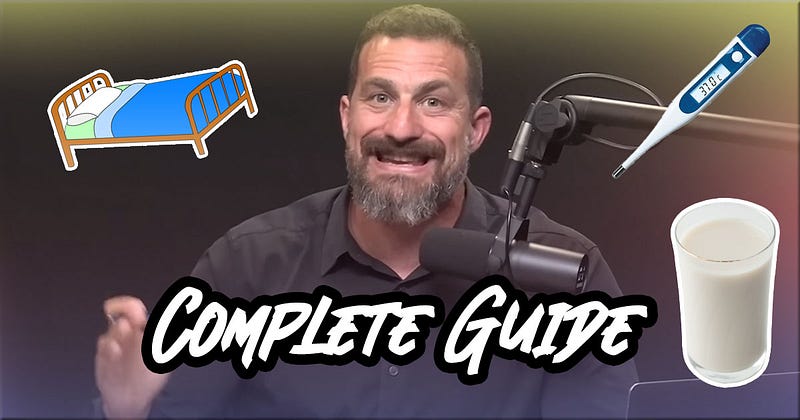
From the Huberman Lab Podcast ep. 84 — Edited Using Photoshop
In today’s day and age, we have unlimited knowledge at our fingertips, in and amongst the virtual internet drama, Tik-Toks, and funny cat videos on Reddit, there is a vast array of information on how to lead healthier, more fulfilling, and more productive lives.
Unfortunately, it’s not very accessible. There are many factors that make it difficult to understand.
Peer reviewed studies are difficult to access because they are often paywalled.
They are difficult to read for people without a science-based background.
It is time consuming to read through the research and results and then to figure out how to apply them to daily life.
On the other hand, other information you may find on the internet is not supported by any scientific evidence, or the sources are questionable at best.
The Game Changer
Thankfully there has been a rise in academics taking on the role of science communicators, bringing zero cost to consumer scientific education that is presented clearly and concisely.
One of the most prominent people in this field is Andrew Huberman, Professor of Neurobiology at Stanford School of Medicine.
His podcasts are backed by science, which is clearly explained and broken down.
“Welcome to the Huberman lab podcast, where we discuss science and science based tools for everyday life” — Andrew Huberman, from the Huberman Lab Podcast.
I have found his podcasts to be extremely educational and I have found them easy to understand and easy to implement his research and advice in my daily life.
I always learn new things from Huberman’s podcasts, and they also help me to understand the reasoning behind what I already know.
Some reasons why I love Huberman and his podcast:
He never sells you snake oil
His advice is always backed by science
He makes all of his advice easy and understandable to follow
He explains the science behind his advice clearly, even for people without a science based background.
One of my priorities for the last few weeks has been improving and optimizing my sleep, something Huberman has explored in depth on his podcasts.
I have collated tools and mechanisms as explored by Huberman in his podcasts, and I have made an ultimate guide to optimizing sleep, and how I have been using it to get a good nights rest — and how you can too.
I have broken down this guide into 6 parts, which each represent a key pillar of sleep optimization, these are:
Light
Temperature
Food
Time
Caffeine
Supplements
Each of these pillars is important for sleep optimization and should be a part of your toolkit.
But notice how I put supplementation last. Huberman believes we should look towards our behaviors and low to no cost tools first. I completely agree and I think that we should first naturally adjust our lifestyle and only then looking towards external sources.
It makes sense and we can look at it from a bodybuilding analogy — One can take all the creatine and protein powder in the world, but unless they are putting in the effort in the gym, they will see little to no results.
This section would be extremely straight forward if we didn’t have technology and still lived in caves.
In fact his seems to be the theme.
Much of optimizing sleep and other areas of life is combatting the effect modern technology has on our bodies and minds.
This section is really simple. There are two steps.
View direct sunlight within the first hour of waking up.
Avoid bright fluorescent light in the evening before falling asleep.
With point number one, it is important to remember that you must go outside, looking through a window or artificial light is not enough.
The direct sunlight sets your internal clock and balances your sleep hormones. It’s important to go outside even if it is cloudy or gloomy, this is because the level of light outside is still orders of magnitude higher than inside.
You might want to check out my other article on a similar topic:
It is also incredibly important to stay away from technology in the evening, as the bright light interrupts your circadian rhythm.
The Paradox
You may have noticed something, although your phone or other device is enough to disrupt your sleep at night significantly, it is not anywhere near enough to affect your circadian rhythm in the morning.
As you can see this pillar of sleep is straightforward, simply reduce your screen time at night and be sure to go outside first thing in the morning. I haven’t found this particularly difficult to implement.
This section is equally as straight forward, but with a counter-intuitive twist.
Put simply:
An increase in core body temperature causes wakefulness.
A decrease in core body temperature causes sleepiness.
Notice how it it’s about the “core body temperature” and not just “temperature”.
It’s recommended by some to take cold showers in the morning to wake up. This is because the coldness of the water increases the core body temperature.
Equally, a warm shower or relaxing bath at night will induce sleepiness and cause you to feel more relaxed.
“You will also want to leverage not just light, but temperature as a tool, if you are inclined, it would be wise to try to increase your temperature a bit more quickly.” — Andrew Huberman, from the Huberman Lab Podcast #84
Huberman Recommends to increase body temperature in the morning, and you can do that through a cold shower for a few minutes.
It’s advisable to sleep in a colder room, even if you need to wrap yourself in your blanket. If you are too warm, you will extend your limbs out from the blanket or take it off in your sleep, which will cool you down. However you will not be able to do that if the room is too warm and you will wake up in the middle of the night.
Besides getting over the discomfort of a cold shower in the morning, I have found this easy to follow, things like opening a window before going to bed are a breeze to do.

This part is a lot more complicated, because the advice doesn’t line up with some other self improvement habits you are doing.
Put simply, eating early on in the day helps to set and train your inner body clock. It will trigger an increase both in body temperature and in your metabolism.
You need to watch out though, because if you get too full then you will feel groggy, since blood and other resources are being driven away from your brain in order to start digesting the food.
I am using intermittent fasting in my diet and I find that maintaining my eating schedule is more important as I like to do a lot work in the morning and have a sociable dinner with family and friends.
If you have a different eating schedule, or are yet to have one at all, you can adjust this advice accordingly.
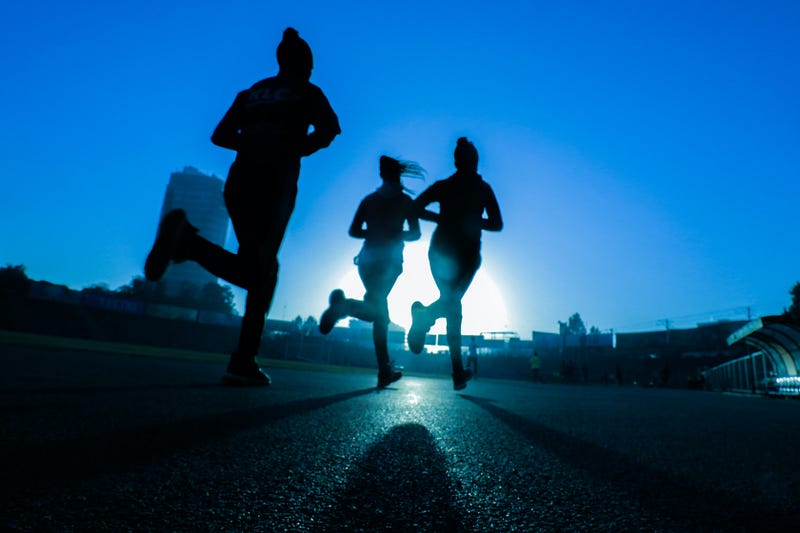
The time at which you wake up is equally as important as the time you go to sleep.
In the best case scenario you would go to sleep at the same time each night and wake up at the same time each morning. This makes your body predict the times it should feel awake and tired.
However this is not always realistic and is something I really struggle with.
Many people sleep in on the weekends, but Huberman recommends sleeping in only a maximum of one hour. Again, not realistic if you’re socializing late into the night.
One of the advice Huberman gave is to still wake up at the same time, or an hour later, and then take an afternoon nap. Once again not really realistic if you are at work at that time.
This is a pillar of sleep that I really struggle with, as a student with a part time job in hospitality I struggle with this advice.
It seems like this pillar requires a lot discipline and sacrifice to achieve.

Some people are very sensitive to caffeine and should not consume it at all, or in the afternoon.
Caffeine works by blocking adenosine receptors, adenosine makes us feel tired and builds up throughout the day. The caffeine then blocks the receptors and so the adenosine has a reduced effect.
There is one thing to remember: The adenosine is still there
So once the caffeine wears off, there is an even greater amount of adenosine in the bloodstream and you will feel tired.
That’s why you should delay your caffeine intake in the morning in order to avoid an afternoon crash — according to Huberman.
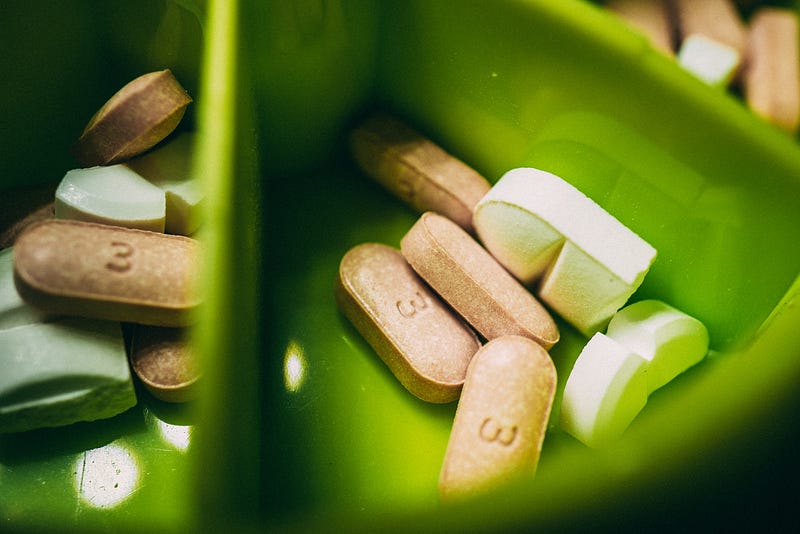
This is not something I have explored as I am still working on behavioral and low to no cost tools for improving my sleep.
Huberman recommends to stay away from melatonin, as although it is produced naturally in the body, over the counter doses are too high and may disrupt the circadian rhythm instead of helping to regulate it.
Huberman recommends taking single ingredient supplements, instead of a multi supplement. This is because you can alter the individual ingredients to your liking and see how each change affects your sleep.
Huberman has developed his own sleep cocktail which you can check out here.
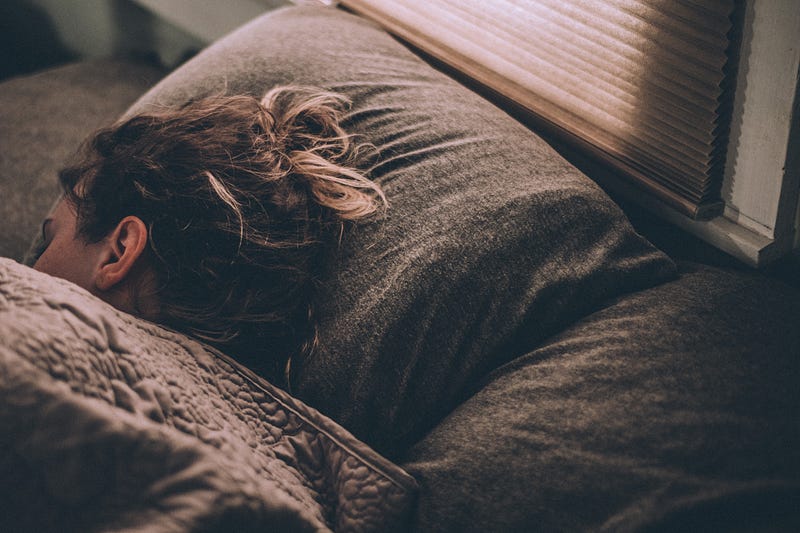
Hopefully you can see how you can stack all of these pillars on top of each other for maximum sleep optimization. Doing things like going outside first thing in the morning, followed by a cold shower can really help you get the day started.
Ultimately there is a long road ahead of myself until I perfect my sleep quality. You will find that you need to vary all of these habits and tactics to suit your body and your needs.
Finding the perfect temperature and time to go to bed vary from person to person, but you will find that these guidelines are a good place to start.
Thanks for reading.
If this guide helped you, please check out some of my other stories: