
Andaman Islands: Paradise Found
Midway Between India and Thailand
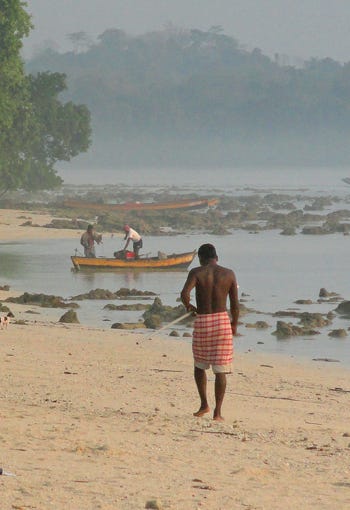
Do you ever wish you could go back 50 years to see what Hawaii or the Caribbean were like before the hordes of tourists descended, demanding bigger hotels and more services? It seems some would prefer to simply move the conveniences of home to a more exotic location. But not me. I’ve always had a dream of finding my own undiscovered paradise.
I had first heard of the Andaman Islands, in the aftermath of the massive Tsunami that struck the region in 2004. Killer waves swept across the Indian Ocean leaving a path of death and destruction. The Andaman Islands were struck about a half-hour following the 9.1 magnitude earthquake in Sumatra on Boxing Day, December 26, 2004. 300,000 of the islands’ 356,000 people were affected. 1899 people were killed and 5537 missing before the Tsunami continued on its path to the Indian coast.
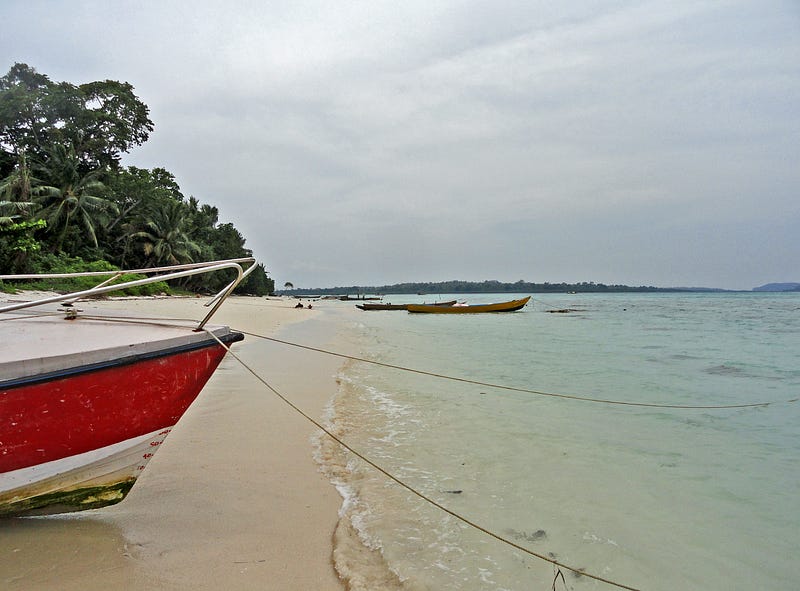
I had seen pictures of the islands and remembered the name when I was looking for places to go during a 3-month visit to India. The Andaman/Nicobar island group is made up of 394 islands but only 38 are inhabited and of those, several are off limits to tourists. They are home to remote tribes that are still living the way they have for hundreds of years, though many have seen their numbers dwindle.
I didn’t know what to expect when I got there but was ready for it... well almost ready.
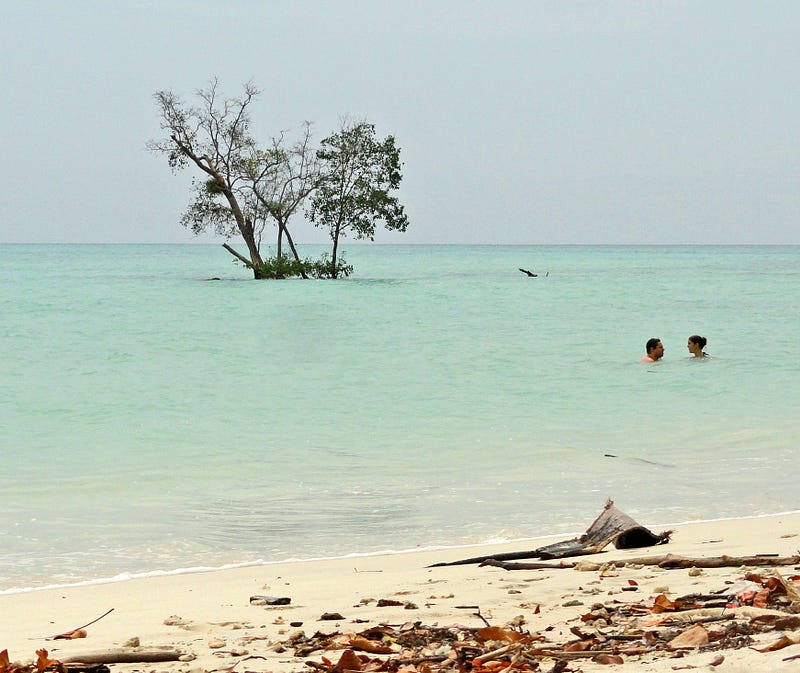
The water was so warm, the beach so inviting and the hot sun offered such a relaxing treat that I forgot about the dangers and stayed out just a little too long. And did my skin ever pay the price! Not only were my lips swollen like a collagen injection gone wrong and my shoulders and back bright red and likely to peel off a layer or two of skin, but it meant I had to avoid more beach time, and forget long walks along the beach or any outdoor exercise… in the sunshine anyway.
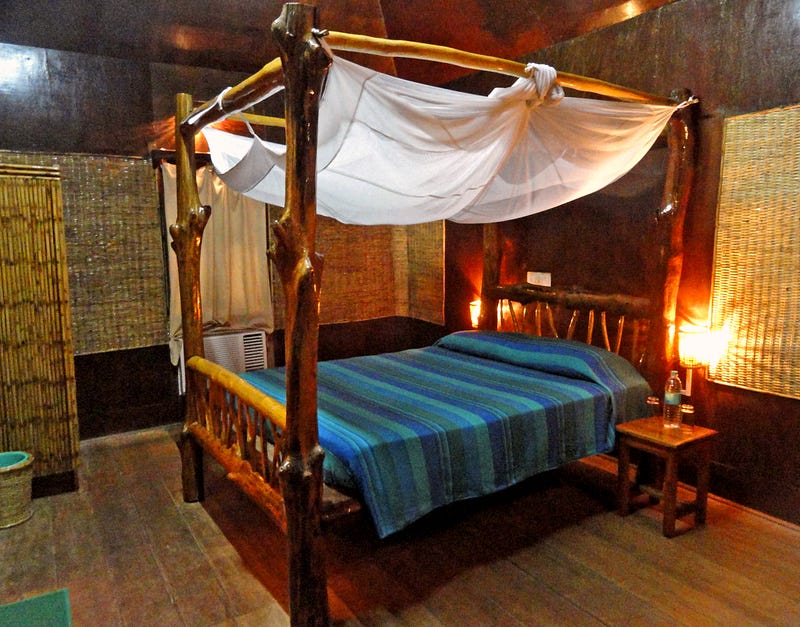
Instead, I was confined to my hut for the next day or so, nursing my very painful burn. It hurt to have anything touch it, cold wet towels felt like pins and needles and the mosquito net felt like sandpaper. I couldn’t sleep because every time I would move or roll over I’d be awakened by the pain. I know it serves me right for not being more diligent about my sunscreen use.
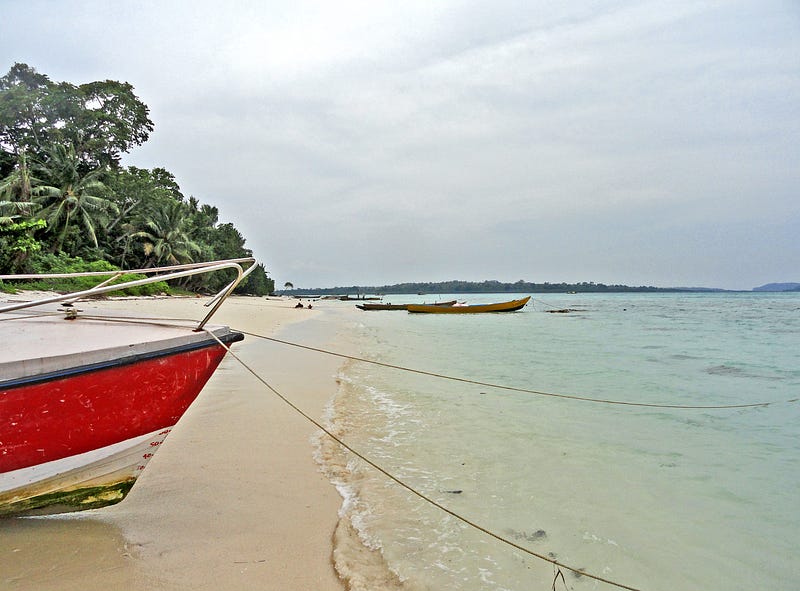
So as long as you remember to slather on the sunscreen and cover-up, the Andaman Islands are a tropical paradise. They’re still virtually undiscovered, with no massive resort developments, the way I would imagine places like Hawaii were 50–60 years ago.
Time Magazine readers voted Beach #7 (that’s how they are still referred to on maps, although it’s also known as Radhanagar Beach) as the number one beach in Asia and the 7th best in the world in 2004! That’s the same year that the Tsunami struck, leveling most buildings on the islands. It was also voted among the top 25 beaches in the world by Trip Advisor in 2016.
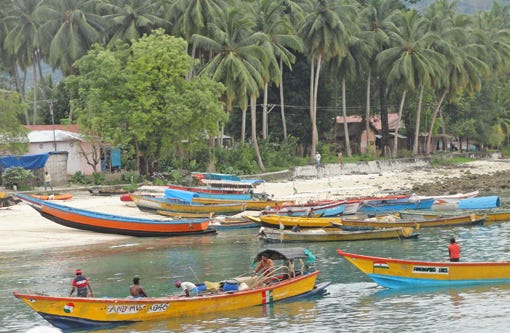
It’s not easy to get to paradise though. First a two-hour flight from Chennai or Kolkata, India to the Andaman capital of Port Blair. Then wait around on a stifling hot jetty (pier) at Port Blair for two hours followed by a two-hour boat trip to Havelock Island. I had sweated through my clothes by the time we got on board the boat.
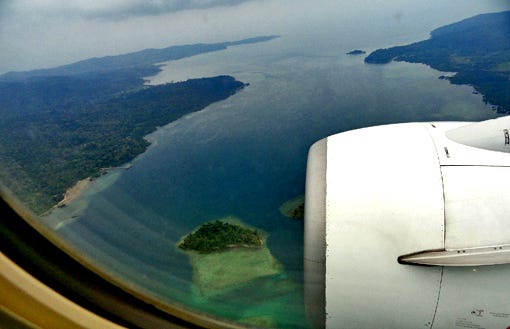
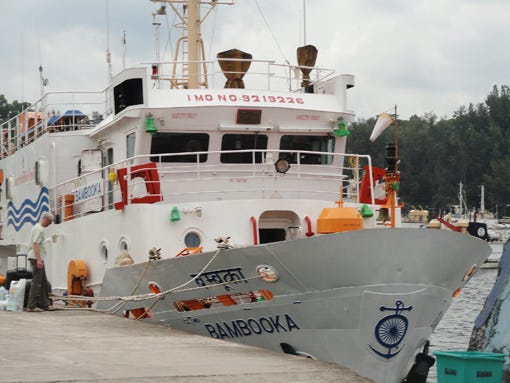
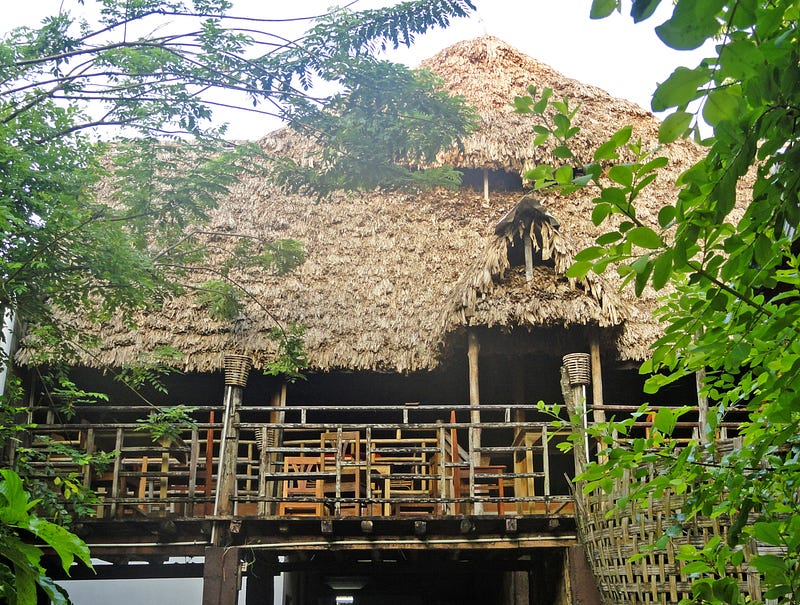
Luckily I had cooled off on the boat by the time we arrived at the resort. Wild Orchid transports you back to a distant era and forces you to get back to the basics. My hut had its own bathroom with a separate shower, a big double bed with a mosquito net around it, but (best of all) no wi-fi, no TV, and not even a fridge. It did have two big ceiling fans and AC to help cope with the muggy heat (temperatures around 30c each day with high humidity).
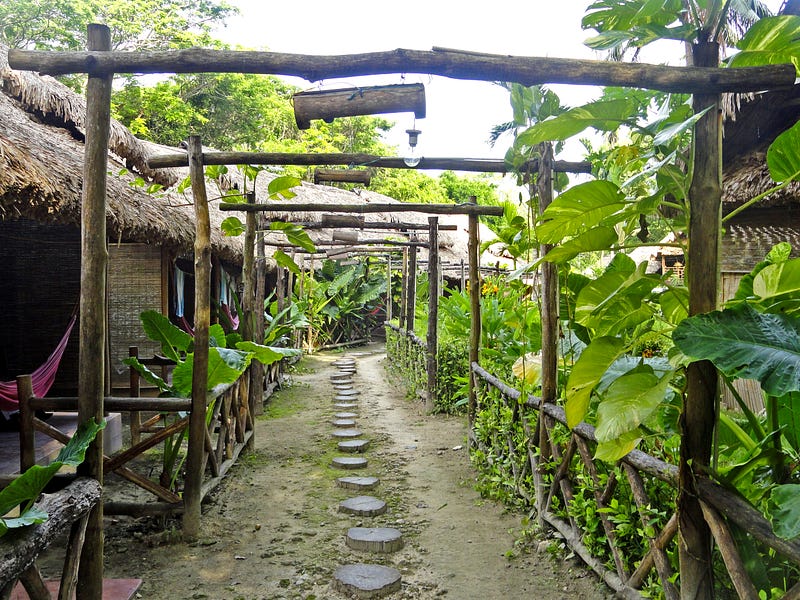
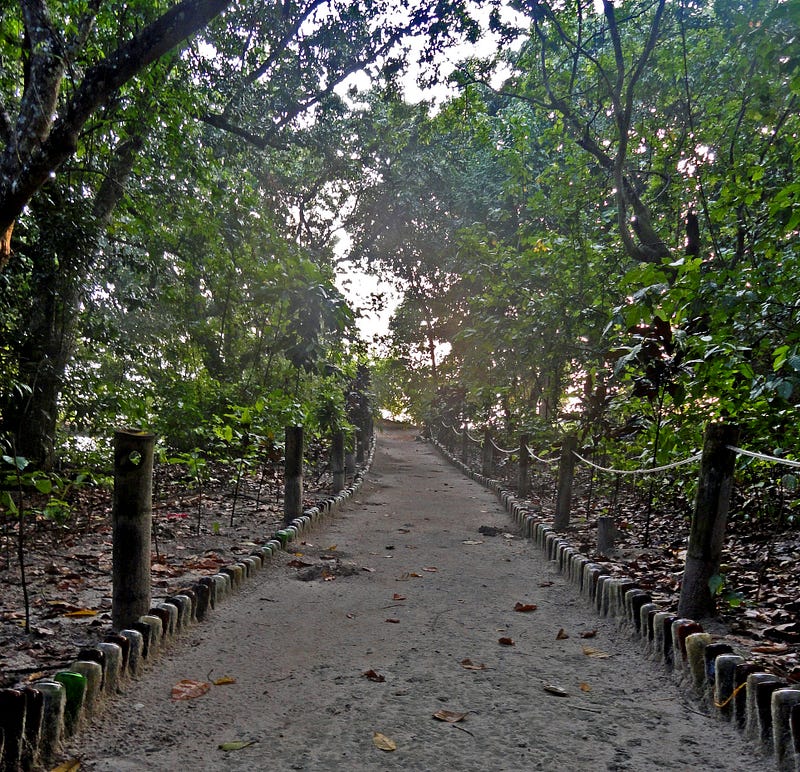
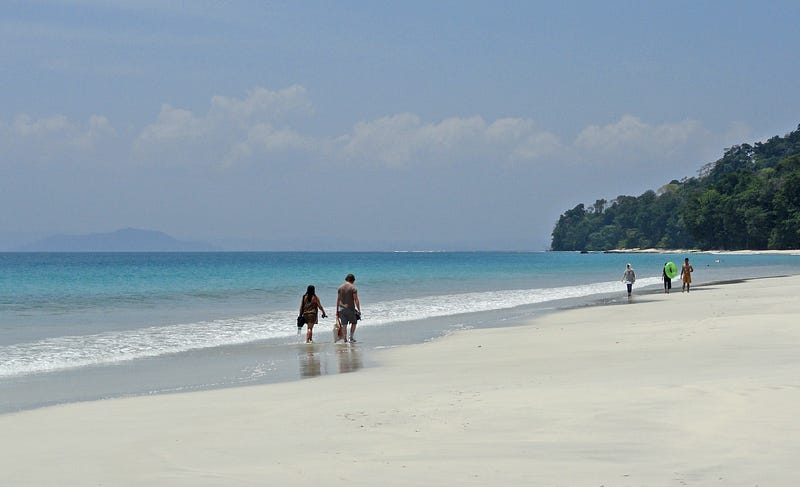
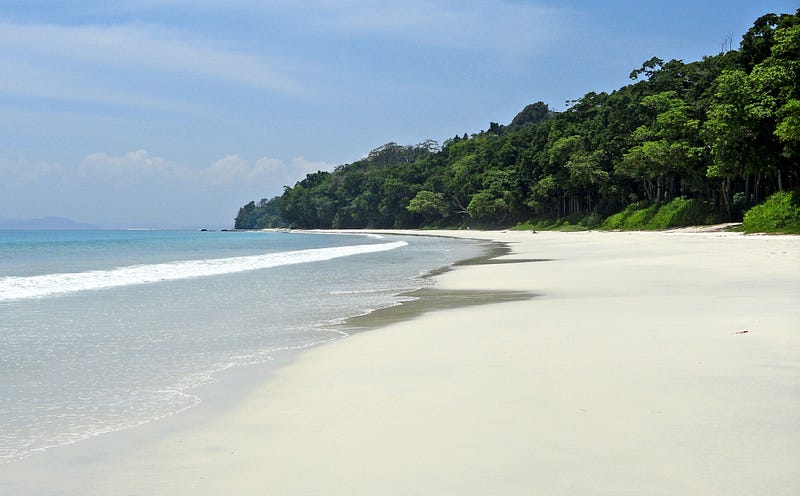
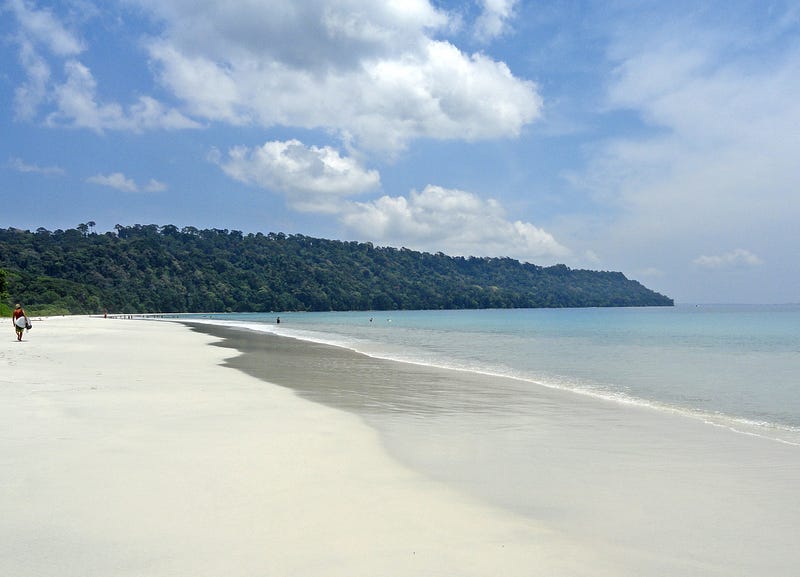
The Andamanese-style grass huts are in the midst of a tropical jungle and are only a 2-minute walk to the beach; beautiful white sand framed by palm trees and turquoise blue water that is as comforting as a warm bath. The sea has a sandy bottom so no worries about cutting your feet on sharp coral. The water feels like a warm bath. And best of all, it’s almost totally deserted. I walked along the beach on a Sunday around noon and saw maybe a dozen people in just over an hour. You really feel like you’re on your own deserted tropical island.
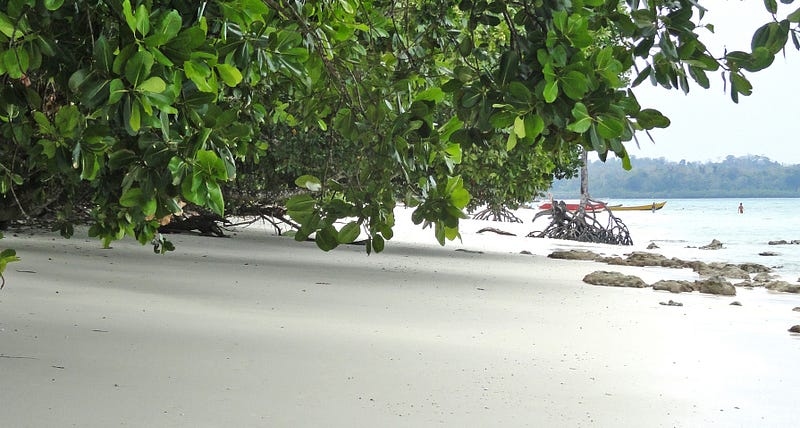
When the tide is in (first thing in the morning) there isn’t much beach that doesn’t get wet but when the tide goes out you can walk for more than 100 meters before the water rises above your waist.
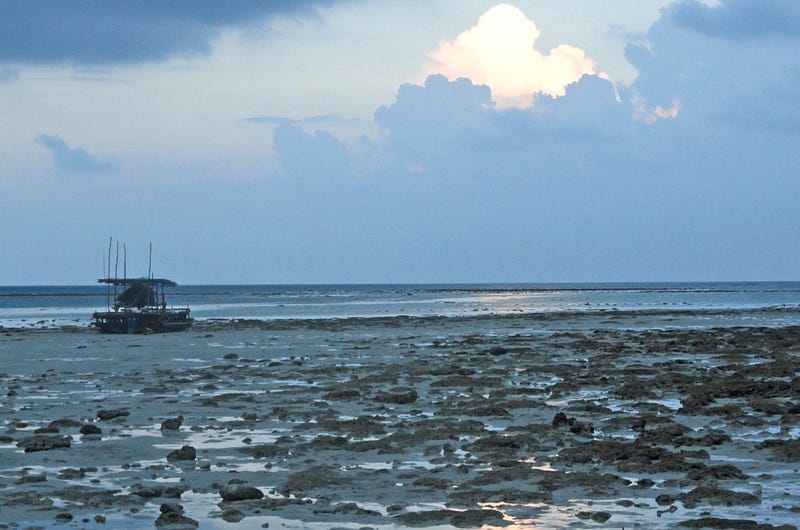
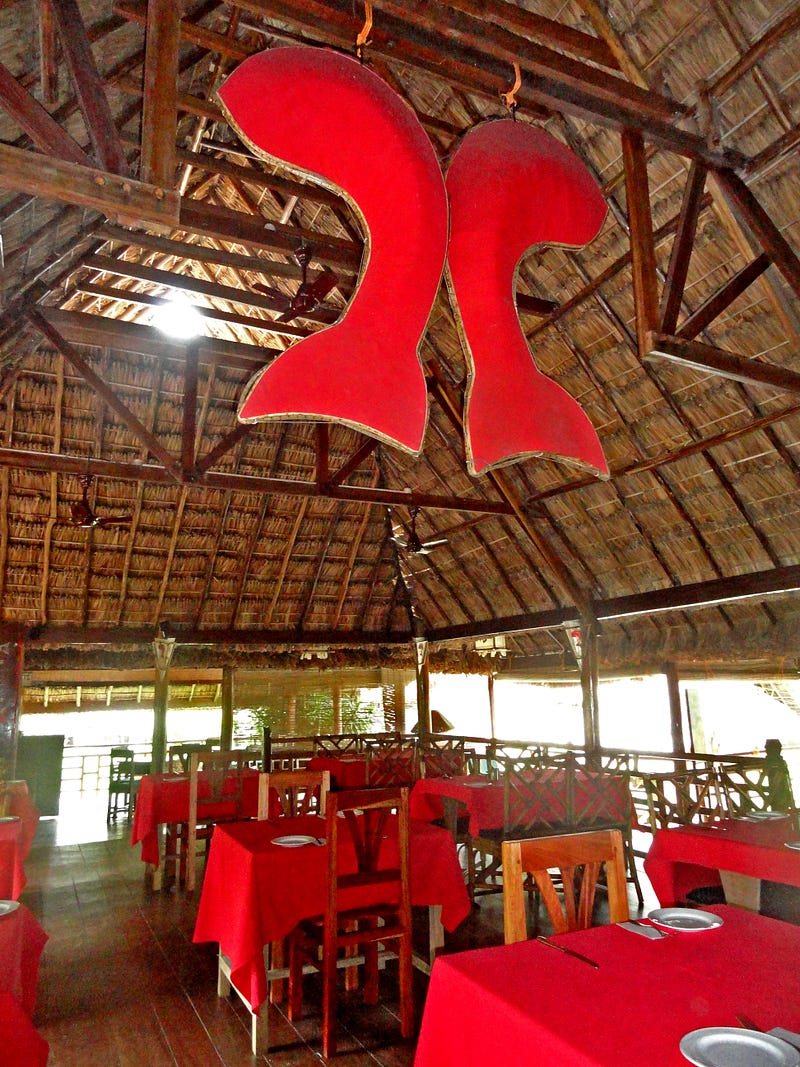
The restaurant at the hotel where I was staying is very good and in fact, people came from other resorts to sample the great food, with fish fresh right out of the ocean.
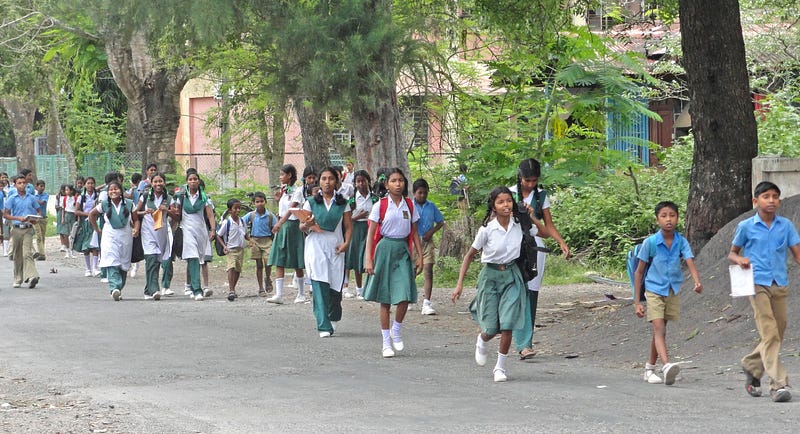
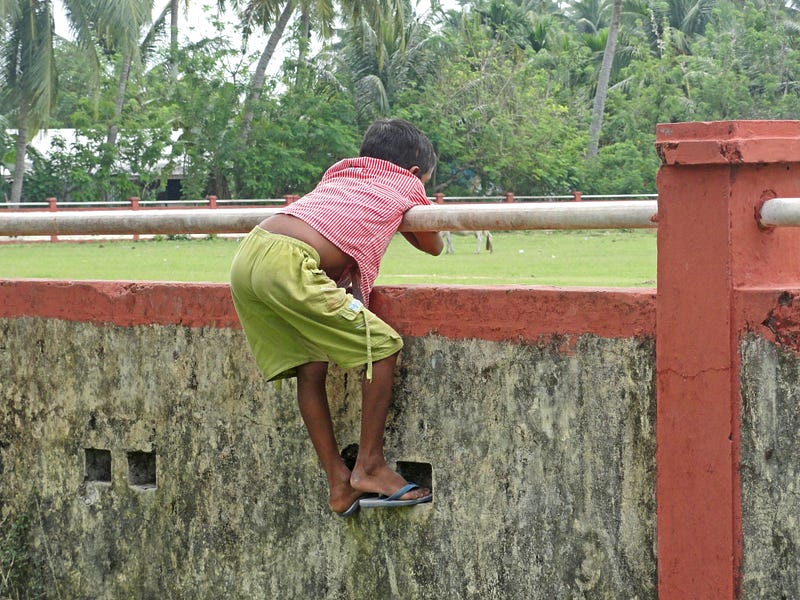
On the ride back from the jetty on the first day, I met a couple from Iowa now living in Pune and a young couple from London, England who I really hit it off with. When Ron (from Iowa) went scuba diving for a few days, his wife Regina and I hung out together. One day we walked 1–2 km to the nearby town (Village #3) and checked out some of the shops and markets and the day-to-day life on the island.
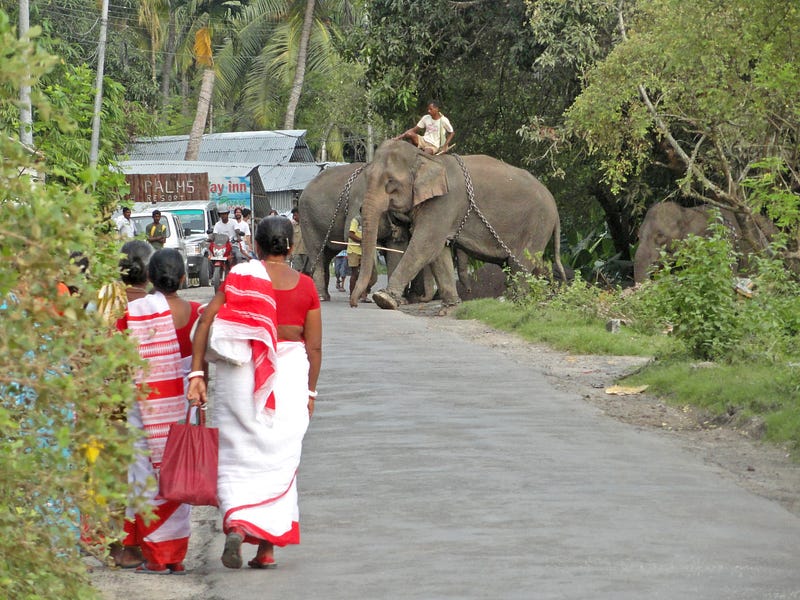
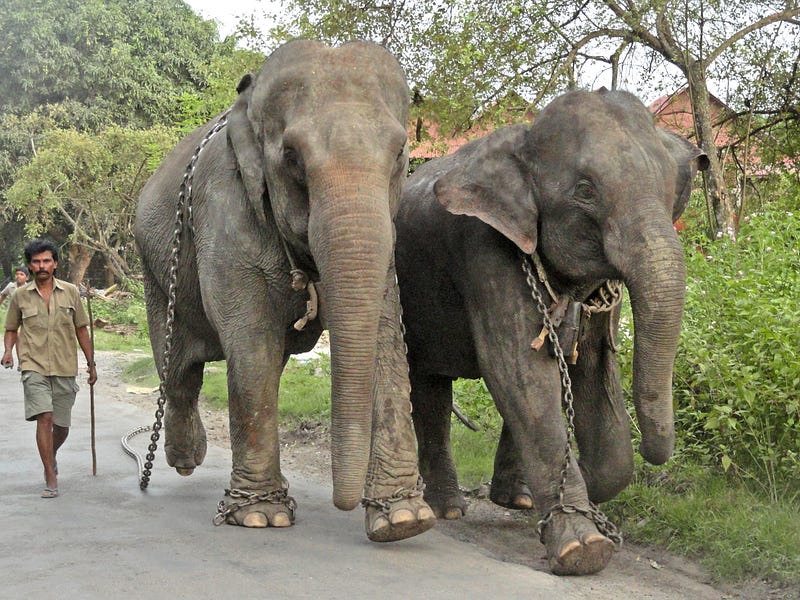
On our way back we ran into 4 working elephants walking down the road with their handlers. They had chains around their ankles and I think they were just coming from the nearby elephant training camp, a disturbing sight for those of us from the west but a way of life here. Elephants have been used for logging on the islands until logging was banned in 2002, and were even trained to swim to the next island when a logging operation was finished.
The next day we rented bicycles and rode out to the famous Beach #7, Radhanagar Beach. We expected it to be an easy ride but it was oppressively hot, sunny, and very very hilly… mostly all uphill.
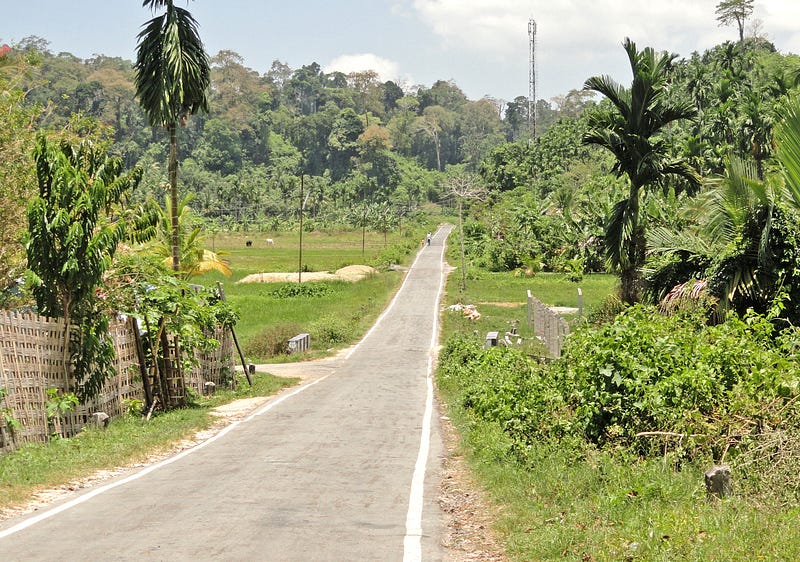
At one point I had to sit down on the side of the road to cool off. I was sweating buckets but also felt chilled and had goosebumps… never a good sign… and likely the start of heat stroke.

We took our time for the rest of the ride, and when we arrived the beach was even more spectacular than the brochures had mentioned.
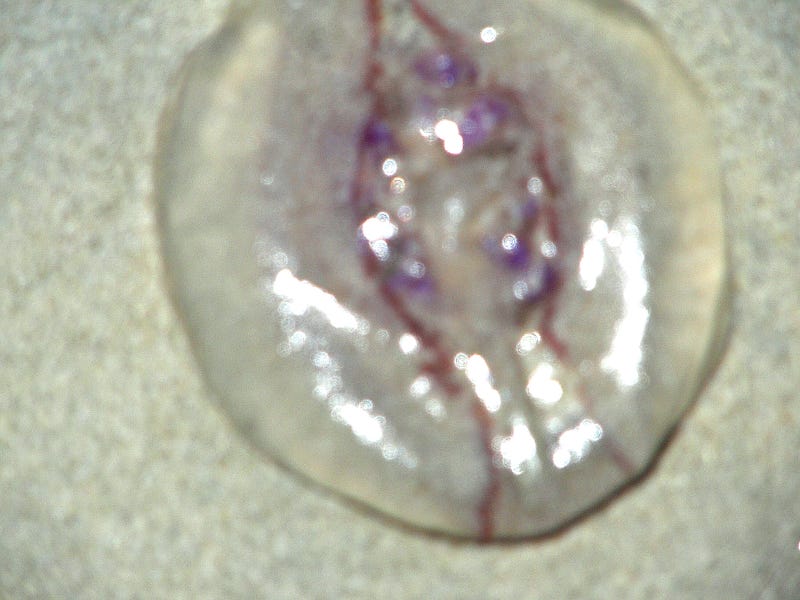
As we strolled along the wide expanse of sand we noticed hundreds of beached jellyfish everywhere. We were careful not to step on them, but found out later they have very short tentacles and don’t sting. In fact, divers (scuba and snorkel) pass through big clouds of them without any trouble.
As we neared Neil’s Cove, a security guard approached us and told us we couldn’t go any further because of “shooting”, I asked “military?” and he replied, “no, comedy”. What? It turns out they were shooting a TV series, the Indian version of Fear Factor, and had the beach blocked off.
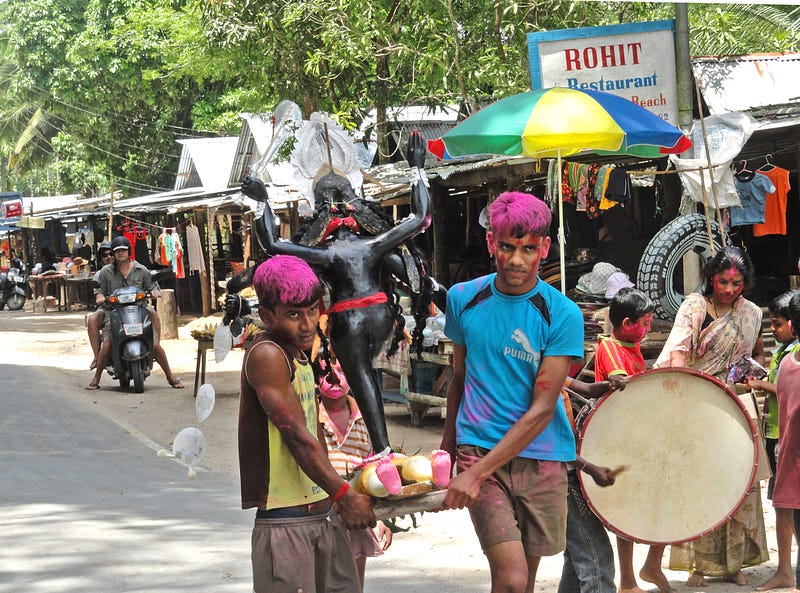
There’s also a small village with a few shops and a couple of resorts (and very cool space-age-looking forestry department pods) but those we spoke to who were staying there, say they have to take the taxi or TukTuk to our side of the island regularly for a variety, and something to do. On the day we were there, the community was celebrating Holi Festival, a few weeks early.
On day 3, I decided to have a relaxing day at the beach with my new friends. We all lazed around and floated in the sea chatting until our skin looked like prunes… and despite the sunscreen, we realized later that we all had ended up with nasty sunburns.
We had all booked a snorkeling adventure the next day so we all made sure to wear the highest SPF we had and to keep reapplying it through the day. The five of us hooked up with two guys from Israel (they work for Yahoo and were taking a break after a conference) and another couple and their daughter now living in India and we all squeezed onto this tiny boat.
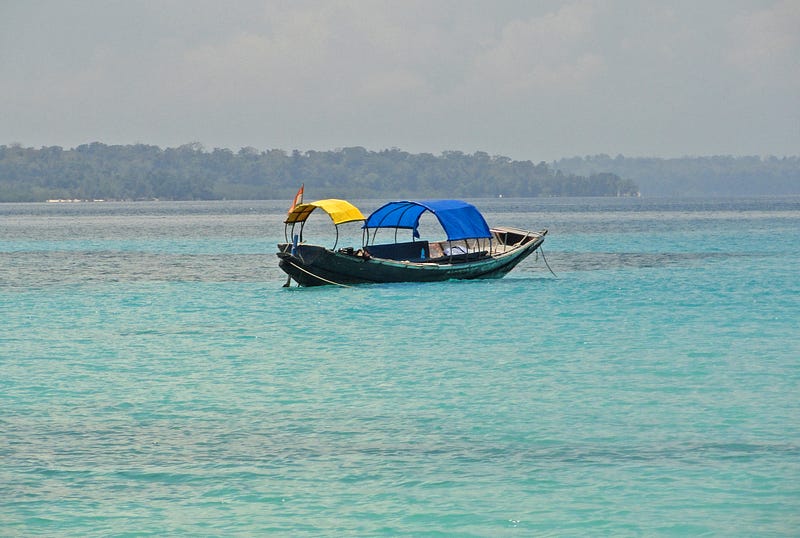
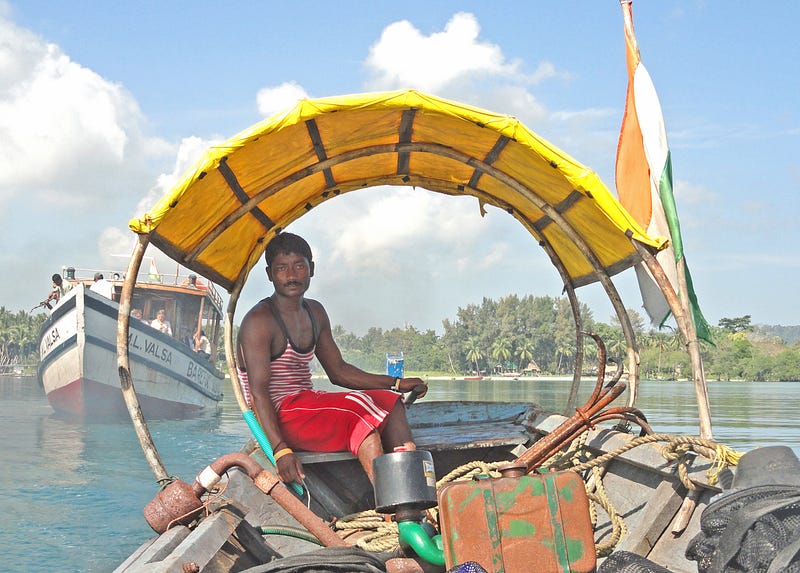
Luckily the family of three was not a family of swimmers either. I am not comfortable in the water or on a boat but luckily the 1.5-hour boat ride was on calm waters.
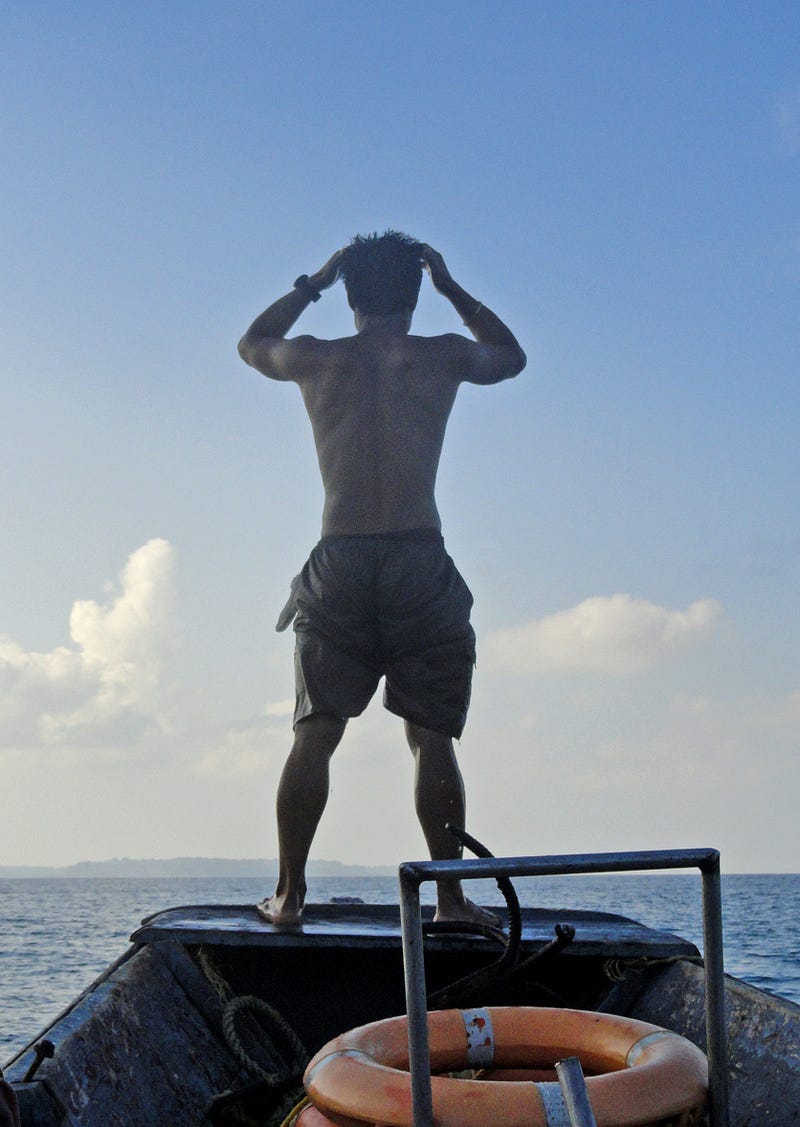
We traveled across the open water to a deserted island, Inglis or English Island. The boat stopped a few hundred meters offshore, so we all donned our short wet suits (more for sun protection than anything else), our flippers, snorkels… and some of us life vests, and jumped in.
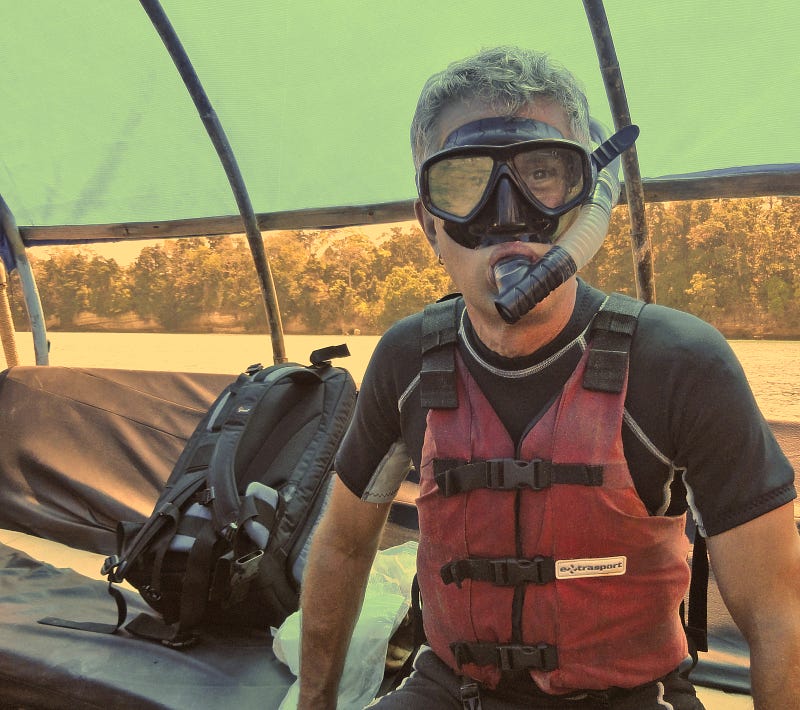
What a spectacular experience. It took me a few minutes to remember to breathe, but once I got the hang of it I glided through the water gazing at another world below the surface. There were hundreds of fish, all different shapes and sizes and colors and there is really no other experience like floating through a cloud of small neon fish that glimmer as they near the surface. (I’m sorry I didn’t have an underwater camera with me.)
We saw a few pieces of live coral, a brilliant blue or yellow, but Dia our guide told us that most of the coral had died off a year and a half earlier because of the rising water temperature. It was sad to see the fields of dead coral below us but still huge parrot fish were feeding off the few live parts, biting off chunks that you could actually hear echoing in the water.
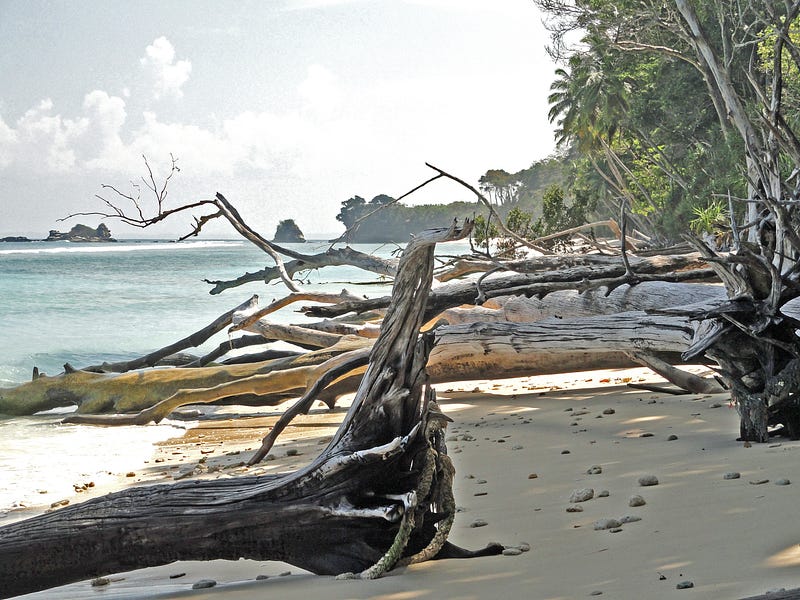
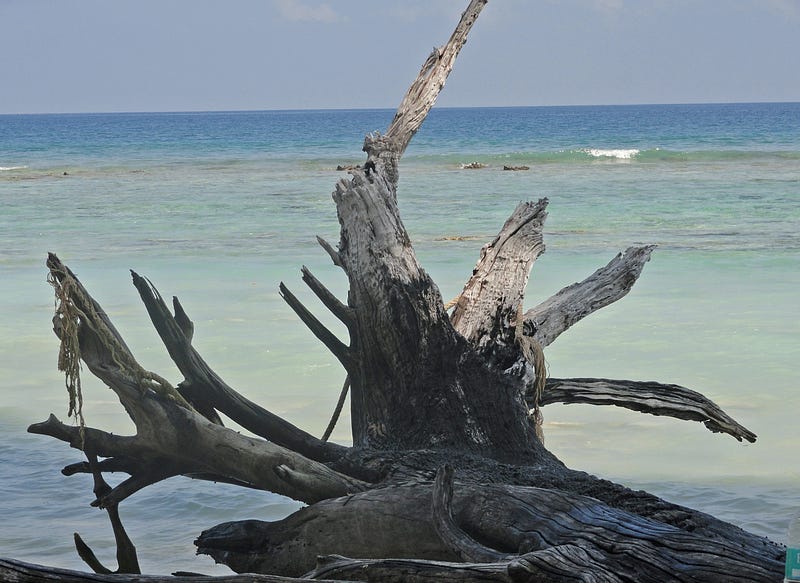
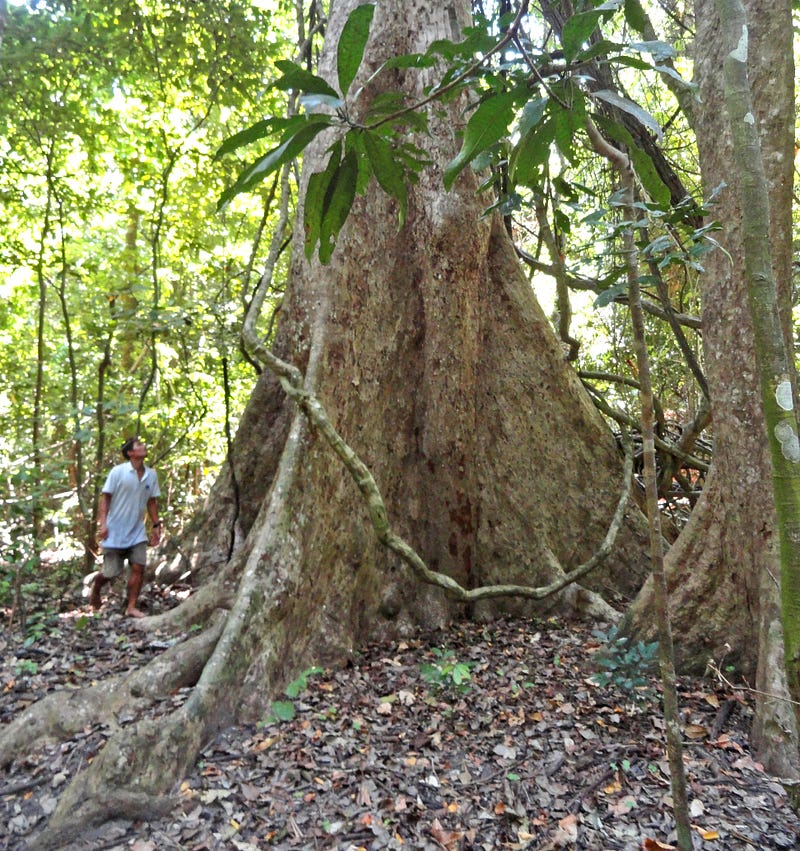
After about two hours in the water, we made our way back to shore, changed out of our wetsuits, and went for a 2.5-hour hike through the jungle. Some of the trees were massive, hundreds of years old.
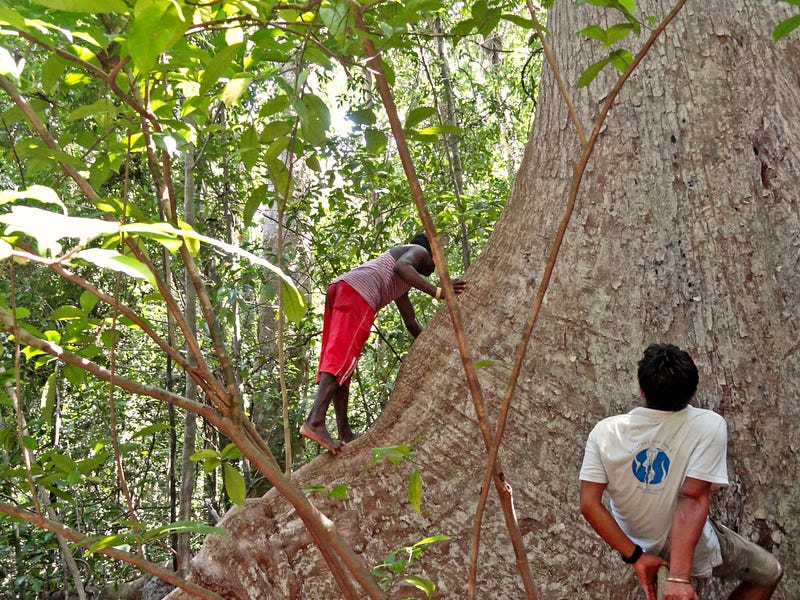
We had two guides plus Dia, our snorkeling guide, leading us through the brush and trees, up hills, and down again. We didn’t see much wildlife but there are deer, snakes, and birds living on the island.
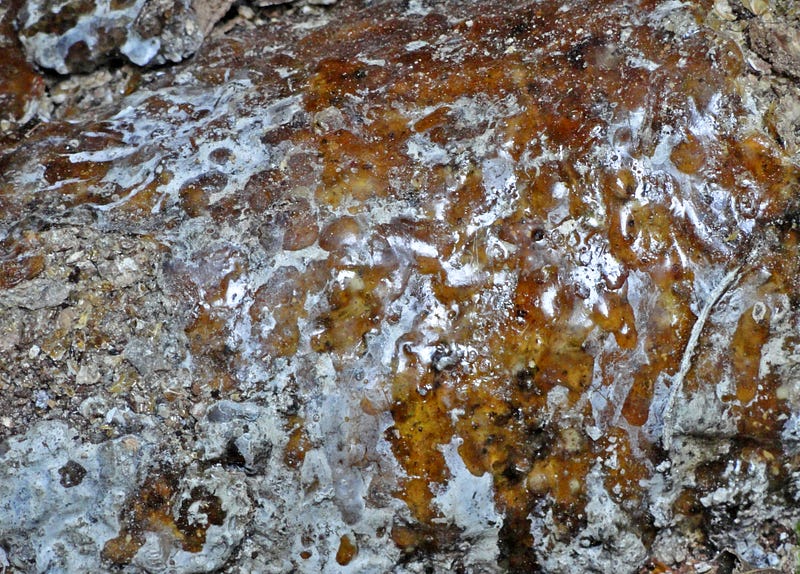
At one point the guides stopped and were breaking off pieces of bark from a big log on the ground, when we looked closer we saw that they were coated with an amber resin that was dripping from the tree above. Apparently, they take it home, put it on some hot charcoal and it keeps the mosquitoes away. I also encountered the magic resin in Israel when I saw some friends putting it on some embers at bonfires to repel bugs.
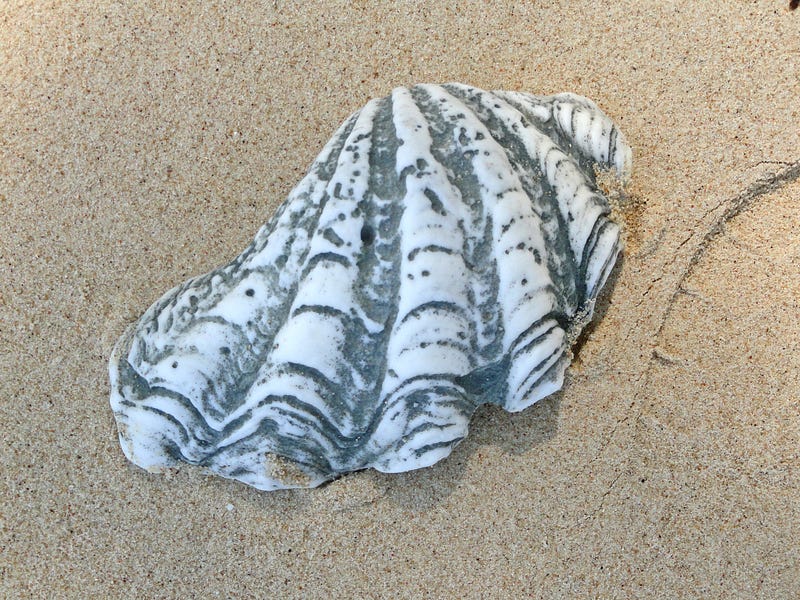
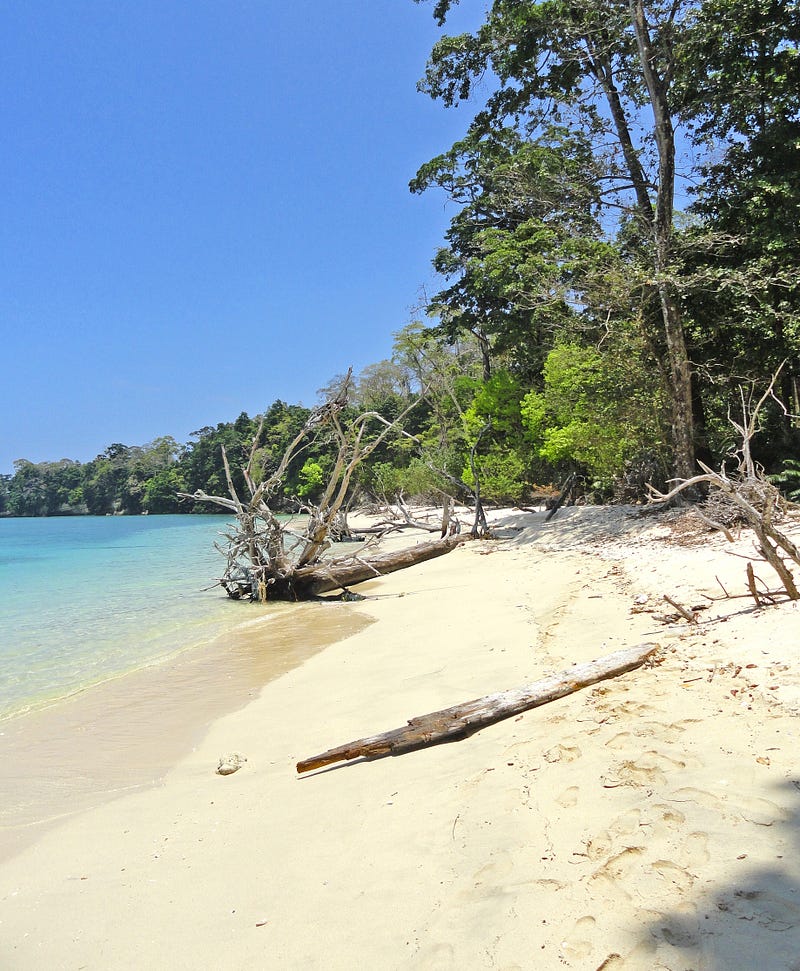
We stopped on the other side of the island on a pristine beach for a short rest in paradise. The beach was untouched with some of the best shells I have ever seen, perfect for beachcombers, except it is illegal to transport shells off the Andaman Islands, so best to leave them where they are.
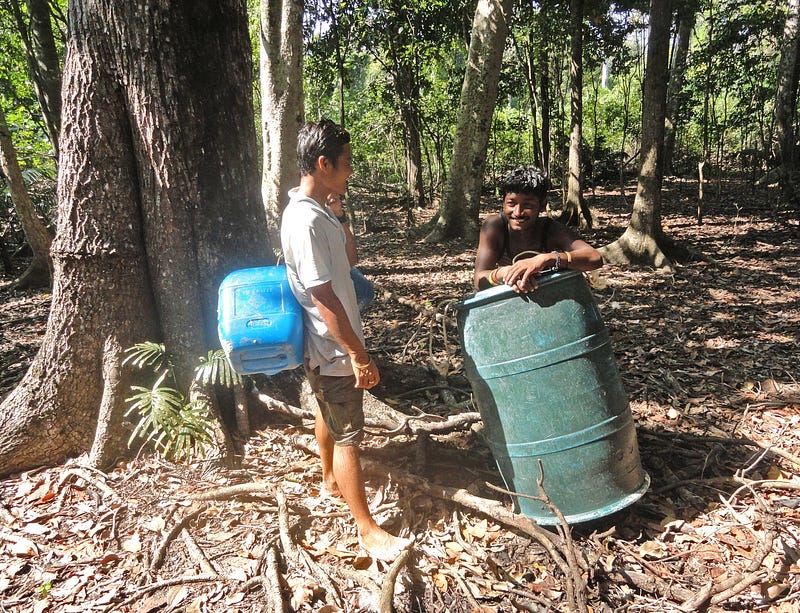
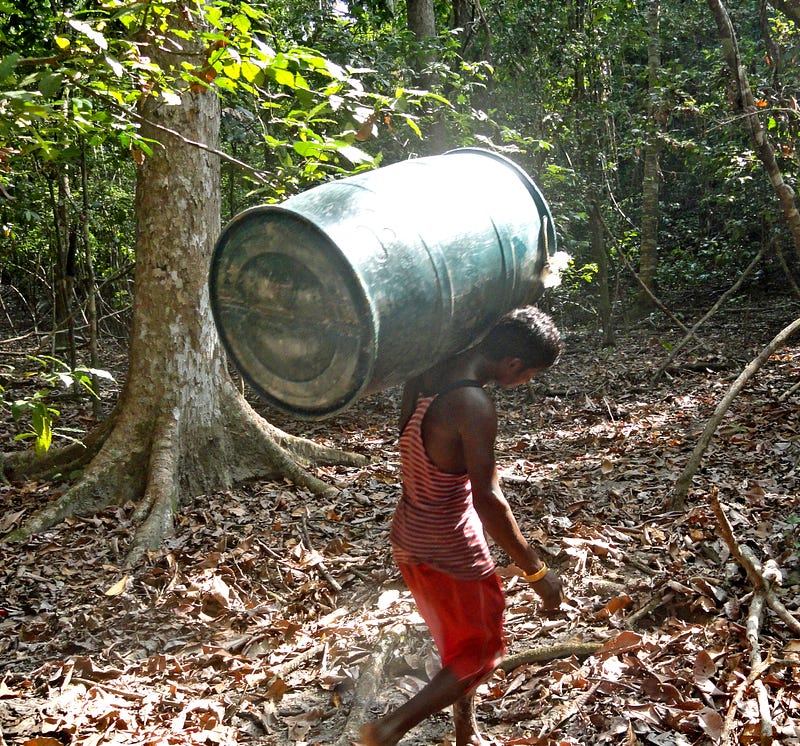
We suddenly noticed our two guides had wandered off and came back with 3 plastic water jugs and a huge plastic water barrel they would sell back to the dive shops, but first, they would have to carry their loot back to the boat on the other side of the island… not an easy feat. We were all drenched in sweat from the heat and humidity but they kept pace, packing along their treasure.
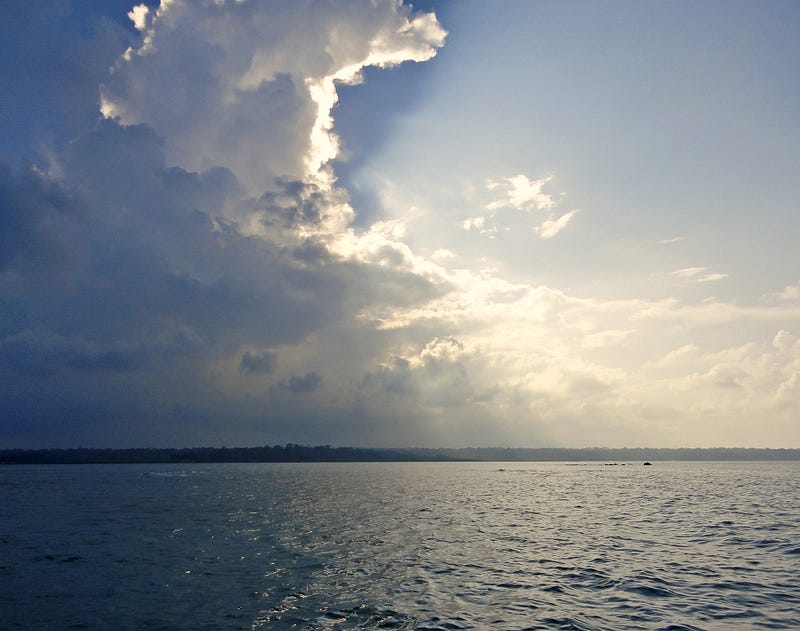
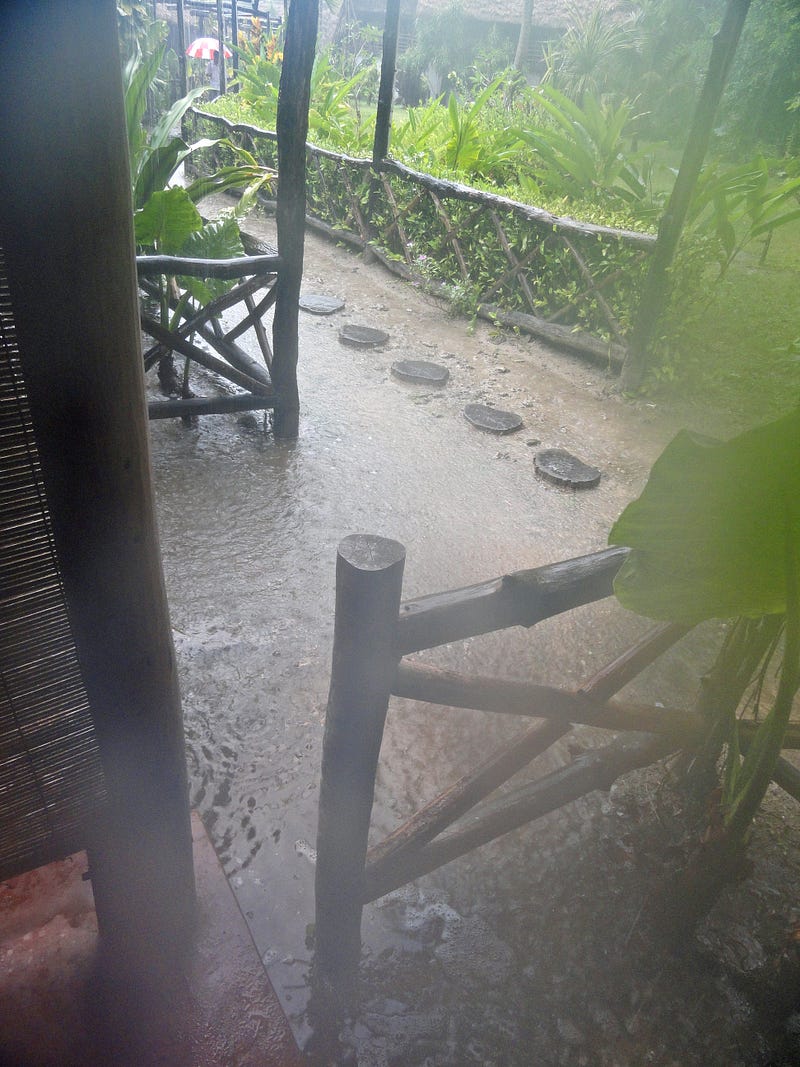
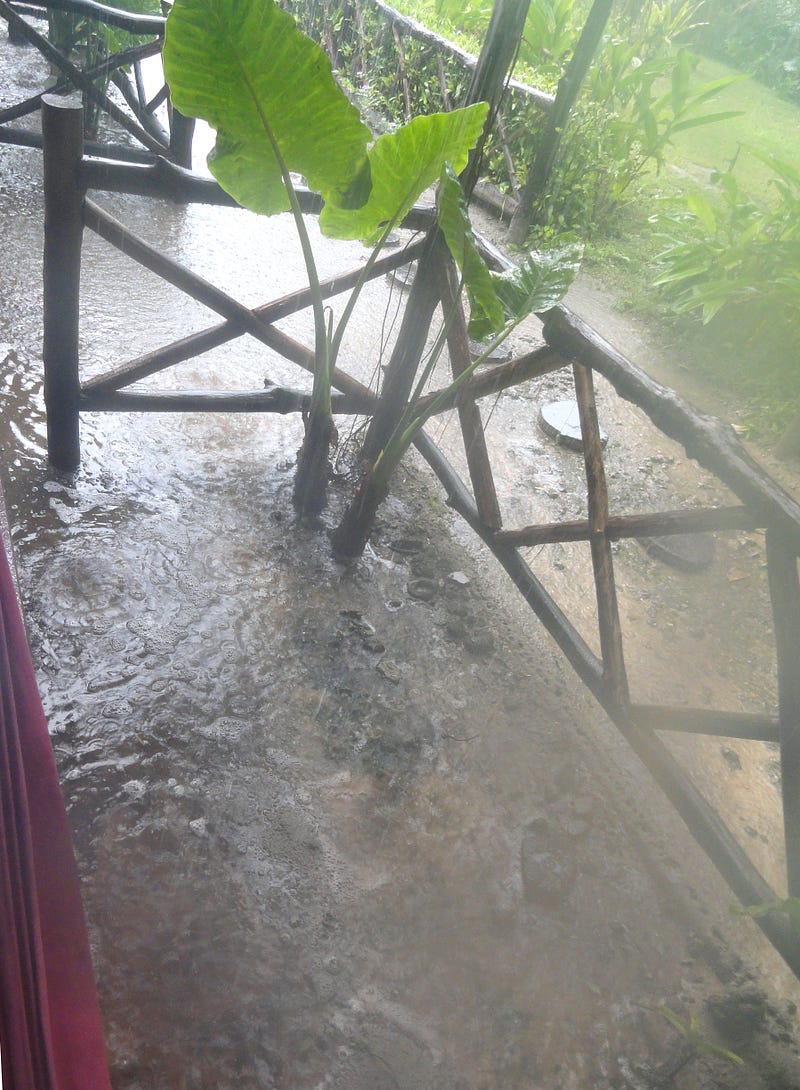
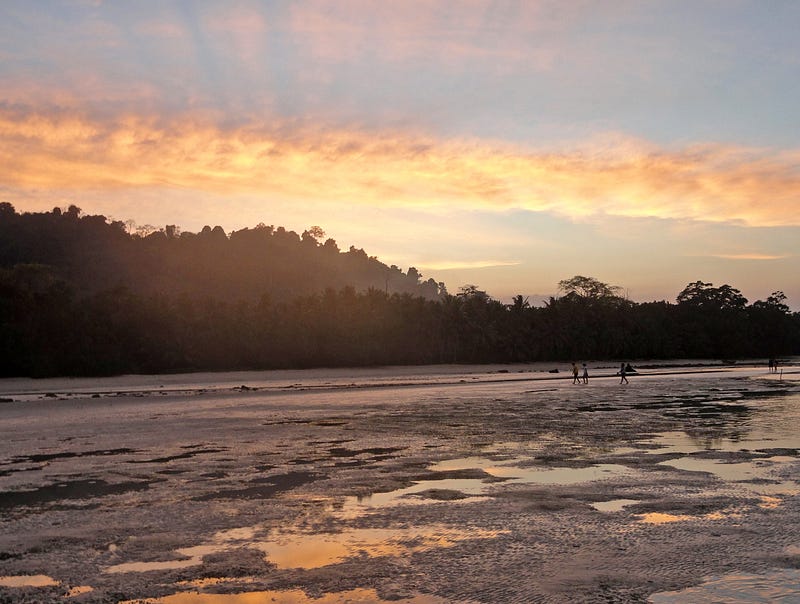
We waded back out to the boat and began the journey back to our beach, 1.5h away with a threatening storm at our backs. We got there safely at low tide. And made it back to our hotels with just minutes to spare before the skies opened up, which made for a beautiful sunset later.
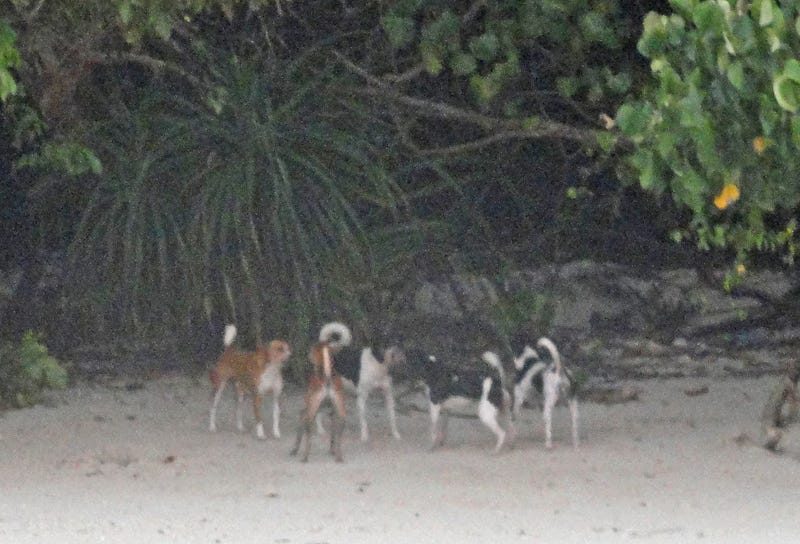
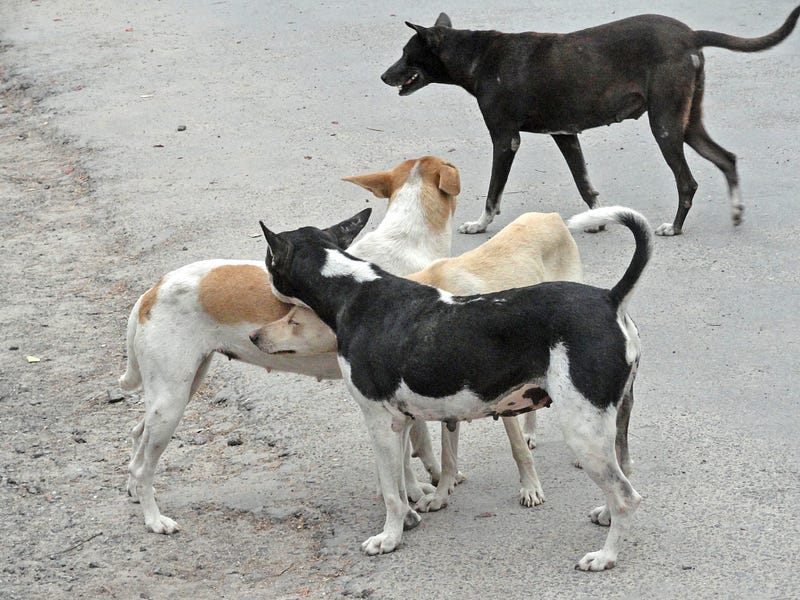
The island, like other parts of India and South Asia, has a serious problem with the large number of stray dogs running around the beaches and resorts. Some are better off than others, with some locals, but mostly the visiting tourists, making sure they are fed.
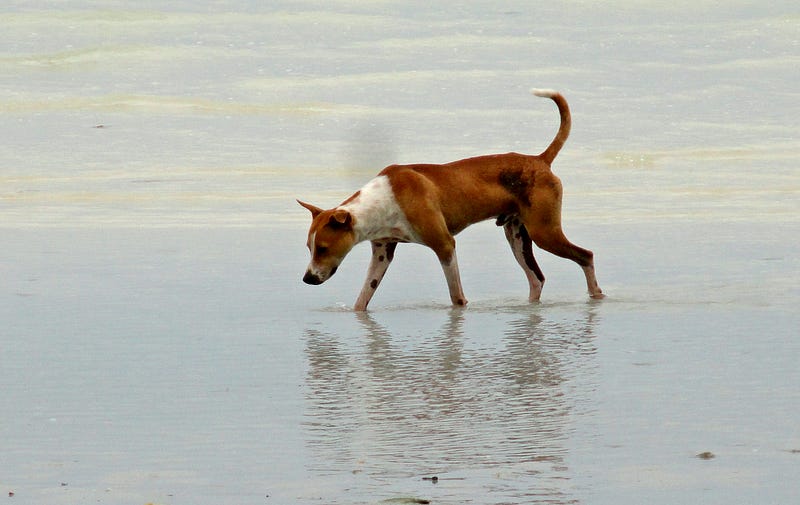
The British couple I had met, made friends with one dog they named Brutus… an un-neutered male who was usually a submissive dog, avoiding fights (although he had a few scars from previous scraps) unless food was involved when he would become just as nasty as the others.
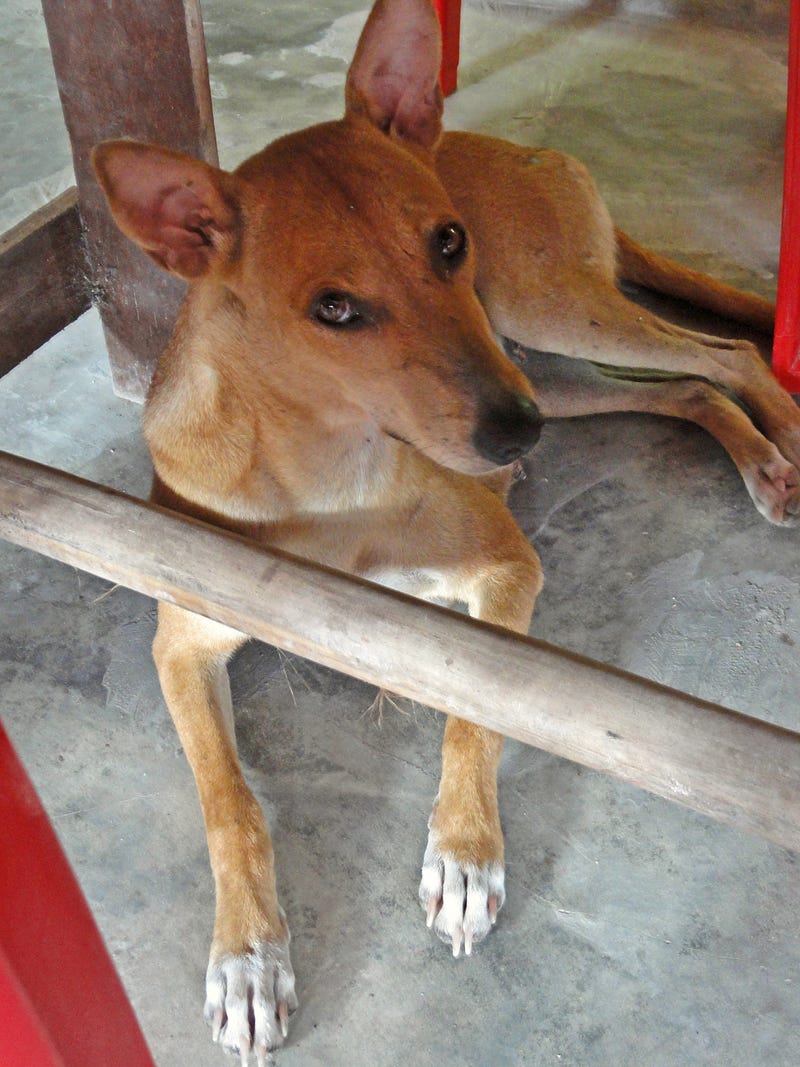
One day I watched him as he wandered along the shore when the tide had gone out, looking for crabs to catch and eat, though I don’t know how successful he was.
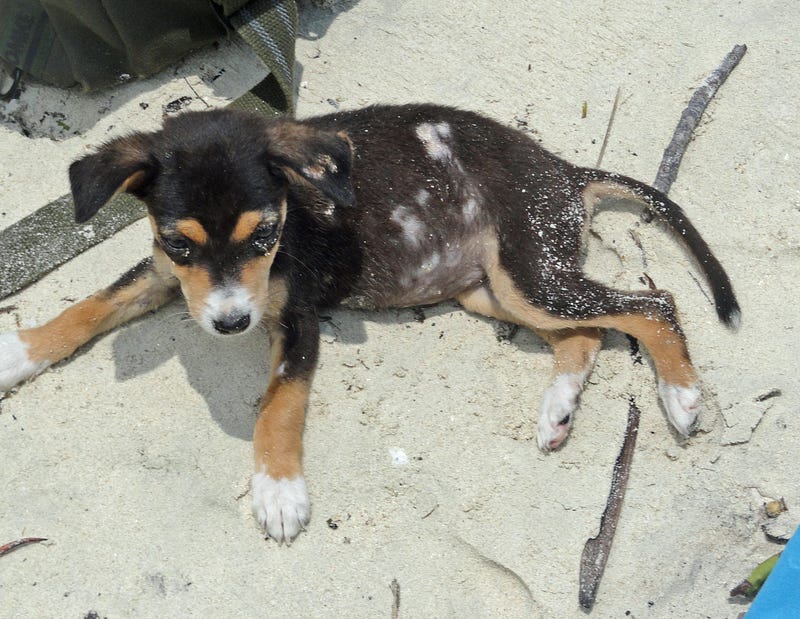
We also befriended a little orphaned puppy, one of the women named Lester, who was the cutest little guy, following us around the beach. I gave him some of my bottled water that I poured into a sea shell. And we fed him a few biscuits which was all the food we had on us. But the poor puppy was covered with sores because he was infested with fleas.
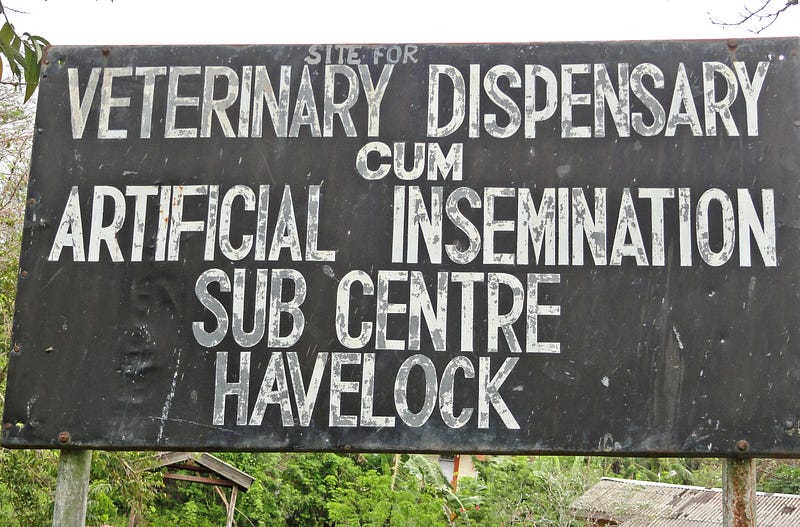
We decided to go into Town #3 to the veterinary clinic (with a very strange sign out front) to see about getting him some relief from the fleas and maybe some puppy food… but it was closed.
One day I hope that some kind-hearted veterinarian will visit the islands (and in fact all over India and South Asia) to spay and neuter the homeless dogs, even though many Indian animal rights activists say that isn’t the humane way to deal with the issue.
Every evening at sunset we would hear several dogs fighting and crying on the beach. It’s an out-of-control problem that needs to be addressed. Those that are not cute enough end up eating scraps wherever they find them, we saw one dog on the beach that was just lying in the shade, skin, and bones, and near death. It’s such a sad sight and it doesn’t have to be this way.
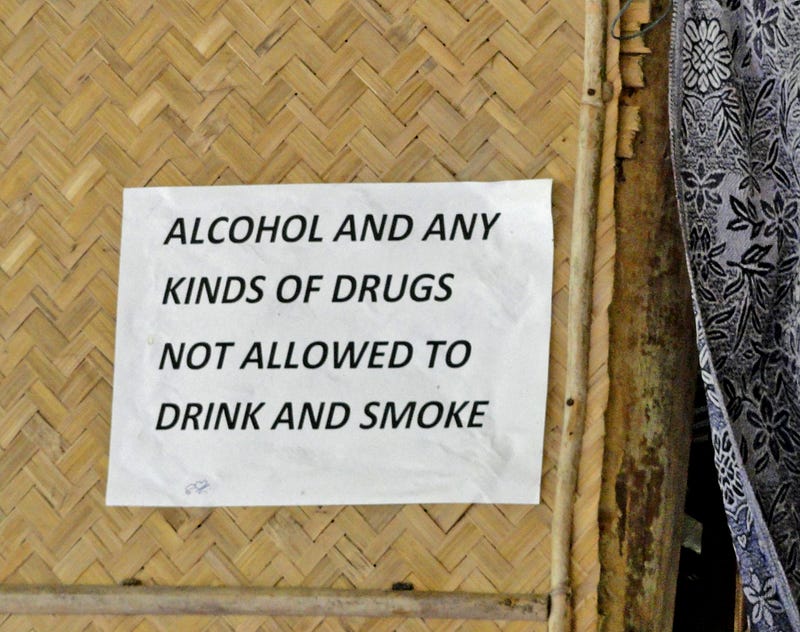
The island was pretty “dry” when I got there. Not from a lack of rain but from a lack of alcohol. The resort had a sign up when I arrived saying “Bar Closed” which didn’t upset me too much, but some of the other guests were disappointed.
The desk clerk explained that their license had expired and they hoped to get it renewed on Monday (this was Saturday). Well, it never happened and it seemed most of the other hotels and bars on the island had the same issue. There were only two places that my friends had discovered that still had any beer. It must have been a big loss of business for the hotel I was staying at which had a great rating and the restaurant/bar was always highlighted in its reviews. Some nights the restaurant was packed but other nights only a couple of tables were filled and I’m sure the lack of alcohol had something to do with it.
The island doesn’t have much in the way of nightlife either. Part of the reason is the time. The Andaman Islands are still on India Time even though the islands are halfway between India and Thailand. That means the time is the same in the island capital of Port Blair as it is in Mumbai even though they are thousands of kilometers apart. The sun sets at about 5 pm every day.
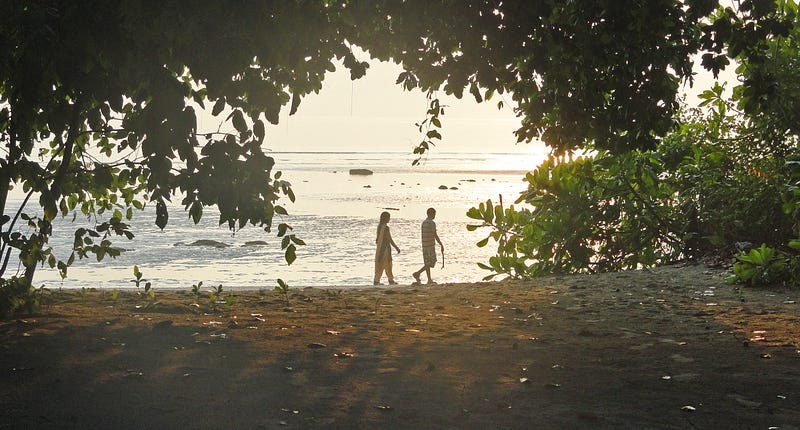
There are also a lot of divers who travel to the Andamans for the spectacular dive sites and they always want to be up and on the water first thing in the morning. Everything dies down by around 9 pm. I haven’t gone to bed that early in years but it was nice to get up bright and early before it got too hot outside.
One morning I decided I wanted to get up and see the sunrise, just offshore behind the hotel, but I realized I’d have to get up pretty early to catch it. I kept missing it until my last day when I woke up at 4:30 AM and looked out the window to see the sky starting to lighten up and the birds starting their day.
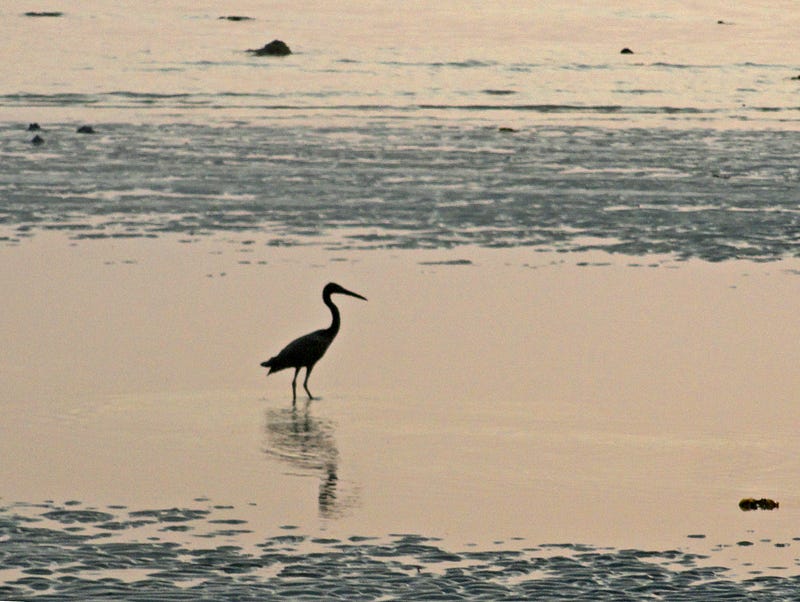
I got dressed and dragged myself to the beach and was rewarded with a spectacular sunrise. At one point the sun was a brilliant orange/fuchsia color. I was also all alone until after the sun was up so it was a very peaceful way to start the day.
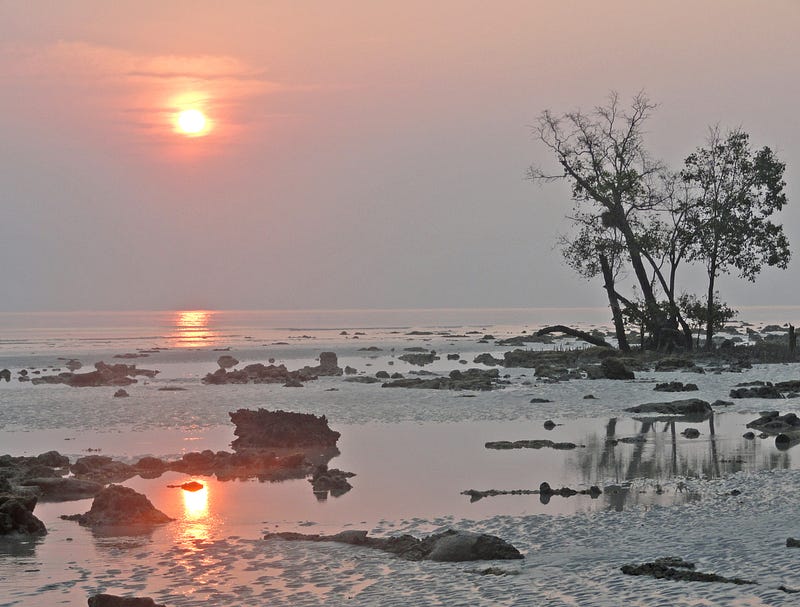
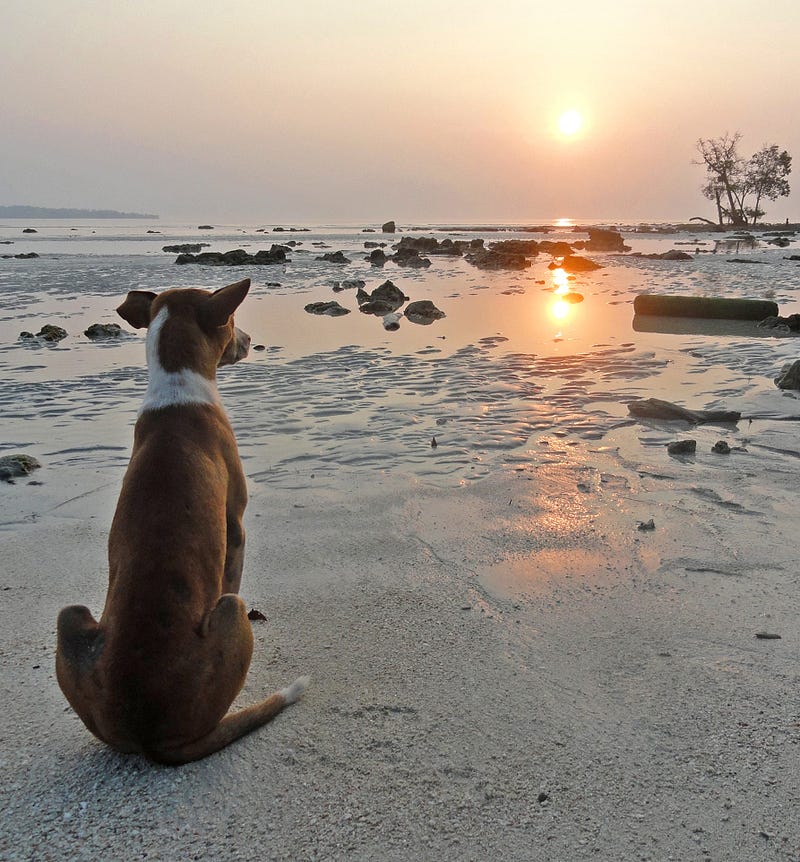
I was also joined by Brutus the dog that wandered over to join me… sitting on the beach beside me staring at the sun as it rose above the waterline. I wonder if that is how he starts his day too, or maybe he was just trying to see what it was that I was looking at.
A man I called “the pied piper” wandered past playing mournful tunes on a long piece of metal pipe that he played like a flute. It was beautiful and so ingenious the way he had created a musical instrument from some scrap metal he had found.
Be Careful Where You Sit
Unfortunately, there are no beach chairs on Havelock Island. It is all government property so that means that development is closely monitored but it also means that the rules are strict and right across the board.
We had asked a few times if there were beach chairs to sit on and were always told no but one day when we headed to the beach there were four beach chairs with mattresses lined up. We asked if we could use them but were told no they were strictly for government officials. We argued that we were the paying guests and shouldn’t we receive some consideration too, but were told their hands were tied.
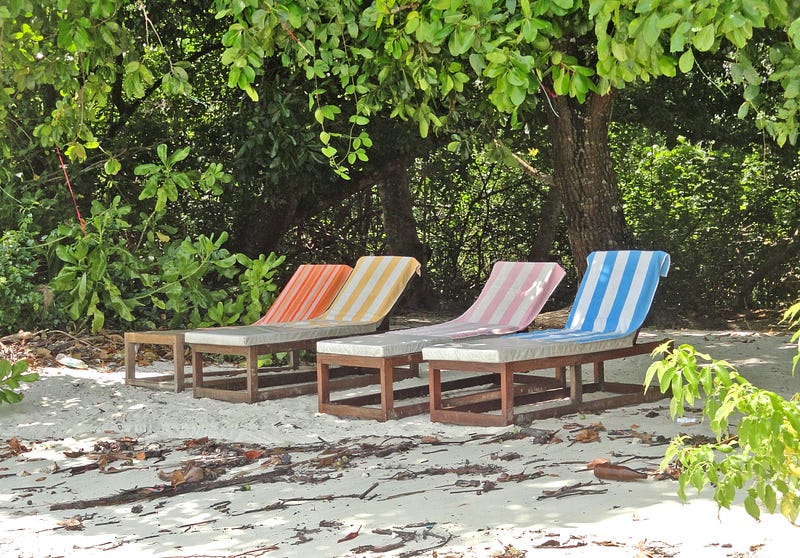
Later a government official and his family arrived and sat down on the coveted chairs, and a police speed boat showed up stopping just offshore to patrol the beach area directly in front of the group. As we swam around nearby we expected to get a stern warning to stay clear but that didn’t happen, the police security was on the lookout for much more serious threats than a small group of pasty-faced tourists.
Time For A Celebration
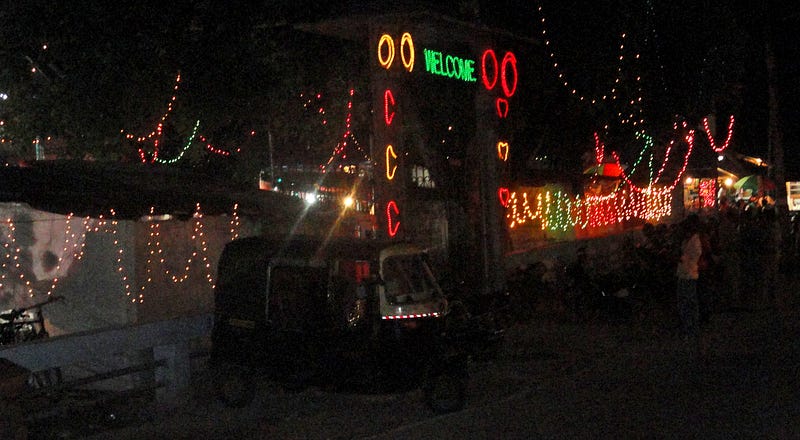
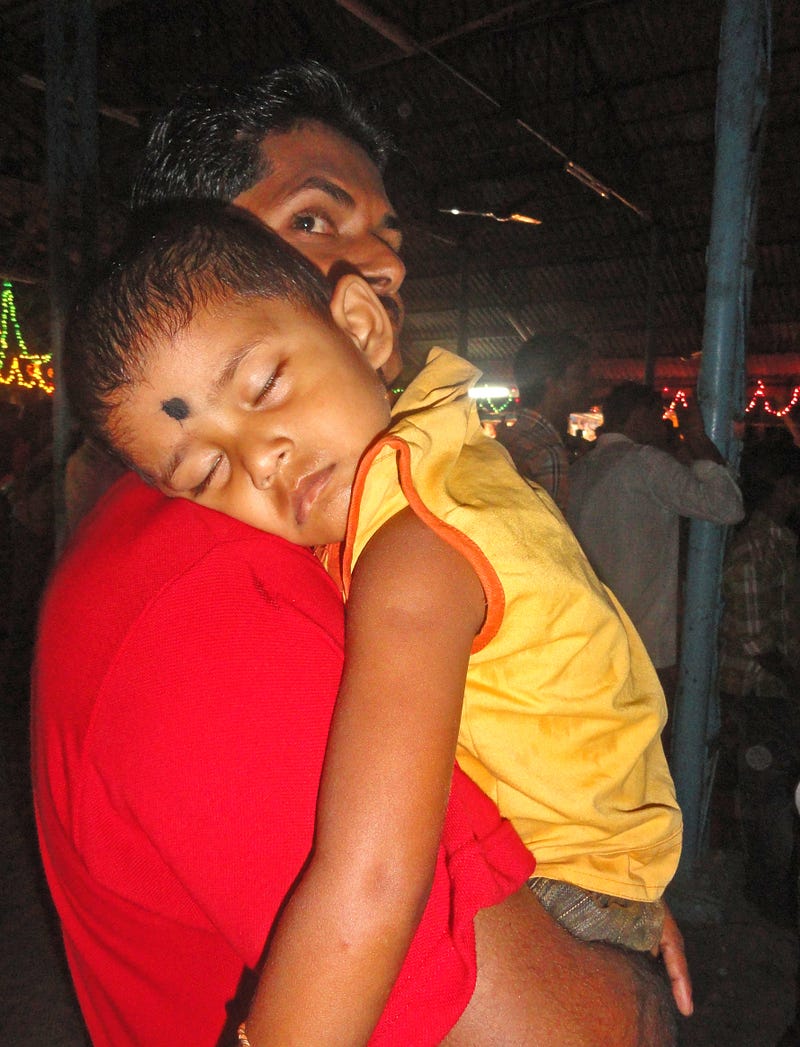
On my last few days on Havelock Island, there was a festival in village #3. I checked it out on the first night but there were only a few people hanging around and they were still working on the stage. I went back a few days later and it was packed with people, vendors set up all over the place, and lots of kids having a ball, although as the night went on (it ended at midnight) most of the kids were dropping off.
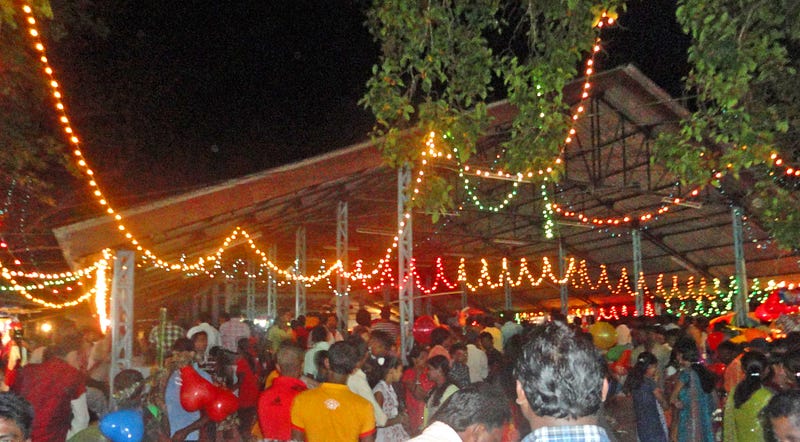
There was an amateur stage show going on most of the evening, with many of the island’s young people performing. Everything from girls on stage with their own choreographed dance to modern music (like “Waka Waka” by Shakira) to traditional Hindu stories being acted out. One of the crowd favorites was a local boy dressed up like a Hindu woman acting and dancing to a story that I wasn’t able to follow along with, but I still found entertaining.

It was a great way for me to end my visit to these islands, mingling with the locals as they celebrated their festival.
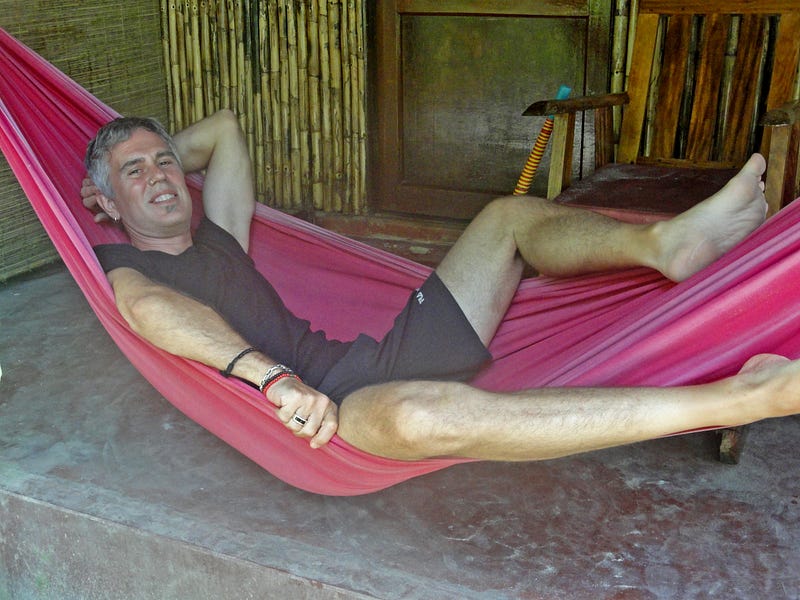
The best thing I took away from my visit to the Andaman Islands is the art of doing absolutely nothing. We always seem to feel the need to be doing something even when we are on vacation and supposed to be relaxing — reading, writing letters or postcards, listening to music, talking with friends — and it took me several days to realize that there’s nothing like spending time just lying in a hammock, ignoring the clock and everything else going on around me… just living in the moment.
_______________________________________
You could read so much amazing content on Medium and it could be your next step in becoming a writer, for just a few bucks a month. And if you sign up with this link you will also be supporting my writing.


