
And Then . . . We Self-Quarantined
Is there sanity in the face of the Corona Virus?
The month of March — no wait — the first quarter of 2020 has been a wild ride for the ENTIRE world. Trying to sort out the real information from the panic-written hype about the Corona Virus and the crazy reactions of the general populace continues to be a nightmare.
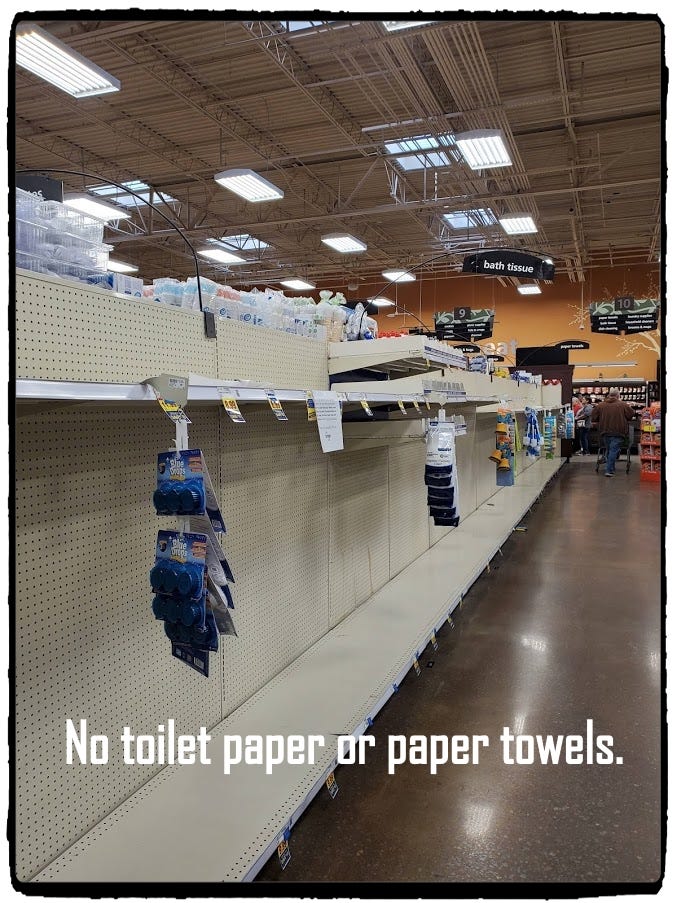
Seriously, would you have ever guessed that there would be a widespread panic that would cause a run on toilet paper, paper towels, and hand-sanitizer?
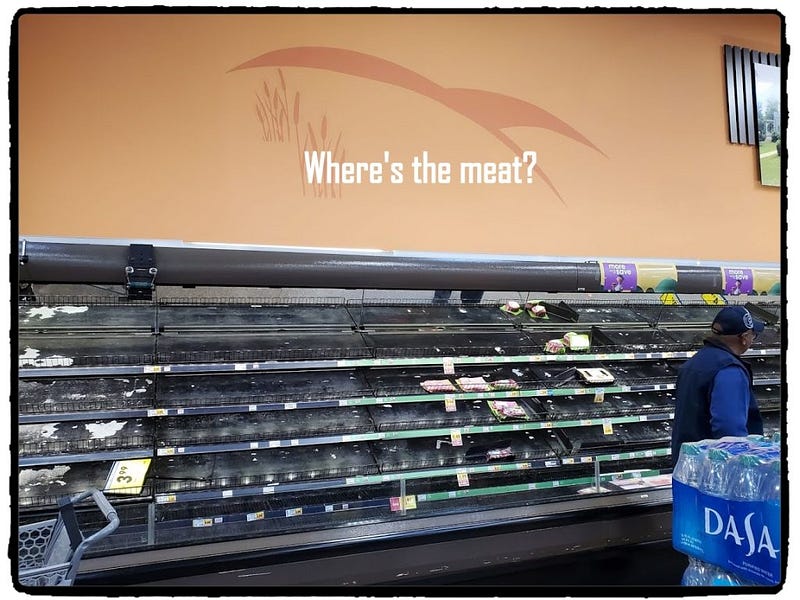
Could you have ever imagined the meat section of the grocery store almost empty?
How about fights breaking out over the last package of toilet paper, or people stockpiling necessities in hopes of selling them for a huge profit? How about people spreading information without the source because the information sounded logical or the “snake oil” remedies that might just do more harm than good? (And no I don’t mean some kind of oil derived from snakes. In history, curatives that actually did nothing were consider “snake oils.”)
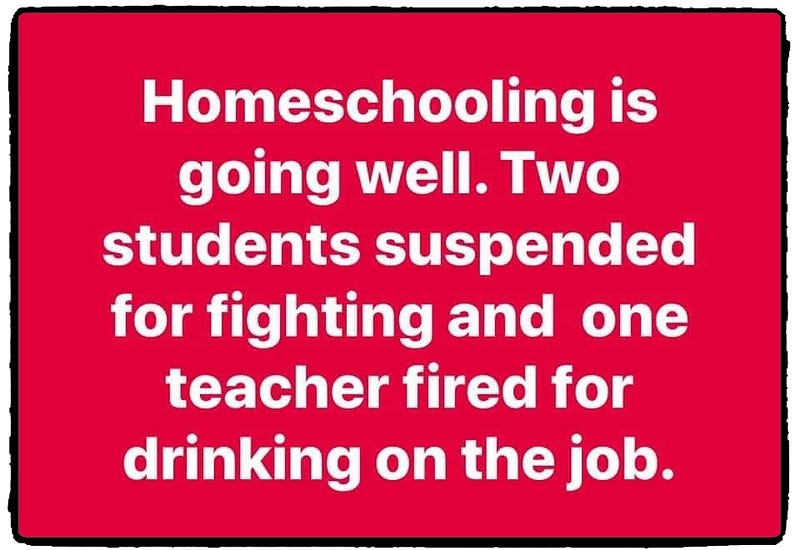
Did you ever think schools and universities would be closed and students would be expected to learn remotely either from learning packets their parents picked up or online? Did you ever think parents would become acquainted with the problems teachers face on a day-to-day basis?
Did you ever think dining “in” at restaurants and bars would slow to a halt and that they would move their business to take-out or delivery service? Did you ever think there would come a time when companies asked employees, when possible, to work remotely from home? Did you ever conceive that museums, state parks, theaters, and other forms of entertainment would have to shutter their doors and gates and, where possible, put their business online?
All in an effort to help us self-quarantine.
Do we really need to be reminded about the basic habits of good hygiene health: how do you forget to wash your hand or sneeze into your elbow? Better yet, how have we forgotten that we are better off at home in bed if we are sick?
People chastise each other on social media for comparing COVID19 to the flu and pneumonia or for refusing to believe that COVID19 presents a danger to them or that the politicians aren’t working fast enough or speaking straight forward enough. (I don’t know about you all, but if I was functioning with two to three hours of sleep each night for over a week, I wouldn’t be able to formulate my thoughts into a coherent statement.)
According to one radio broadcaster I heard today, millennials are now partying for spring break without a thought about how COVID19 might affect them. They have been, according to this person, conditioned with the notion that something will kill them and yet here they are — still alive: climate change will kill them (they are still here), the president will have us all destitute with in his first year in office (many were better off on January 1st than they were when he took office). Now, with the unknowns of COVID 19, they are urged to self-quarantine, and they don’t see the point.
But they are not invincible. COVID19 might not even give them one symptom, but they may carry the virus home from where they are to someone they love: grandma, grandpa, brother or sister who has acute asthma. What then? Even the news this morning identified that 40% of the cases of COVID19 that are hospitalized are individuals between the ages of 20 and 50.
I get it. I am cautious. I am not a millennial, and I am not over 70, BUT my husband (55) has a compromised immune system from diabetes, kidney disease, heart disease, and some of the medications he is on, a cousin (around 6) has acute asthma, and several relatives are over the age of 70.
What escapes much of the news these days are the ways in which neighbor is helping neighbor — friend is helping friend.
In Italy, those quarantined are singing together from their balconies. Check it out HERE.
One guy decided to DJ from his balcony. Check it out HERE.
Churches have gone online with their Sunday services.
Museums have virtual tours. Here’s a link to 12 Museums to check out while sitting on your couch.
With the Broadway theaters closed, some actors have taken Shakespeare to live stream. Check it out HERE because, of course, the show MUST go on. Or watch the show HERE.
And musicians are giving virtual concerts. Check it out HERE. Or HERE.
Some grocery stores have a segment of time where seniors have a special shopping time if they want. While other people are asking their elderly neighbors if they can run errands for them.
And then there are those who are showing their talent for humor on social media. The retired teacher in me found these amusing:
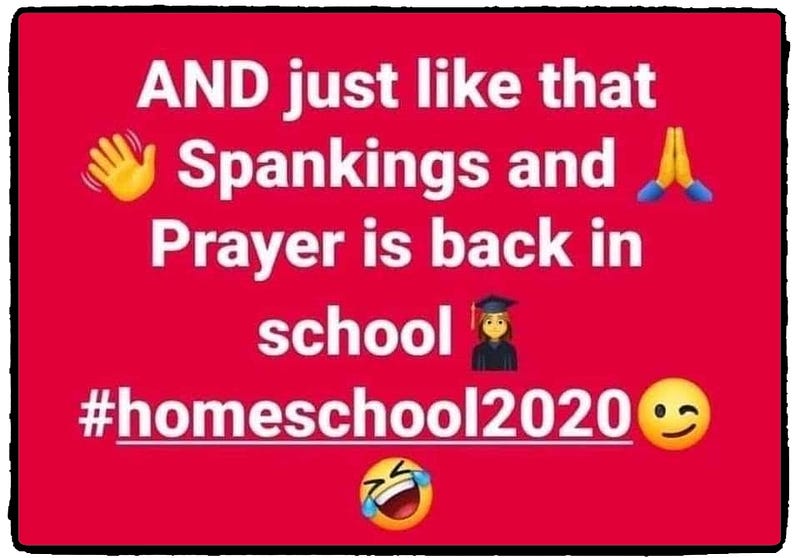
So, here’s the real take in my opinion. We have to do what is necessary to fight this invisible enemy (a virus). It’s much like a science fiction novel that has come to life.
But in fighting this invisible enemy, we need to become human again.
- We need to be compassionate to those around us in the WHOLE WORLD.
- We need to step away from a panic state: learn to meditate, go for a walk, listen to music.
- We need to help each other out: Does someone need your help to pay their rent because their business can’t have them work from home? Does someone need you to pick up groceries and leave the bag on their porch?
- We need to begin to think less about ourselves and more about others. That includes self-quarantining because you might get someone else sick who might not recover.
Rebecca (Becky) spent 34 years in a teaching career, but when she retired in 2014, she picked up her pen and pursued her passion to write. As a high school English teacher, Becky held the philosophy that she wouldn’t give any writing assignment that she personally wouldn’t or couldn’t do. That philosophy strengthened and broadened her own writing.
In addition to publishing her writing on various platforms, Becky also blogs at Life is for Living, a blog to encourage, motivate, and help others live the best life possible. As an extension of Life is for Living, she also publishes a weekly newsletter, Let’s Chat. (Check it out HERE.) Life is for Living also has a social media presence with the group Coffee on my Porch. (Check it out HERE.)
After teaching writing for 34 years, Becky began Ink & Keyboard, a blog for writers at all levels. She supplements what she writes on the blog with a subscription newsletter, The Writer’s Notebook (Check it out HERE.) and the social media group Ink & Keyboard (Check it out HERE.)
Before you go . . .
If you like my writing or got something out of it, why not join Medium as a paying member. As a member, you have unlimited access to my articles as well as the work of other talented writers.
Originally published at https://www.rebeccakojetin.com.