
And the Nominees for the 93rd Academy Awards Are…
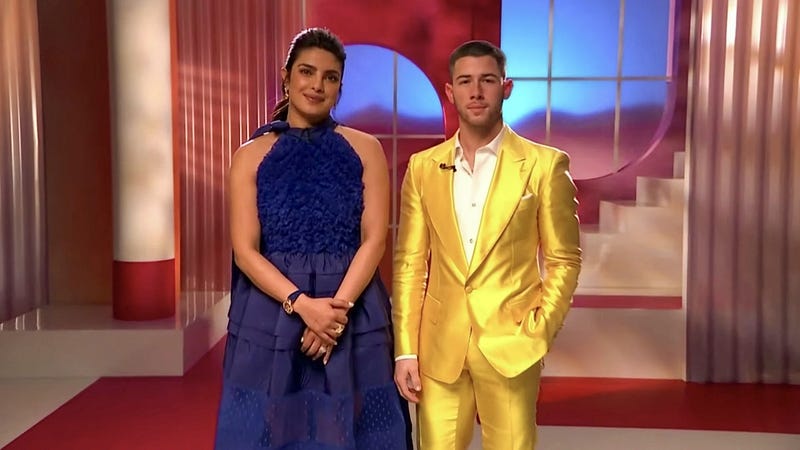
At 5:19am Pacific Time this morning, Priyanka Chopra Jonas and her husband Nick Jonas announced the nominations for the 93rd Academy Awards, which are set to air on ABC on April 25th. There were some shocking snubs and surprise inclusions, but ultimately it played out largely as expected despite the COVID-related upheaval of the movie industry the past year. Below I list the key takeaways and the nominees in the major categories, along with their Oscar history.
10 Key Headlines from This Morning’s Oscar Nominations
- It was a banner year for racial and ethnic diversity in the major categories, but it wasn’t perfect. Of the 20 actors nominated across the four major acting categories, nine are non-white — Chadwick Boseman, Viola Davis, Andra Day, Daniel Kaluuya, LaKeith Stanfield, and Leslie Odom Jr. are black, Steven Yeun and Yuh-jung Youn are Korean, and Riz Ahmed is Pakistani. This is the most diverse acting lineups ever. Add to that two Asian filmmakers making the Best Director lineup (see below), and you have a banner year for inclusivity. The reason for this is likely threefold. One is the Academy’s very firm push for more inclusivity. The second is the delay of many high profile films due to the pandemic, which allowed for smaller films to shine. The third is probably a bit of happenstance. Despite these gains, it wasn’t a perfect morning for diversity and inclusivity. Three critically lauded black-led ensemble films were snubbed in Best Picture. Two received major nominations in other categories and were considered solid bets for the top nomination (George C. Wolfe’s Ma Rainey’s Black Bottom and Regina King’s One Night in Miami). The other was Spike Lee’s Vietnam veteran epic Da 5 Bloods, which inconsistently performed throughout awards season and was only nominated in one category at the Oscars (Best Original Score). Of the eight nominees for Best Picture, only three were directed by filmmakers of color and only three featured people of color in lead roles.
- The Best Director lineup was historic. There were a number of firsts in the Best Director category. For the first time ever, two women were nominated in the same year — Nomadland’s Chloe Zhao and Promising Young Woman’s Emerald Fennell. These two filmmakers mark only the 6th and 7th female directors ever nominated in the category in the 93-year history of the Oscars, which is easily one of the most egregious examples of Oscar’s inclusivity problems. This is also the first time two Asian directors have been nominated in the same year — Zhao and Minari’s Lee Isaac Chung. The result is that white men, who have dominated this category for the past 92 years, became a minority for the first time.
- It was a great morning for Mank, Nomadland, Promising Young Woman, Minari, The Father, and Judas and the Black Messiah. As expected, David Fincher’s black-and-white drama about the writing of Citizen Kane was the clear nomination leader with 10 (four more than the runner-up). It showed up in every major category it was being strongly considered for, with the exception of Best Original Screenplay. It was also a great morning for Nomadland, Promising Young Woman, and Minari, all of which received Best Picture, Best Director, Best Screenplay, and acting nominations. Two films that were “on the bubble” in some major categories strongly over-performed. The first is Florian Zeller’s family drama The Father, which garnered a Best Picture nomination in addition to its expected nominations for Best Actor (Anthony Hopkins), Best Supporting Actress (Olivia Colman), and Best Adapted Screenplay. The second is Shaka King’s drama Judas and the Black Messiah, which scored nominations for Best Picture, Best Original Screenplay, and two Best Supporting Actor nominations (for co-leads Daniel Kaluuya and LaKeith Stanfield, see below for more on them).
- It was a not-so-great morning for The Trial of the Chicago 7, One Night in Miami, Ma Rainey’s Black Bottom, Da 5 Bloods, News of the World, The Mauritanian, and Soul. Aaron Sorkin’s courtroom drama The Trial of the Chicago 7 is the only film that showed up in every major category of every major precursor. The omission of Aaron Sorkin today for Best Director was not surprising to me (I predicted it), but it does suggest the film has an uphill battle to take the top award. In the history of the Oscars, only five films have ever won Best Picture without a Best Director nomination. As mentioned above, black-led ensemble films One Night in Miami, Ma Rainey’s Black Bottom, and Da 5 Bloods missed in several key categories. Paul Greengrass’s traditional Western News of the World and Kevin MacDonald’s Guantanamo Bay drama The Mauritanian were considered potential contenders in a few of the major categories, but the former was only cited in technical categories and the latter was shutout completely. And then there’s Pixar’s Soul, which had an outside shot at Best Picture and Best Original Screenplay nominations, but just received nominations for Best Original Score, Best Sound Design, and Best Animated Feature.
- One of the most egregious cases of category fraud in Oscar history. The long, problematic history of “category fraud” during awards season is an annual talking point. It is exceedingly common for performances that are really lead roles to be campaigned for supporting to bolster their chances (either by avoid campaigning against a co-star in their own film or because of less competition in the supporting categories). The Academy occasionally rights this wrong (see Whale Rider’s Keisha Castle-Hughes and The Reader’s Kate Winslet getting nominated in lead after campaigning for supporting), but more often than not they follow suit (particularly egregious examples include Ordinary People’s Timothy Hutton, Paper Moon’s Tatum O’Neal, The Danish Girls’ Alicia Vikander, Carol’s Rooney Mara, and Collateral’s Jamie Foxx). But this year, the Academy nominated the only two lead performances in the same film against each other in Best Supporting Actor — presumed front-runner Daniel Kaluuya and his co-star LaKeith Stanfield for Judas and the Black Messiah. The only conceivable way Kaluuya makes sense in supporting is if Stanfield is considered lead, which one could make an argument for given that it’s a few minutes longer. Putting them both in supporting makes absolutely no sense as it is not an ensemble film and they have essentially equal screen times. This is a head-scratcher for the ages.
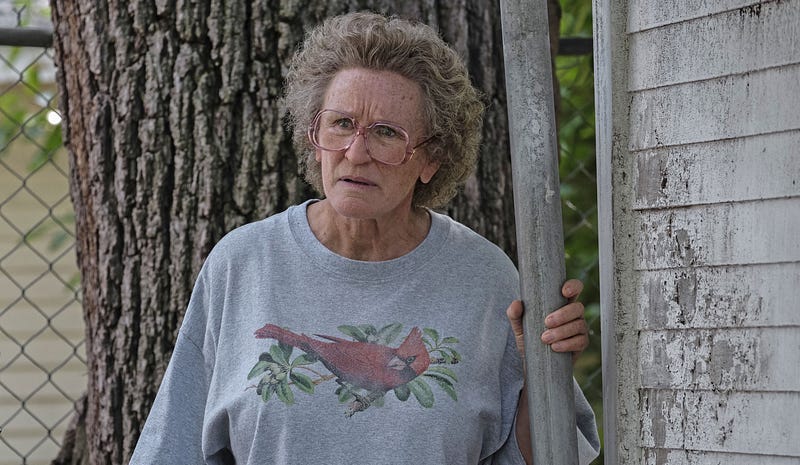
- There were landmark nominations for some film legends, but snubs for others. Glenn Close scored her 8th nomination for Hillbilly Elegy. If she loses for the eighth time, she will tie Peter O’Toole for the most Oscar nominations without a win among all actors in history. Frances McDormand’s nominations for Nomadland made her the first actor to be nominated in the last five consecutive decades (she has nominations in the 1980s, 1990s, 2000s, 2010s, and 2020s) and the first actress to be nominated for acting and producing for the same film. Like McDormand, Anthony Hopkins also scored his sixth nomination. Viola Davis scored her fourth, which breaks her tie with Octavia Spencer as the black actress with the most Oscar nominations in history. She is also the only black actress in history to be nominated in the Best Actress category more than once. However, not every legend had a good morning. Tom Hanks (News of the World) missed his chance to join McDormand in being nominated for performances in each of the last five decades and Sophia Loren (The Life Ahead) and Ellen Burstyn (Pieces of a Woman) missed the chance to make historic returns to the Oscars (both actresses are in their 80s and were first nominated in the 1960s).
- Glenn Close achieves the exceedingly rare Oscar-Razzie double whammy. Speaking of Glenn Close, she has another particularly unenviable distinction this year. Her performance as Bonnie “Mamaw” Vance in Ron Howard’s critically reviled Hillbilly Elegy became only the third performance in history to receive a nomination at the Oscars and the Golden Raspberry Awards (“Razzies”), which “honors” the worst in film each year. The other two were James Coco for 1981’s Only When I Laugh and Amy Irving for 1983’s Yentl, both of whom went home empty-handed at both the Oscars and the Razzies.
- For the first time in years, the Academy didn’t markedly deviate from the critics. In the past two Oscar ceremonies, the Academy has raised the ire of many film critics and movie buffs by giving top nominations and wins to movies with mixed or flat-out bad reviews. In the past two years, five films that had an average Metacritic rating of below 70 out of 100 scored Best Picture nominations and a combined total of 35 nominations and 11 wins (Green Book, Bohemian Rhapsody, Vice, Joker, and Jojo Rabbit). This year, all eight Best Picture nominees crossed the threshold of 70, with the highest being Nomadland (an impressive 94/100) and the lowest being Promising Young Woman (72/100). In fact, the only films below that threshold nominated in any of the eight main categories are Borat Subsequent Moviefilm (68/100) and Hillbilly Elegy (a certifiably awful 38/100).
- The Academy continues to spread the wealth. With Mank the only film to score more than six nominations and the 20 acting nominees spread across 14 films, it seems likely that we are going to see the top awards split among a number of contenders among Oscar night. This is in stark contrast with the Oscars’ tradition of having a major contender or two dominate the ceremony, which has been dramatically changing in recent years.
- Some top races are clarified, others remain a mystery. With its recent triumphs in Best Picture and Best Director at the Golden Globes and Critics Choice Awards, Nomadland is looking more and more likely to take home the corresponding Oscar categories. Sorkin’s snub in Best Director only increases the likelihood of this outcome by weakening The Trial of the Chicago 7’s chances of upsetting. Chadwick Boseman looks likely to triumph in Best Actor, but the lack of Best Picture and Best Adapted Screenplay nominations for his film signal less support than anticipated among Academy members. The over-performance of Judas and the Black Messiah bolsters presumed frontrunner Kaluuya’s chances, but he now has to contend with his co-star, which could lead to some vote splitting. And Best Actress and Best Supporting Actress remain as mystifying as ever, although my money is currently on Mulligan and Bakalova.
Note on my predictions: Of the 43 nominees in the top eight categories (Best Picture, Best Director, the four acting categories, and the two screenplay categories) I correctly predicted 35 (81%) Of the eight I missed, all were on my list of potential alternatives (although I had LaKeith Stanfield in Lead not Supporting). This is pretty much on par with my performance the last two years when I got 82% and 86% correct.
The Nominees in the Top 8 Categories
Best Picture:
- The Father (6 nominations)
- Judas and the Black Messiah (6 nominations)
- Mank (10 nominations)
- Minari (6 nominations)
- Nomadland (6 nominations)
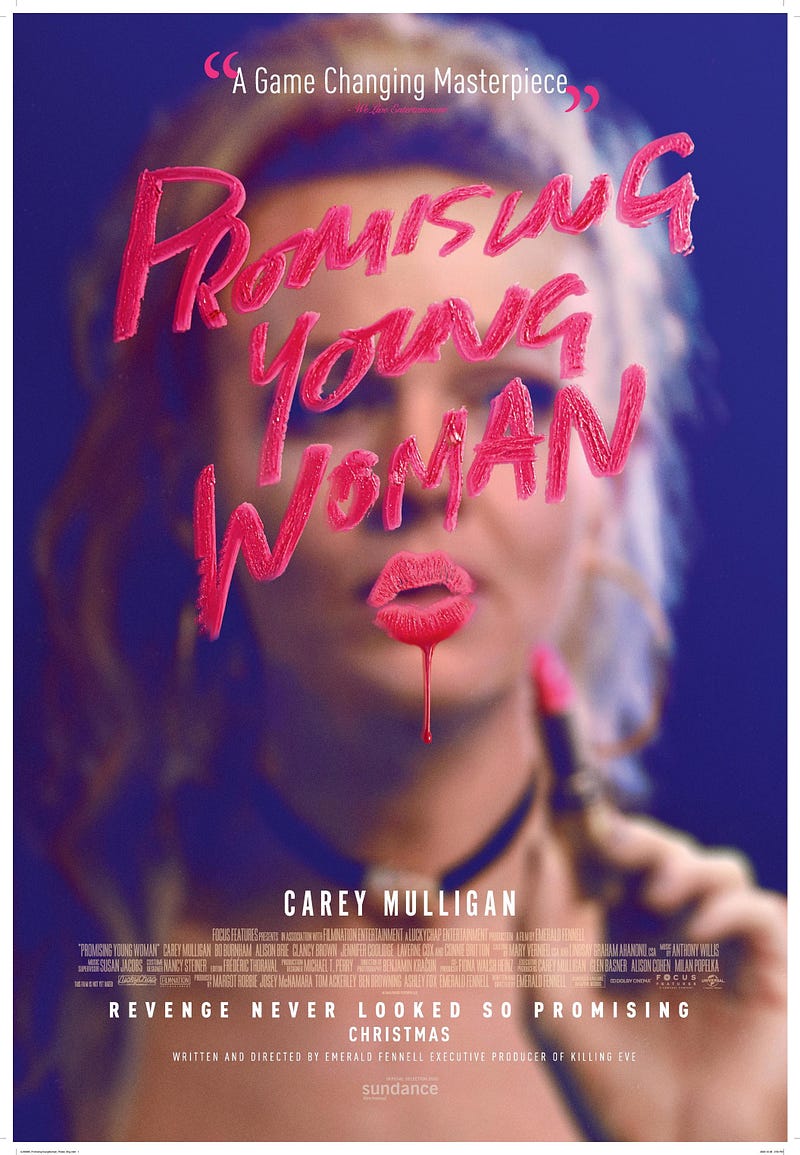
- Promising Young Woman (5 nominations)
- Sound of Metal (6 nominations)
- The Trial of the Chicago 7 (6 nominations)
Best Director:
- Lee Isaac Chung, Minari (1st time nominee this year; also nominated for writing this year)
- Emerald Fennell, Promising Young Woman (1st time nominee this year; also nominated for producing and writing this year)
- David Fincher, Mank (3rd nomination; previous nominations for The Curious Case of Benjamin Button and The Social Network)
- Thomas Vinterberg, Another Round (1st Oscar nomination)
- Chloe Zhao, Nomadland (1st time nominee this year; also nominated for producing, writing, and editing this year)
Best Leading Actress:
- Viola Davis, Ma Rainey’s Black Bottom (4th Oscar nomination, the most among black women; previous win for Fences and previous nominations for Doubt and The Help)
- Andra Day, The United States vs. Billie Holliday (1st Oscar nomination)
- Vanessa Kirby, Pieces of a Woman (1st Oscar nomination)
- Frances McDormand, Nomadland (6th Oscar nomination for acting over 5 consecutive decades; previous wins for Fargo and Three Billboards Outside Ebbing, Missouri and previous nominations for Mississippi Burning, Almost Famous, and North Country; she has an additional nomination this year as a producer of Nomadland, bringing her tally to 7)
- Carey Mulligan, Promising Young Woman (2nd Oscar nomination; previous nomination for An Education)
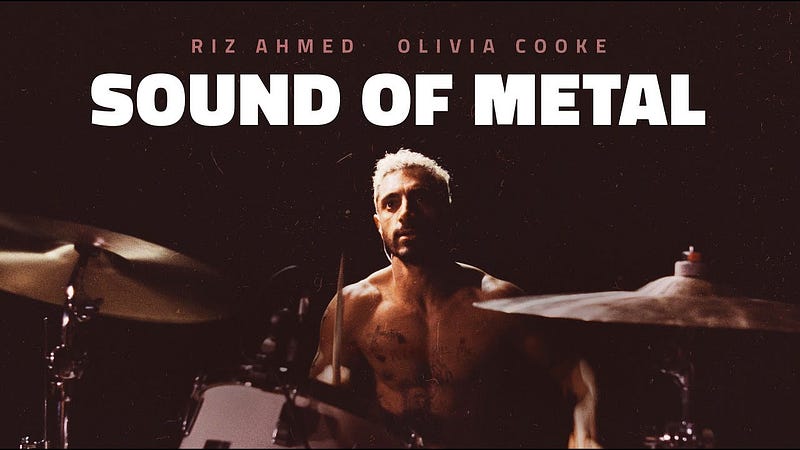
Best Leading Actor:
- Riz Ahmed, Sound of Metal (1st Oscar nomination)
- Chadwick Boseman, Ma Rainey’s Black Bottom (1st Oscar nomination; posthumous)
- Anthony Hopkins, The Father (6th Oscar nomination; previous win for The Silence of the Lambs and previous nominations for The Remains of the Day, Nixon, Amistad, and The Two Popes)
- Gary Oldman, Mank (3rd Oscar nomination; previous win for The Darkest Hour and previous nomination for Tinker, Tailor, Soldier, Spy)
- Steven Yeun, Minari (1st Oscar nomination)
Best Supporting Actress:
- Maria Bakalova, Borat Subsequent Moviefilm (1st Oscar nomination)
- Glenn Close, Hillbilly Elegy (8th Oscar nomination; previous nominations for The World According to Garp, The Big Chill, The Natural, Fatal Attraction, Dangerous Liaisons, Albert Nobbs, and The Wife)
- Olivia Colman, The Father (2nd Oscar nomination; previous win for The Favourite)
- Amanda Seyfried, Mank (1st Oscar nomination)
- Yuh-jung Youn, Minari (1st Oscar nomination)
Best Supporting Actor:
- Sacha Baron Cohen, The Trial of the Chicago 7 (1st Oscar nomination for acting; previous nomination for writing Borat and current nomination this year for writing its sequel)
- Daniel Kaluuya, Judas and the Black Messiah (2nd Oscar nomination; previous nomination for Get Out)
- Leslie Odom Jr., One Night in Miami (1st Oscar nomination; has an additional nomination this year for Best Original Song)
- Paul Raci, Sound of Metal (1st Oscar nomination)
- LaKeith Stanfield, Judas and the Black Messiah (1st Oscar nomination)
Best Original Screenplay:
- Will Berson, Shaka King, Keith Lucas, and Kenny Lucas, Judas and the Black Messiah (All 1st time Oscar nominees this year)
- Lee Isaac Chung, Minari (see above)
- Emerald Fennell, Promising Young Woman (see above)
- Darius Marder, Abraham Marder, and Derek Cianfrance, Sound of Metal (All 1st time nominees this year)
- Aaron Sorkin, The Trial of the Chicago 7 (4th Oscar nomination; previous win for The Social Network and previous nominations for Moneyball and Molly’s Game)
Best Adapted Screenplay:
- Rahim Bahrani, The White Tiger (1st Oscar nomination)
- Sacha Baron Cohen, Anthony Hines, et al., Borat Subsequent Moviefilm (see above re: Cohen; three of the eight (!) additional credited screenwriters have a prior nomination for the original Borat film)
- Christopher Hampton and Florian Zeller, The Father (Hampton has a previous win in this category for Dangerous Liaisions and an additional nomination for Atonement; this is Zeller’s 1st Oscar nomination)
- Kemp Powers, One Night in Miami (1st Oscar nomination)
- Chloe Zhao, Nomadland (see above)
Follow me on Medium and Twitter.
Check out my recent articles about awards season: