
And Then What?
“Enough” never is
I’ve just read The End of Procrastination, in which author Petr Ludwig explicates a concept of motivation that corresponds to the theme of an essay I’d written, titled Just a Thought.
Ludwig distinguishes extrinsic and intrinsic motivators — imposed punishment/reward versus self-directed goal-oriented.
He touches on the obvious point that the latter is preferable — then counters with a counter-intuitive finding about conventional goal-setting.
Ludwig argues that goal-setting leads ultimately to dissatisfaction — after a brief high, we’re off to chase a higher high, and so on and on.
We’re caught in a cycle cast in concrete. Achievement, abstract though the noun itself is, is made manifest in the form of possessions, ever more, ever better.
For instance, you save up for a car. Two years of thriftiness later, your discipline pays off.
Thrilled with the car and with yourself for making it happen, you drive off the lot and on to Macy’s to treat yourself to a handsome watch.
Alas, new-car luster can’t compete with lust for a luxury car; a month post-Mazda, you’re mooning after a Mercedes.
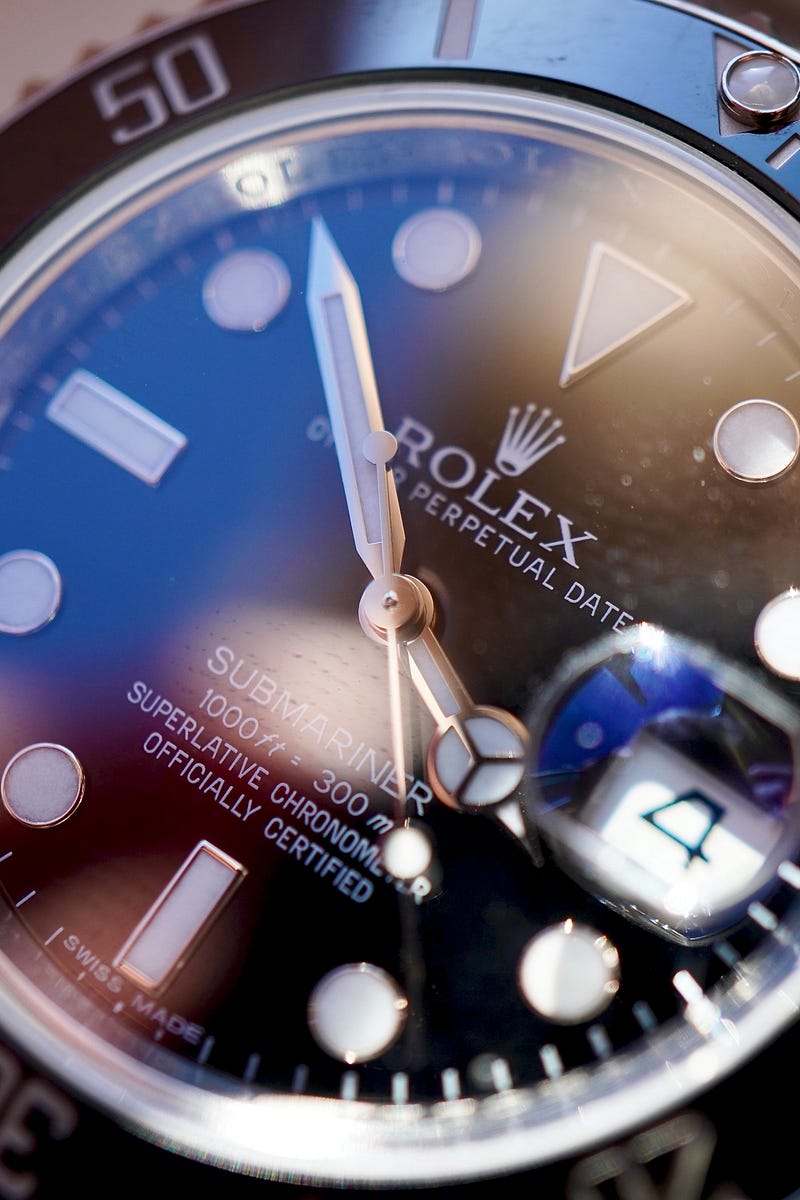
All the while, tick by tick, your shiny Timex whispers: trade-up/Rolex!
In this material world, similar scenarios abound.
Let’s skip the examples and just stick with the green stuff: Money, money, money.
For more vivid visuals — and spectacular sound effects — let’s go for the gold, as in Ka-Ching! King (Midas) at the count. Gold upon gold upon gold… medals.
Oops — meant to say coins. I guess I have medals on my mind. Hell, I know I have medals on my mind.
It has been less than a year since I wrote Just a Thought, the essay that makes my case against goal-chasing. Clearly, I need to reread it. Since the time of my writing, I’ve increasingly neglected “to walk the walk.”
Or, rather, “to run the run.” How easy it was back then to preach that trite twaddle touting running as its own reward, regardless of one’s winning a medal. Back then I was winning medals: gold, silver, bronze.
Now? Not so much. Mainly when there are only the three of us in our age division.
So much for that flippant punchline. Let’s punch out and over to the flip-side of goal-chasing.
Ludwig calls this “journey-based” motivation, wherein rewards are found continually throughout, rather than at an arbitrary destination.
This distinction correlates to my essay’s contrasting “process” with “product” -oriented motivation: the process should supersede the product.
Ludwig refers to a self-perpetuating, steady “state of flow,” which, in the long run, is preferable to transitory elation followed by let-down.
Think of “falling” in love-at-first-sight.
When the wind that whirls you up to cloud nine winds down, you’ll take a “fall” — straight down the abyss of despair. Wouldn’t you trade for the continual contentment of a loving marriage?
That said, during those years that my feet were possessed by a speed demon, how I thrilled to hear my name called to the winners’ circle where a shiny neck-piece awaited.
Trumping the metallic awards were the rewards of performance per se, my race goal always being: Could I best my best?
Inevitably came the point where I couldn’t; over the past year came various negative-growth spurts where I grew slower still.
I seem to have leveled off for now, at a per-mile pace nearly a minute slower than my prime’s circa 7:25.
My challenge used to be to run ever faster; now it is to content myself with contentment in the process — which is, after all, what really counts in the long — though not-so-fast — run.
Have I risen to this challenge of process-contentment?
Alas, not so high-risin’ am I. At best, I’m working a dual track, so to speak; whilst cursing my less-than-fleet feet, I pat my back for persisting regardless of the peds’ poor performance.
These back-pats have kept me motivated for these discouraging 12-months running.
That I haven’t quit in despair after a year indicates perhaps not process-contentment per se, but at least modest success working the process of process-contentment.