
THE SECRET TO HAPPINESS
Ancient Hindu Saint Believed These Three Things Control Your Happiness
I followed his advice for three months. Here’s what happened.
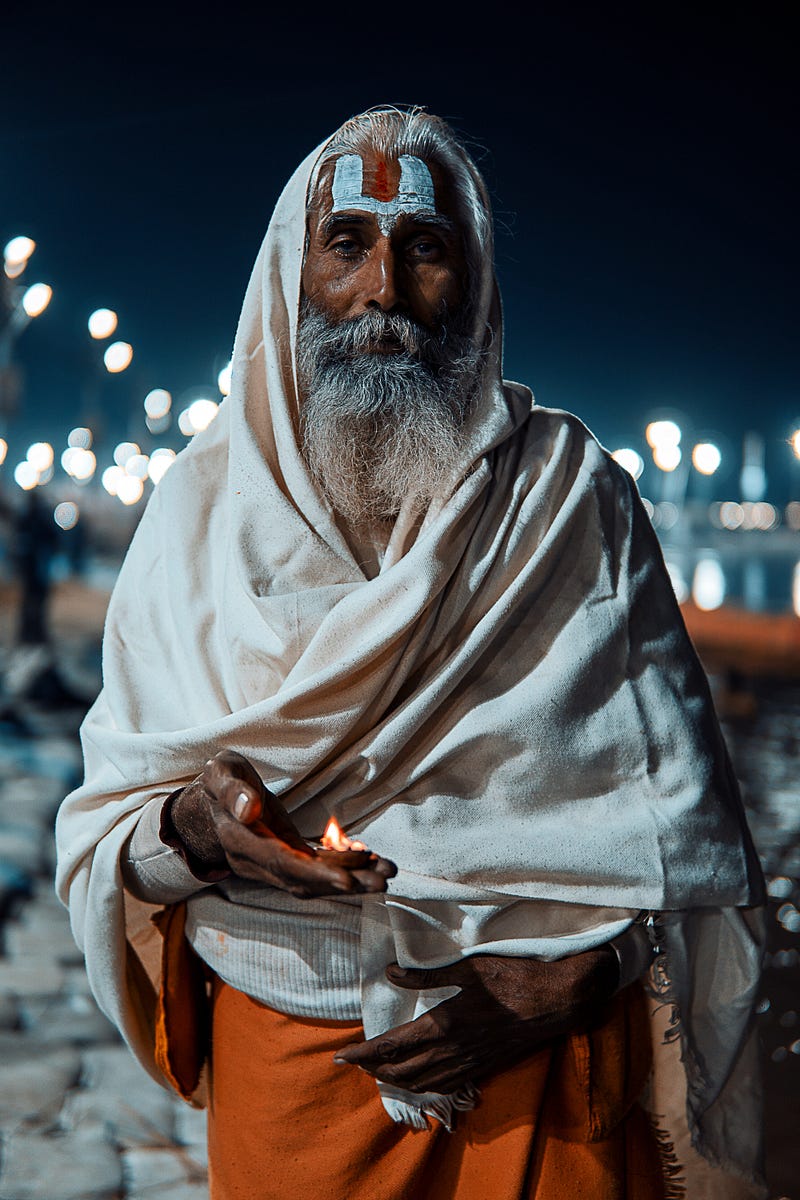
Ancient Hindu Saint and Physician ‘Dhanvantri’ was one of the Navaratnas (Nine Gems) in the court of King Vikramaditya(c. 380 — c. 415 CE). His methods of treatment were so effective that Hindus still revere him as the God of Ayurveda.
Chinese traveller ‘Fahien’ once visited him to find the secret to happiness he claimed to have discovered.
Dhanvantri took Fahien to the beautiful garden in the Ujjain court of Vikramaditya. He told him to pluck one red rose from the flower bed nearby.
Fahien bent and carefully plucked the rose, avoiding all the thorns. Dhanvantari extended his hand to take the rose and asked him, “Are you angry because the rose put thorns in your way.” “No, of course not,” Fahien replied.
“The evolution has made the rose grow thorns to protect itself. It’s the past of rose of which we know nothing about,” Dhanvantari continued.
“This is the first secret to happiness- Sometimes in life, you are the rose and other times a plucker. And neither of them is bad.”
Dhanvantri continued, “Words work in the same manner.”
1: Words
Everyone has faced something hard in life which we know nothing about. That’s what makes them say things they rarely mean. Those harsh words are like the thorns of a rose.
Be empathetic enough to understand that they had their own journey, which makes them see things and say things the way they do. Don’t take their words to heart.
Also, do not react to everything with words. We should learn to observe every person keeping the above lines in mind. Then we could feel the pain behind everyone’s harsh words.
They might be having the hardest day of their life. And we might be completely unaware of it.
The same goes for us. Sometimes we say things we never mean. We should forgive ourselves the moment we realize this. We aren’t bad. We just had a bad moment.
Takeaway
This doesn’t mean we should grow thorns all around us and say whatever we want. Our words do more harm than we realize. They sometimes leave permanent scars on the minds of people.
“Every stone we throw in the mud will spoil our clothes too"
What comes out of our mouths affects our happiness. Every hurtful word uttered even for someone else makes an impression on our minds too.
Always mind your words. Learn what to say and what to let go of.
How to do:
Whenever a situation requires my response, I ask myself if the situation demands my immediate reaction. If it doesn’t, I pause and ask myself, 'Is it really necessary to even react?’ If it is not, I choose to smile and let go.
If it requires my immediate response, I still try to give the person the benefit of doubt. He might be speaking out of his years of prejudice, priming, and lack of knowledge. Realizing this automatically makes my response positive and constructive.
If sometimes, however, I say something which I shouldn’t have; I don’t beat myself up. I give the same benefit of the doubt to myself, too.
Dhanvantari then took Fahien to the other part of the garden where rosemary shrubs were growing. He bent down this time, took out a knife and cut one shrub from the stem.
After stripping the leaves from the bottom, he carefully planted the stem in the ground nearby.
“One has to cut the stem off the right length,” he said.
“Too short, it won’t grow. Too long, it won’t grow either” he continued. “Pruning is necessary for the bushier plant”.
“That’s the second secret to happiness. Right action. Not too much. Not too little.”
“What if someone doesn’t know the right course of action?”, asked Fahien.
“Then, pause and observe. Soon you will find someone doing it the right way,” Dhanvantri replied.
2: Actions
Our actions decide what kind of environment we create around ourselves.
They can help grow beautiful rosemary all around us. They can also destroy already blooming ones. Our happiness depends directly on our actions and reactions.
Be mindful of how you react to any situation. If you don’t know the right course of action in a particular event, do the action of observing silently. There is no need to react immediately unless it is a matter of someone’s life.
Sometimes, doing nothing is better than doing anything that comes to mind.
Takeaway
We cannot make everyone happy, but that doesn’t mean we cannot make someone happy.
Don’t worry about hurting people inadvertently. Just make sure you don’t do that on purpose. Because if you do, the ghost of guilt will haunt you forever.
How to do:
Because of years of priming, our brain makes us react to any situation without us giving much thought to it. Mostly when we lose our temper, it is due to this priming only.
We all try to control our anger and the reaction which stems from it. I will not tell you to suppress the anger. Once conceived, it’s better that anger finds its way out or else it will come out on the wrong person at an unexpected moment.
Instead, what I suggest is balancing the negative action with some positive one. Whenever I get angry or do something which I shouldn’t have, I buy sweets for the person I have wronged.
This not only makes me and the person feel better. It also imprints the event permanently on my mind. Then, I hardly do something wrong with that person again.
After all, we cannot end the darkness. We can just light the candle in hope.
“Do you know why we pull out the weeds?”, asked Dhanvantri as they circled back to the courtroom.
“Yes, because they are unwanted plants which impede the growth of the beautiful flowers,” Fahien replied.
“Not only they prevent healthy growth. They also make the surroundings of a flower look untidy and ugly,”
“But remember,” Dhanvantri continued, “Removing them from the vicinity of a flower doesn’t mean they are utterly useless in themselves. It just means they don’t go along with that flower. They, however, might look beautiful when grown around weeds of its kind.”
“This is the third secret to happiness- Control your surroundings.”
3: People
“Our lives are exactly what people are in it. Period.”
Whether happy or sad, our life is a product of people we hang out with. Their presence has a direct impact on our happiness. Positive people create an atmosphere of happiness and growth in our life. Negative people make life seem dull and empty.
Keep yourself away from the negative people for a while until you learn how to deal with such people. Even if it means keeping away from family members or a best friend. Do it until your brain can handle such people without being affected.
Takeaway
“The goal is to grow so strong from the inside that no one can affect your inner happiness without your conscious permission”
Once we train our mind to deal with negative people, the mind itself shields us from the words and actions of negative people. We then can co-exist with them without letting them have any negative influence on us. This means we can be happy even around negative people.
How to do:
Hindu monk Dandapani calls these people “energy vampires”. He teaches the art of dealing with such people.
But remember, Just because we need to remove some people from our life doesn’t mean they are bad people. If someone removes us from their life doesn’t mean we are bad either.
It means we both are not right just for each other.
Final Takeaway
I started controlling words, actions and people in my environment a few months ago. What I noticed is that my energy started attracting positive people with no effort from my side; even from across the world — case in point: Graceygee (a passionate yoga instructor from Germany), Sanem Tekkaya (An Author and Co-Founder of SUS-talks from Turkey), Mira Koteva(An Award-winning actor and writer from Bulgaria).
I reconnected with old friends who have a growth mindset. I started waking up at 4 a.m. just to meet other like-minded people in the gym.
I started following my passion — writing. Not that I didn’t have the energy earlier to follow my passion after my regular work. It was just that my energy was being drained into unproductive activities without me even noticing it.
Yes, I get sad once in a while, but I do not worry about it anymore. Without the existence of sadness, happiness had no existence either.
“We are all a happy person at the core. The problem is that we all have buried happiness under the hill of ego. The ego forces us to say things and do things to people who don’t even matter to us.” said Dhanvantri.
“Happiness is not something to be found outside or in the wilderness of the Himalayas,” he said as he bid goodbye to Fahien, “It is something to be discovered inside.”


