
Ancient Egyptians’ Affinity with Cats
“In ancient Egypt, cats were worshipped as gods. Cats have never forgotten this.” — Terry Pratchett
Arrival in Luxor
Luxor is the ancient city called “Thebes” and is an open-air museum of Egyptian history. Every day archaeologists are making discoveries. I was excited with the anticipation of actually seeing the archaeological sites I had studied in books and National Geographic magazines. My to-do list included:
- Find a new tomb in The Valley of the Kings.
- Decipher hieroglyphics in Karnak.
- Sketch Luxor Temple.
- Explore the female pharaoh's tomb — Hatshepsut.
- Gaze at the brightly colored murals in the Tomb of Tut Ankh Amun.
My first day in Luxor was hot and dusty, and I was one of the few tourists in the town. We were waiting for a dhow (sailboat) to take me from the west to the east bank of the Nile to the hotel. I sat on my suitcase, drinking water, in the afternoon sun and absorbed the echo of the late afternoon prayer call floating from the minarets joining in a chorus and the sound reverberating from each side of the river.
After the prayer call, vendors started to approach me as I waited for the boat. Their faces were warm and weathered from their hard work under the sun. One older man in a khaki kandora and a white turban had a toothless smile inviting me to see his small cat statue souvenirs. Although my guide was trying to stand between us so the vendors wouldn't hassle me, he couldn't stop me from glancing at the small cat figurines wrapped in a frayed hessian cloth.
I said, “Salam Alaikum (a greeting — Peace be With You). You like cats?” He replied, “Alakaum Salaam”. “ All Egyptians love cats!” I placed my hand on my heart as I recalled how the cat was a divine symbol in Egyptian history and permeated their art and culture. As a cat lover, I seek out all kinds of feline statues and art on my trips to Egypt.
Cats in Ancient Egyptian Culture
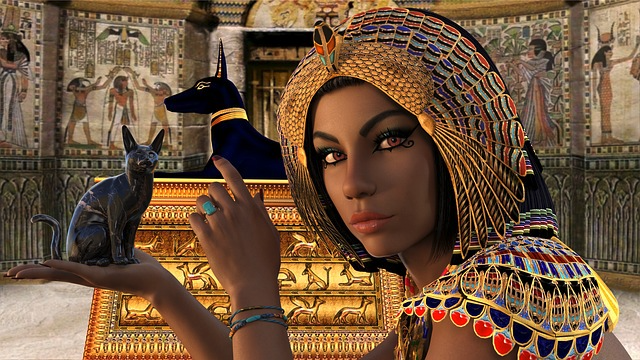
Cats held a very honored place in ancient Egyptian culture. In Luxor, they have found inscriptions to cats from the 18th through to the 26th dynasties. Their practical use was to keep the granaries and houses free of mice, but cats were also pampered domestic pets. Even unintentionally, hurting or killing a cat was met with the death penalty in ancient Egypt, reflecting the esteemed position of cats in ancient Egyptian culture.
Cleopatra’s Cat
Cleopatra loved cats, and they claim her pet was an Egyptian Mau, one of the first domesticated cats in the world. “Mau” is the sound of the cat and perhaps an ancient Egyptian word. They are spotted short-haired cats with green or amber eyes and tend to be very friendly and loyal.
Cat Cemeteries
Wealthy families honored their cats, dressing them in jewels and spoilt them with cat treats. When their cats died, as a sign of mourning, their owners shaved their eyebrows and were in mourning until their brows grew back.
The reverence for cats is evidenced in the cat cemeteries excavated by archaeologists. In 2018, archaeologists unearthed tombs near Cairo dated over 4500 years old. In these tombs were thousands of mummified cats and statues. Cemeteries for cats date back to 1000 BC in Egypt. Cats were also buried in human graves. The cats were dressed, decorated, and mummified, and provided safety on the journey to the afterlife. There was a belief that cats also passed to the afterlife.
Bastet — the Feline Goddess and her City
“Bastet is a rarity. The Goddess of the moon and of the sun. She represents the duality in all women, docile yet aggressive, nurturing yet ferocious.” Frances Conroy — Ophelia
Bastet is probably the best-known feline goddess in Egyptian mythology. She protected the home and its inhabitants from infectious diseases and evil spirits. She was also a symbol of feminism and fertility and the protector of maternal instincts. Originally depicted as a lioness, Bastet transformed to the image of a cat or a feline-headed woman in the 2nd millennium BCE. Bastet was linked with the scents of lavender.
In honor of the Goddess Bastet, the pharaohs of the 19th dynasty (1292–1190 BCE) constructed a magnificent temple of red granite known as Per-Bast to the Egyptians. The name is the sound when you call a cat to you. The cat goddess was known as Buobastis by the Greeks, and the Latin version was Bubastis. This city was located in the Delta region of Lower Egypt on the Nile River. People from all over Egypt came to the city to pay their respects, and elaborate festivals were held in her honor. You can still visit the ruins of the temple, which are located southeast of Zagazig.
Cats in the Battle of Pelusiam
Egyptians reverence for cats was utilized as a military strategy in 343 BC. There is an old legend set in the city of Pelusian. The Achaemenid Empire, a vast empire often referred to as the First Persian Empire, attacked the Egyptian army.
The most devasting Egyptian weapon of war was the chariot because of its speed and swords attached to the wheels. So the enemy leader pondered how he would stop the Egyptians’ most efficient war machine (chariots). With a strong knowledge of Egyptian culture, one of his majors suggested unleashing thousands of cats on the battlefield, which would neutralize the power of the Egyptians, as the chariots would hurt the cats if they charged.
As soon as the Egyptians saw the cats, the army could not believe their eyes. The soldiers were motionless in fear of injuring or killing the cats. They could not maneuver around the cats, so they had to leave their chariots and fought where they stood. The soldiers were disadvantaged without their ability to move safely without injuring the cats or using their chariots. Overwhelmed from the emotional shock of seeing their beloved cats at risk, their priority was to protect the cats. They had to defend Egypt from where they stood. Many Egyptian soldiers died that day, protecting the lives of their feline friends, and the battle was lost. The Persians celebrated their first conquest of Egypt.
So next time your cat demands your attention, remember the rich history and position of her ancestors, the soldiers who lost their lives for the cats, and her role in protecting the home from pandemics. She may even protect you and your house.
Enjoy more of my stories here or in my Flipboard Magazine.
Join Medium for $5 a month to write your own story. $2.27 goes directly to the writer (me). I will spend it wisely on a cafe latte in my favorite coffee shop, pretend to be JK Rowling, and be inspired to write more.
Briddy is an Australian writer enjoying freedom in her Feisty Fifties. If you enjoyed her writing — sign up for her email list so new stories go direct to your mailbox. She looks forward to connecting with other writers and readers around the world through Medium. Twitter handle is @BriddyBrigid.
.