
Competitive Pressure on Product
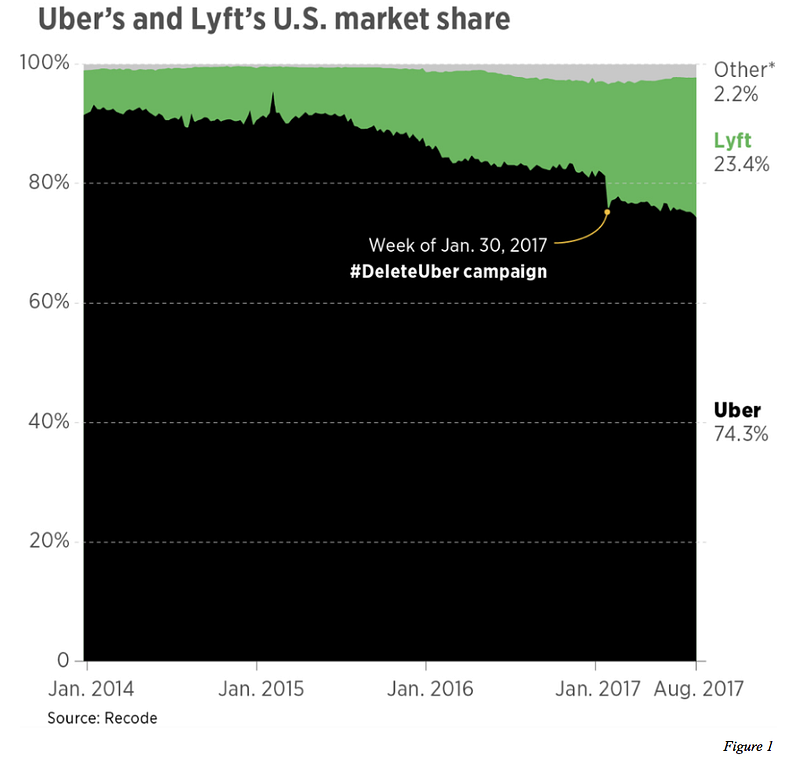
In Part 3 of this series, we covered how seasonality affects product usage. User behavior is also affected by competition and other external events, such as government actions, new products and social media campaigns. These factors can dramatically change how your users engage with your product. When Turkey blocked access to Facebook in 2016, the site’s number of daily active users dropped. And Uber saw a dramatic drop in usage and overall market share due to the #DeleteUber campaign (see Figure 1).
Generally, the larger the change in a key metric and the shorter the time frame in which it changes, the easier it is to identify the cause. This is particularly true with many external events, although the effects of competition are often difficult to quantify.
ANALYZING COMPETITION
The impact of competition on your product can be subtle and difficult to identify — and even harder to fix. This is because competition generally manifests as churn; while we can identify that people are churning, it is difficult if not impossible to know whether people are leaving for a competitor without user experience (UX) research.
Consider the example from the music industry show in Figure 2. Pandora was growing steadily until Spotify’s growth started to pick up speed.
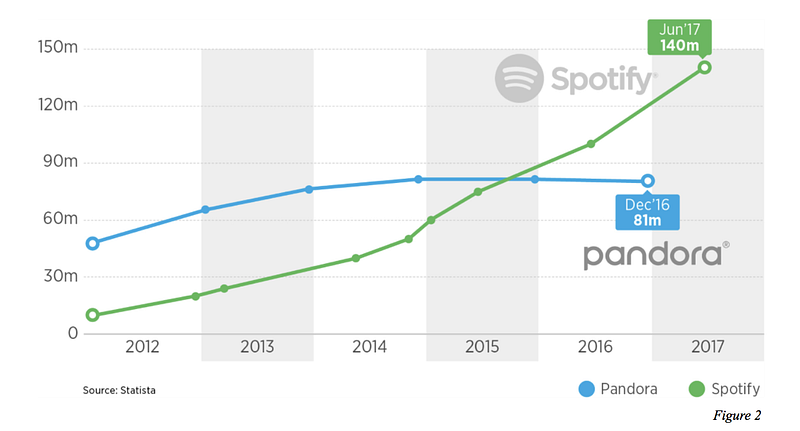
It is likely that users began moving from Pandora to Spotify, further accelerating Spotify’s growth and flattening Pandora’s. However, it is difficult to quantify this shift precisely. Leveraging third-party datasets that cover your industry (App Annie for usage, credit card panels for consumer spending, etc.) and frequently commissioning user surveys will help you understand how competition is cannibalizing your user base. But this is very hard to do well, and even the best analysis is usually directional. We will dedicate a future post to understanding competition, cannibalization and incrementality.
ANALYZING EVENTS
Understanding the impact of a singular external events is often relatively easy, as such events often trigger abrupt movement in key metrics that make correlations clear. The example of the #DeleteUber campaign (in Figure 1) is one such case.
ANALYZING MACRO TRENDS
Similar to behavioral changes due to competition, long-term behavioral trends are challenging to detect but can be guided by UX research.
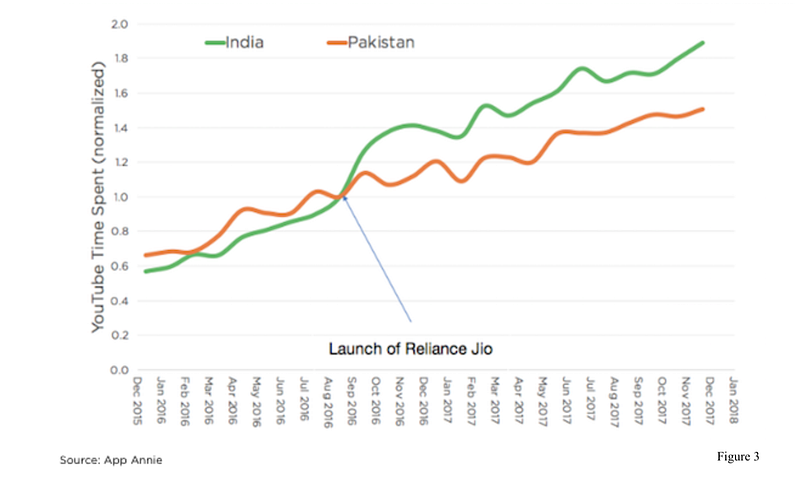
These macro changes are often driven by external events — for example, the introduction of low-cost 4G connectivity in India (Reliance Jio) made internet access in that country cheaper and more reliable, which in turn dramatically shifted the time people in India spent on YouTube (see Figure 3).
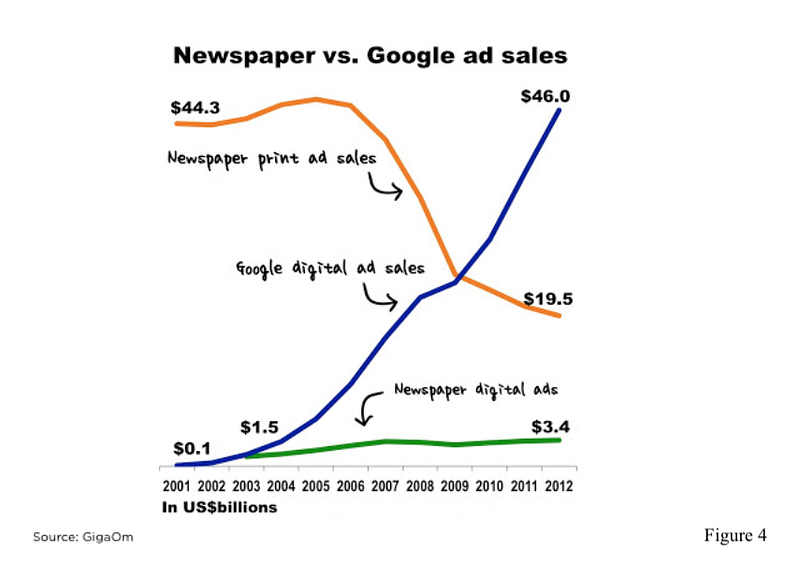
Of course, the impacts of such macro changes are not all positive. In Figure 4, we see how increased access to broadband internet changed the way consumers obtained their news. While Google’s ad sales dramatically improved, American newspapers saw print circulation decline quickly, which later manifested in significantly lower revenue from ad sales.
CLOSING THOUGHTS
External factors can dramatically affect the performance of your product, and most — aside from macro trends — are difficult to predict. However, if you are disciplined in monitoring key metrics and ensure your company has strong analytical DNA, you will be better positioned to take advantage of opportunities and mitigate the negative impacts of external events.
TAKEAWAYS
- Effects from competition are difficult to measure and address but industry data sources can offer direction.
- Singular external events usually result in abrupt changes to metrics.
- Macro trends may dramatically affect metrics for your product, but will usually do so over an extended period of time.
This work is a product of Sequoia Capital’s Data Science team. Jamie Cuffe, Avanika Narayan, Chandra Narayanan, Hem Wadhar and Jenny Wang contributed to this post. Please email [email protected] with questions, comments and other feedback.
Originally published at www.sequoiacap.com

This story is published in The Startup, Medium’s largest entrepreneurship publication followed by 355,974+ people.
Subscribe to receive our top stories here.


