avatarInstitute for the Study of Diplomacy

Free AI web copilot to create summaries, insights and extended knowledge, download it at here

6528

Abstract

’s Note</i>: Nesmith playfully encourages Burton, drawling “Aw, pick it, Luther” midway through the renowned chicken pickin’ guitar solo in a nod to Johnny Cash’s original lead guitarist Luther Perkins.] James also led me to the Wrecking Crew. I didn’t follow Rick’s work at all.</p><figure id="4ccf"><img src="https://cdn-images-1.readmedium.com/v2/resize:fit:800/1*HZDCimzchmzc8JS_zl2T7A.jpeg"><figcaption><b>Twenty-four-year-old newly married rocker Rick Nelson shields his eyes from an unrelenting sun for the album cover of “The Very Thought of You,” dropped with little notice during the onslaught of the British Invasion on August 3, 1964, via Decca Records. The bouncy title cut, a clever reimagining of a pop standard written in the 1930s and cut by Bing Crosby, was nearly Nelson’s final Top 30 single until the iconic “Garden Party” literally arrived outta nowhere eight years later. Image Credit: 45Worlds user Vidman45 / Universal Music Group</b></figcaption></figure><p id="971d"><b>In hindsight, was RCA Victor the best label to launch your solo career?</b></p><p id="85d1">It was the only option I had. By that time the Monkees were a pariah among the show business and creative community — and the Monkees fans were confused by this. My venture into my solo efforts was not well received in 1969 but I think the RCA execs thought they could market my music on the back of my Monkees celebrity in a way no other record company could.</p><p id="8c03">However as time went on they actually became interested in the songwriting and Felton Jarvis and Chet Atkins took notice — but no one — not even them — from the record company got too close. They didn’t know what to make of the Monkees backlash and so they sat on the sidelines well clear of me to see how it would all shake out. I can hardly blame them. Those were rough seas.</p><figure id="d8dd"><img src="https://cdn-images-1.readmedium.com/v2/resize:fit:800/1*ZWYt0CPTl7Cb45nTTqnJeQ.jpeg"><figcaption><b>Pedal steel guitarist Red Rhodes, bassist John London, partially obscured drummer John Ware, and Michael “Papa Nez” Nesmith constitute the First National Band in this revealing 1970 candid, possibly taken during a television taping due to the confined stage area. Image Credit: The Dana Harris Rhodes Collection</b></figcaption></figure><p id="573b"><b>The B-side to “Silver Moon” was “Lady of the Valley”, both ultimately included on <i>Loose Salute</i> in December 1970. Red Rhodes has a memorable pedal steel solo, the rhythm section is locked in tight on a Latin-influenced groove, and your multilayered vocals have a soothing, ethereal effect, particularly on the following couplet: “Days, sleeping days, waves, gentle waves, join in the rhyme…” Can you recall your inspiration for the song?</b></p><p id="51aa">“Lady of the Valley” was one of those songs that Red propelled. The sonics of his steel and the way he played it seemed to make the song appear in my head almost complete. I think I recall sitting in rehearsal one day and starting to play the song and it came out almost all in one piece.</p><p id="32fc"><b>In listening to your effective covers of “Tumbling Tumbleweeds” [<i>Nevada Fighter</i>, May 1971] and “Prairie Lullaby” [<i>Pretty Much Your Standard Ranch Stash</i>, October 1973]</b>, <b>I am reminded of the B-western singing cowboy phenomenon of the late ’30s thru early ’50s, an era when the Sons of the Pioneers, Roy Rogers, Gene Autry, and Tex Ritter captured the hearts of many adolescents and adults alike. In fact, ”Tumbling Tumbleweeds” made its official debut in the 1935 Autry film of the same name. As a young boy growing up in Texas, did you attend Saturday matinees and possibly develop an admiration for any of the singing cowboys?</b></p><p id="0af7">I was never very interested in singing cowboys. I didn’t understand the creative dynamic. It was more a source of puzzlement than inspiration. So I did not go to the movies or buy the outfits. Some adults would give me hats or cap pistols — but I never used them.</p><figure id="4057"><img src="https://cdn-images-1.readmedium.com/v2/resize:fit:800/1*jgPXhlIdlABMwhqeZEE-tQ.jpeg"><figcaption><b><i>Papa Nez tackles a guitar riff on his ubiquitous Black Beauty Gibson Les Paul at the RCA Music Center of the World recording studio in Hollywood circa 1971. Image Credit: Videoranch3D</i></b></figcaption></figure><p id="de65"><b>“Mama Rocker” contains one of your best rock ’n’ roll vocals alongside some dynamic, fuzz-drenched guitars recorded with the short-lived Second National Band. Where did you get the idea for the song?</b></p><p id="a686">The band was a lifeboat band when the First National Band disassembled. Mike Cohen [keyboards, Moog synthesizer] and drummer Jack Ranelli were advanced musicians and opened some doors for me I don’t think I could have gone through otherwise.</p><p id="2e98">“Mama Rocker”, the lead-off track on <i>Tantamount to Treason</i> [February 1972] was one of them — although I don’t know if they ever got the connection between the inspiration for that and their jazz chops.</p><p id="97d6"><b>Does “Roll with the Flow”, a tale of an individualist’s encounter with a lackluster lover who tries to convince him to build a relationship and a didactic minister who wants to convert him to Christianity, accurately reflect your life philosophy? The applicable final verse, “In the final analysis it’s foolish if you resist the changes that come into your everyday life, there might be some trepidation but don’t let hesitation deprive you of hope and try to replace it with fear…”, demonstrates that the song is worthy of rediscovery. The chorus has a sing-along vibe that appears to be tailor-made for a live setting.</b></p><p id="8e4c">The last song on <i>And the Hits Just Keep on Comin’</i> [August 1972], it has some of the early notions of my present thought about things — constant change has a familiar ring to all of us — but the song is not so much about that. It is more Taoist than anything, although I hate to saddle a tune like “Roll with the Flow” with such weight.</p><p id="02f4">I thought it might flourish at the hands of some hard rockers but I have no clue who that might be — and the rhyme and meter don’t seem to be natural to contemporary music. The most notable aspect of the song in my life was that my Uncle Chick asked me to play it several times whenever I visited him.</p><figure id="411d"><img src="https://cdn-images-1.readmedium.com/v2/resize:fit:800/1*pBIQ-DenOFyozrZclV2lZA.jpeg"><figcaptio

Options

n><b>Papa Nez embraces his inner cowboy as he defiantly wears a psychedelically inspired Nudie suit circa 1972, actually also worn to the premiere of the Monkees’ commercially underwhelming “Head” film in November 1968. The image also appears on the European CD reissue coupling “Magnetic South” and “Loose Salute.” <i>Image Credit: Camden International / Sony Music Entertainment</i></b></figcaption></figure><p id="573f"><b>In the early twenty-tens you toured significantly compared to the previous 30 years. Did it have an adverse or positive effect on your writing?</b></p><p id="06b8">Very positive in terms of making me want to do more performing — but I haven’t started “writing to the band” yet. I am comfortable with Paul Leim and bassist Joe Chemay but Chris Scruggs [mandolin, steel guitar, six-string guitar] and keyboardist Boh Cooper are discoveries for me and I am excited by what they are teaching me.</p><p id="58b3">I have more to learn before I start writing here. Just the thrill of playing the tunes I have written over 50 years with this group is about as much fun as I can stand right now — and it takes all my time. I am so glad I decided to do this. It has been an unimagined joy [<i>Author’s Note:</i> Much to fans’ consternation, Nesmith bowed out of the Monkees’ highly publicized 50th Anniversary Tour in 2016 to complete his debut memoir, <a href="http://www.videoranch3d.com/infinite-tuesday.html"><i>Infinite Tuesday: An Autobiographical Riff</i></a>, although he was thoroughly involved in their Top 20 comeback record, <i>Good Times!, </i>circulated earlier that summer].</p><figure id="6e56"><img src="https://cdn-images-1.readmedium.com/v2/resize:fit:800/1*UkF-Aea5pSeB2ktQAW2lJQ.jpeg"><figcaption><b>On August 5, 2016, Michael Nesmith mischievously clutches a pair of mustard yellow Converse sneakers backstage during a rare guest appearance on the Monkees’ 50th Anniversary Tour at the Golden State Theater in Monterey, California. Photography by Gemma “Coco” Dolenz [younger sister of Micky Dolenz]</b></figcaption></figure> <figure id="d3dc"> <div> <div> <img class="ratio" src="http://placehold.it/16x9"> <iframe class="" src="https://cdn.embedly.com/widgets/media.html?src=https%3A%2F%2Fwww.youtube.com%2Fembed%2FsdiEMIbqkBg%3Ffeature%3Doembed&amp;url=http%3A%2F%2Fwww.youtube.com%2Fwatch%3Fv%3DsdiEMIbqkBg&amp;image=https%3A%2F%2Fi.ytimg.com%2Fvi%2FsdiEMIbqkBg%2Fhqdefault.jpg&amp;key=a19fcc184b9711e1b4764040d3dc5c07&amp;type=text%2Fhtml&amp;schema=youtube" allowfullscreen="" frameborder="0" height="480" width="640"> </div> </div> </figure></iframe></div></div></figure> <figure id="9ec0"> <div> <div> <img class="ratio" src="http://placehold.it/16x9"> <iframe class="" src="https://cdn.embedly.com/widgets/media.html?src=https%3A%2F%2Fwww.youtube.com%2Fembed%2FbTEz-7QjsyI%3Ffeature%3Doembed&amp;url=http%3A%2F%2Fwww.youtube.com%2Fwatch%3Fv%3DbTEz-7QjsyI&amp;image=https%3A%2F%2Fi.ytimg.com%2Fvi%2FbTEz-7QjsyI%2Fhqdefault.jpg&amp;key=d04bfffea46d4aeda930ec88cc64b87c&amp;type=text%2Fhtml&amp;schema=youtube" allowfullscreen="" frameborder="0" height="480" width="854"> </div> </div> </figure></iframe></div></div></figure> <figure id="c456"> <div> <div> <img class="ratio" src="http://placehold.it/16x9"> <iframe class="" src="https://cdn.embedly.com/widgets/media.html?src=https%3A%2F%2Fwww.youtube.com%2Fembed%2FDEUM5cUhLfM%3Ffeature%3Doembed&amp;url=http%3A%2F%2Fwww.youtube.com%2Fwatch%3Fv%3DDEUM5cUhLfM&amp;image=https%3A%2F%2Fi.ytimg.com%2Fvi%2FDEUM5cUhLfM%2Fhqdefault.jpg&amp;key=a19fcc184b9711e1b4764040d3dc5c07&amp;type=text%2Fhtml&amp;schema=youtube" allowfullscreen="" frameborder="0" height="480" width="640"> </div> </div> </figure></iframe></div></div></figure><div id="1119" class="link-block"> <a href="https://readmedium.com/monkee-micky-dolenz-promises-piston-power-in-a-city-near-you-d6ff96e302a5"> <div> <div> <h2>Monkee Micky Dolenz promises piston power in a city near you</h2> <div><h3>Oddball Gretsch drummer Micky Dolenz tallied 12 Top 40 A-sides on Billboard’s Hot 100 with the Monkees, still the most…</h3></div> <div><p>medium.com</p></div> </div> <div> <div style="background-image: url(https://miro.readmedium.com/v2/resize:fit:320/1*uV-7hk5Nl88rAysjXEKhOQ.jpeg)"></div> </div> </div> </a> </div><div id="398c" class="link-block"> <a href="https://readmedium.com/you-dont-need-love-to-love-insists-monkees-heartthrob-davy-jones-ecc2479051b1"> <div> <div> <h2>You don’t need love to love insists Monkees heartthrob Davy Jones</h2> <div><h3>“You gotta have love to love, they all say it works that way, but if it’s true, why do I love you?” “Love to Love” was…</h3></div> <div><p>medium.com</p></div> </div> <div> <div style="background-image: url(https://miro.readmedium.com/v2/resize:fit:320/1*o7BORTUFirHCDSbQytXdFQ.jpeg)"></div> </div> </div> </a> </div><div id="12a8" class="link-block"> <a href="https://readmedium.com/listen-to-the-band-when-the-monkees-slayed-jacksonville-s-florida-theatre-97ec1e5616dd"> <div> <div> <h2>‘Listen to the Band!’ When the Monkees slayed Jacksonville’s Florida Theatre</h2> <div><h3>The Monkees performed a dose of good clean fun on June 6, 2011, at the historic Florida Theatre in Jacksonville…</h3></div> <div><p>medium.com</p></div> </div> <div> <div style="background-image: url(https://miro.readmedium.com/v2/resize:fit:320/1*Pi2b3hFJLZcUNh0FB1n3gw.jpeg)"></div> </div> </div> </a> </div><p id="6a2f"><i>© Jeremy Roberts, 2013, 2017. All rights reserved. To touch base, email <a href="mailto:[email protected]"></a></i><a href="mailto:[email protected]">[email protected]<i></i></a><i> and mention which story led you my way. I appreciate it sincerely.</i></p></article></body>

Analysis | Strategic corruption exemplified (Part 1): Russia, the progenitor

Kelly McFarland

As part of our New Global Commons Working Group series on emerging diplomatic challenges, funded by the Carnegie Corporation of New York’s Bridging the Gap Initiative, ISD has convened a working group on combatting strategic corruption, building on the findings of its fall working group “Kleptocracy: Confronting Corruption at Home and Abroad.” This post is part of a series on strategic corruption, drawing on the research and discussions of ISD’s spring working group.
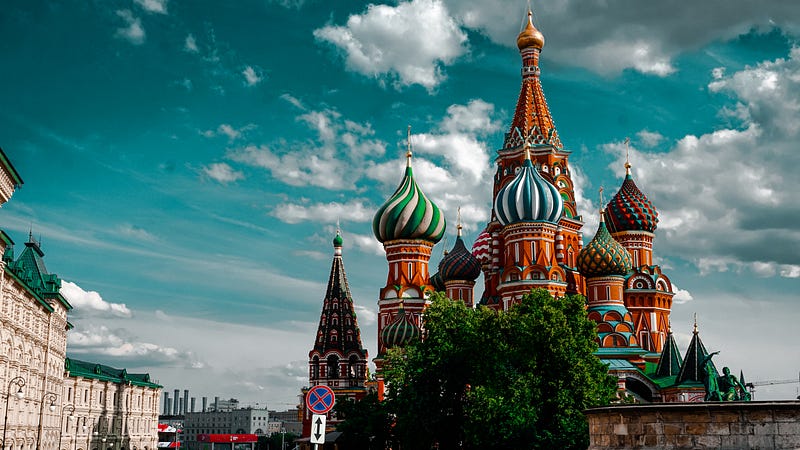
The Russian government has become highly effective in deploying strategic corruption. (Image: Felipe Simo on Unsplash)

In our first post in this series, we broadly defined strategic corruption as the exploitation of official positions, resources, and processes for geopolitical purposes. Increasingly, autocracies the world over are deploying corruption as a strategic weapon to undermine democratic institutions and weaken the defenses of their adversaries. No one does this better than Russia and China. Both countries use corruption to gain a stranglehold over other countries’ key industries and infrastructure, create leverage over politicians and other leaders, curtail negative depictions of and actions toward their regimes abroad, and muddy the waters in domestic elections. These efforts have been increasingly successful– and they’re just getting started.

Our next few blog posts in this series will examine each of these countries individually, and their strategies for utilizing corrosive capital, malign influence, and election interference to create an increased level of influence in target countries and regions, weaken democracies from the inside, and gain space to operate and spread their forms of authoritarian government. Up first, Russia.

A government dependent on corruption

Since the fall of the Soviet Union, the Russian government has been built upon corruption and kleptocracy. As Matthew H. Murray, Alexander Vindman, and Dominic Cruz Bustillos highlight, “in Russia…corruption is not simply a matter of individual officials abusing public power for private gain but, rather, an organizing principle of governance. Formal government decision-making is captured by informal networks of political and business patrons who control the allocation of public resources.” This, as the authors note, means that the “rule of law poses a strategic threat.” Because of this, “Russia seeks to combat the U.S.-led post-Cold War liberalization of global trade, finance and markets. It is pushing oligarchic control as an alternative to the Western model of a free market driven by private-sector competition based on the protection of private property.”

More specifically, as a Center for International and Strategic Studies (CSIS) report demonstrates, “Russia seeks to gain influence over (if not control of) [other countries’] critical state institutions, bodies, and the economy and uses this influence to shape national policies and decisions.” This can, at times, lead to what the CSIS authors refer to as “state capture.” In order to do so, Russia “uses state-owned enterprises in the energy and defense sector, private business surrogates, money laundering, and financing of political campaigns.”

Energy: Russia’s ultimate weapon

Arguably the most important weapon in Russia’s strategic corruption toolkit is energy, which is on stark display today. Moscow uses all of the tools at its disposal, including kickbacks, bribes, stoppages, and entrenched middle men to gain leverage over governments through its supply of oil and gas. According to the CSIS report, “Russia uses a price determination scheme that depends more on a country’s reliance on Russian supplies and the dominant role of a single company on the market rather than on domestic and regional energy demand.”

The authors go on to note that:

On the one hand, Russia has been able to offer very lucrative delivery, transit, and/or service contracts to regional leaders to entice them into making concessions on other important deals and issues central to its interests in countries. But Russia has also been able to take advantage of the debts that local gas distributers are often forced to incur in order to purchase Russian natural gas as a pretext for the temporary cancellation or suspension of contracts, which have political consequences and have prompted civil protests.

This is all the more worrisome for many Eastern European countries because many of them receive the majority, or the totality, of their gas from Russia. These same gas industries, most notably Gazprom, are conduits for funneling money to Russian oligarchs and external groups and individuals. In 2011 alone, according to a Transparency International report, “the total amount of loss due to waste and corruption in Gazprom may have reached $40 billion USD, compared to $44.7 billion USD in profits. Time and again, Gazprom made decisions that were not in the financial interests of the company, but which enabled it to funnel wealth to individuals.” In one notable example that has direct ties to U.S. politics, Ukrainian tycoon Dimitry Firtash, former Gazprom middle-man in Ukraine, and head of the Turkmenistan-Ukraine-Russia gas trade, paid $1 million to Lev Parnas and Igor Fruman. These two were partnered with Rudy Giuliani and front and center in the tangled web of President Trump’s first impeachment over his attempted blackmail of Ukrainian President Volodymyr Zelensky.

Elections: The ultimate prize

Russian individuals and entities began donating “dark money” to Western populist parties beginning in 2014 using the money they had gained through corruption. This included 9.4 million Euros to French far-right populist Marie Le Pen as thanks “for publicly endorsing Russia’s annexation of Crimea.” The money came from “a Czech bank ultimately owned by Gennady Timchenko, an alleged former KGB operative from St. Petersburg who worked closely with Putin and became the sixth richest Russian by trading oil bought at a discount from Russian state-owned supplies,” according to Josh Rudolph, of the Alliance for Securing Democracy .

In another instance, which demonstrates the influence Russia can gain through dark money political donations, “former Lithuanian President Rolandas Paksas…was accused of having received campaign financing from individuals suspected to be linked to Russian organized crime, in exchange for granting them Lithuanian citizenship and for divulging classified information on investigations into their business dealings.”

Gazprom and other Russian energy companies play a key role in political party funding. In Lithuania and Latvia, for example, “a single firm formed by the manager of the local Lukoil subsidiary reportedly funded multiple political parties opposed to the entry of Western energy firms into local markets. In Croatia…Russian firms reportedly funded political parties in order to empower local friendly politicians.” In arguably the most notorious case, former German Chancellor Gerard Schroder is on the board of Russian energy giant Rosneft, a seat which he has conspicuously refused to give up amidst Russia’s attack on Ukraine.

Bulgaria is a prime example of Russian influence bordering on “state capture.” The Kremlin dominates foreign direct investment (FDI) in strategic sectors of Bulgaria’s economy and Gazprom is the country’s “sole natural gas provider.” Russia has used “its dominant position in strategic sectors to strengthen existing relationships and cultivate new ones with corrupt businessmen and local oligarchs. These businessmen, in turn, are linked to prominent politicians over whom they exert considerable control. The politicians cut deals that benefit businesses and deepen their power within the country’s corrupt networks and over state institutions. Increasingly, the middle step is removed and the pro-Russian local businessman enter politics themselves and attain positions of prominence whining state institutions to directly promote pro-Russian business interests and politics.”

New Generation Warfare

Energy sector corruption, election interference, and ultimately, state capture come together to form part of what Russia calls its doctrine of New Generation Warfare, which seeks to break “the internal coherence of the enemy system.” Over decades, they have taken their kleptocratic networks– originally built to stabilize the post-Soviet Russian regime– and weaponized them, using them to transfer key elements of their internal systems abroad and undermine their democratic adversaries.

There is no question that these efforts have been successful in some instances. The question is: What will democracies do to fight back?

This publication was made possible in part by a grant from the Carnegie Corporation of New York. The statements made and views expressed are solely the responsibility of the authors.

Kelly McFarland is a U.S. diplomatic historian and the director of programs and research at the Institute for the Study of Diplomacy. Follow him on Twitter @McFarlandKellyM.

More from ISD’s Fall and Spring Working Groups on Corruption:

Diplomacy
Corruption
Russia
Ukraine
Authoritarianism
Recommended from ReadMedium