
An Update From Inside China #4
Education and Business Edition

Welcome back to the latest in my regular updates from within China.
Today’s update is focused on business and education, and as always, I’m telling it from my experience living and working as a teacher in Shanghai.
The main focus for today’s update will be on the delay of the school semester and the forced closure of all learning centers and other businesses across Shanghai. This development has been devastating for the expat community in China because education is how the vast majority of us make a living.
Let’s get started.

Scratching Out a Living During a Crisis
Today (Monday, February 10th) marks the first day of ‘camp week.’
Camp week is ordinarily the week before school begins, it’s a time when students start taking week-long “camps” focused on specific educational disciplines.
In Australia, a camp is very literal. The students go out to a campsite and learn about self-reliance and bravery etc. In China, a camp (in regards to students) means a week when the kids go to a learning center every day and learn either English, math, or anything else their parents choose.
This is the week when students brush up on their academic skills before heading back to school and resuming typical study.
This is how things would typically go, but the coronavirus changed everything. No one is leaving their house, yet Chinese parents haven’t become any less fervent about the importance of education. The government has forced all learning centers to remain closed until further notice and has delayed the start of the official school semester.
Students everywhere are turning to the screen for their education, and out-of-work educators (such as myself) are scrambling to catch their attention.
Usually, I’d be swimming in work and would be exerting minimal effort to gain it. My agent here in Shanghai finds schools that have the budget for a foreign teacher, then I show up and teach either debate or drama (depending on what I’ve been booked to teach). I commit to a 17 week semester, then go back into negotiations once the semester is over.
The coronavirus has left all of us out to dry, and now we’re fighting to make a living from our living rooms until the government allows schools and learning centers to re-open. For me, it’s meant weeks of researching and writing online courses. However, it turns out that teaching online is very different from teaching in person, and requires a different skill set.
Can you imagine moderating a six-way debate taking place on a video call? It’s completely different and has none of the benefits of an in-person discussion. The very meaning of debate has to be re-imagined when it comes to online learning; nothing can be taken for granted.

Fighting Skepticism
Parents are very skeptical of online learning, so the transition hasn’t been anywhere near as smooth as a lot of people predicted.
A lot of educators felt that Chinese parents would naturally switch their children from in-person classes to online, the transition feeling obligatory because of the virus.
Unfortunately, it hasn’t happened this way, and that’s been because of mistakes made in the past by online educators.
After the SARS epidemic in 2003, people realized that an online education option was needed. The Chinese middle-class was forming, and people began to realise they had disposable incomes. With their new wealth, they wanted to invest more in their children’s education. Like everywhere else in the world, Chinese parents want a better life for their children than they had.
Online education companies starting forming all over the world to try and exploit this need, and earn a share in the new Chinese wealth. While some companies provided responsible and valuable courses, many didn’t. They’d lie about the credibility of their teachers, and waste class-time spewing nonsense. Since arriving in Shanghai three years ago, I’ve heard hundreds of stories from parents who’ve felt ripped off by online education and vowed never to try it again.
It was always these stories that stopped me from ever trying to pursue this avenue of making money, and why I’ve been dreading the day I knew was coming ever since the coronavirus hit the news.
I have to make this work, and so do countless other educators across the country. If the SARS virus is anything to go by, hundreds of education companies will go bankrupt before this crisis is over.
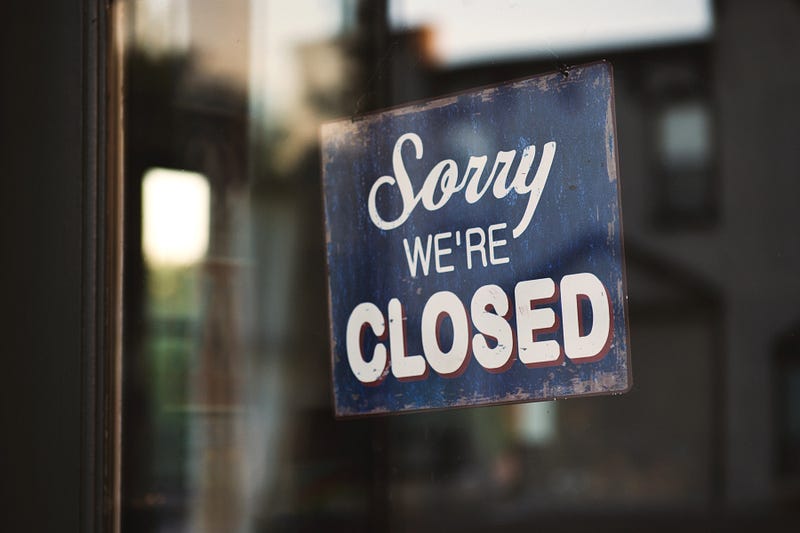
Thousands of Businesses Will Go Under
Potentially thousands of businesses of all kinds across the country won’t survive this crisis.
Every mall in the area I live in has now been closed. I have to travel further downtown to find a mall that’s still open, but inside only the supermarket and a few designer boutiques are still running. The restaurants, Apple store, Starbucks, and most other stores have closed.
Continuing to pay rent without making an income will force the permanent closure of most of the businesses that go under because of this crisis. I suspect state-owned companies will be bailed out by the government, but everyone else is on their own.
International brands such as Starbucks and Apple will absorb the losses, but smaller brands won’t. The government has mandated that companies continue to pay employees that aren’t working because of forced closures. Employees that are working should be paid overtime and compensated later with extra vacation days.
I’ve been asking around, and no-one has confirmed to me that their company is honoring this mandate. Most corporate offices that have been forced to closed are being run by their employees from home and are being paid their regular salary.
Even call center employees are answering calls while sitting on their living room sofas in their pajamas. Employees that work are being paid, as usual, ones that aren’t working aren’t being paid, and this includes most of my teacher friends and myself.
We could try and find someone to complain to, but even if found someone who cared, a financial penalty could destroy a company during a time like this. Then we’d be even more screwed.
So now I’m in marketer mode. I’ve written and am marketing several debate, writing, and public speaking courses that take place entirely online.
Unlike people across the world, I have the advantage of years of networking in this city and a track record of good results. Regardless, it’s still no guarantee of success, and any one of us can find ourselves out of work at any time.
The longer this crisis goes, the more of us will fall. #tossacointoyourteacher
As the situation develops, I’ll keep writing updates that will keep you informed of the crisis from within. If you have questions or want to know more about an issue, let me know in the comments.
Stay safe, don’t stress, but do remain prepared.


