avatarCaterina

Free AI web copilot to create summaries, insights and extended knowledge, download it at here

2601

Abstract

ecdotes.</p><p id="dd45" type="7">Among all of these, the one that fascinated me the most was Candomblé.</p><p id="5a5f">You could notice practitioners of Candomblé by their voluminous full white clothes, the pop-corn baskets (offerings to the spirits they worshipped, called <i>‘orixás’</i>), statues of such spirits spread across the city, and simply, in the conversations of people.</p><p id="92d3">One day, I had an encounter with an <i>orixá</i>, not in the sacred context you would expect. It happened when I visited the Cultural Afro-Brazilian Museum in the center of Salvador.</p><p id="b7a9">Perhaps because it was a weekday, the museum was empty, except for another couple.</p><p id="914f" type="7">One day, I had an encounter with an orixá, not in the sacred context you would expect. It happened when I visited the Cultural Afro Brazilian Museum in the center of Salvador.</p><p id="dff0">While talking with an improvised guide (a young Venezuelan who had run away from his country and found this job while staying at his aunt’s in Salvador), I learned that the museum was running out of funds and would likely close soon. A pity.</p><p id="c5b2">It wasn’t until I walked in and saw this goddess sleeping that I was rendered speechless.</p><p id="e54a">I was utterly mesmerized.</p><figure id="bd8c"><img src="https://cdn-images-1.readmedium.com/v2/resize:fit:800/1*A0BXhpSBzn10d_w5OdBERw.jpeg"><figcaption></figcaption></figure><figure id="8230"><img src="https://cdn-images-1.readmedium.com/v2/resize:fit:800/1*qWXLKs7wfBISInVfYL71wA.jpeg"><figcaption>Photo from the Author</figcaption></figure><p id="81f8">This was <i>Yemanjá</i>, the orixá of the water.</p><p id="6470">She’s also considered the mother of all the <i>orixás.</i></p><p id="1818">I returned a few days later to draw her, and the guide even brought a chair for me. This time, the museum was completely empty.</p><figure id="cfc8"><img src="https://cdn-images-1.readmedium.com/v2/resize:fit:800/1*UgudJhQy6fr4Xqq5eBU6vw.jpeg"><figcaption>Definitely not the best drawings, but… — Photo from the Author</figcaption></figure><p id="7500"><i>Yemanjá</i> is often syncretized with either Our Lady of Regla (Black Virgin in the Afro-Cuban diaspora) or various other Virgin Mary figures of the Catholic Church.</p><p id="fac1">Frequently depicted as a mermaid, her statues, objects, and paintings are scattered throughout Salvador.</p><p id="5983"><i>Yemanjá</i> is associated with the moon, water, and feminine mysteries, serving as the protector of women. She governs everything related to women, including parenting, child sa

Options

fety, love, and healing.</p><p id="3df2"><b>On that day at the museum, I felt a sense of feminine suffering in <i>Yemanjá</i>’s face, while her sleeping pose emanated a strong sense of mystery that I couldn’t penetrate.</b></p><p id="1bd4">According to myth, when her waters broke, it caused a great flood, creating rivers and streams, and the first mortal humans were born from her womb.</p><figure id="70d4"><img src="https://cdn-images-1.readmedium.com/v2/resize:fit:800/1*h6Asd0p8jvmSfjS4g3NgoA.jpeg"><figcaption>A temple dedicated to Yemanjá in Salvador— Photo from the Author</figcaption></figure><p id="27fc">This is how a museum standing on the brink of closure set the stage for a spiritual encounter.</p><p id="3090">Now, I realize that it wasn’t just the museum, but the entire city of Salvador de Bahia that exuded a sense of spiritual whisper — what people commonly call <i>‘Axé’</i>, in Yoruba language, meaning the sacred energy present in everything, derived from the <i>orixás.</i></p><p id="2220">I name <a href="undefined">Tim Ward, Mature Flâneur</a> for his interesting explanation on Christmas Metamodernism:</p><div id="7954" class="link-block"> <a href="https://readmedium.com/christmas-lights-miracle-on-south-13th-street-philadelphia-eb525cb787ae"> <div> <div> <h2>A Christmas Light Miracle on South 13th Street, Philadelphia</h2> <div><h3>Have yourself a metamodern little Christmas</h3></div> <div><p>medium.com</p></div> </div> <div> <div style="background-image: url(https://miro.readmedium.com/v2/resize:fit:320/1*[email protected])"></div> </div> </div> </a> </div><p id="0641">and <a href="undefined">Su Guillory</a> for her description of a fascinating place in Italy I didn’t know:</p><div id="9ed8" class="link-block"> <a href="https://suguillory.medium.com/celebrating-the-winter-solstice-in-eerie-argimusco-sicily-af2b080325e7"> <div> <div> <h2>Celebrating the Winter Solstice in Eerie Argimusco, Sicily</h2> <div><h3>Time stopped in Sicily on the Winter Solstice. Were we in another era?</h3></div> <div><p>suguillory.medium.com</p></div> </div> <div> <div style="background-image: url(https://miro.readmedium.com/v2/resize:fit:320/0*zBpSlwK2T1vdZrC0.jpg)"></div> </div> </div> </a> </div></article></body>

An Unexpected Encounter With a Goddess

In plain city center of a Brazilian city.
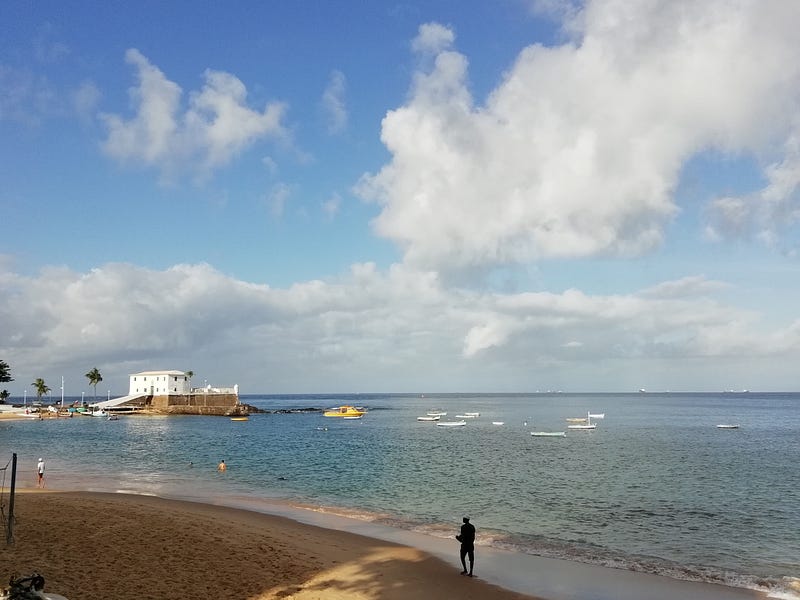
Photo from the Author

In 2018, I spent a summer in Salvador de Bahia, Brazil.

I participated in a program that involved living with a Brazilian family while volunteering in a public school in a disadvantaged neighborhood.

Reflecting on that time sparks a range of intense emotions and reflections within me every time. Over the years, I repeatedly delved into and attempted to make sense of this experience, but, to date, it still often feels overwhelming.

In 2018, I was in my early 20s and I was studying and living in Portugal — a country worlds apart from Brazil in many aspects, despite the shared history between the two. I was absorbing new notions and cultures at the pace of a jackhammer.

Among the cultural facts I couldn’t help but notice everywhere in Salvador de Bahia was the emphasis on faith.

While in Portugal, and even more predominantly in my home country, Italy, the main faith to which you would be exposed was Christian Catholicism, in Bahia, there was an explosion of faiths originating from Europe, different parts of Africa, as well as native indigenous beliefs.

These faiths overlapped each other, resulting in a whirlwind of dances, loud sermons in the street, giant churches, traditional clothing, and spiritual anecdotes.

Among all of these, the one that fascinated me the most was Candomblé.
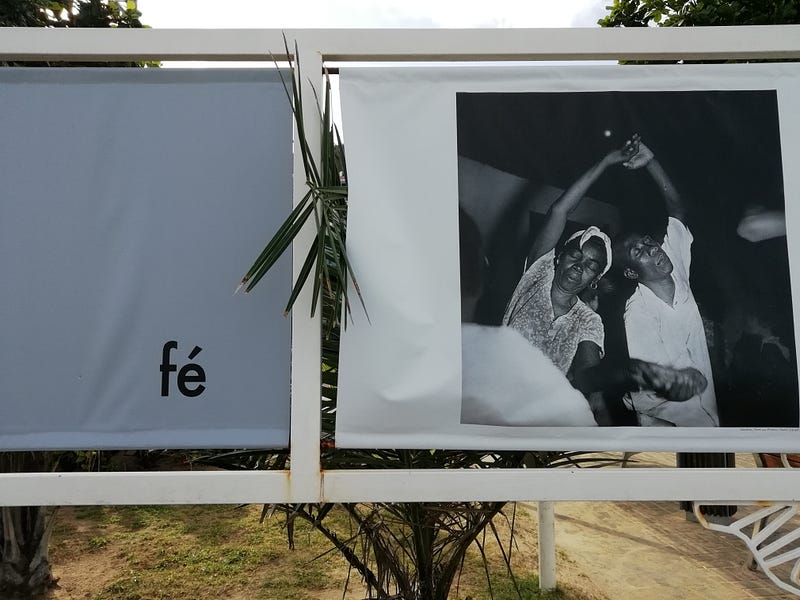
An open-air photography exposition in Salvador on ‘Fé’, meaning ‘Faith’ in Portuguese. — Photo from the Author

Candomblé is a religion that developed in Brazil among Afro-Brazilian communities during the Atlantic slave trade from the 16th to the 19th centuries. It resulted from a fusion of West African religions and Portuguese Christianity.

In a nutshell, slaves, who were forced to hide their beliefs, paired every African god with a Roman Catholic saint, giving rise to a process called ‘syncretism.’

These faiths overlapped each other, resulting in a whirlwind of dances, loud sermons in the street, giant churches, traditional clothing, and spiritual anecdotes.

Among all of these, the one that fascinated me the most was Candomblé.

You could notice practitioners of Candomblé by their voluminous full white clothes, the pop-corn baskets (offerings to the spirits they worshipped, called ‘orixás’), statues of such spirits spread across the city, and simply, in the conversations of people.

One day, I had an encounter with an orixá, not in the sacred context you would expect. It happened when I visited the Cultural Afro-Brazilian Museum in the center of Salvador.

Perhaps because it was a weekday, the museum was empty, except for another couple.

One day, I had an encounter with an orixá, not in the sacred context you would expect. It happened when I visited the Cultural Afro Brazilian Museum in the center of Salvador.

While talking with an improvised guide (a young Venezuelan who had run away from his country and found this job while staying at his aunt’s in Salvador), I learned that the museum was running out of funds and would likely close soon. A pity.

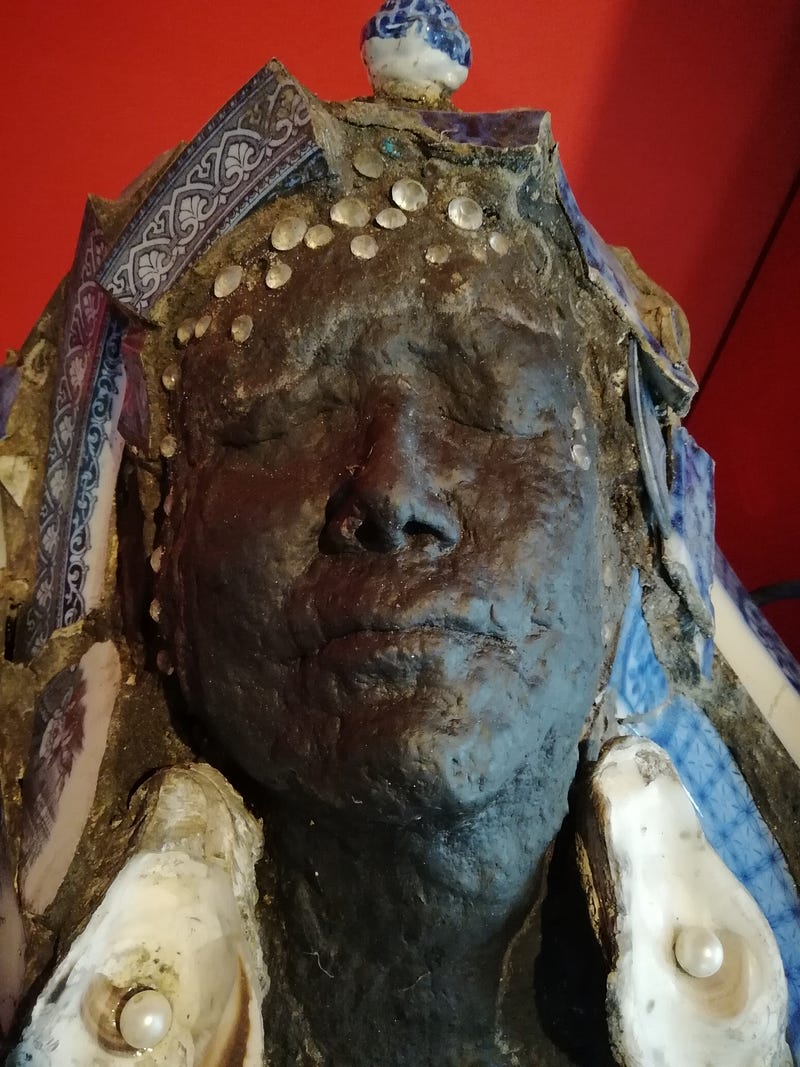
It wasn’t until I walked in and saw this goddess sleeping that I was rendered speechless.

I was utterly mesmerized.
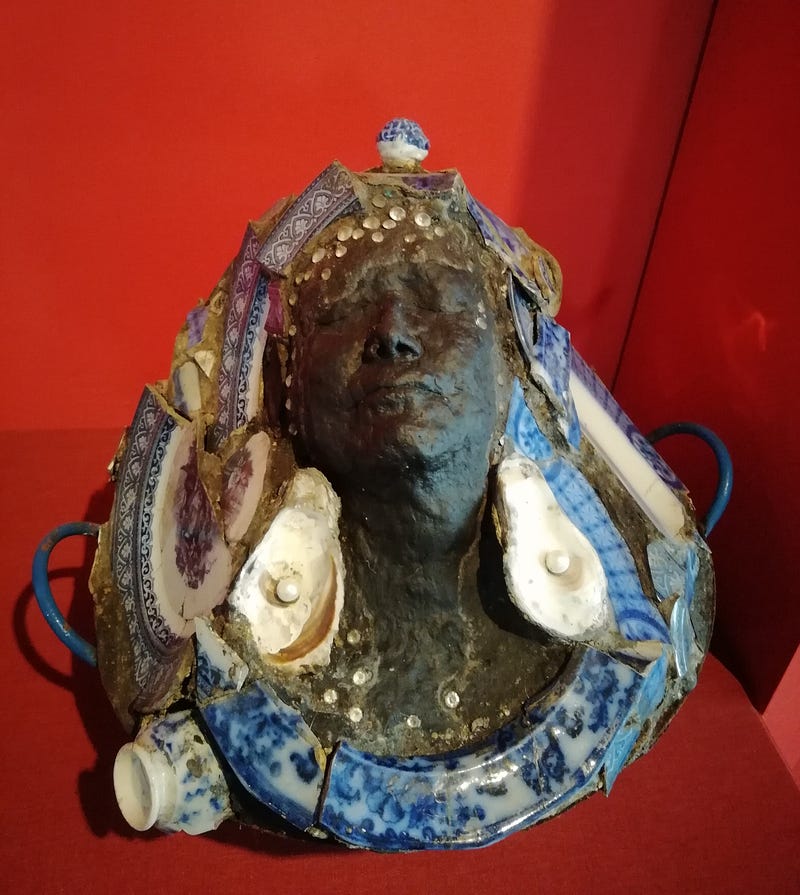
Photo from the Author

This was Yemanjá, the orixá of the water.

She’s also considered the mother of all the orixás.

I returned a few days later to draw her, and the guide even brought a chair for me. This time, the museum was completely empty.
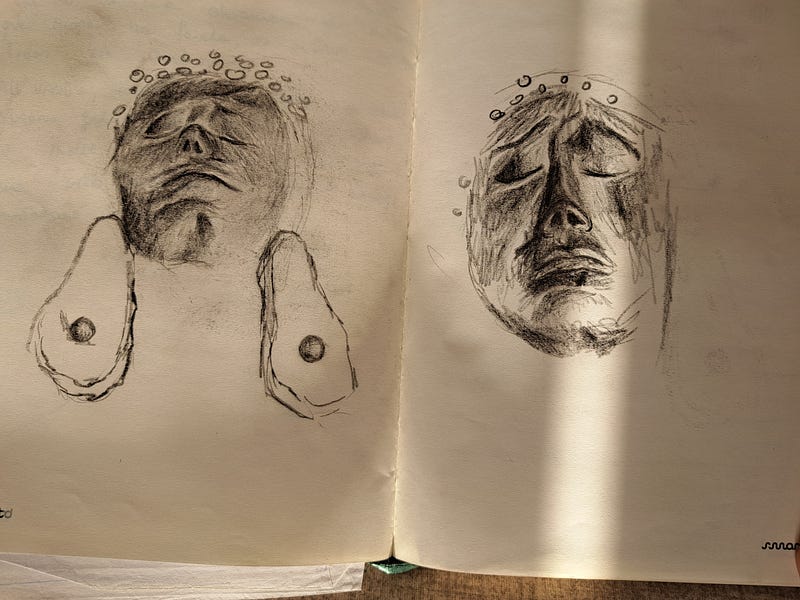
Definitely not the best drawings, but… — Photo from the Author

Yemanjá is often syncretized with either Our Lady of Regla (Black Virgin in the Afro-Cuban diaspora) or various other Virgin Mary figures of the Catholic Church.

Frequently depicted as a mermaid, her statues, objects, and paintings are scattered throughout Salvador.

Yemanjá is associated with the moon, water, and feminine mysteries, serving as the protector of women. She governs everything related to women, including parenting, child safety, love, and healing.

On that day at the museum, I felt a sense of feminine suffering in Yemanjá’s face, while her sleeping pose emanated a strong sense of mystery that I couldn’t penetrate.

According to myth, when her waters broke, it caused a great flood, creating rivers and streams, and the first mortal humans were born from her womb.
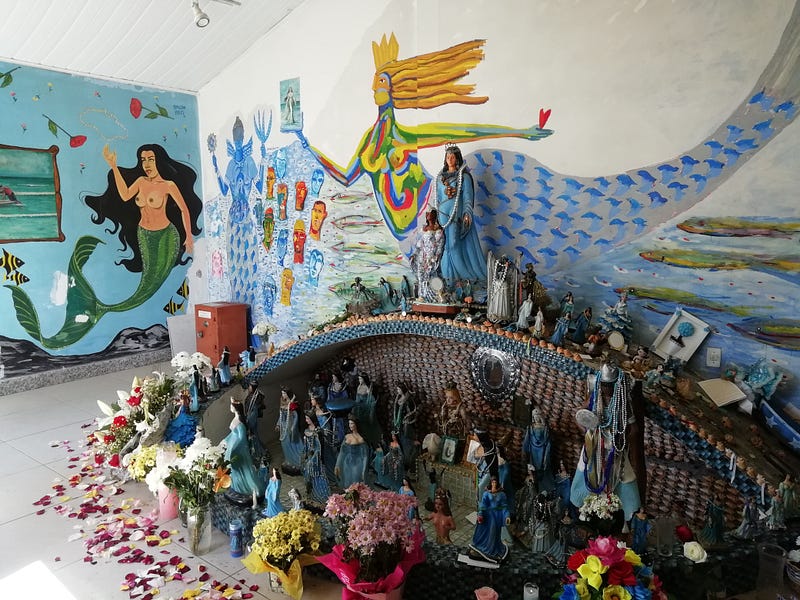
A temple dedicated to Yemanjá in Salvador— Photo from the Author

This is how a museum standing on the brink of closure set the stage for a spiritual encounter.

Now, I realize that it wasn’t just the museum, but the entire city of Salvador de Bahia that exuded a sense of spiritual whisper — what people commonly call ‘Axé’, in Yoruba language, meaning the sacred energy present in everything, derived from the orixás.

I name Tim Ward, Mature Flâneur for his interesting explanation on Christmas Metamodernism:

and Su Guillory for her description of a fascinating place in Italy I didn’t know:

Globetrotter
Monthly Challenge
Travel
Brazil
Faith
Recommended from ReadMedium