
An Underhanded Yet Great Way to Inspire Teenagers to Read
Welcome to the Contraband Book Club
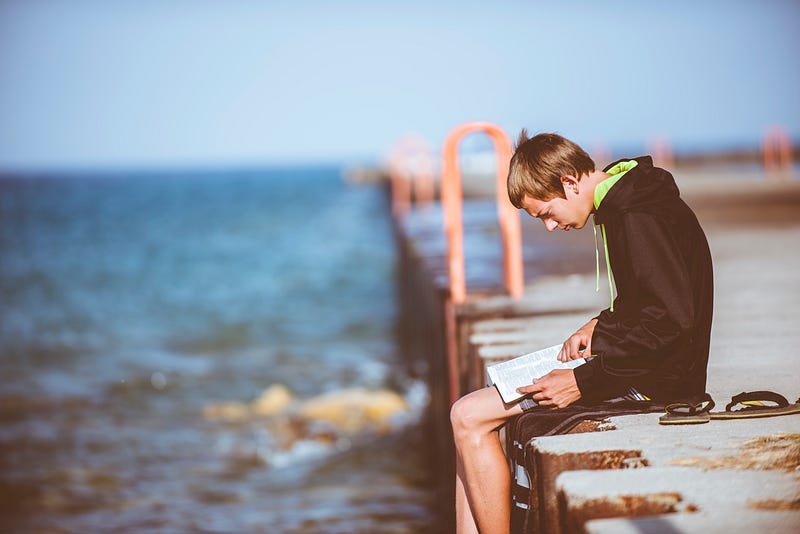
Inspiring ninth-grade boys to read can be a near-impossible job, but that’s because schools go about it the wrong way. I know because I disliked reading as a teenager and later found myself on the other side of the fence as a teacher.
Reading is a vital part of living.
I didn’t find my love of reading until I left school, but now it’s a vital part of living. And a special joy is when a friend gives you — or you discover — a book at just the right moment. So it wasn’t that I didn’t enjoy reading when I was growing up. It was simply that the compulsorily assigned texts didn’t inspire me to read. They bore no relevance to my life.
Fifteen is an age of figuring out who we are in the world. When wanting to discover who you are in relation to society, it seems antithetical for society to assign a compulsory text to an individual. This is a big problem for teachers and students. Texts are selected because they bear literary strength, not because they connect with where teens are at.
As a ninth-grade English teacher, I would carefully select a book that might interest an individual student and package it in a brown paper bag. I would then quietly hand the package to the student in the schoolyard (never in a classroom) while looking over my shoulder to make out as if it’s important no one was looking. I would quickly walk away without looking back.
A week or so later, the student would find me in the schoolyard and return the book in much the same fashion it was given to them. Few words were spoken in the exchange, but I’d later ask them what they liked about it. We never once dissected the book.
A few weeks would pass, and they would ask, “Got more where that last one came from, Mr. B?”
Choosing the right book for someone is a great way of saying, “I see you!”
This is how the Contraband Book Club was born. Okay, so the books weren’t exactly contraband or even controversial. But they did have the individual figuring out who they are in the world. And the brown paper bag gave the impression they were reading something perhaps they shouldn’t be reading. Above all, choosing the right book for someone is a great way of saying, “I see you!”
Some classics at the time were Ishmael by Daniel Quinn, The Alchemist by Paulo Coelho, Jonathon Livingstone Seagull by Richard Bach, Siddhartha and The Glass Bead Game by Hermann Hesse, and A Fortunate Life by A.B. Facey.
I never bothered with young-adult literature, although there’s some great novels out there. It was more powerful for me, as an adult, to acknowledge the adult within them.
Before teaching a student how to dissect a literary text it is important to inspire them to read.
Books teach us empathy and how to see the world in new ways. Reading helps us discover who we are in relation to the world. And something as simple as a brown-paper bag can help do that.
What books changed you as a teenager? Which ones helped you discover who you are?


