
Essay
An Owie that Protects
A visit to a vaccine site
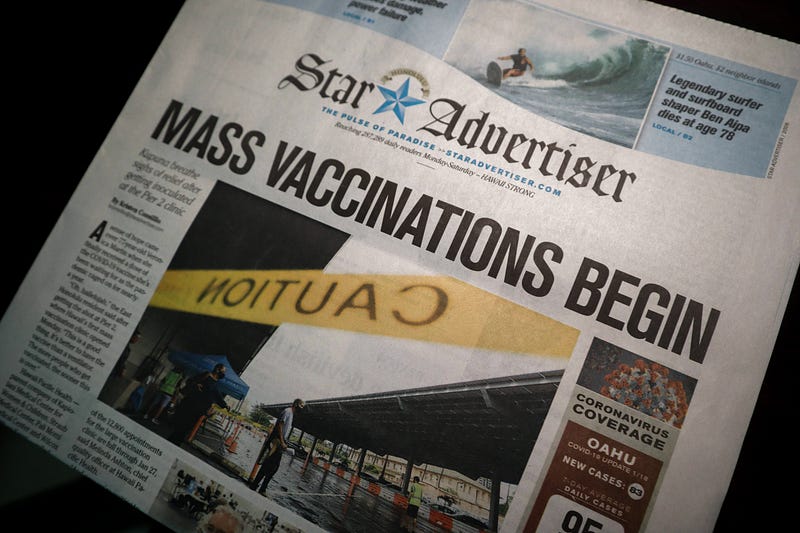
Today I received my first dose of the Pfizer COVID vaccine. All morning long before piling into the car and making the 45-minute, 35-mile drive to the State Farm Stadium in Glendale, Arizona, I had mixed feelings of fear. Fear of the jab of an unknown vaccine (my first in at least 40 years) and fear that due to the COVID variants from the UK, Brazil, and South Africa, the vaccine would not sufficiently protect me.
I was a relative newbie to vaccines. Despite yearly recommendations to get a flu vaccine for age 55-and-over, I’ve avoided doing this. Not so much because I was scared of a 20-second “owie,” but because I felt my immune system was strong enough to deal with any flu strain I might come into contact with. Also, as a freelance writer, I felt I didn’t see that many people face-to-face so I wasn’t in a high-risk category.
But today was different, and reason prevailed. There was no way I was going to refuse a drug that might save my life even if I might need a booster every year after that, which was what scientists were currently telling the public. It was the price of living in a global society. It was also the price of electing a self-absorbed megalomaniac for a president and counting on people to self-discipline to contain instead of spread a novel virus.
As I sat in the comfort of my home awaiting my departure, I reflected on another time when polio threatened the well-being of a population, and parents prayed for a vaccine. When it finally came in the form of the Salk vaccine, great joy exploded across the country and we were once free to go wherever and do everything we desired.
I have led a privileged life if you consider the health risks my generation was spared. Oh, there were scares of spinal meningitis, mononucleosis, and later tuberculosis and AIDS, but my generation was spared much of the horrors of disease. Instead, our horrors took the form of wars (Vietnam and the Gulf), domestic protests, and governmental scandals, the latest being the insurrection incited by President Trump against the Capitol in Washington, D.C.
I thought about our current scourge and the miseries it has brought. As we drove to the State Farm Stadium in Glendale — a site that President Biden recently visited virtually, proclaiming it a model of vaccine organization — I found it hard to believe that Arizona was a model of anything healthy. Less than one percent of our population had been vaccinated, and we had a governor who still allowed restaurants to basically operate unregulated. But maybe things were changing, I mused.
I ran into a lot of traffic in both directions on the interstate. I wondered how many of the cars on this strip of the highway were headed toward the same vaccine destination.
A day later I learned not that many had been headed there. According to a poll from the Associated Press-NORC Center for Public Affairs Research, only two in three Americans planned to get vaccinated. The remaining third doubted the vaccine’s safety and effectiveness. Dr. Anthony Fauci, of the NIH, says if this holds true, the nation will not gain herd immunity, and this will further delay the containment of COVID and risk more lives.
But last night I didn’t have that knowledge so I was feeling upbeat and patriotic. I felt that not only was I keeping myself safe, but I was also helping to eradicate the virus. How could I not muster a sense of well-being under those circumstances?
Driving through the parking area at the State Farm Stadium was like maneuvering through an obstacle course. Workers wearing reflective vests checked documents, which consisted of computer-generated appointment reservations and license IDs.
Then they crayoned codes on the front windshield. Although our appointment was not scheduled until around 9 pm, we were early. But no one scolded us, and we cruised from station to station answering questions such as:
What is your birth date?
Do you take blood thinners?
Do you suffer from COPD, diabetes, heart, or kidney disease?
Do you have a history of allergic reactions to vaccines?
Workers asked these questions at more than one station. We also were cautioned repeatedly that if we felt we were having a serious reaction to the vaccine that we should blare our horn or in some way communicate our need for help.
I was impressed with the sincerity and personal interaction of the workers with prospective vaccine inoculees, all the more considering that the workers had probably been educating and interrogating hundreds of people for hours.
The workers who actually inoculated my husband and I asked us which arm we preferred to extend. Still in our cars, we felt a brief two-second stab, and it was over. Professionally executed and so fast that it wasn’t until the next morning that I realized that the technician had slapped a bandaid over my puncture.
At the last station, we were handed vaccine cards, and workers scheduled appointments three weeks from that date to receive the second injection. A worker even cleaned the crayon marks from our windshield with a cloth.
Then still maneuvering my Nissan Rogue around a few more cones and signs with arrows, I drove out of the parking lot and onto the fast-moving highway that would lead me home.
As I drove, I started feeling a soreness in my arm, and later that evening, it became more intense. It was a small price to pay for getting the first injection of the two-part Pfizer vaccine. I felt better than I had in a week dominated by two tragedies: the death of a beloved dog and that of a close friend.
If I can communicate anything by telling my story of the simple, painless vaccination I recently experienced, it would be to try to convince others to do the same. We’re all in this together, but only if we act in concert.