avatarAbhinav Vinci

Free AI web copilot to create summaries, insights and extended knowledge, download it at here

2020

Abstract

e for fast writes.</li><li>Periodically, the memtable is flushed to disk, usually in sorted order, creating a new on-disk data structure known as a sorted string table (SSTable).</li></ul><h2 id="18cd">3. Periodic Merge Operations for efficient storage:</h2><p id="f06e">As SSTables accumulate on disk, LSM databases periodically merge them together to maintain efficient storage and query performance.</p><ul><li>During a merge operation, overlapping SSTables are combined and compacted to produce a new, larger SSTable with sorted and deduplicated data.</li><li>This process helps reduce disk space usage and improves query performance by reducing the number of disk seeks required for read operations.</li></ul><figure id="c8f5"><img src="https://cdn-images-1.readmedium.com/v2/resize:fit:800/1*Kx2VRKg1mamjeY4_qp4TKA.png"><figcaption><a href="https://en.wikipedia.org/wiki/Log-structured_merge-tree">https://en.wikipedia.org/wiki/Log-structured_merge-tree</a></figcaption></figure><h2 id="201b">4. Sorted data for efficient Query Processing:</h2><p id="1e2b">LSM databases support efficient query processing by maintaining sorted data on disk.</p><ul><li>When querying data, LSM databases typically search through the in-memory memtable and the on-disk SSTables in a sorted manner, leveraging techniques like binary search to efficiently locate and retrieve data.</li></ul><h2 id="8e98">5. Configurable Consistency and Durability:</h2><p id="839a">LSM databases typically provide configurable levels of consistency and durability.</p><ul><li>Write operations are durable due to the use of a WAL, and durability guarantees can be adjusted based on application requirements.</li></ul><figure id="b9e3"><img src="https://cdn-images-1.readmedium.com/v2/resize:fit:800/1*0DvAG--BPgQXbLjLviYc2w.png"><figcaption><a href="https://medium.com/@dwivedi.ankit21/lsm-trees-the-go-to-data-structure-for-databases-search-engines-and-more-c3a48fa469d2">lsm-trees-the-go-to-data-structure-for-databases-search-engines-and-more-c3a48

Options

fa469d2</a></figcaption></figure><p id="be8c"><b>Real World Use Case:</b></p><ul><li>LSM databases are commonly used in various applications, including time-series databases, distributed systems, and Big Data analytics platforms.</li><li>The append-only nature of write operations and the ability to batch writes and merge data efficiently make LSM databases well-suited for high-throughput environments.</li></ul><h2 id="e0e4">Drawbacks of LSM Databases:</h2><ol><li><b>Relatively higher read latency:</b> LSM databases may suffer from performance during read-heavy workloads. This is because data may be spread across multiple SSTables, requiring additional disk seeks to locate and retrieve the desired data.</li><li><b>Write process overhead:</b> Although LSM databases offer high write throughput, individual write operations may experience higher latency compared to traditional B-tree-based databases. This is due to the additional overhead of write-ahead logging, memtable flushes, and compaction processes.</li></ol><h2 id="32a2">Alternatives to LSM:</h2><ol><li><b>B-tree-based Databases</b>: B-tree-based databases use balanced tree structures which provide efficient read and write operations without the need for compaction processes. Used in : <b>PostgreSQL, MySQL.</b></li></ol><ul><li>It provides more balanced performance for sequential and random access. It is efficient for range queries as traversing the tree can quickly identify a range of keys.</li></ul><p id="b6e7">2. <b>In-memory Databases</b>: In-memory databases store data entirely in RAM, offering extremely low-latency read and write operations.</p><ul><li>They have limited storage capacity, but can provide excellent performance for certain use case like cache. Example : <b>Redis and Memcached.</b></li></ul><p id="ea6d">3. <b>LSM-Tree Hybrid Databases:</b> Some databases combine LSM and B-tree structures to leverage the strengths of both approaches.</p><ul><li>Example : <b>WiredTiger (used in MongoDB)</b></li></ul></article></body>

LSM databases — An Overview: The DB for write heavy workloads

Log-Structured Merge-tree (LSM) databases are a type of database that organizes data for efficient insertion, updates, and deletion operations, making them particularly well-suited for write-heavy workloads.

Popular LSM databases include Apache Cassandra, , LevelDB, and ScyllaDB. Each database has unique features and optimizations, but they all leverage the underlying principles of LSM data structures to provide efficient performance for write-heavy workloads. LSM principles are also used in Kafka and HBase

Overview of LSM databases:

1. Multi layer Data Organization for Fast write :

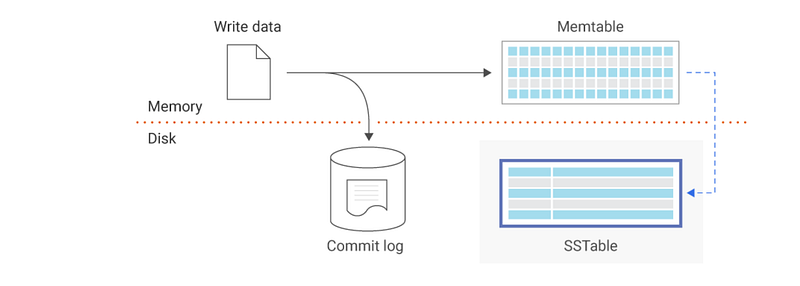
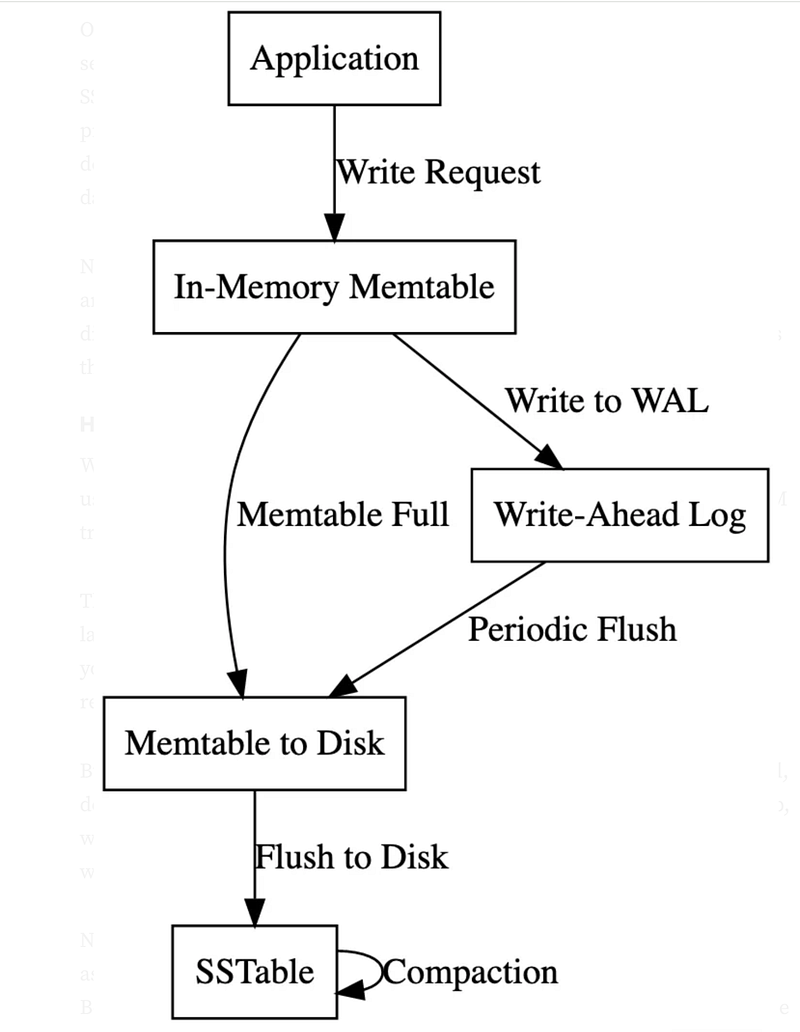
In LSM databases, data is organized into multiple layers. These typically include a write-ahead log (WAL) for sequential writes, an in-memory data structure called a memtable for recent writes, and one or more on-disk data structures for long-term storage.

Main Components:

  • Write-ahead Log (WAL): Sequentially records all write operations to ensure durability and maintain write order.
  • Memtable: In-memory data structure that caches recent write operations for fast access.
  • Sorted String Table (SSTable): On-disk data structure containing sorted key-value pairs, usually generated from flushed memtables or compacted SSTables.
https://www.scylladb.com/glossary/sstable/

2. Write Optimization strategies:

LSM databases optimize write operations by

  • First incoming data is written sequentially to a WAL. This ensures durability and maintains write order.
  • Then, the data is added to an in-memory memtable for fast writes.
  • Periodically, the memtable is flushed to disk, usually in sorted order, creating a new on-disk data structure known as a sorted string table (SSTable).

3. Periodic Merge Operations for efficient storage:

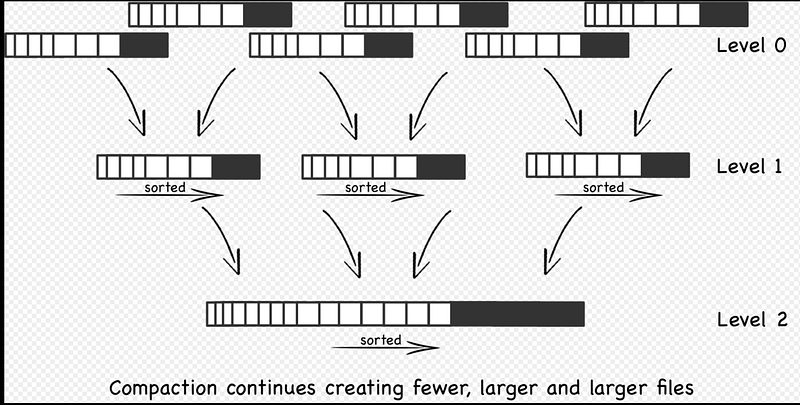
As SSTables accumulate on disk, LSM databases periodically merge them together to maintain efficient storage and query performance.

  • During a merge operation, overlapping SSTables are combined and compacted to produce a new, larger SSTable with sorted and deduplicated data.
  • This process helps reduce disk space usage and improves query performance by reducing the number of disk seeks required for read operations.
https://en.wikipedia.org/wiki/Log-structured_merge-tree

4. Sorted data for efficient Query Processing:

LSM databases support efficient query processing by maintaining sorted data on disk.

  • When querying data, LSM databases typically search through the in-memory memtable and the on-disk SSTables in a sorted manner, leveraging techniques like binary search to efficiently locate and retrieve data.

5. Configurable Consistency and Durability:

LSM databases typically provide configurable levels of consistency and durability.

  • Write operations are durable due to the use of a WAL, and durability guarantees can be adjusted based on application requirements.
lsm-trees-the-go-to-data-structure-for-databases-search-engines-and-more-c3a48fa469d2

Real World Use Case:

  • LSM databases are commonly used in various applications, including time-series databases, distributed systems, and Big Data analytics platforms.
  • The append-only nature of write operations and the ability to batch writes and merge data efficiently make LSM databases well-suited for high-throughput environments.

Drawbacks of LSM Databases:

  1. Relatively higher read latency: LSM databases may suffer from performance during read-heavy workloads. This is because data may be spread across multiple SSTables, requiring additional disk seeks to locate and retrieve the desired data.
  2. Write process overhead: Although LSM databases offer high write throughput, individual write operations may experience higher latency compared to traditional B-tree-based databases. This is due to the additional overhead of write-ahead logging, memtable flushes, and compaction processes.

Alternatives to LSM:

  1. B-tree-based Databases: B-tree-based databases use balanced tree structures which provide efficient read and write operations without the need for compaction processes. Used in : PostgreSQL, MySQL.
  • It provides more balanced performance for sequential and random access. It is efficient for range queries as traversing the tree can quickly identify a range of keys.

2. In-memory Databases: In-memory databases store data entirely in RAM, offering extremely low-latency read and write operations.

  • They have limited storage capacity, but can provide excellent performance for certain use case like cache. Example : Redis and Memcached.

3. LSM-Tree Hybrid Databases: Some databases combine LSM and B-tree structures to leverage the strengths of both approaches.

  • Example : WiredTiger (used in MongoDB)
Database
Cassandra
Backend Development
Software Development
Data Structures
Recommended from ReadMedium