
BOSSY WOMEN
An Open Letter to Anyone Who Ever Called Me Bossy
Otherwise stated, bossy is a different way to get a woman to sit down and shut the f**k up
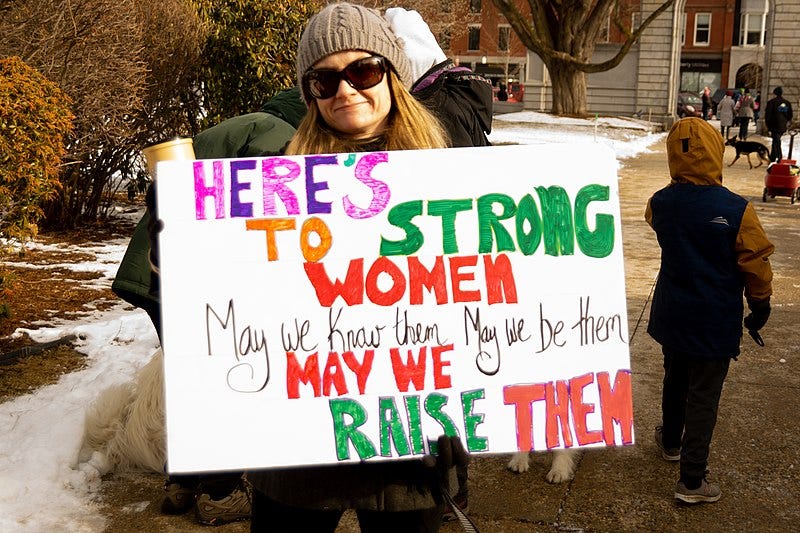
The Merriam-Webster Dictionary defines bossy as “inclined to dominate, and likely to tell others what to do.”
Bossy has several synonyms, such as overbearing, pushy, imperious, officious, high-handed, authoritarian, dictatorial, and controlling. In short, “Bossy” connotes a negative stereotype of a strong or successful woman.
I’ve been haunted by this “B” word that evokes anger, frustration, and embarrassment, a term that mocked me throughout my life, a word that tried to tear me down. I’m mainly writing to you and the rest of the unnamed, faceless people for one main reason: I want to know what you saw in me that threatened you to the point that you had to refer to me as “bossy.” What made you feel you needed to give me such a disparaging and depressing moniker?
So why are many women, such as myself, offended by the term “bossy?”
In everyday interactions, we are expected to be nurturing, collaborative, and kind, while men are encouraged to be direct, commanding, and assertive. Women are often punished for standing up for themselves, whether it’s young girls getting called, “know-it-all,” “pushy,” and “smarty-pants,” or professional women deemed as “ambitious,” “aggressive,” and “difficult.”
Don’t you know that the “b-word” is a word meant to insult by reminding me of my place and, more specifically, that it is not my place to voice my wants and needs?
Some people mistake my confidence and a direct communicator as bossy. I refuse to accept your framing and will turn it on you by telling myself that I’m proud to be labeled bossy.
Bossy is gendered
We live in a world where a segment of the population is empowered and encouraged to succeed and take charge. Only in women does bossiness assume such profoundly negative connotations. Aren’t you curious to see what things would look like if we extended those opportunities to everyone? What are you afraid will happen if we do?
Like “thug,” “shrill,” and “articulate,” “bossy” is part of a coded language, specifically gendered and meant to stifle. Being labeled sets the stage for a lifetime of trying to avoid being viewed by others as assertive, aggressive, controlling, and obsessed with power.
The truth is that these words are entrenched in stereotypes, and they are only applied to women. From Ruth Bader Ginsburg, who was called “a bitch” by her law school classmates to the “ball-busting” Hillary Clinton, historians will testify that women in power have long been chastised for displaying traits of assertiveness because it veers from the “feminine” mold.
Until 1980, the term, female hysteria, a once standard diagnosis for women with problems has remained in the Diagnostic and Statistical Manual of mental conditions. But the trope of the crazy, emotional, moody, hysterical, PMS-ing, crazy woman — or worse, the crazy, emotional, hysterical romantic stalker — remains in full force.
Looking into the linguistics behind the word reveals an asymmetry in how we treat men and women. When a little boy affirms himself, he’s termed a “leader.” Yet when a girl does the same, she chances being labeled “bossy.” Words like bossy communicate: don’t raise your hand or articulate yourself — a lesson that continues into adulthood.
Women are referred to as “bossy” more often than men are. We see it in the workforce. Women are underrepresented in leadership positions throughout society, from every level of government to board rooms, retail jobs, and arts institutions.
Parting thoughts
Perhaps we should pay close attention to how we speak about ourselves as women and call out those who use femininity to insult others. We can begin to change the conversation — and ensure that the language directed toward women is more egalitarian.
Oh . . . and while we’re at it, let’s avoid descriptors like “whiny,” “nagging,” or “complaining” to refer to women. Unless, of course, you’d use them to refer to a man too.
Thank you for reading and sticking with me to the end.
If you haven’t signed up for Medium yet, and want to read all my articles, use my affiliate link! There’s no additional cost to you, and I’ll receive a small commission — thanks for your support!


.jpg)