
An Open letter from a Boomer to Gen X, Millennials, Z’s, and Alphas
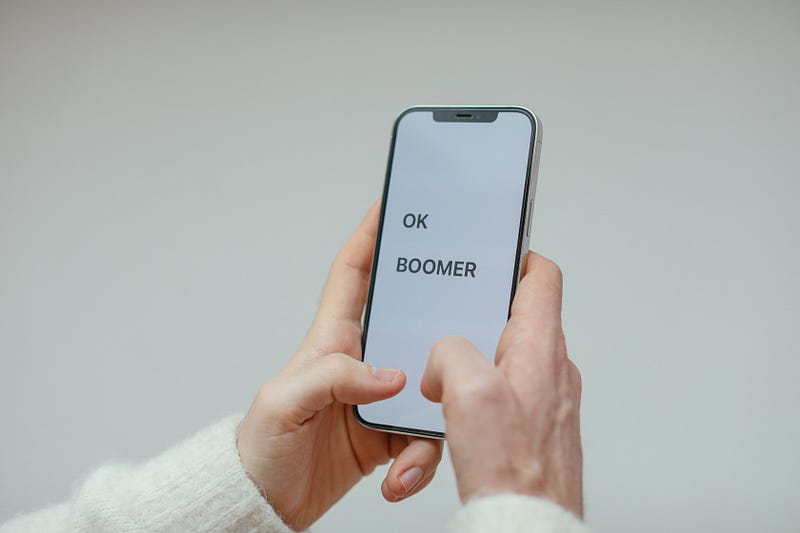
Dear Millennials, and Gen X, Z and Alpha,
Things are not good. I don’t mean global warming, racism, etc. Of course, these are very bad, but I believe you’ve already built the foundations for real progress with these problems.
What is not good is the state of the human mind. As you know we are more depressed and anxious than ever. Our suicide rates are high and climbing. Rates of alcohol and opioid abuse continue to mount.
School shootings and overdoses rob the young of their futures. People are more lonely, agitated, and burnt-out, finding relief in their screens of their devices.
This is the face of life in a modern, technological society.
There are many places to lay some blame. Screen time and social media get the most attention. But we can broaden our gaze to envision a wider span of modern life.
There are two underlying forces within modern life that light the fire beneath our various pathologies. The first, is how technology infiltrates our minds directly through devices and indirectly through how devices change our lives. Second, is how the pace and direction life takes us has shattered our communities, and with it, the web of connections that support us.
Technology forces you to live in your head, not the world. How this taxes our minds in ways we have never experienced as a species is a story in itself and is explained here. Meanwhile, our isolation goes further than making us merely lonely. It takes us away from the social connections and customs which are the building blocks of shaping a life. A deeper look at how our ruptured connections to one another eat away at our mental well-being is further explained here.
Building a world in which we are the masters of technology, not its servants; a world in which we thrive because of those around us, not suffer in isolation, is the challenge of the modern era. Solutions to the technology piece are already taking form. For example, current studies relating screen time and mental health are supplying needed guidance.
What is not taking form is how we rebuild a sense of community. This vital task falls to Millennials and Generations X, Z, and Alpha.
Communities offer much to their members: friendships, acquaintances, neighbors, customs (the common ways people do things like make a repair, cook, raise children, have relationships, become the person you aspire to be). Now we try to Google our way through these life decisions, trying to invent our lives over and over. But we are not computer programs. We are social creatures down to our bones. This is why learning from each other is so much more effective and natural than reams of data.
The apparent simplicity of life in years gone by tempts us to simply rebuild a former world. If the world was not as stressful a few decades ago, can’t we just go back to the way things were? This is neither possible nor desirable. Yes, there are things we need to regain from the past like the support and know-how that community offers. But there are also things we must retain from our current society particularly the many freedoms we have attained over the past century. These freedoms would be lost by going backwards.
So why not simply create a community with the aspects we want and leave out the rest? Because within this formula there is an inherent tension; the very same tension that has contributed to some of our most toxic social problems.
Communities, whether neighborhoods, towns, or cities, often evolve a large degree of uniformity. When people live in the same place and do many of the same things, they often like things done in the same ways. This sameness allows for customs, language, traditions, and much of what makes us human.
But as we know over time it will form rigid rules, exclusive practices, and a gradual homogeneity, that will invariably exclude people who do not fit in, even for superficial reasons.
What happens in established communities is that likeness, rules, and customs become misconstrued as values. We must remain clear that even though some rules and customs work well, that does not make them moral goods. At their core they are practices that could have been done any number of ways.
The tension between the individual paths we carve for ourselves, and the tremendous benefits of community seem to demand that we choose one or the other. Either we flourish as individuals, or our communities grow and nurture us. Communities, which people thrive in like sameness; individuals like to be themselves.
I do not believe this breach is unfixable. Mending this rift will place our modern world on a path towards health and peace of mind. Although there are likely many avenues toward this goal, success will depend on establishing a foundation of common values. I propose we begin with following: “every person has inherent dignity that is not earned but is their birthright” as our guiding principle.
By putting a value on the dignity of the individual and not on conformity we could hopefully alleviate the scourge of loneliness and our pandemic isolation. I ask the younger generations to take up this task and build a bridge to a modern world that allows true connections, true support, and the chance for all to thrive.
Mark Rego
Boomer