
An Olympic Games That Concluded in Controversy
The 2022 Beijing Winter Olympics were marked by developments outside of sports, and those respective developments overshadowed the actual sports events themselves
THAT WAS UNEXPECTED.
That statement can be used to describe many events that went down during the 2022 Beijing Winter Olympics, for better or for worse.
Heading into the games, many already expected that these Games would be like no other, in light of the host country’s respective flaws and the ongoing national pandemic. Instead of being a grace period where the world doesn’t have to worry about its ongoing issues for just 20 days, these Olympic Games were swallowed up by the ongoing noise around it and leading into it. Inside the Olympic bubble, conditions were no better, and to say that the end was drama-free would be a lie.
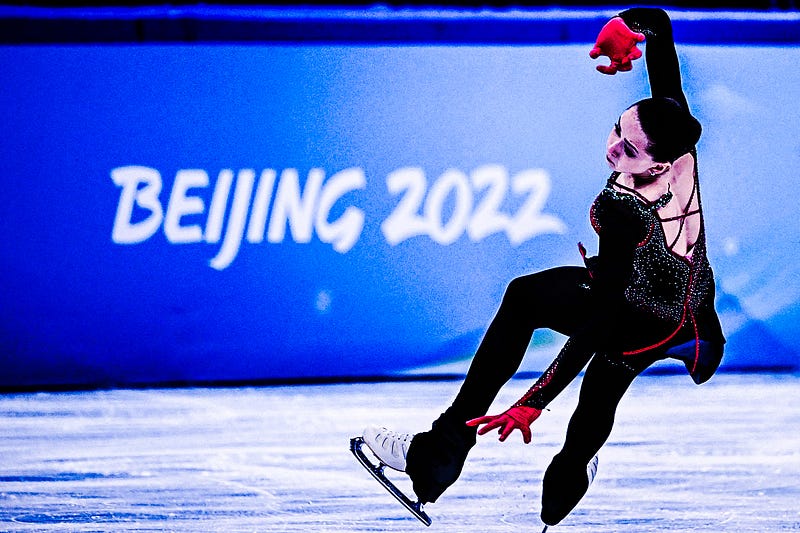
One story in particular that stands out during these Games was the dramatic and emotional finish in the women’s solo free skate, where gold medal favorite Kamila Valieva stumbled and slipped to a 4th place finish, falling off the podium in her stunning final performance of the Games, but for all the wrong reasons. Before the festivities kicked off in Beijing, Valieva was seen as a darling across the world, as the 15-year old had captured everyone’s hearts and her perfect technique and expression wowed viewers everywhere.
That narrative quickly changed when it was revealed that the teenager tested positive for a banned heart medication called trimetazidine, a heart medication found mostly in older patients to promote blood flow, and it was a substance that had been banned by the IOC since 2014 for its suspected ability to increase one’s stamina and agility. The ensuing legal battle that followed was well-documented to the public, and the pressure seemed too much to handle for the 15-year old, as she was seen crying towards the end of one of her practices as she awaited the decision on whether she would be able to perform or not.
In the end, Valieva was allowed to compete, largely because she was considered a “protected person” at her young age by the Anti-Doping Agency. However, the medal ceremony for the team free skate event where Valieva helped ROC, the Russian Olympic Committee, win gold over the second-place United States was postponed. The IOC then ruled that if Valieva finished on the podium for the women’s solo free skate, no medals would be awarded in that event either until the conclusion of the investigation into the ROC figure skating team and its substance use policies.
The American skaters filed an appeal to receive their silver medals before the conclusion of the games, which was denied by the International Olympic Committee. So now, the Americans will have to wait for the conclusion of the investigation to receive their medals, which could take years. To make matters even more complicated, the IOC is also investigating the coaching policies of the ROC after Valieva’s coach was seen angrily asking her why she “gave up”.
The harsh treatment of Valieva by her coaches was publicly criticized by IOC president Thomas Bach, and the drama doesn’t stop there. In addition to the U.S. team skaters being forced to wait until the conclusion of a possibly eternal trial, the actual women’s event itself was full of leaky faucets of emotion. The broadcast was shocked and reasonably said that it was one of the biggest dramatic finishes to a figure skating event since the Tonya Harding and Nancy Kerrigan exchange.
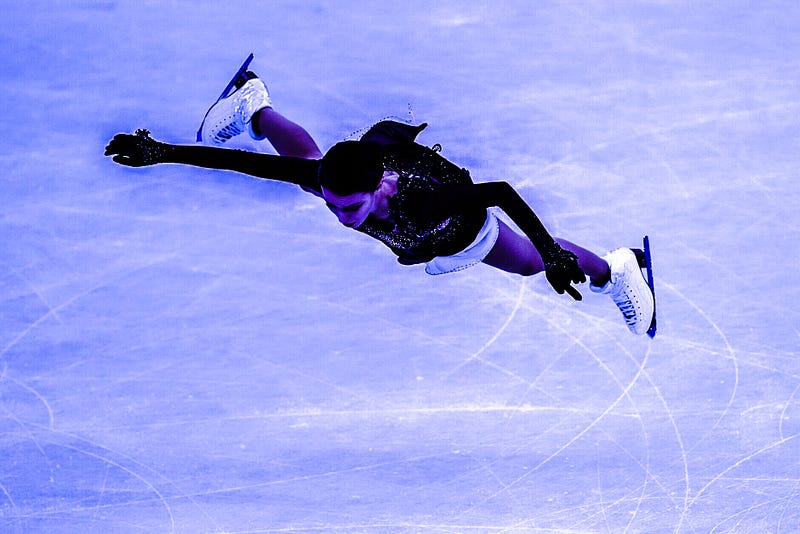
FIRST, SILVER MEDALIST, Alexandra Trusova. Before even reaching the Olympics, her relationship with her coach was already at wit’s end, as she temporarily switched coaches before switching back in May of last year. The drama beforehand didn’t seem to affect her, as she made history with her performance, becoming the first woman to fully rotate four quads in one program for a new personal best.
The problems then started to pile up in what was becoming a train wreck that one couldn’t stop watching. The eventual gold medalist, Anna Scherbakova, skated a less technically challenging program than Trusova but was able to win over her teammate because of extra artistry points in her very clean program. As you’ll later see, this would be a major reason for the drama that ensued. Scherbakova seemed thrilled with her performance, and Trusova seemed fine in the medal room before Valieva skated when Scherbakova joined her.
Valieva’s program was one of the worst of her young career. A routine that she’s otherwise run through flawlessly hundreds of times in practices and competitions seemed a distant second to what it was before the allegations, with Valieva falling twice and stumbling through multiple elements that she completed with ease. The deductions were enough to knock Valieva to fourth, which she seemed to know would happen, as she slammed her arm down in frustration following her program. Valieva was already crying before her score was even announced, and that’s when the drama started to explode out of control.
When Valieva’s score was announced, the emotions hit everyone. Valieva’s tears flowed freely once she realized she would not medal in the event she was favored in, while Scherbakova sat in stunned silence alone in the medal room realizing what had just happened. Valieva’s coach was seen scolding her while another ROC coach was comforting Trusova, who was seen crying after claiming that she was “the only one without a gold medal”, tried to hide behind a mat to shed her share of tears.
Kaori Sakamoto, the bronze medalist from Japan, left the medal room and cried tears of joy after the results were announced, leaving Scherbakova alone with no one to celebrate her win. While Trusova and Valieva were left crying with their coaches, the broadcast could do nothing but watch Scherbakova in stunned silence sitting alone.
Eventually, one of the ROC coaches congratulated Scherbakova, but the drama wasn’t finished. Trusova refused to go to the medal ceremony and refused to accept that she had come second. This went on for what felt like an uncomfortably long amount of time, with the viewers left stunned. The drama has led some to call for a raise in the age limit of participants from 15 to 17 or 18, as countries like ROC seem to heap unbelievable amounts of pressure on kids who are still in school.
The careers of Russian figure skaters are notoriously short, with last year’s silver medalist now a commentator, and the three teammates who were previously dubbed the “Quad Squad” for their ability to hit quadruple elements that before seemed impossible are now left to wonder what their future holds. Trusova has vowed that she “will never skate again”, while Valieva could face a ban of varying lengths for her positive test. Scherbakova has been asked if she will retire, a possibility considering no ROC figure skater has been in the Olympics twice in a row since 1988.
Whatever may happen, it spoiled an event that was expected to be one of the highlights of the Olympics, and it’s left many puzzled and confused at a crossroads, including the viewers.
The figure skating drama was not the only controversy to come out of the Olympics, but it was one of the most memorable in recent history. Moments produced during these Olympics will be hard for viewers to forget, and the rough backdrop that led into the Olympics has made these Games a hard pill to swallow for everyone involved, perhaps why viewership was down significantly from the poor performing 2018 Winter Games.
Images of thousands of health testers in full swabs and protective gear, athletes begging to be let out of quarantine, and the restrictions and poor living conditions set for the athletes leave many to wonder what the 2026 Milan and Cortica Winter Olympics.