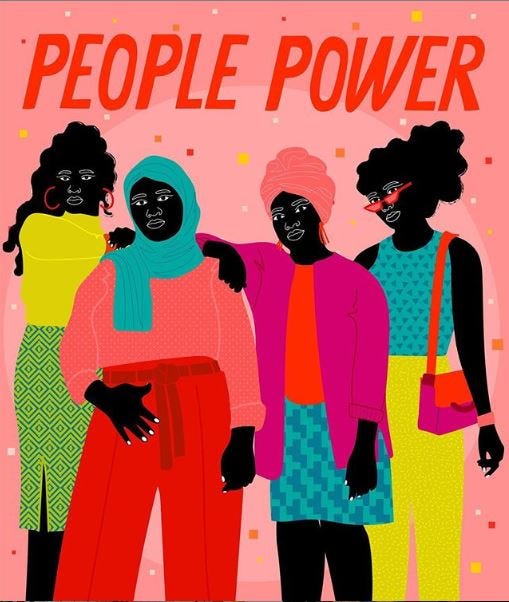
An Older Gen Z-er’s Two Cents on Mental Health After a Pandemic and Last June.
This is everything but a normal summer.
At the dawn of July your country might still be locked down, in the process of opening up, or fully back to standard activity. Aside from the mask-wearing, if you’re in the northern hemisphere and are being hit by the heatwave, it may even feel like any other summer, except you know it’s everything but that.
Between March and May all that we thought to be normal was taken and shoved out the window, opening just for a minute the can of worms that our global system is seemingly solidly built around. With hundreds of thousands dying and millions losing their jobs, the Covid-19 pandemic finally shed a light on the inadequacy of our health, economic and political systems.
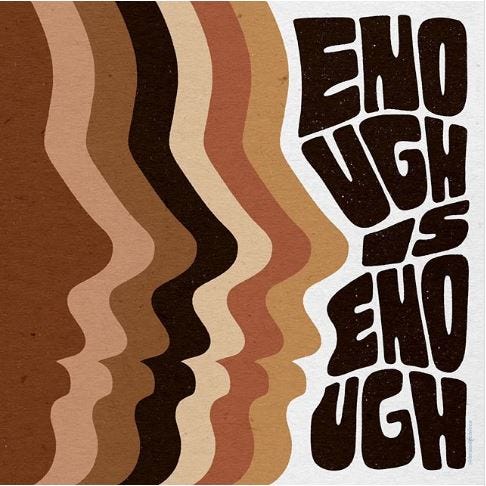
But then the 25th of May came, June came, and even the pandemic that seemed to have frozen the world stopped being top priority and became an amplifier to the global discourse on injustice. We’re now not only talking about health, economy and welfare, but we’re finally addressing our culture and the foundations of inequality that Neoliberalism is built upon. We’re all finally questioning the spirit of capitalism that we breathe everyday, and asking ourselves if it has really been freeing us or if it has only served to free and enrich a selected few.
Although fast-fashion brands may have stopped at #blackouttuesday, in an attempt to turn the Black Lives Matter movement into easy-access publicity and image-cleansing — following the glorious footsteps of pink-washing — it’s only fair to say that over a month after George Floyd’s murder was recorded and made circulate everywhere, we can be hopeful that nothing will be as it was before.
A good part of our mainstream western discourse has gone to a depth that hadn’t been seen for at least five decades, only thanks to those voices that have been always there but had been forcefully silenced and painstakingly ignored. It’s our duty as a society to hold ourselves accountable for what is coming next, and especially if we’re individuals in any position of privilege, it’s our obligation to stop ignoring those voices.
This time is exciting and scary.
But it still feels like we’re standing at a crossroad and can either choose the well-known road ahead of us, following the same direction as the one we’ve been walking in so far, or finally take a different path, one that needs designing but can lead us to a more just and less unequal future.
And this responsibility is on our Millennial and Gen Z cohorts, although we’re moving around a world that we can’t control yet. So we feel the frustration of having a system that will be soon handed down to us, but whose brokenness we can see clear as day and right now can do only little about. Add this feeling to a destroyed economy and inaccessible job market, to the distress experienced by those who have to fight for their own equality, to the knowledge that we’re useless in the face of the millions of people that are being tortured, oppressed and are dying for many reasons and in many places in the world. Many of us are rightfully angry, most are disenchanted and some are feeling lost to great extents.
And I’m only speaking from the privileged position of a white, able-bodied European, I lost no one to Covid, I still have food and house security after lock-down, and when I’m out I only marginally fear for my safety if compared to many of my peers. I cannot begin to imagine how mentally and physically exhausted people who are in less fortunate circumstances, and people who are fighting and protesting relentlessly, must be.
So, where do we go from here? We clearly cannot give up to exhaustion. If we’re privileged individuals, we have a duty to put the assets randomly bestowed upon us at the service of our sisters and brothers — which means that if our voices are louder we need to know when to be megaphones and when to shut up and let them express their anger. It means that we need to question our biases and our automatisms, and that we need to act in the face of injustice, in any way that is ours. We need to look after each other and try to finally put an end to the never-ending competitiveness that runs our current ways of life. Disenchantment to the current system can become our strongest tool to designing that new path towards justice and equality. Feeling lost can be the beginning to building new ways.
My only hope is that in ten years we’ll be looking back at June 2020 as the month that changed everything, from our perception of ourselves to the way we organise our collective lives. I wish June 2020 will be seen as the Pride month that we couldn’t celebrate but that honoured best the founding essence of Pride: to raise awareness and to fight for full equality for each and every one under the sun.