
An Investigation into Descartes and Existence

Possibly the most famous philosophical utterance is Descartes’ “cogito ergo sum” (I think therefore I am). In this article, I aim to deconstruct the point Descartes makes with this idea and provide some additional thoughts as to the limitations of this interpretation of existence. Through considering the limitations of the Cogito, I hope to gain a more nuanced understanding of the connection between awareness of thought and knowledge of existence.
What does it mean?
The importance of Descartes on the Enlightenment is paramount. It is often asserted that Descartes is the father of modern philosophy. He is the person who takes the first major steps in going beyond the philosophy of the Greeks. In particular, in “Meditations on First Philosophy” Descartes takes all of the assumptions he has of the world and throws them away. His goal is to figure out if there is anything he can know for certain. This is what is known to us as epistemology, which may be explained as the study of how we can know what we know.
Descartes’ objective may seem puzzling at first. After all, I can see the world around me, I can feel all of my senses. I know plenty of things about the world! It seems uncontroversial to claim that the sky is blue, grass is green, and a square has 4 sides. These claims seem as if they aren’t just beliefs, these are things I know to be true.
But maybe you don’t actually know these things, says Descartes.
Consider, that perhaps you are being deceived. Descartes gives the example of a demon who is trying to trick you, who deceives you every time you try to observe something. The modern version of his thought experiment would be asking if perhaps we are in a computer simulation or a brain in a vat, where all of our senses are actually illusory.
If this were so, could you actually know anything for certain? Maybe the sky isn’t actually blue, you just think it’s blue. Maybe the grass isn’t green. Maybe when you count the sides of a square, you actually make some mistakes. Maybe these things don’t even exist, and they are all figments of your imagination. After all, I’m sure you have experienced optical illusions before, or have had a dream so rich that it felt real. How can you know that a similar sort of illusion isn’t overtaking you constantly?
You may believe you know things, but to be certain of that knowledge is to be certain that you are a completely objective observer and are not under any form of illusion. Consider that one of the most common philosophical definitions of knowledge is justified true belief. If we start to doubt even our senses, it becomes very difficult to form any concrete justification for any knowledge claim, and it also becomes near impossible to establish the truth of a claim as a result. Because of this, Descartes created his method of radical doubt, whereby any belief that could be doubted would be regarded as false and discarded. By doing this, he would be able to remove all illusions and decide what he could actually consider to be knowledge.
The problem is though that this method does not give you much to work with. In fact, the only thing Descartes has initially, is that he is actively doubting everything. This is how he can know he is thinking, as doubting is a kind of thinking. One cannot doubt that they think, as that would be thinking about thinking. Therefore, because he is actively doubting, he is actively thinking. If he is thinking, then he must certainly exist, as thinking is a form of existence. This is how Descartes arrives at the Cogito.
From this, Descartes then makes the assertion “I am a thinking thing”.
For Descartes, he can know he exists only so long as he is thinking. This then means that existence is best explained as the continual ability to think. Once thinking no longer occurs, it is no longer certain that existence occurs. This is why, perhaps a better translation of “cogito ergo sum” is “I am thinking, therefore, I am”, as the act of thinking in the present is what proves the validity of the statement, not the act of thinking at some past point in time. This is very similar to Heidegger’s explanation of Being and of Dasein as being bound by time. For him, we must consider Being as temporal in nature, as being something that occurs at a time. Existence then, is intrinsically thought of as Dasein, as it is a sense of being in a particular place at a particular time. From a Cartesian perspective, we may consider this a place in the mind that we access when we are thinking.
Beyond The Cogito — A Phenomenological Approach to Descartes
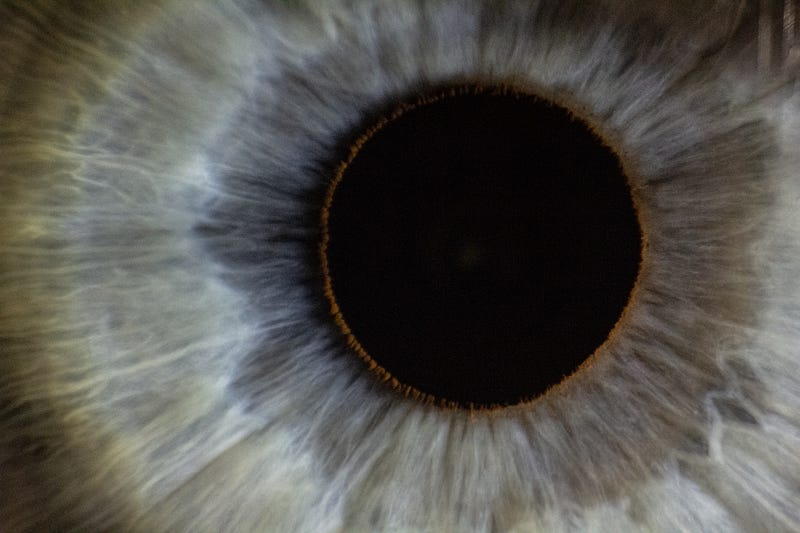
Whilst it is difficult (perhaps even impossible) to disprove the Cogito, what is debatable is how the validity of this assertion can change depending on someone’s mental state. In particular, if someone is less conscious, and therefore thinks less, does it then follow that they exist less in some way?
Consider someone in a vegetative state, whereby they are not awake and cannot think about anything consciously. Do they still exist? Our intuition would lead us to believe that they do still exist, perhaps just in a different way to us. It is difficult to say with any certainty though if, from that person’s perspective, they exist. For, if they are not thinking, or are not aware of their thinking in the lucid way which we seem to be, then how can they know they exist? It is, after all, through awareness of thought that Descartes can assert his existence.
Perhaps the answer is that they are in fact still thinking, just not in the same way that we think when we are awake. It is difficult to know though, because, at least in the case of a coma caused by trauma, there is no evidence of fluctuating brain activity, yet there are cases of people remembering dreams they had whilst being in a coma.
Perhaps this could be distinguished as a passive form of thinking, rather than the active form which led Descartes to the Cogito. Here, when I say passive thinking, I mean a form of thinking that is not directed in any conscious way, such as when one’s mind wanders or when you are dreaming. Considering this potential distinction, it is important to be nuanced when considering the Cogito and consider that thinking and not thinking is not strictly a binary thing. For, if we accept that thinking is not a binary thing, then it may imply that existing is also not binary by extension and that there are degrees to which one can exist, whereby more active thought would indicate a greater degree of existence.
In fact, this view aligns with another critic of Descartes, Husserl, who asserts that what is true is our subjective, phenomenological experience of the world. His version of phenomenology is based entirely in observation and perception of the world. If one cannot observe, then they cannot exist as fully. Perhaps the passive thought of a dream, where the details can be murky, can still be considered existence under phenomenology, so long as the observer can accurately consider their perception of their dreams.
This way of thinking about existence as being more or less rich depending on the ability to observe and consider phenomena raises issues though, as it is difficult to know how exactly thoughts come to us and how we observe them. Do we really want to say that those who are less able to think clearly exist less in some way?
It may be better to say that if we can think in a clearer way we can observe the world in a richer way and therefore experience life more fully, rather than actually existing more, although, these terms could also be considered synonyms in a sense. If one experiences existence more, then they have in a sense gained more from existing.
Consider a hypothetical game where each second of active observation of life gets a point, and there is a multiplier from 1 to 10 based on how closely the person observes their life. If we put someone who is in a coma against someone who is not in a coma and is not in any way mentally impaired, then the person who is not in the coma will likely win more points, as they have greater perceived control of their mind and can observe what life is for them with greater precision. This is a potential way one may think about the quality of existence and how it could be said that someone who experiences existence more, in a sense, exists more.
A problem arises though when we return to Descartes. We must consider the Cogito as a binary statement. We either do or do not think and therefore do or do not exist. There is little room for the nuance necessary to describe the actual range of ways one may experience existence.
This leads me to conclude that existence itself is both binary and exists on a continuum. We either do or do not exist and can deduce this through awareness of thinking, however, our quality of and the degree to which we can experience existence is contingent on how lucid we are in our thinking. Thinking either does or does not occur. We either are or are not aware of our act of thinking. The depth of thought and depth of our perception of thought is what makes the quality of existence exist on a continuum. This is the progress made by Husserl on Descartes’ description of existence. For Descartes, one could say it is a binary question, but it is not that simple for Husserl.
Therefore, we can assert that whilst the person in the vegetative state does exist as they may think without being conscious of it, their quality of existence is different from a person who is not in this state, as they are more able to observe their existence.
Thank you for reading, make sure to leave your thoughts in the comments!
For any enquiries, you can contact me at [email protected]