avatarSeema Singh

Free AI web copilot to create summaries, insights and extended knowledge, download it at here

1905

Abstract

ssification vs clustering</b></p><p id="b4a5">Let’s understand how classification in supervised learning is different from clustering in unsupervised learning.</p><p id="2ddc"><b>Classification</b></p><p id="f9d8">In Supervised learning our model learns a method for predicting the instance class from a pre-labeled (classified) instances.</p><p id="bb02"><b>Clustering</b></p><p id="269d">In unsupervised learning our model tries to find <b>“natural”</b> grouping of instances for a given unlabeled data.</p><figure id="853b"><img src="https://cdn-images-1.readmedium.com/v2/resize:fit:800/1*wgDyhfGAEroSqcfN8ulwuA.png"><figcaption>Classification vs clustering</figcaption></figure><p id="8061"><b>How do we define good Clustering algorithms?</b></p><p id="4364">High quality clusters can be created by reducing the distance between the objects in the same cluster known as intra-cluster minimization and increasing the distance with the objects in the other cluster known as inter-cluster maximization.</p><p id="c0f1"><b>Intra-cluster minimization:</b> The closer the objects in a cluster, the more likely they belong to the same cluster.</p><p id="65d6"><b>Inter-cluster Maximization: </b>This makes the separation between two clusters. The main goal is to maximize the distance between 2 clusters.</p><figure id="5399"><img src="https://cdn-images-1.readmedium.com/v2/resize:fit:800/1*kFAJCaRaOKk2GqqiJDX4Ag.jpeg"><figcaption></figcaption></figure><p id="c63c">There are lot of clustering algorithms and they all use different techniques to cluster. They can be classified into two categories as</p><p id="1ddc">1. Flat or partitioning algorithms</p><p id="7a19">2. Hierarchical algorithms</p><figure id="56dc"><img src="https://cdn-images-1.readmedium.com/v2/resize:fit:800/1*dDWT6QpM1s2w02ov9DhniQ.png"><figcaption>Flat/ partitioning and Hierarchical methods of clustering</figcaption></figure><p i

Options

d="52a0"><b>Flat or partitioning algorithm:</b></p><p id="6de0">This algorithm try to divide the dataset of interest into predefined number of groups/ clusters.</p><p id="ba50">All the groups/ clusters are independent of each other. For Example: K-means</p><p id="ebd6"><b>Hierarchical Clustering algorithm</b></p><p id="2e00">Hierarchical clustering does not partition the dataset into clusters in a single step. Instead it involves multiple steps which run from a single cluster containing all the data points to n clusters containing single data point.</p><p id="1d52">This algorithm is further classified into Divisive and Agglomerative Methods.</p><p id="f8a8">Hierarchical clustering can be shown using dendrogram (below).</p><figure id="420a"><img src="https://cdn-images-1.readmedium.com/v2/resize:fit:800/1*ieeuYVb6rm8FGHcD_DxN_w.png"><figcaption>Types of Hierarchical clustering</figcaption></figure><p id="1d6e"><b>Divisive Method</b></p><p id="3f1f">This method is also known as top-down clustering method. It assigns all the data points to a single cluster and then it partitions the cluster to two least similar clusters. Then the same method is applied recursively on both the clusters until we get the cluster of each data point.</p><p id="72de"><b>Agglomerative method</b></p><p id="0546">It is also known as bottom up clustering method. Here it assigns n data points to n clusters and joins the most similar clusters by computing the similarity i.e the distance between each of the clusters. This process is continued until we get a single cluster.</p><p id="f7c0">So this was the brief introduction about clustering. I hope now you have the basic idea of clustering and why it’s used.</p><p id="0a27">Thanks for reading.</p><figure id="7c0b"><img src="https://cdn-images-1.readmedium.com/v2/resize:fit:800/1*QqoC_i4SDUyWPTWi1Xr8PQ.png"><figcaption></figcaption></figure></article></body>

An Introduction To Clustering

Clustering is considered to be the most important technique of unsupervised learning. In this blog we will try to understand some basics of clustering in machine learning.
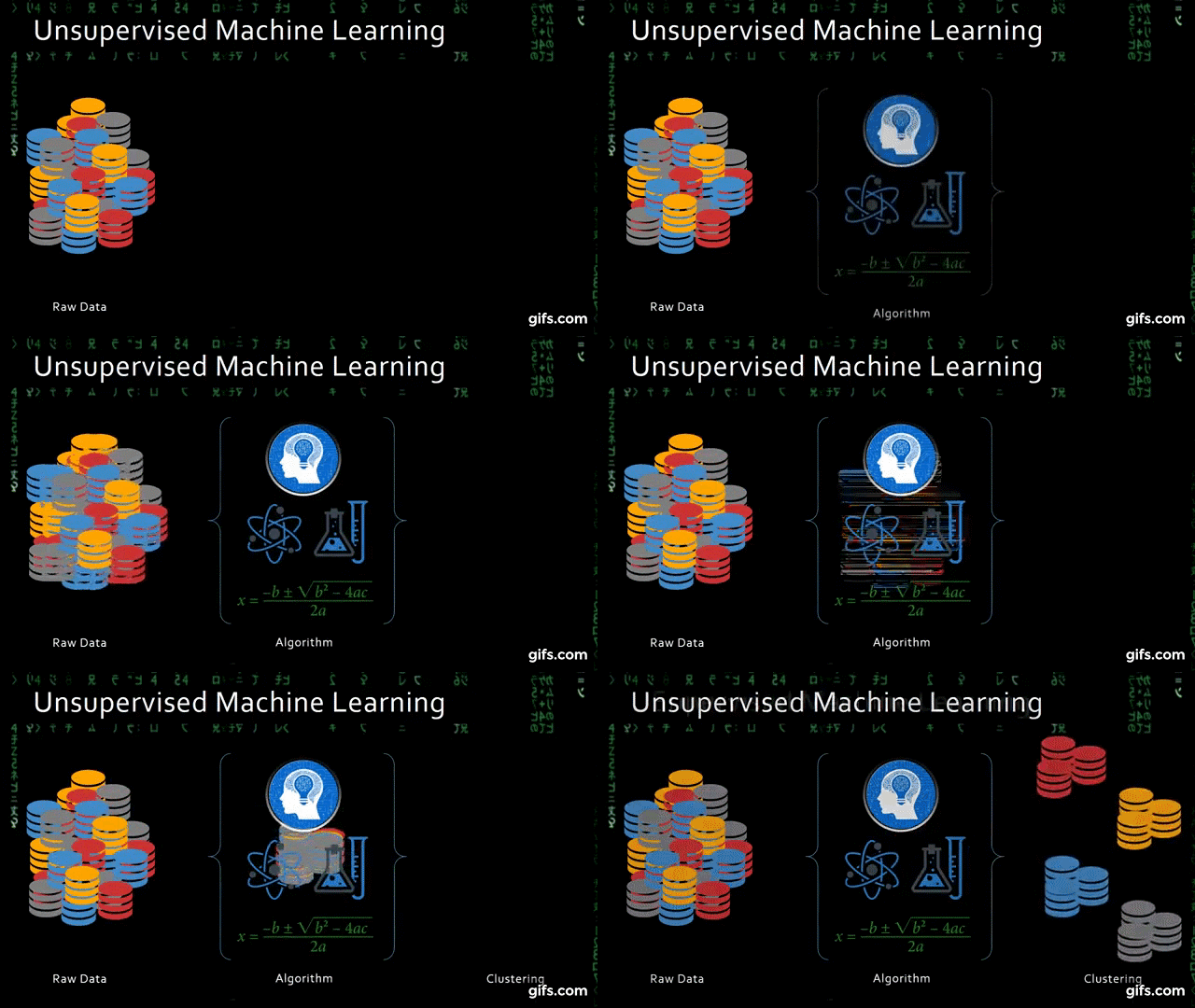
Before we start about Clustering let’s understand first what is a cluster.

Cluster is the collection of data objects which are similar to one another within the same group (class or category) and are different from the objects in the other clusters.

Clustering is an unsupervised learning technique in which there is predefined classes and prior information which defines how the data should be grouped or labeled into separate classes

It could also be considered as Exploratory Data Analysis (EDA) process which help us to discover hidden patterns of interest or structure in data

Clustering can also work as a standalone tool to get the insights about the data distribution or as a preprocessing step in other algorithms.

Why Clustering?

Clustering allows us to find hidden relationship between the data points in the dataset.

Examples:

1. In marketing, customers are segmented according to similarities to carry out targeted marketing.

2. Given a collection of text, we need to organize them, according to the content similarities to create a topic hierarchy

3. Detecting distinct kinds of pattern in image data (Image processing). It’s effective in biology research for identifying the underlying patterns.

And there are many examples which makes clustering so important.

Classification vs clustering

Let’s understand how classification in supervised learning is different from clustering in unsupervised learning.

Classification

In Supervised learning our model learns a method for predicting the instance class from a pre-labeled (classified) instances.

Clustering

In unsupervised learning our model tries to find “natural” grouping of instances for a given unlabeled data.
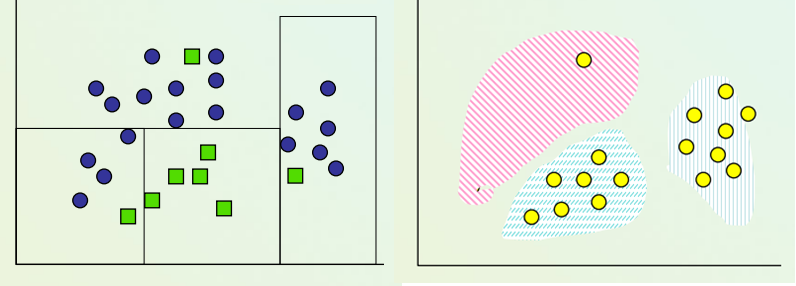
Classification vs clustering

How do we define good Clustering algorithms?

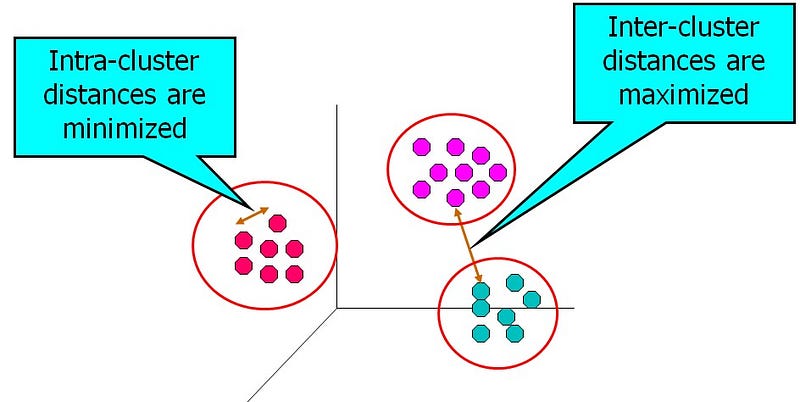
High quality clusters can be created by reducing the distance between the objects in the same cluster known as intra-cluster minimization and increasing the distance with the objects in the other cluster known as inter-cluster maximization.

Intra-cluster minimization: The closer the objects in a cluster, the more likely they belong to the same cluster.

Inter-cluster Maximization: This makes the separation between two clusters. The main goal is to maximize the distance between 2 clusters.
There are lot of clustering algorithms and they all use different techniques to cluster. They can be classified into two categories as

1. Flat or partitioning algorithms

2. Hierarchical algorithms
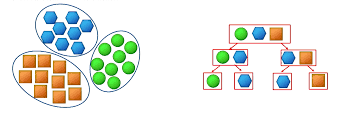
Flat/ partitioning and Hierarchical methods of clustering

Flat or partitioning algorithm:

This algorithm try to divide the dataset of interest into predefined number of groups/ clusters.

All the groups/ clusters are independent of each other. For Example: K-means

Hierarchical Clustering algorithm

Hierarchical clustering does not partition the dataset into clusters in a single step. Instead it involves multiple steps which run from a single cluster containing all the data points to n clusters containing single data point.

This algorithm is further classified into Divisive and Agglomerative Methods.

Hierarchical clustering can be shown using dendrogram (below).
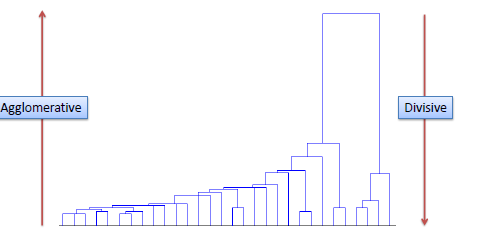
Types of Hierarchical clustering

Divisive Method

This method is also known as top-down clustering method. It assigns all the data points to a single cluster and then it partitions the cluster to two least similar clusters. Then the same method is applied recursively on both the clusters until we get the cluster of each data point.

Agglomerative method

It is also known as bottom up clustering method. Here it assigns n data points to n clusters and joins the most similar clusters by computing the similarity i.e the distance between each of the clusters. This process is continued until we get a single cluster.

So this was the brief introduction about clustering. I hope now you have the basic idea of clustering and why it’s used.

Thanks for reading.

Machine Learning
Clustering
Unsupervised Learning
Unsupervised
Classification
Recommended from ReadMedium