
Travel / Africa
An Interview with the Hungriest Hyena, Part 1
The beginning of a ripping yarn about a far too close encounter with the animal kingdom in Southern Africa.
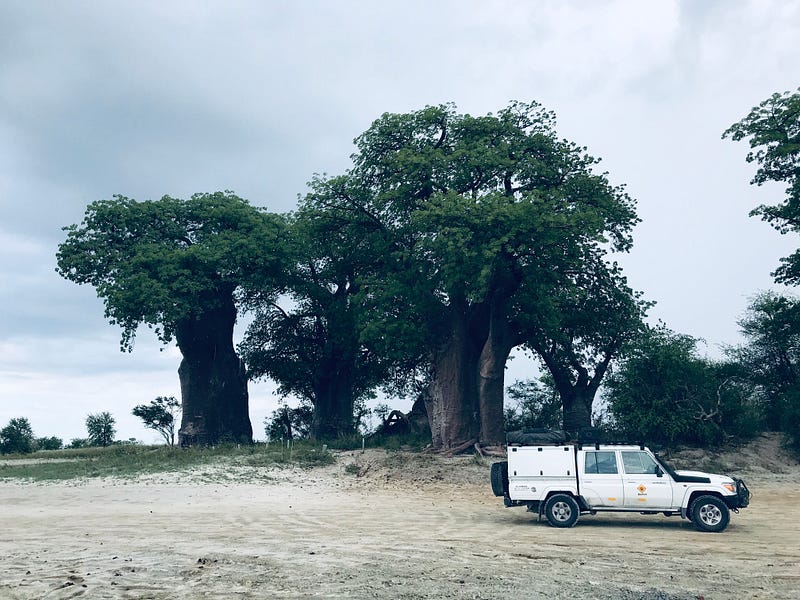
For some reason, the prospect of a three-week overland road trip through some really isolated places in Zimbabwe, Zambia and Botswana didn’t make me nervous.
Then again, I really didn’t know what I was getting into. In hindsight, some nerves probably would not have been out of place.
The first four nights in our beast of a Toyota Landcruiser 70 were easy. My then partner and I had arrived in Victoria Falls, Zimbabwe, flying from Dar es Salaam in Tanzania (where we were living at the time), via Johannesburg. The latter is mentioned mainly for the best selection of airport Duty-Free liquor that I’ve ever seen anywhere in the world.
Two nights at Victoria Falls and then one across the border and on the other side of the Zambezi River that the town of Livingstone lies on was reckoned to be enough to prepare us to drive this tank into the great unknown that we were about to head into.
They did. And they didn’t.
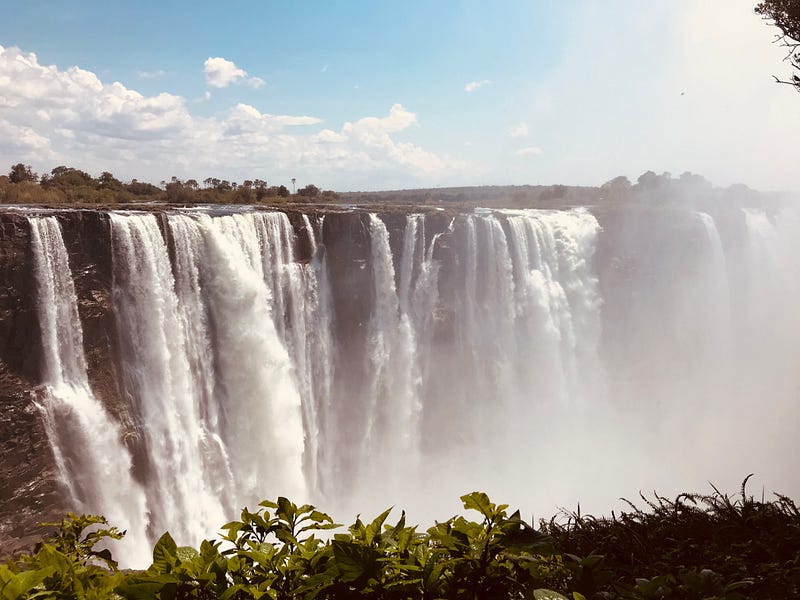
There were restaurants, there were bars, there were swimming pools, there was shopping. We weren’t exactly roughing it just yet. And then there was seeing the mighty falls themselves. Even though they were at half-steam at that time of year, they did not disappoint.
The crossing of the Zimbabwe-Zambia border was for me, just the second time I had navigated a border overland in Africa. There is nothing that can prepare you for it except doing it. The confusion, the nebulous lineups, the lack of clarity, the people offering to guide you through the bureaucracy, the paperwork, the stamps, and the money-changing hands, all combine to create a swirling two-hour vortex that only patience will get you through.
It’s all a part of it.
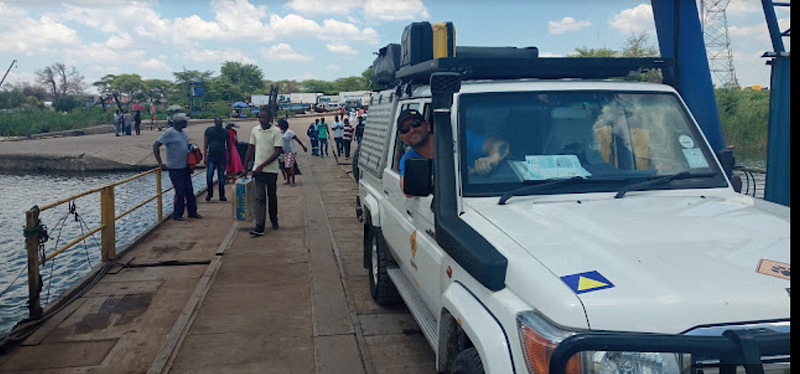
The next border crossing was from Zambia into Botswana at Kazungula. This involved a hectic lineup to board a car ferry — actually a floating steel platform with an engine on it — across the Zambezi that was arranged by a man who materialized out of a nearby shipping container office, as though he had been expecting us all along.
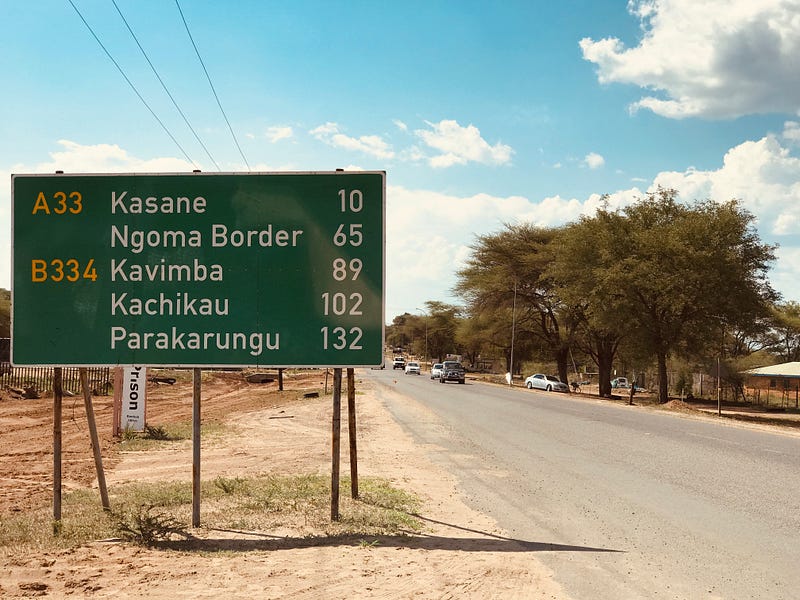
Once in Botswana and through a comparatively calm immigration office, it was a short drive to Kasane and a big stock up of groceries. We had little understanding of what lay ahead and didn’t know when we’d see a grocery store again. I marveled at the quality and quantity of the supermarkets in this corner of Africa. Cheese, wines and various sorts of biltong as far as the eye could see, all absolutely mandatory for three weeks of camping.
One last night of city camping south of Kasane at Muchenjie on the outskirts of Chobe National Park, brought us very near the Namibian border. It also brought us very near to a run-in with a few aggressive monkeys looking for food that would foreshadow our animal encounters in the coming days.
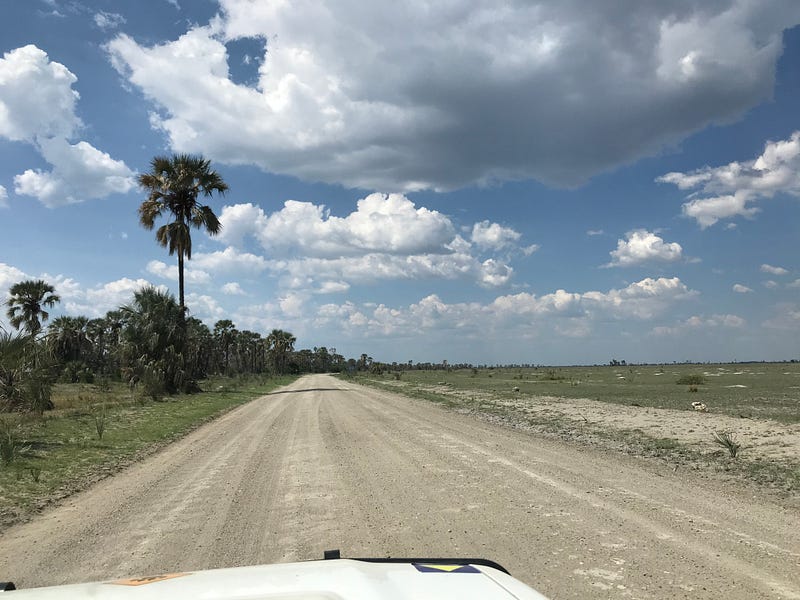
The road from there continued tarmacked for a while. But the further you got from population centres, the sandier things got…until we were completely on a sand track without signs, markers or internet service.
As far as maps were concerned, the prevailing wisdom seemed to indicate that having one direction / location source was a rookie move. Things change out there and technology does not always keep pace. To that end, we had AfriTracks on the onboard computer, as well as a detailed paper map, Google maps on our phones, and the requisite Lonely Planet guidebook.
And still, we got lost. Several times.
The rental company had booked all our campsites for us and as a result that created a rough route to follow in our travels. The first truly bush camping location was in a national park called Linyanti. There was no going back now, this would be our first night of truly “out there” adventure.
It quickly became clear that I possessed very little understanding of how to drive in the sand. Knowledge of the importance of deflating the tires, how to handle a four-wheel drive, using the differential lock, when to brake, when to accelerate, what to do when you feel it getting bogged down lest you dig yourself a deeper hole, would all have been useful.
I either missed that in the initial orientation at pick-up, or didn’t pay enough attention.
On top of that, there were no signs, no directions, no other vehicles, no sign of humans on that track. It was exhilarating even though we got bogged down countless times. Since the winch mounted on the front of the rig was faulty and was a tangled spaghetti of wire rope, we resorted to digging ourselves out with the shovel and six-foot rubber tracks provided.
Once unstuck, I would rumble about 100 metres down the road, conscious of the fact that my partner had been outside, pushing and would have to walk through sand to catch up. I couldn’t stop, but neither could I leave her. And the two rubber tracks were too heavy and cumbersome for one person to carry alone.
Eventually, daylight began to fade, and though we had been on the go all day, figured we had about 25 kilometres to go to reach the camp. The decision was made to stop where we were for the night, in the middle of the bush, without any idea of what else was out there.
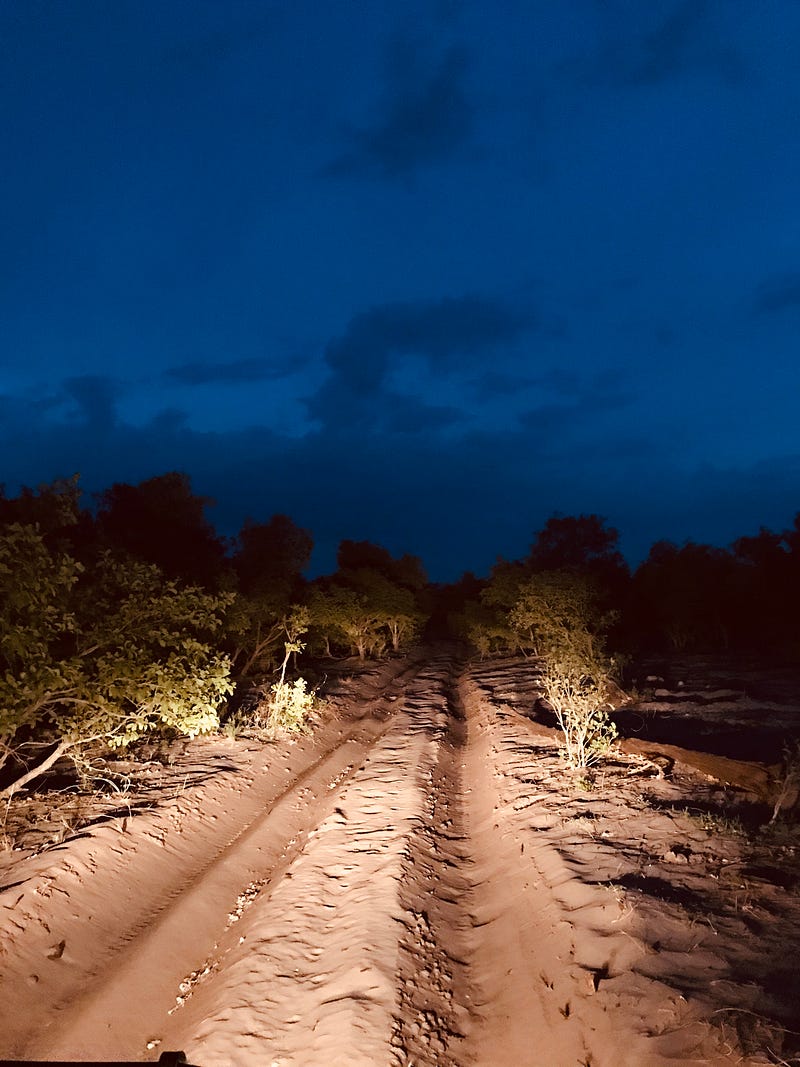
We thought about opening the rooftop tent, but instead decided to sleep in the cab. At this point, there was little else to do but open a bottle of wine, put together a little meat, cheese and chocolate picnic and have a little cry.
We still had two more weeks of this to go. Is this what it would be like? No, it would get better. It had to. But actually, it would get worse before it got better.
Here is Part 2 of this tale.
Here is Part 2 and Part 3 of this story.
I really do hope that you like what you have just read. If you want unlimited access to thousands of writers, consider a subscription to Medium. It will set you back $5 a month and if you use the link below, then I get a slice of that. I’ll buy a better map the next time I do this kind of trip.


