
An insight into the Engineering Program Manager team at Criteo
Criteo R&D is made of close to 100 teams who are building and maintaining an ever-complex ecosystem. The ad tech industry is rapidly evolving. Under such challenges, how do we keep it together? The Engineering Program Manager team is there to bring solutions! Here is my perspective on this key role.

My background
My first job was in consulting and it set the foundations of my next professional experiences. I’ve been doing support which included challenging on-call situations, so I had to be quick to understand and solve issues even in the middle of the night — what better training can there be? I then moved on to technical responsibilities and finally project management, which also included a lot of client-facing work like pre-sales and contract management. So, technical background, client-oriented mindset, and project management: after a bit less than 5 years, I joined a video game company to work in their IT department, first as a project manager on web applications used by business teams, then as a manager for a portfolio of projects, directed towards marketing & sales as my internal clients.
Why become an EPM
Although I was learning a great many things on that job, this last experience has been a turning point for me: I started to miss actual engineering work. I was drafting IT contracts, building financial views, organizing steering committees, and managing a team, but the work that I liked to do, such as system design, a bit of coding here and there, or even managing a production crisis, was taking a smaller and smaller portion of my time. At the same period, the world of tech was booming, and “digital transformation” was on every company’s mind. Companies started to realize their survival now depended on that bunch of IT guys they had left to take dust in the basement. Geeks were becoming the cool kids. I thought, why shouldn’t I be part of this?
I applied to Criteo after hearing about the Engineering Program Manager position from a friend. As I told interviewers back then, I did search for similar positions, but none fit my aspirations so well: a mix of project coordination, technical know-how, and a solid attention to clients’ needs, whether business or internal clients. All of this in a renowned, fun, and open company of the French Tech. This job was meant for me!
What I find appealing at Criteo
When I joined Criteo, what probably impressed me the most is how everyone shows ownership and commitment, no matter their years of experience. A junior software engineer will be responsible for leading her/his topic from start to completion, with the appropriate level of support from his peers, and no hand-holding is necessary. I believe the key to such empowerment is in the mindset of mutual trust around here, that allows for different styles and truly supports people’s growth, while striving for excellence.
R&D is building the product, so we’re at the source of the value for the company. We’re making it together. What surprises on-boarding EPMs who come from the “traditional” project management field, like I knew myself, is this: the program manager is not that one person with superpowers, on whom everything and everyone is dependent. On the contrary, success is when the project goes to completion smoothly with everyone autonomously playing their part.
So the EPM is an enabler, working to define what this part is and who should have it, explaining the “why”, supporting the “how”, but not taking everything on her/his shoulders and becoming a bottleneck.
The difficulty, compared to a more traditional organization, is that no one will tell us what to do: we have to figure it out.
My role in details
What I described earlier is the greatest challenge and the greatest opportunity of the EPM role.
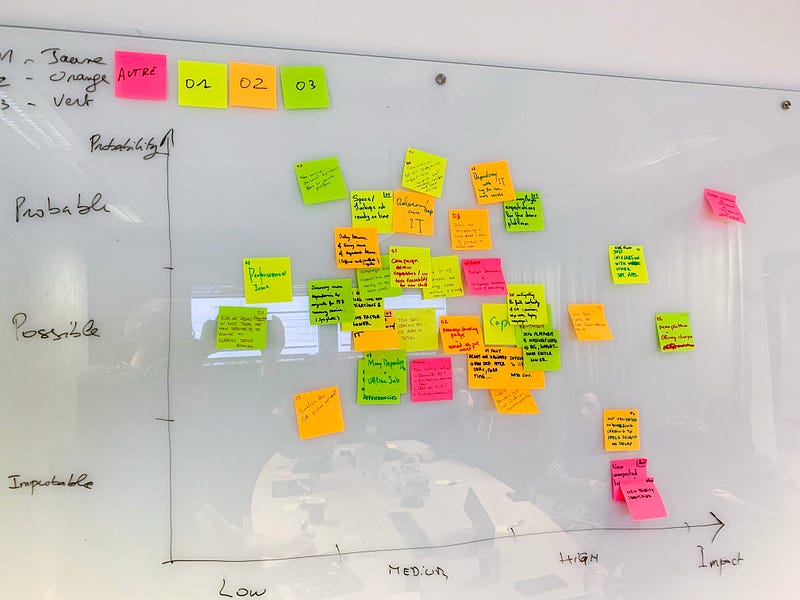
My job is to uncover all sorts of challenges and come up with solutions, which requires, more than any other job, to be highly adaptable to situations, teams, or personalities. It can be to help a particular team with their agile organization or their release cycle, to be the glue that holds together particular pieces of work, scattered across engineering teams, or to create and lead complex programs that involve other departments in the company. We move regularly from one solved challenge to the next. The challenge is in the diversity and complexity of situations.
And it’s a great opportunity too, because no day will look the same, and there are tons of different ways we can make an impact. We like to joke that no EPM here works the same way. Personally, beyond pure coordination, I need to feel that I am bringing an individual contribution to the team. It can be by achieving and sharing an end to end understanding, by helping product teams iterate on their vision, or by putting in some technical, hands-on skills, like taking on a data analysis or contributing to a system design.
What I worked on recently
I spent the past year working with a new concept of team that we call “squad”. I had been tasked with creating a program that oversees R&D work on Criteo app products, and this program has been heavily relying on the concept of squad: a diverse, super agile and business-oriented team, directly working with product and commercial teams, to make the product grow and drive its roadmap. I enjoyed helping Engineering Managers create this team from scratch, giving it direction, setting up its way of work, and then fully being part of it, involved in the product’s success.
At Criteo, we are also very welcome to launch or participate in new initiatives at any level. I’ve recently been creating a project management toolbox with 2 fellow EPMs, and I also particularly like interviewing candidates and contributing to our hiring processes. It’s also possible to get involved in diversity and inclusion as part of the Criteo Cares program.
Career advice
It does not apply just to becoming an Engineering Program Manager: do consider all the options you have in your career. If there is one that you tend to overlook, this might be the one you need to look harder at.
And there are 2 specific cases of that which I’d like to unfold:
- If you feel that becoming a manager is your only option for a higher salary and career advancement: this is not true. Do not confuse leadership and management as if hierarchy was the only possible way to extend your influence. Companies that make you believe so are doing it wrong. The job of a manager is to help other individuals grow and perform. This means encouraging them in doing differently and better than what you would have done in their place. There are many other possibilities for a career path, such as developing your expertise, changing teams and projects, changing technologies, taking on transversal roles, being part of innovation task forces, writing publicly, speaking publicly, mentoring, or recruiting people…So there are implications to such a career choice, in skills, in attitude and aspirations, no option being better than the other.
- If you feel that you are not “technical enough” for a job in tech: there are many ways to be “technical” and not all of them imply coding. Do you like to understand how a system works under the hood, to abstract and think conceptually, and to solve problems? Then you have the mindset of an engineer. And this is really what we’re looking for in an EPM. And if you still feel that dreaded impostor syndrome, be curious. When I started to work in 2006, there were no social networks, no MOOCs, no meetups, no coaching programs, and barely any good resource online. The world is accessible now. Thanks to Criteo, I’ve been recently completing a specialization in Data Science, so I could go beyond surface understanding and be a bit more hands-on in helping my team.
All the means are there for you to become who you want to be, so no second thoughts: go go go!
Interested in joining the journey? Check out our career opportunities below!