
An Expat In The Time Of Coronavirus
Why being a foreigner in a foreign land wasn’t a good thing in the midst of a global pandemic
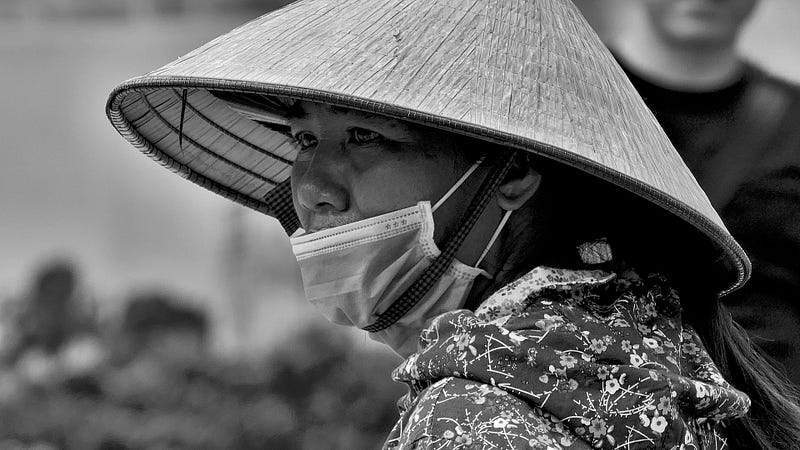
I’ve been based in Hanoi, Vietnam for almost four years, and I’ve neither seen nor experienced anything like the xenophobia among the local Vietnamese — towards foreigners — that has occurred as a result of the coronavirus. For one week at the beginning of March, the vibe was really, really weird.
The Vietnamese government was proactive and sensible in its approach, closing borders and schools, enforcing strict quarantine regulations to control outbreaks, encouraging the cancellation of events and sending regular public service announcements by text, which were not, unfortunately, translated into English (but Google translate did its job).
Hospitals offered free health care for patients testing positive (only for local Vietnamese — foreigners had to pay), and there was a requirement for Vietnamese and foreigners to complete a health declaration via smart phone apps. Several popular neighbourhoods were locked down — no one in or out for 14 days. All perfectly reasonable under the circumstances.
The government’s response was calm, measured and controlled in Hanoi — so I don’t understand how this failed to filter through to the average Vietnamese on the street, who — usually kind and friendly and warm towards foreigners — were hostile and angry and suspicious.
Except I do.
Despite government messaging, fear and loathing swept through the streets of Hanoi, and woe betide any foreigner who was caught not wearing a mask — regardless of the fact that many Vietnamese weren’t wearing them. Expats were berated and yelled at and shamed for not “taking care of the community”. This happened on the street, and online in Facebook Groups, where expats were regularly told to “get out of my country”.
Except we couldn’t.
In one neighbourhood, a Vietnamese man was literally taking swings at foreigners with a golf club. Expats were denied entry to venues that under normal circumstances usually welcomed them with open arms; first it was the Chinese that were banned, and then when there were no more Chinese to blame, it was all foreigners. Discrimination became such an issue that the government had to promulgate a regulation to deal with it.
In a high context culture like Vietnam, where the individual’s needs are pushed aside for the greater good, it makes sense, even with differing opinions about the effectiveness of aforementioned masks. Hell, the Vietnamese government even said in official text messages at the beginning of the pandemic that it’s not necessary unless someone is sick or working in the medical profession, tending the sick. Then this position changed, so there were mixed messages out in the community.
The 24/7 news cycle didn’t help. It was driving a moral panic that was fed by the fear of the unknown. Emotionally laden language that told us we are all doomed and to expect the apocalypse tomorrow and we are all fighting an unseen enemy is unhelpful. It’s not news. It’s fear mongering. If it bleeds, it leads, right?
Interestingly, as soon as the three-week soft lock down ended, things in Hanoi were quickly back to normal. Not a new shitty normal, but the old normal that I like so much in this city: friendly locals, great food, the hustle and bustle of a vibrant anything goes kind of city.
But I’m now conscious of what lies beneath: an uneasy distrust, disdain and dislike of foreigners that could reveal itself at any moment.
Something that I had never seen before.


