
NON-FICTION
An Eulogy to Vintage Typewriters
Sentinels of Ink and Iron
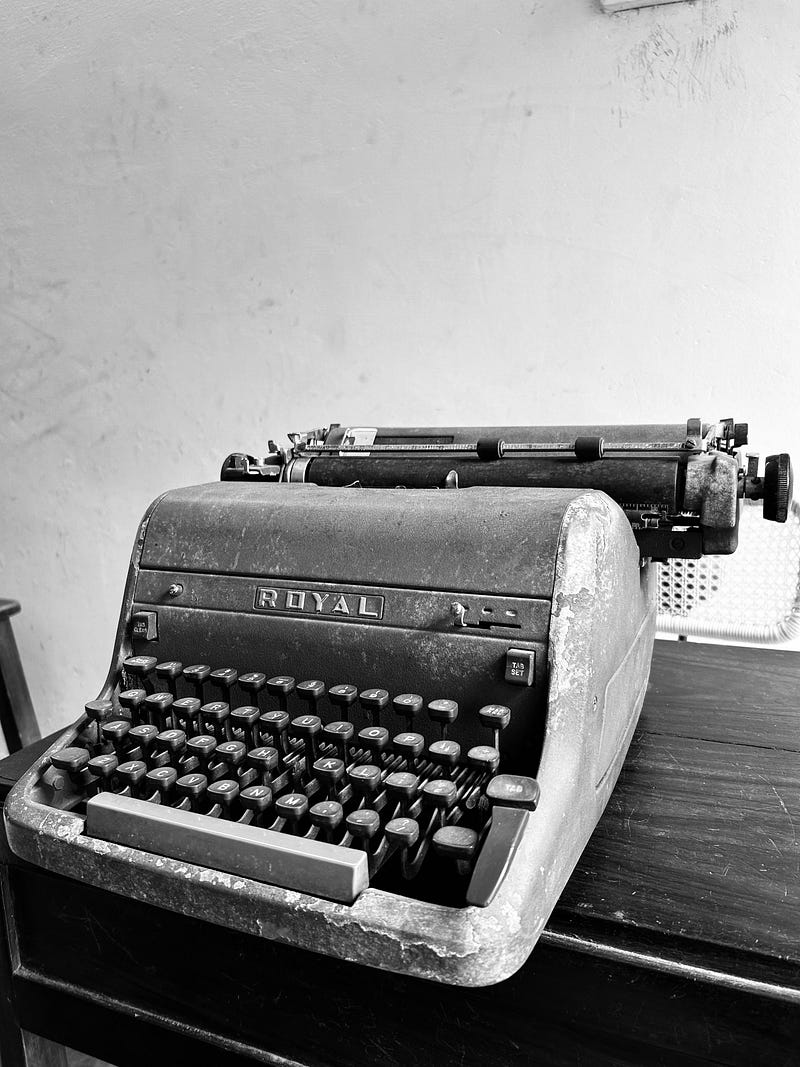
Being an ardent lover of anything and everything vintage, dilapidated, rusty, and ancient, I keep looking for things and places to go to, explore things that are long forgotten and love to engage with people who are old.
I came across Mr Rama, while surfing the internet, looking for typewriters, for no apparent reason. I just wanted to sit beside an old typewriter and hear all the stories that it typed through its entire lifetime. I searched through a lot of articles, and news cuttings and came across this very fine, seventy years young, gentleman, and his workshop cum laboratory cum selling station. I called him, but he didn’t pick up the first time. I dialled back in an hour.
He picked up.
I remember his bewildered voice when I said I was a typewriter enthusiast and would like to visit his shop. The very next moment, he beamed with joy, asking me to come that very day. I said Yes. When life throws you an opportunity like this, you shouldn’t say No.
I was half expecting that there’ll be some old board, or a name of his shop, but there were none. And I missed the spot and went a few blocks ahead. Re-tracing back my steps, and yes, I could see it now. A maverick sitting proudly amidst his typewriters. I waved at him, he waved back. It seemed he was waiting for me.
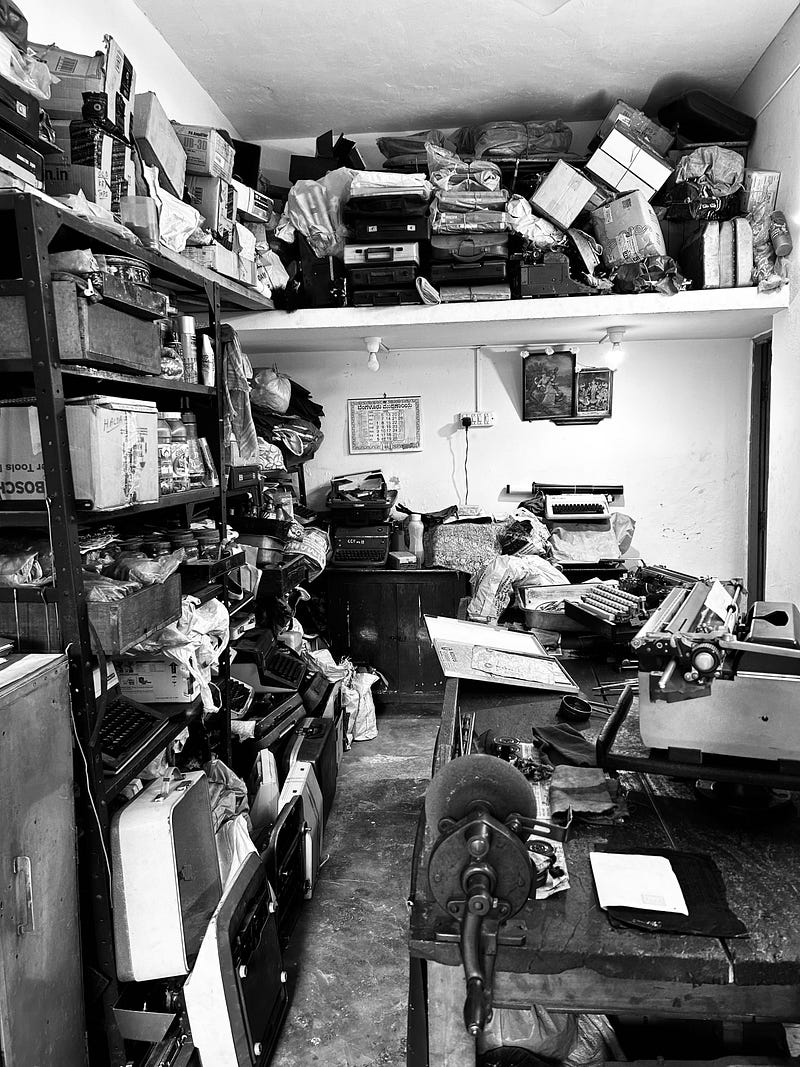
At first glance, as I unlatched the old iron gate, and looked towards his workshop, it all seemed otherwordly. As if, the surroundings around me have slowed down, the colours having been replaced by black and white, only the sepia street lights piercing my interiors like never before. I went and shook his hand, his child-like enthusiasm to show me everything had topped the charts. Immediately, he took me to a typewriter that he was repairing currently with his brother.
It was dismantled, and originally Made In Italy, he said. Landed in India around the 1950s. And is still being used by a family. I was really touched to hear this, someone still clicking those keys.
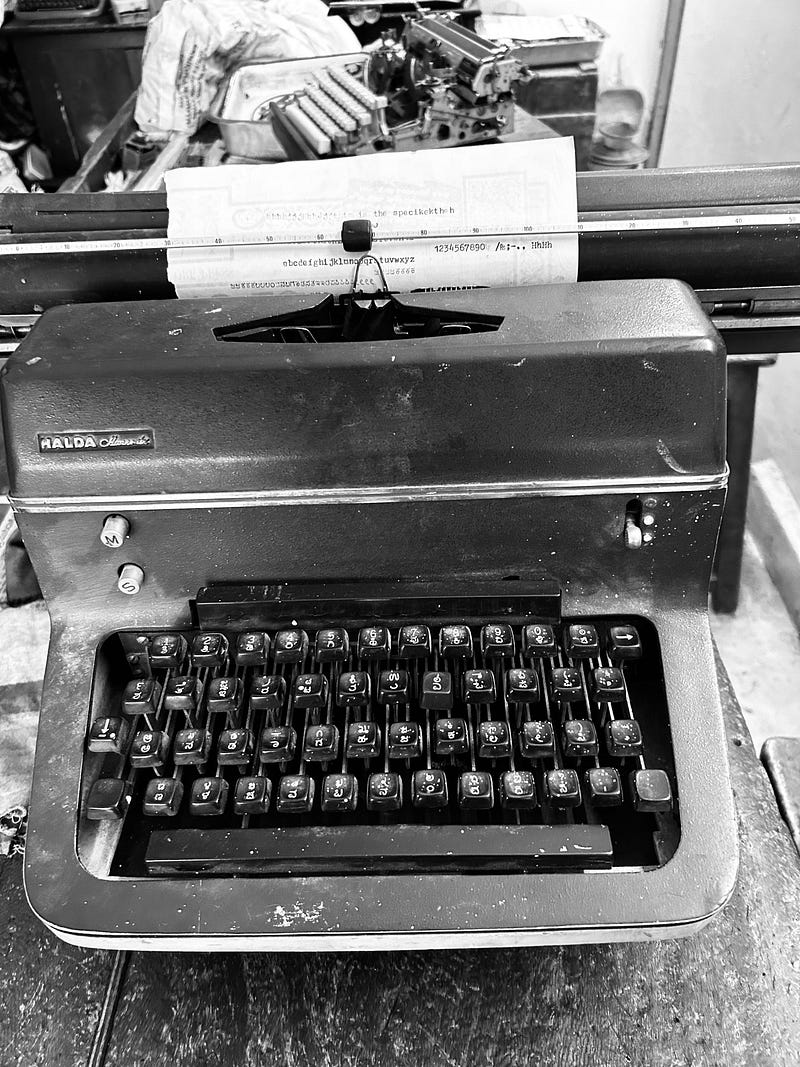
He took me next to some Indian typewriter companies, like Godrej and Remington, but he was not very apprehensive about them. His eyes shone when he went and picked one from a top shelf. It seemed lonely, almost invisible amidst a lot of others around it.
“A thing of beauty”, he said. And it indeed was.
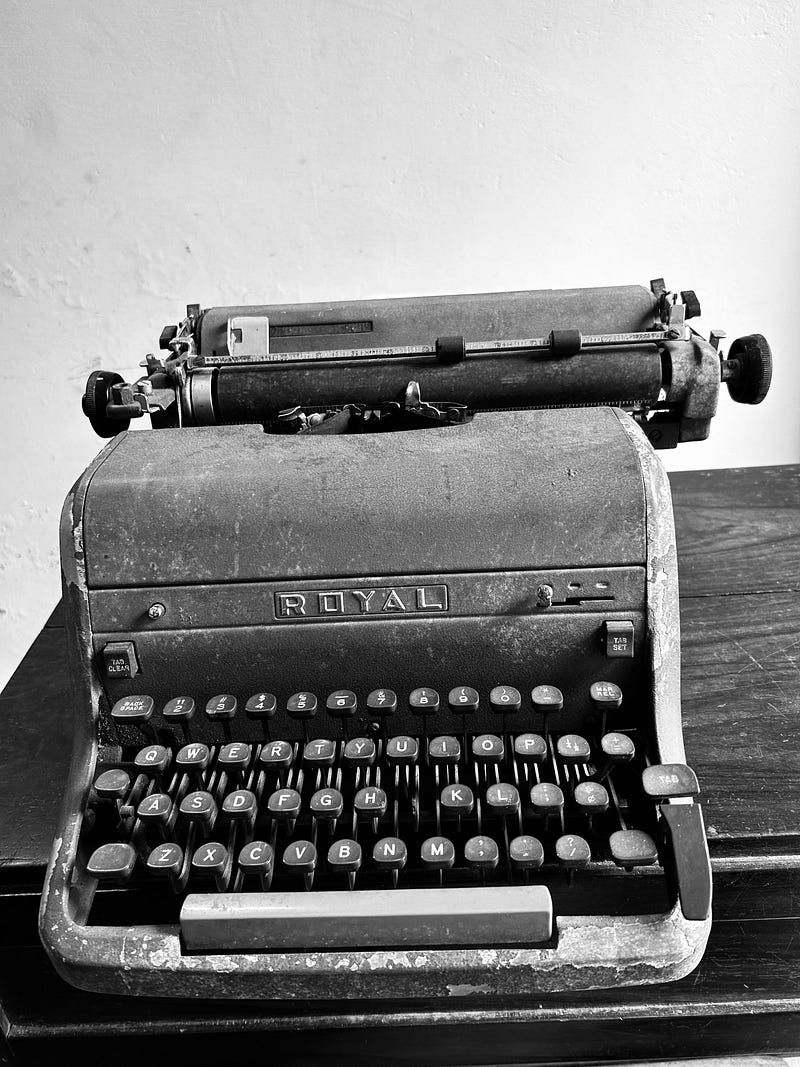
It was a company called ROYAL, a typewriter from the 1940s, made exclusively in the USA, currently lamenting a bygone era, gathering dust, remembering the good old days of clicks and bells, hoping against hope that maybe someone shall press a finger to a typewriter key, and words shall appear again on a blank page, about love, loss, mystery, heartbreaks, forgiveness, loneliness, and what not.
He asked me to type on this. He brought the papers, and I started clicking. The sound was music to my ears. This particular typewriter, had a lovely little sound of a cycle bell or a temple bell, whenever you’d do a line change. The gong, he said. That’s what the sound is about.
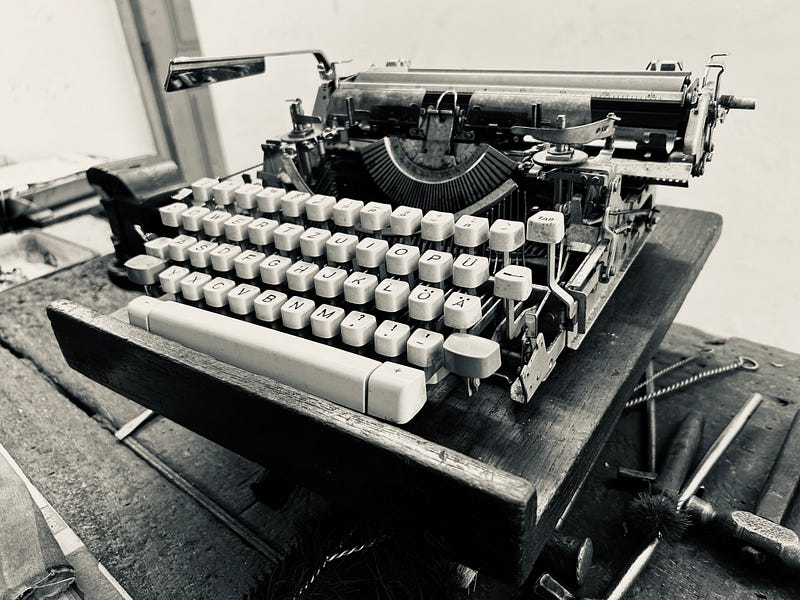
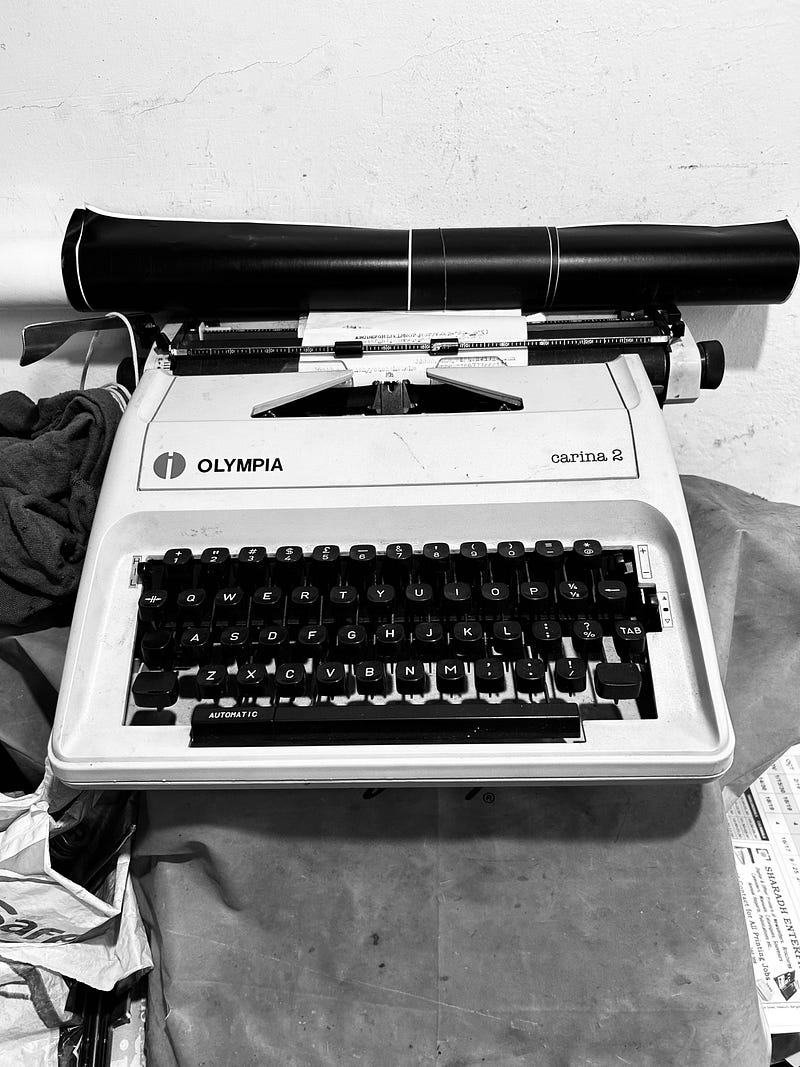
He went ahead and showed me an Olympia branded typewriter, that looked so meticulously built. What I loved about it, and many others were, they were cared for, so very beautifully by Mr Rama. Many of them, were sold to him, and he took immense care, without thinking whether he’d be able to see them off.
The rain gods signalled that a long pending shower might be arriving very soon, so I thought I’d leave. But, as soon as I started to leave, the heavens opened up.
Mr Rama said, “I didn’t ask anything about you. Tell me!”
So, I returned back. More conversations with a cup of tea. And the rains. He went on and talked about how his father had set up the shop in Bangalore, in 1943, and started selling typewriters, imported and local. The business grew till the end of the 1990s when computers came into existence. They had to close a couple of their shops, and finally, the last standing one got shut during the pandemic. Then, he and his brother shifted to this garage in their house.
I was curious to know why he chose to dedicate his entire life to typewriters.
He was lost for some time. “I don’t know, it was inculcated in me since childhood, whenever I looked into this, I felt there’s a strange connection, a sort of soul-to-soul connection, strangely, with a non-living object.”
He smiled. He told me how every single instrument, every single wooden chair and table is at least eighty years old, and how he loves to wake up every day, and fix typewriters. The machines that once told stories, now lying in corners, such an irony.
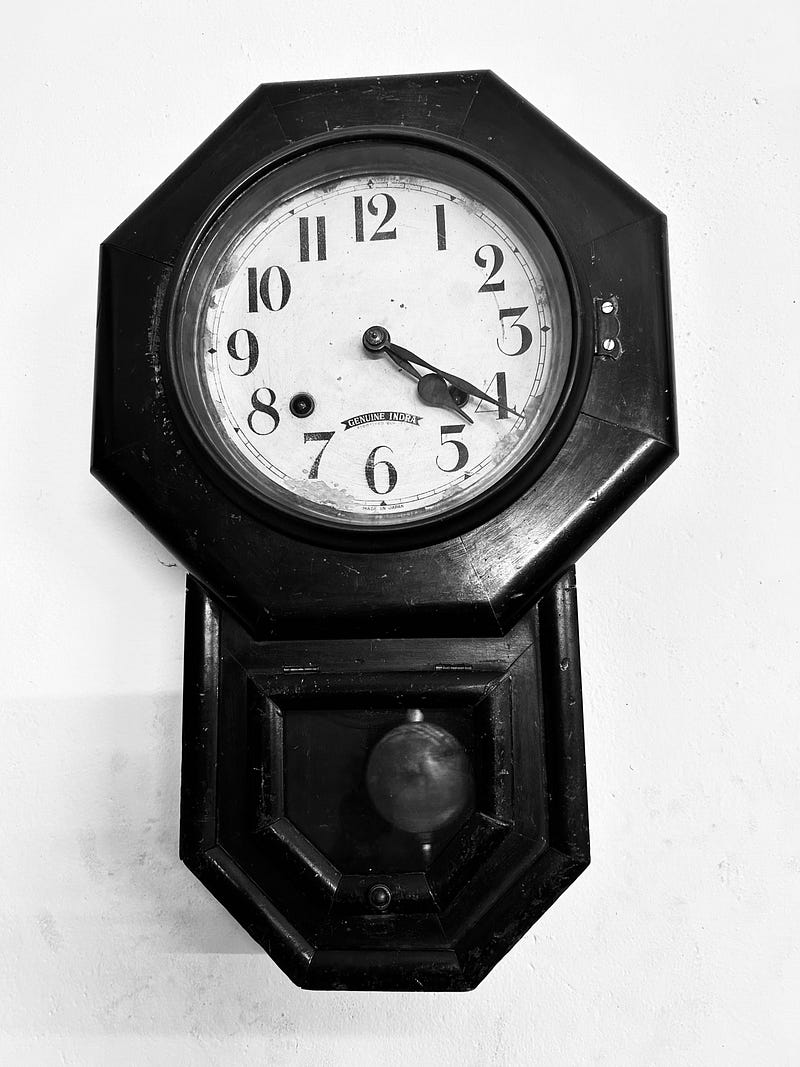
He suddenly remembered something. He asked me to look behind the wall. The wall clock, tells time for a hundred years. Made in Japan, he smiled. I smiled, this place is a time machine.
The rains had stopped, and I did not want to keep the man waiting, he had to fix a typewriter. I went ahead with my last question, with a little dilemma.
“What would happen to all of these, once you’re gone?”
He looked at me for a couple of seconds, folded both of his hands, took them near his chin, stared towards an unfathomable distance, and smiled.
“Me and my brother are one of very few remaining, who know a good amount about a typewriter. We can fix almost everything. Once we’re gone, I don’t think anyone can fix the feverish typewriters. There’s no one to carry forward our legacy, absolutely no one. It is painful, but I know I will carry one with this work till the last day. After that, I don’t care. I won’t even know, right? Whatever has to happen, will happen. Let me keep working and fixing these gems.”
I shook his hands, telling him that I’d come back again. As I walked back, a slanting ray of the setting sun fell on the ROYAL. The inscription shone, as Mr Rama took it back to its original place on the shelf.
It waited patiently, for words to re-appear on that blank white page. Words that won’t ever evaporate. Words that shall stay, forever. Words that’ll always bring back that comfort. The inks could be messy, smudgy, and imperfect, but they’ll last the tests of time.
As the auto pierced through a busy city, my mind was still in that place. In loops. I wondered a lot about those typewriters. About people who had to give it up. Maybe it was a special memory, a gift from his grandfather, a gift from her mother. Eating up space, not much use, so have to sell it. What if someone sitting far, far away in another part of the world, having a connection to one of them, still remembering these typewriters with fondness, some hidden photos somewhere, but doesn’t know that it has landed in Bangalore?
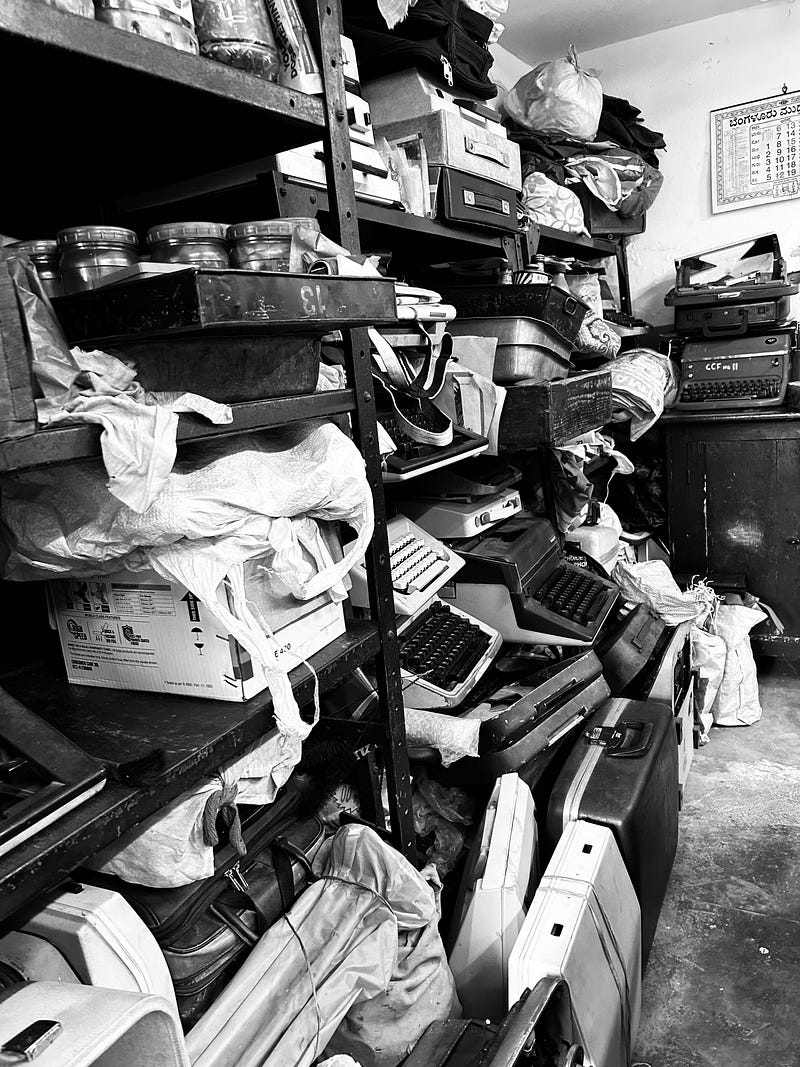
Visiting his laboratory was like getting transported to space and time beyond comprehension. From being bewildered after getting to know that I am a lover of typewriters to his childlike enthusiasm to show everything, the two hours I spoke to this seventy-year young man might be the most poignant conversation I had with anyone in this city, so far.
We are all stories in the end.
Snap. Click. Clack.
Somsubhra Banerjee, 2023


