
An Epidemic of Loneliness Among the Elderly
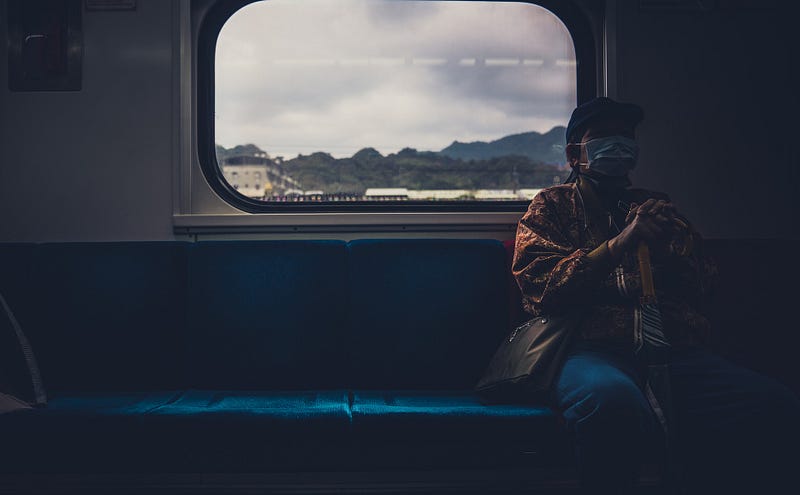
Loneliness, especially among older people, has only been recognized as a serious problem in the last few years. And, frankly, loneliness is difficult to admit.
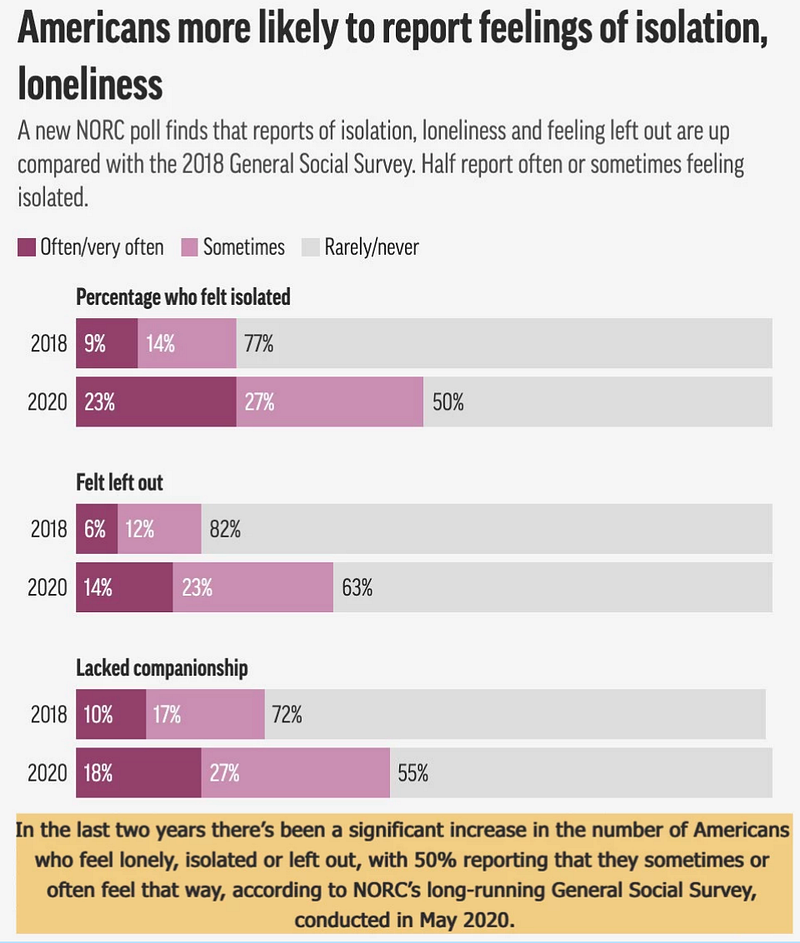
Now, during this time of Covid-19 and social distancing, people of all ages experience loneliness. Loneliness, as a societal issue, first came to my attention when I learned that Theresa May had named a Minster of Loneliness for Great Britain. A 2017 study had found that nine million people, or 14% of those in the UK, reported that they were always or often lonely. And, of course, we in the US learned we had an epidemic of loneliness here, too.
What is loneliness?
Loneliness is a feeling. It is the subjective experience of disconnection from other people that can include feelings of emptiness, helplessness, and yearnings for more meaningful connections. Loneliness can happen to anyone — young or old, married or single, rich or poor, living alone or in a crowded apartment. It is different from being alone. You can be alone and not lonely. We know that it is more prevalent in older people and people who live alone. About 28% of older adults live alone.
Loneliness Kills
Loneliness is bad for your health. A 2020 study by the National Academy of Sciences found that loneliness is as deadly as smoking, alcohol abuse, or obesity. Among people with heart failure, those who are also lonely have a risk of dying that is four times greater than people who are not lonely.
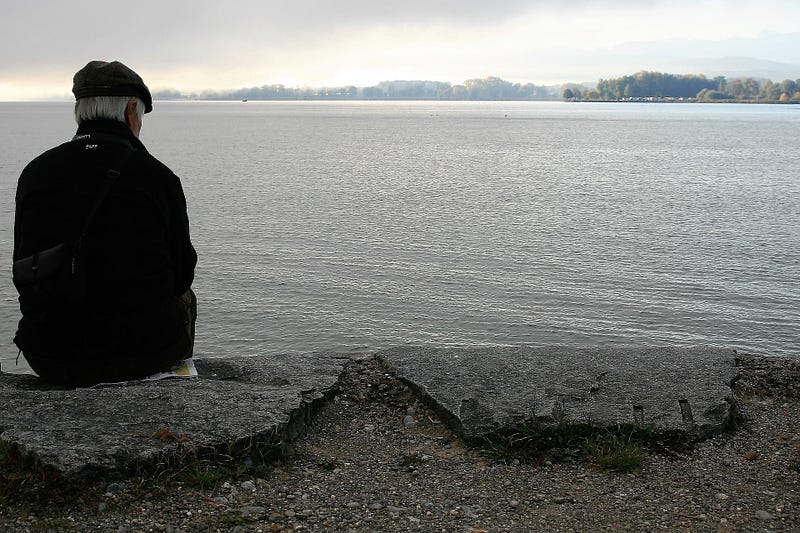
In my interviews, I discovered loneliness troubled people who lived in vastly different circumstances. Let me tell you about Muriel, Orca, and Vincent.
Muriel, a quiet, discontented person, lives with her husband in a large house with an extensive flower garden. She spends her time gardening and she also volunteers at her library. She has several friends that she sees for coffee. Her two grown children, who live far away, come home for some of the holidays. Her husband is a heavy drinker, she thinks he may be an alcoholic. He plays golf many days and often spends time at their summer house to work on projects there. She tells me they are not close — they bicker about everything and she doesn’t think he cares about her. And, she tells me she is lonely, very lonely.
Muriel illustrates that you can be lonely despite living with great material comforts and in the midst of family and friends. Her relationships are not providing the deep connections she yearns for.
Orca, who lives alone in a small apartment several miles from a store, is another lonely person. She raised two sons as a single mom while working part-time at a florist shop. This is how she describes her life to me:
“I have macular degeneration so I don’t see well and can’t drive. Neither of my sons takes care of me. One son drops off of a bunch of frozen dinners every two weeks or so and I warm them in the microwave. My neighbor fixes my pills for me. I try to call my cousin or my other friend. It is not like when I was young and could run out at night and jump rope or play hopscotch with a bunch of neighborhood kids. I don’t go out. I just watch TV. It is not easy.”
What strikes me about Orca is how despite her loneliness, she can get people to provide her with what she needs to survive. She, like Muriel, clearly yearns for better relationships. But she is cranky and a complainer. I wonder where are the support services from her town. Who is checking in on her? No one is keeping her company.
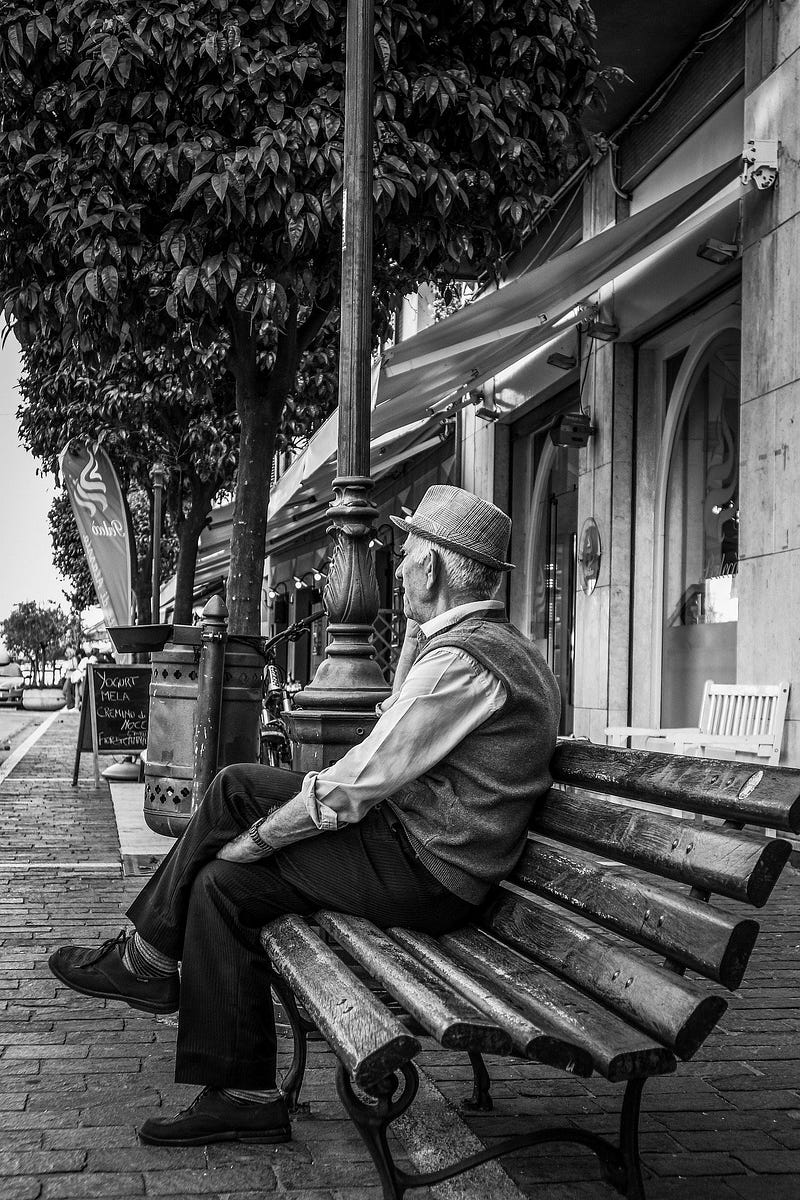
Vincent lives in a nursing home and has no resources except Medicaid. He is a small man, all skin and bones. He told me, “I don’t do a damn thing. I don’t know if I am better off dead or alive. I am and an old-time smoker and you can’t even smoke here. The food here is terrible. My roommate is terrible. He bangs on his chair all the time and during the night he growls. I have six daughters but some of them don’t talk to me. I have a grandson and he‘s been saying for a month that he will come and see me, but I haven’t seen him. It’s pretty sad.” Still Vincent has his small pleasures. He explained, “A trip to the doctor is a day out of here. I smoke a cigarette in the car and I am happy as hell.”
Like Orca, Vincent is grouchy and complaining and, like her, he is lonely. We hear his pain so clearly. John Cacioppo, a researcher at the University of Chicago identified the fact that many lonely people are wary, fearful, and ready to lash out. This makes it hard for others to connect with them. Clearly, Vincent’s relationships are not working well. Who is there to help him connect with others?
Curing Loneliness
So, what are the differences between lonely people and those who are not? Muriel is lonely, although from the outside it looks like she has a perfect life. Her loneliness comes from her feelings that she is not deeply connected to anyone, especially her husband. Orca and Vincent also are not closely connected to their family members and do not have close friends either. They do not take part in community activities. Nobody is looking after them.
I’m keenly aware of how, as a society, we have largely ignored the social needs of older adults and vastly underestimated the impact of loneliness. It’s not just a personal problem, but a community issue. Some countries appear to be better at addressing the needs of older people than we are here in the US. The average life expectancy in Hong Kong, for instance, is 84 years compared to 79 years here in the USA, and 81 years if you live in New York City.
A bit shocking, isn’t it? Especially since in Hong Kong, people are packed together in a very polluted city. But the high level of daily human contact seems one of the key factors in their longevity. They also have lots of public transportation, public walkways, and free healthcare.
My Vision
I have a vision that’s achievable if we want it. I envision our society as a place where people grow old, their community keeps track of them, has ways of checking in with them, and helps them in getting connected to other people. Wouldn’t it be great to solve one health crisis?
Looking for more from Dr. Katharine Esty? Sign up on her website for her bi-weekly newsletters.
#health #eightysomethings #loneliness #agingwell #family


