
An Award-Winning Director Shares His Best Piece of Writing Advice
He sits on his drafts a long time
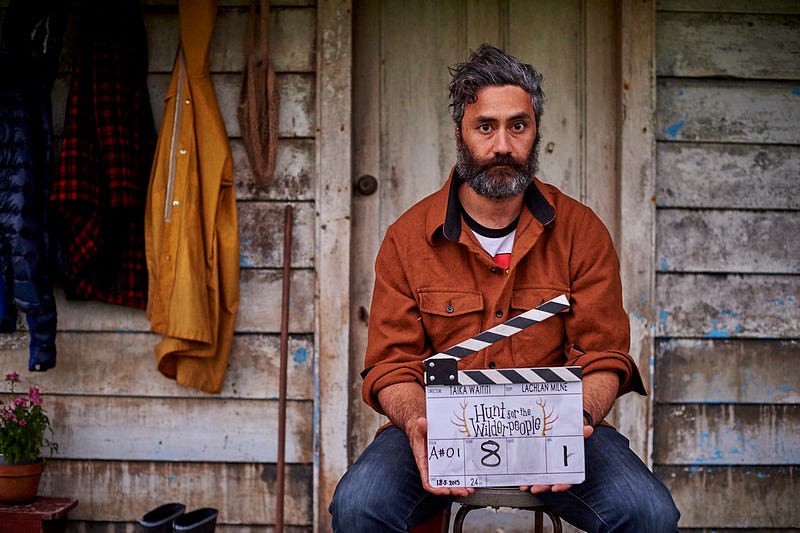
The crowd is packed. The lights are low. On stage, the mediator volleys over a question.
“When did you start writing ‘Jojo Rabbit?’” she asks.
Taiki Waititi smirks a little as he considers his most recent release. “Jojo Rabbit” has collected six Academy Award nominations including Best Picture. Waititi also happens to play Hitler in the movie. With his curly hair flopping around on the top of his skull, the famed director waves a hand vaguely.
“I started writing that one in 2011.”
You can almost hear hundreds of mental calculators crunching the numbers. The result they will come up with is this: eight years. It took eight years for “Jojo Rabbit” to go from first line to Academy Award nominee.
Waititi isn’t done, though. He then says this:
“Basically, I think all of my scripts have taken over six years.”
Another gaping pause stretches across the audience. The director winds up for another piece of advice. He gives a malevolent smile and squints his eyes, well aware that he is about to crush more than a few dreams.
“This is my little trick that none of you will want to do. I will write a draft and put it away for a year or so. Sometimes it will be two years, sometimes three. Then I’ll come back to it, and I’ll read it two or three times…Then, I’ll throw it all away and start over from page one, based on the memory of what I’ve read.”
The crowd is dead silent. No writer wants to hear advice like that.
Two Parts of a Difficult Trick
Taiki’s “trick” is two-fold, and although neither piece of advice is particularly new, it’s worth taking a deeper look at each piece of the puzzle to understand why each piece is so valuable.
Put your draft away for a while
This is not new advice. Even Harvard’s writing center lists it as the top tip for getting to the second draft.
Why do so few people act on it?
Setting a draft aside for a month, a day, or even a few hours is difficult because there is immense pressure for creative people to say more, louder, constantly. With Gary Vaynerchuk recently advocating for a minimum release of 64 pieces of content a day, it’s hard to justify waiting even a few moments to release work.
So here’s the question: Is it possible to reach the volume of content necessary to be seen today while still reaching a respectable quality?
According to Waititi, yes. The secret? Do more meaningful work in the meantime.
While “Jojo Rabbit” was sitting on a hard drive somewhere, Waititi was acting in other films, writing other scripts, and directing other movies. All the knowledge he consumed from each of those projects undoubtedly funneled into the waiting draft.
Involving yourself in other projects can relieve the immense “must-be-done-right-now” pressure. It’s also a good reminder: A powerful idea will still make an impact no matter how long the wait.
Rewrite the draft from scratch
If it’s difficult to sit on a draft a while, it’s excruciating to throw all that work away and start from scratch. Common logic says it would be more time-effective to go through a first draft, keep the pieces you like, and throw away the rest.
Waititi offers his reasoning for a different solution:
“I can only write what I remember. Suddenly my 120-page script shrinks down to 80, and I’m left with the real bare bones of my story.”
This seems like double the work, but it works. Instead of considering each sentence and paragraph individually, he considers the movie as a whole picture. Then, he has a fresh slate to tell the story.
I like to think about it this way: You can use all the Band-Aids you want on a broken leg, but if you don’t reset the bone, you can’t heal the wound. A broken story simply won’t work, even if it has perfect skin.
Waititi’s advice is solid. What’s better is the precursor:
“Here’s my little trick that none of you will want to do.”
It is not easy to let drafts sit for days or months on end. It is also not simple to toss away an entire draft, even though you know the bones of the story are in your head. Ultimately, though, this is what being a writer is about — doing what other people will not.
So put your butt in a chair. Place your fingers on the keys. Take a deep breath.
Then, trust the process.
P.S.: I highly recommend watching Taiki’s interview in its entirety.