
An Argument Against Pets
So you don’t eat animals, but do you covet them?
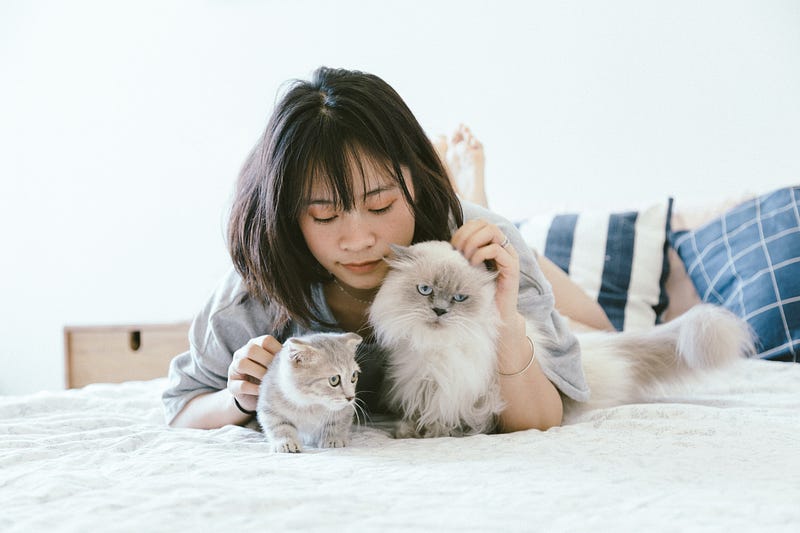
When I was four I asked my parents for a cat. My mother said, “Next year sweetie,” and I’m sure she thought that was the end of it. Well 365 days later I reminded her of her promise and for fear of facing a toddler’s wrath, she followed through.
We returned home shortly thereafter with two kittens named Brad and Jennifer. They were siblings so we quickly changed the names.
Eight years of litter-boxes, cat scratches, and trips to the vet later, we lost “Jennifer” to cancer. It was one of the first times I had lost something so close to me and it made me sympathetic towards all animals.
While wrestling with my guilt and sorrow, I decided to become a vegetarian.
We brought home another cat to be “Brad’s” companion and 10 years later both cats had passed on as well. At first, it was the accompanying sadness that discouraged me from wanting another pet. When I moved out of the house I thought it was because of how much work and how expensive pets were that I remained disinterested. Years after I began building my own life I realized that I wasn’t interested in filling that void because I disagreed with the practice entirely.
Having pets is selfish.
It seems hypocritical to choose not to eat animals but believe it’s okay to deprive them of their free will and interfere with their evolutionary biology. Ultimately, most pets today are bred to be human companions with few convincing arguments that this is for the best.
How can we ensure that all, or at least the majority, of animals are not mistreated?
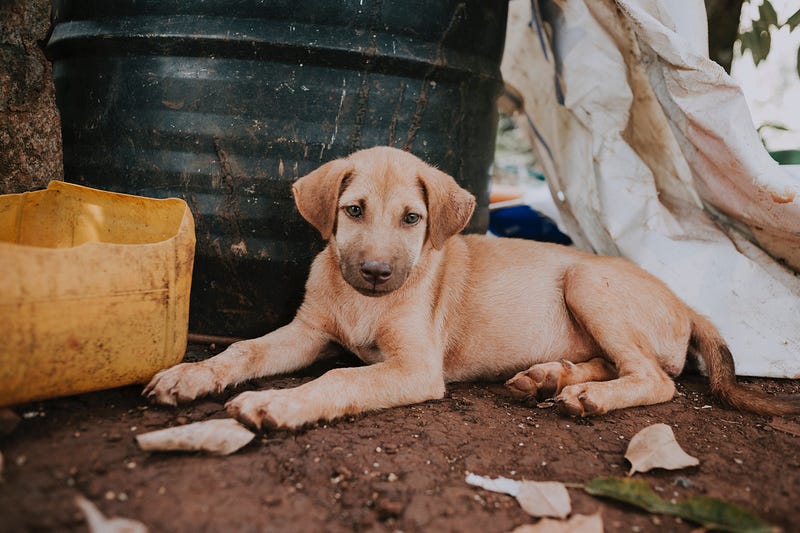
The first reaction I usually get to this controversial opinion is, “Pets are treated so well! Would you rather they be homeless and starving and left to fend for themselves on the street?”
Obviously, it is not my preference that animals are neglected or mistreated. I love animals, regardless of whether I think they should be kept as pets. What concerns me is that not all pets are treated well. To offer a utilitarian argument here, is it worth continuing this societal convention if potentially not even most pets are better off in a domesticated setting? Further, can we be sure that domesticated animals wouldn’t be happier if they had not been domesticated in the first place?
human society highlights that “there are approximately 70 million pet dogs and 74.1 million pet cats in the U.S.” and an average of around 10 million men and women a year are assaulted per minute. According to this same study, 71 percent of domestic violence victims reported that their abuser also targeted pets. Additionally, Peta reports that there are an estimated 70 million stray dogs and cats in the US at any given time and ASPCA approximates that only 6.3 million dogs and cats enter US shelters each year.
What we can take away from these statistics is that over a third of these animals (only cats and dogs are included here for simplicity) experience documented mistreatment, are not treated adequately, and are already living without owners.
Consider that these statistics still do not cover all conditions in which animals may be experiencing cruelty. In addition to domestic abuse, strict animal abuse, hoarding, the factory farm industry, and organized animal cruelty all pose dangers to the welfare of pets. Consider still, that many types of animal abuse go unreported and that inhumane aesthetic procedures such as ear cropping and tail docking have been normalized in a society that values pets as accessories.
Surviving is not the same as living which is not the same as thriving.

You might think you aren’t complicit in this maltreatment because you’ve never exhibited any of the above behavior. But how different is it that you leave your pets alone while you spend 9 hours a day at work, or lock them in a crate or cage at bedtime? At what point does it become neglect? At what point does it become abuse?
How many times have you seen a dog with a muzzle, a pinch collar or a shock collar? Or witnessed a few kids playing too rough with a pet that they have been conditioned to think of as a toy? Dogs today are bred for sport and entertainment. As a standard, we are training out their most basic instincts for our own convenience and with little respect for their needs or wants.
A few years ago I babysat two young kids after camp and watched them until their parents came home. For the most part, we binged CSI and Switched At Birth and drank hot chocolate. A few months into the gig I babysat for the first time on a weekend. The kids were told, “Don’t forget to feed the pets.”
They brought me to a new wing of the house and opened a door to three dogs and two cats. Not only had I not been aware that any animals were in the home, but the two cats were the fattest cats I had ever seen. The kids poured out five overflowing bowls of kibble, left the room and that was the last time I saw those animals.
If we can’t give animals the attention they require, what gives us the right to commandeer their lives and make them subject to our every whim?
This brings us to a very timely conversation about the aftermath of the pandemic adoptions. During the lockdown, several news outlets reported that pet adoption rates surged with many isolated individuals seeking comfort in animal companions. For pets born during the pandemic, constant attention and physical contact has widely become a norm and expectation. However, once families are sent back to work and school, these pets will have to contend with a separation that they most likely are not prepared for and that their owners may not have the patience to deal with.
It is not our place to interfere with evolution.
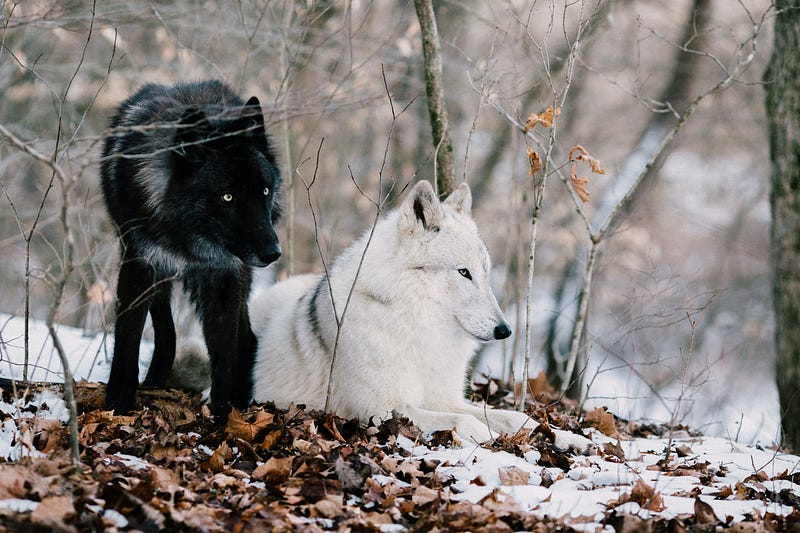
In the pursuit to engineer man’s best friend, we have lost sight of the concepts of evolution and natural selection. The process of creating purebred animals and selective breeding, in general, has led to increases in inherited diseases and other disadvantageous traits.
If you own a pet you might be able to recall a time when your dog ran scared of its reflection or when your cat refused to see the food in its own bowl. After centuries of living beside humans, many of our domesticated animals have lost their survival instincts and become too dependent to take care of themselves.
English bulldogs, pugs, and Boston terriers are examples of dogs that have been bred for their short-nosed qualities. Yet due to breeding, these flat-faced animals are now more susceptible to obstructive airway syndromes, heart problems, and more. In making our lives easier and more enjoyable, we have in many ways made theirs less so.
This essay largely targets dogs and cats, however, these concepts apply to most pets. To address aquatic creatures, amphibians, and reptiles, I have yet to hear a convincing argument for why a two-by-four tank is better than the open expanse of the wild.
Despite our knowing that the world is dangerous, we still choose to venture out into it every day because we have decided it’s worth it.
Consider finally, that for good or bad no animal can consent to the lifestyle you are imposing on them, and if you weigh the pros and cons of domestication against each other, I am not so sure that the pros win.


