
An Ancient and Long-forgotten Practice Is Coming Back. How Competition Among Governments Will Change Everything
The efforts of many countries to attract digital nomads is only a sign of much bigger changes that will empower individuals and transform the economy and political system
In the history of humanity, everything evolves, but some things seem to come back.
The rise of small country jurisdictions such as Estonia or Andorra, competing with other European countries for taxpayers’ residence, is a sign of times to come.
It´s also a return to times when sovereignty was shared and sometimes disputed by different institutions.
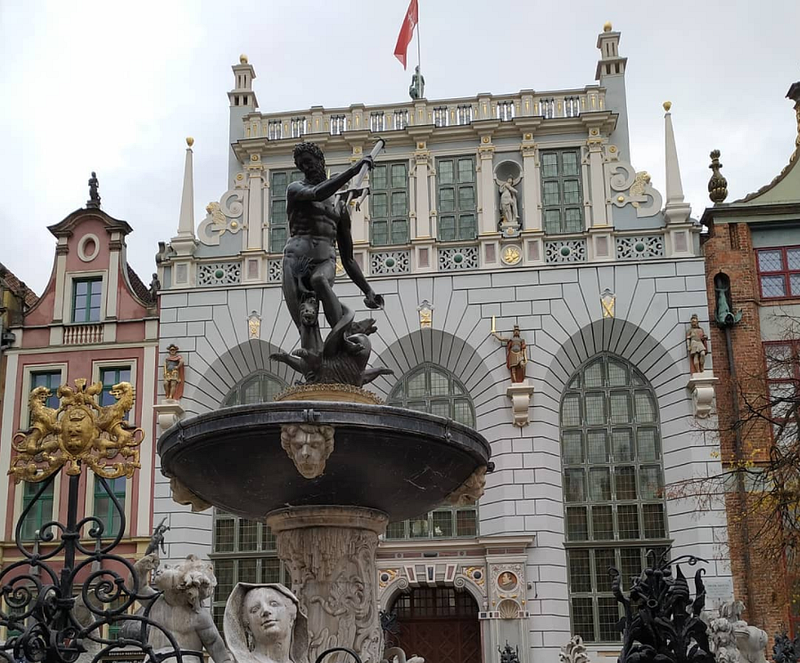
A year ago, I visited Gdansk, a port city in northern Poland with a rich history.
Getting to know it helps to understand the past and, perhaps, the future.
Gdansk is famous for having been the headquarters of the Solidarity trade union.
Under the leadership of Lech Walesa, the shipyard workers grouped in it rebelled and fought in the eighties against the communist regime of their country until they contributed decisively to its fall.
In the museum dedicated to that struggle (and where Walesa, one of the first Polish presidents of the post-Soviet era, still has an office), the souvenir store offers many products with the inscription “Gdansk: where freedom was born.”
The city has that pride, no doubt, and a long history linked to freedom, tolerance, and free trade.
Gdansk was part of the Hanseatic League for much of the Middle Ages, a confederation of free cities created by Germanic merchants to secure routes and trade in the Baltic basin.

They had their headquarters in the German city of Lübeck and a not too rigid operating structure that allowed them to negotiate with kings and emperors benefits and rights to trade in northern Europe and the British Isles.
Many of these cities were born from Germanic settlers who established themselves in strategic locations and negotiated the status of free cities for their enclaves with the rulers of the different countries.
Cities like Gdansk (with its German name Danzig) had their laws, a constitution and minted their own currency.
They were accountable to no one except, of course, to the emperor, but without the intermediary of any nobleman.
In these cities (which included present-day Bruges, Hamburg, and others), there was a greater degree of religious tolerance than elsewhere, which is natural when the primary purpose of a human community is to exchange goods to generate wealth.
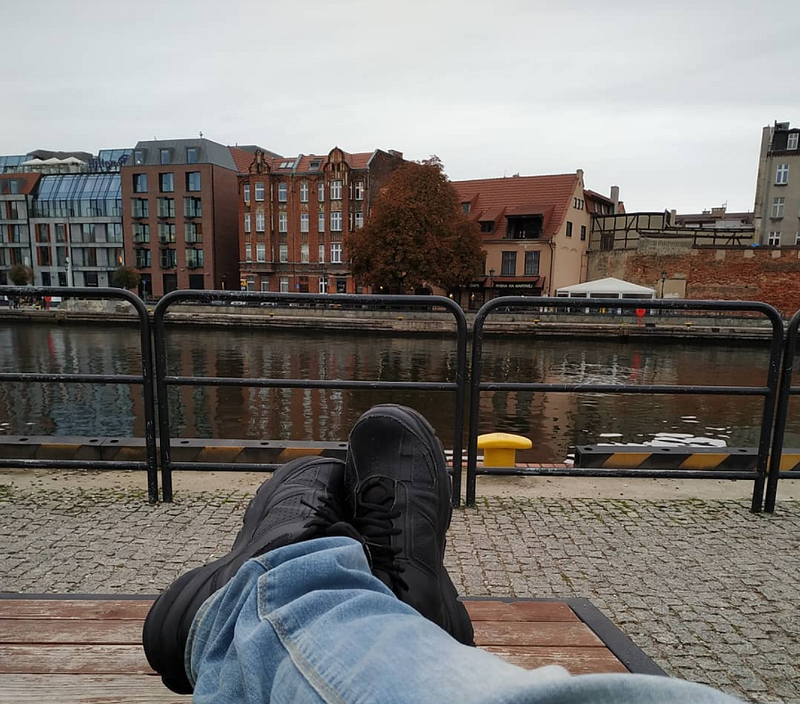
For a more or less prolonged period, the Baltic showed the characteristics of a sort of “cold Mediterranean,” crisscrossed by trade routes, cultural exchanges, and economic splendor.
It is natural for me to compare these free cities with the Italian city-states of the Renaissance, such as Venice or Florence, in terms of their form of political organization (where the bourgeoisie had a decisive weight) and their economic flourishing and development.
The League (which had its own military force) reached a level of international recognition that allowed it to be considered almost equal by some countries and even to go to war with some of them, as in the case of the war with Denmark in 1368.
The Hanseatic League, as well as some monastic-military orders, such as the Order of Malta, are a textbook example of how in this long historical period, sovereignty (the ability to “command”) did not fall only on kings or emperors.
There were different institutions and organizations with that capacity, that is, what more or less from the French Revolution onwards, only nation-states were allowed to do: pass laws, enforce them, and print money.
These historical examples are used by James Dale and William Rees-Mogg in their book The Sovereign Individual.
In it, they illustrate what could be the next stage of humanity: a complex political system where the receding power and influence of nation-states puts them back in competition with other sovereign entities.
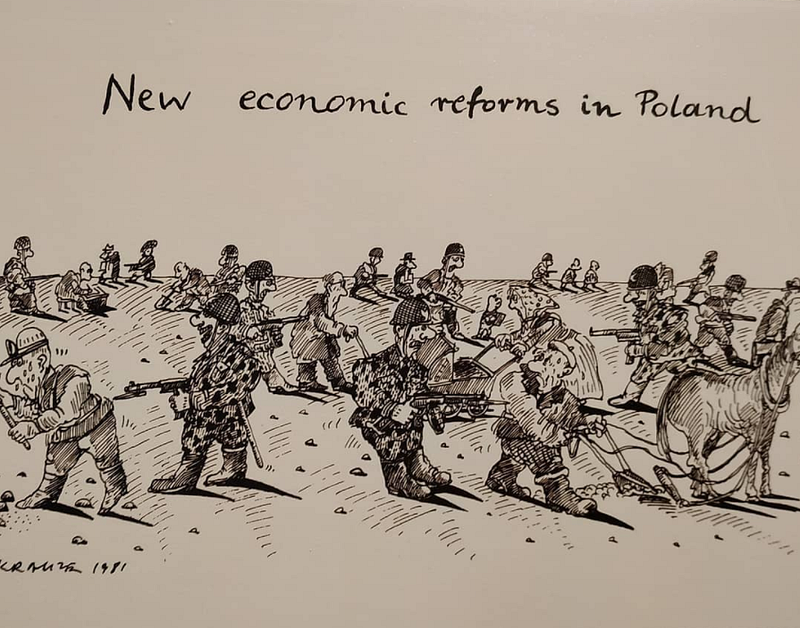
Dale and Rees-Mogg are, of course, talking about the possibilities offered by the Internet and what they envisioned as the possibilities it provides for the development of economic “spaces” outside the absolute control of states (including the ability to tax and enforce the use of a currency).
They foresaw something already happening, namely increasing competition between sovereign states that would offer companies and entrepreneurs (the merchants of the 21st century) better economic conditions to attract them to operate within their spaces and under their rules.
Ironically, one of the earliest and best examples of this type of “competition” to attract entrepreneurs was in a country mainly under the Hanseatic League’s control and, therefore, with an ancient mercantile tradition.
Ironic, but perhaps not all that surprising.
Estonia’s eResidency program is one of the most transparent attempts to put the country in competition with others to offer “sovereignty services,” favorable and specific laws, limited taxation, and ease of operation for anyone wishing to create and operate digital businesses “from” that country.
These types of programs have multiplied. Not necessarily as eResidences, but as physical residence visas, although in principle limited in time, for remote workers.
A remote worker is someone who has a job in another country (which can be done via the Internet), is a digital freelancer, or has some kind of online business or income.
The most notorious case in Spain has been the slow but vociferous migration of YouTubers to Andorra, a country that benefits them with tax rates that are almost a fifth of what they pay in their country of origin.
In one sense, it is an unprecedented transformation and a global change that will unfold over the years or perhaps decades and change how the world works.
In another sense, it is simply a return to the times before the consolidation of nation-states.
Like they say in the fashion world: everything comes back.