An AI Company Offered $73 to Scan My Eyes
Can you put a price on the unique biometric data in your iris?
Who hasn’t heard about Worldcoin? A global biometric cryptocurrency project currently collecting data from the human iris to (allegedly) facilitate online identity authentication.
Last year, I started seeing these futuristic stalls pop up like mushrooms on train stations and shopping malls here in Portugal.
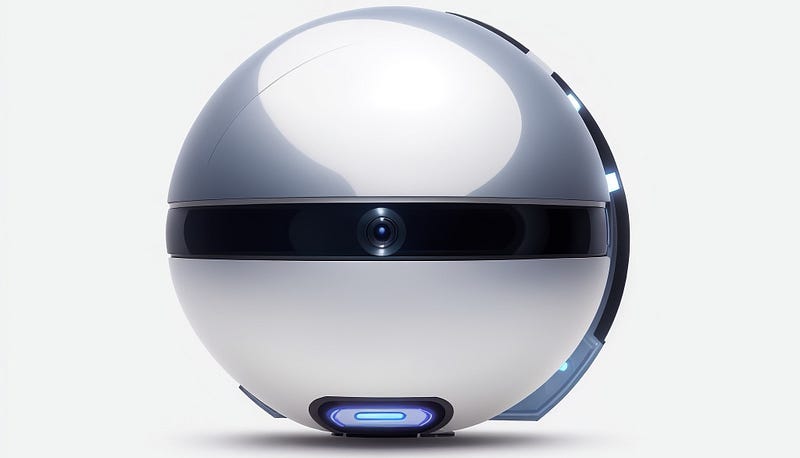
The centerpiece of the stall was always a futuristic sci-fi sphere sitting on a pedestal.
The first time I noticed these clusters of people gathering around the device, I was perusing a mall in Porto. Glancing at all the commotion, I couldn’t help but wonder why everyone was taking turns to look into this all-seeing eye.
I had no clue about what was happening, so I decided to look up the brand name on Google:
“Worldcoin.”
The Worldcoin project was developed by Tools for Humanity, a company led by OpenAI’s CEO, Sam Altman.
In July 2023, the company began its rollout of 1,500 orbs. Several of those biometric scanners found their way to my country.
A Worldcoin Orb is a device that scans your iris and creates your unique World ID, a cryptographic identity that gives you access to the World App and its services. — Worldcoin.org
Sam Altman wasn’t satisfied with leading the AI stampede while riding the wave of ChatGPT.
Now he was set on creating the world’s largest financial network and an alternative to the traditional banking system.
The plan is to provide universal access to the global economy, regardless of the country or origin of each user.
From my Google search, also discovered the World app, and I did install it to see how far into the rabbit hole this thread would take me.
Regrettably, I was in a hurry and didn’t have the time to mingle with the mob and who knows, maybe look into the Orb.
A few days later, I spent a weekend in Lisbon, the Portuguese capital.
While I was at Gare do Oriente, in Lisbon, waiting for a train to return to Porto, I saw another one of these fancy stalls.
I arrived early at the train station, so I had plenty of time to spare. This time I would get to the bottom of this Worldcoin business.
I waited in line for my turn to talk to the Worldcoin operator. I wanted to ask a few questions and get an insider’s perspective.
While I stood there, I watched the Worldcoin operator approach the company’s target audience. Again, it was composed of people who were quite young.
I hear the guy bragging to these kids about how he scans the iris of over 300 people every day.
Then, he lures them in with the promise of a few tokens in a new cryptocurrency without any real market value beyond the perception of how much it will be worth.
The proposal sounds deceptive, but the AI Orb looks appealing to this age group. It stuck in my mind how easily these youngsters fell for anything tech-related.
That day, everyone standing with me in line got their irises scanned on the spot.
When it was my turn, I asked what this was all about.
The operator explained how they scan the human iris to create what he called a “WorldID,” which serves as a “digital passport.”
In his own words:
“A way to verify that each user is indeed a flesh and blood individual.”
Everything he was saying sounded a bit like gibberish.
“Each iris scan generates a code that is compared with all other iris codes to verify individuality. The process serves not to identify who the person is, only to verify that they are indeed a person.”
Ok, cool! Now I have to prove I am a living, breathing human.
Wait, are there any AI surrogates among us?
Suddenly, it felt like I was in a Black Mirror episode.
Meanwhile, the operator kept babbling.
“Welcome to the age of AI!”
“All data is securely encrypted.”
“Worldcoin does not and never will sell anyone’s personal data.”
Should I take this guy’s word for it?
I also realized that registering my unique biometric login in their database would immediately make me a customer.
For all my trouble, and unique biometric data scanned from both my irises, I’d get 10 WLD tokens on their app.
AI would get a part of what makes me unique for the lump sum of $73.
Sounds like a bargain, right!?
How could I sell this unique part of myself for the price of a male groin hair trimmer?
$73 doesn’t even buy my long-coveted R2-D2 LEGO set.
Well, my teenage naivete years are long gone.
“Sorry, buddy!”
I immediately understood everything this guy was mentioning was probably in violation of our data protection regulation.
“Thanks, but no thanks!”
I’ll keep my iris biometrics safely stored behind my eyelids.
Based on my experience, I wasn't surprised when I saw on the news that Worldcoin was collecting biometric data from an average of 4,000 people in Portugal every day.
Time passed, and I kept seeing more and more of these stalls, and I kept wondering why the authorities were allowing this company to operate in Portugal.
A year later, more than 300,000 Portuguese had their iris scanned, almost as many as in neighboring Spain, which had 360,000. Let’s not forget that Spain has four times the population of Portugal.
Earlier in March, the Spanish Data Protection Agency (APED) ordered a precautionary measure against Tools for Humanity and their controversial project.
Meanwhile, here in Portugal, the National Data Protection Commission (CNPD) has been monitoring Worldcoin’s activity since 2023.
Complaints kept piling up at the CNPD headquarters since Worldcoin made the news in Portugal last month.
Earlier this week, the Portuguese CNPD released a statement announcing it had decided to suspend the collection of iris and face biometric data by the Worldcoin Foundation for 90 days to safeguard the right to protection of personal data, especially of minors.
This afternoon, before writing this piece, I once again tried to find my nearest Worldcoin operator. I logged in to the World App. Then I went to the Settings page and selected “Find an Orb.”
The search result was rather reassuring: