
Amusing Snippets of English From Around the World
Interesting phrasing from signs and storefronts
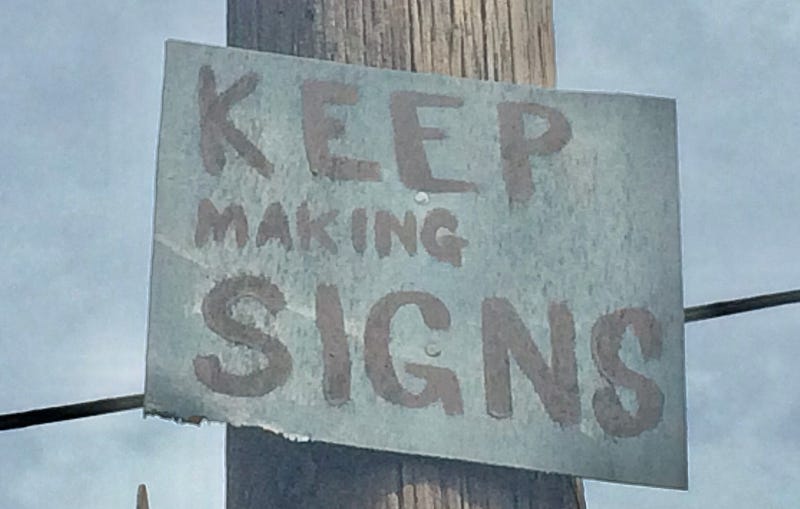
In my travels, I frequently come across surprising and amusing uses of the English language.
In Slovakia, I absolutely loved this chalkboard sign in front of a coffee shop:
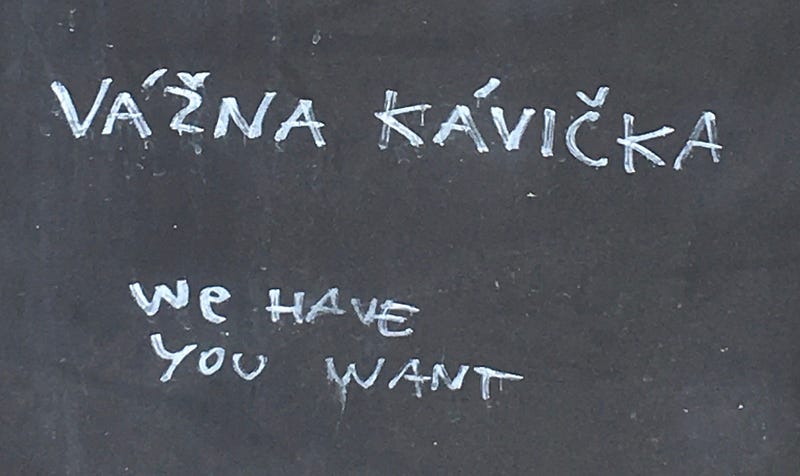
We have. You want. Can’t you just hear these words in an Eastern European accent?
According to Google Translate, the Slovak words at the top of the sign mean “serious coffee shop.” I guess the idea is that they don’t mess around. They have coffee, they know we want it, and that’s all there is to say.
Here’s another one from Slovakia:
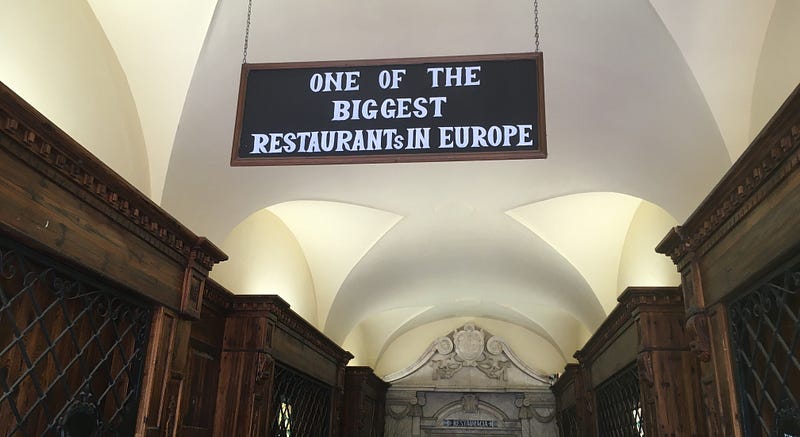
I found this to be such a unique boast. Sometimes, that’s the fascinating beauty of non-native language use — the message comes out making sense, but it’s phrased differently than how native speakers would arrange the words.
Another example, from Lima, Peru:
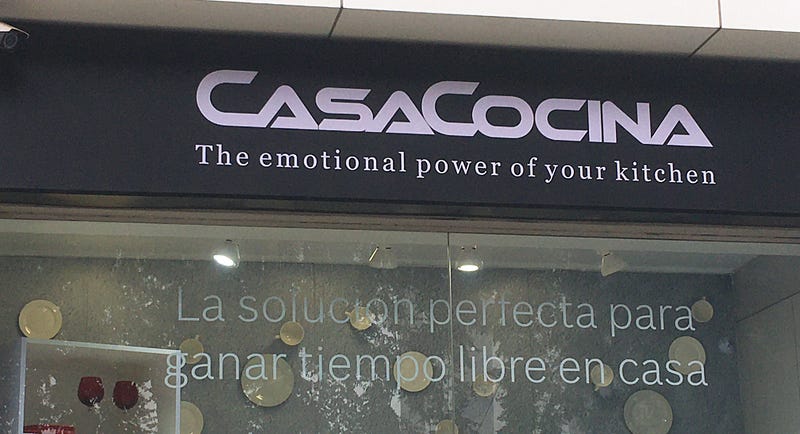
Maybe I’m the only one who loves this wording, but it really grabbed me. The emotional power of your kitchen! It’s just so dramatic.
The store’s name is in Spanish, followed by an English “subheading”, then a more detailed bit of Spanish, which says “the perfect solution for gaining free time at home”. Living in Peru, I’m constantly noticing this sort of intermingling of the two languages.
Another occurrence I enjoy spotting is the use of English curse words in storefronts.
Like these baseball bats in a mall in Slovakia:
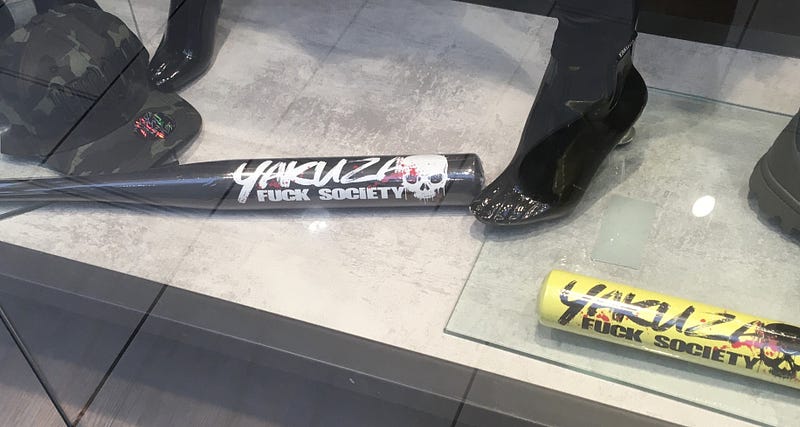
In my opinion, anybody who wants a “fuck society” baseball bat — in a country where they don’t play baseball — shouldn’t be trusted with one.
Here in a burger joint in Quito, Ecuador, profanity is used in a more upbeat tone:
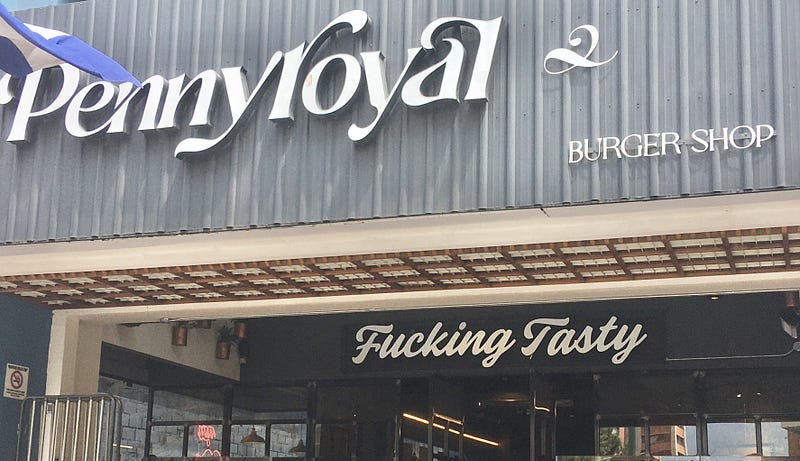
I don’t think many cities in the US would let a business put up a sign that prominently features the F word.
Although, apparently this “Eggslut” chain has locations in Los Angeles and Las Vegas:
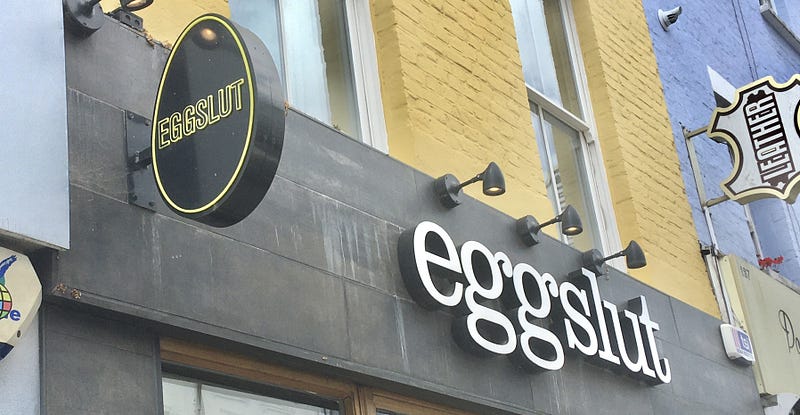
I spotted that one in London. It’s a sandwich shop. It’s worth noting that the owner tried to open a location in Australia and was denied, due to the offensive nature of the business name.
In a more rural part of the UK, the signs were more polite:
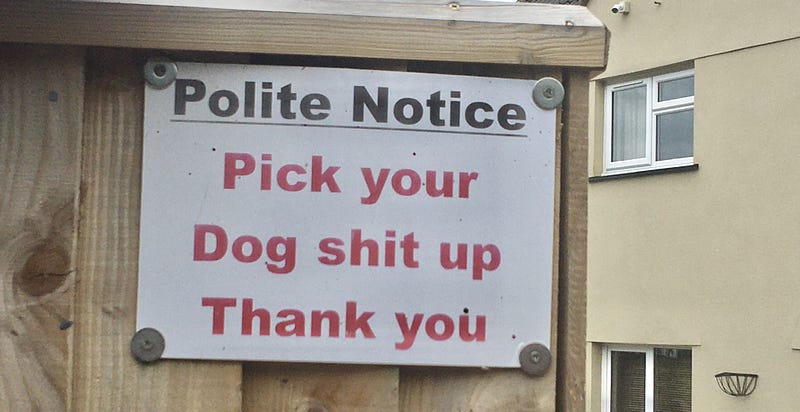
It’s just a silly sign, but it does do an excellent job of presenting a particularly British sort of humor.
I also like the choice of capitalization. Only the first word of each line is capitalized. This suggests to me that the sign is actually a poem:
Polite Notice
Pick your Dog shit up Thank you
Beautiful! Brilliant! Such poignant imagery. It’s like a 2–3–2 haiku.
Sometimes, a sign only seems to be cursing at you, but it’s actually a case of false cognates — words that sound the same in two languages, but with entirely different meanings.
For example, this cheerful SCHMUCK lettering in Germany really caught my eye:
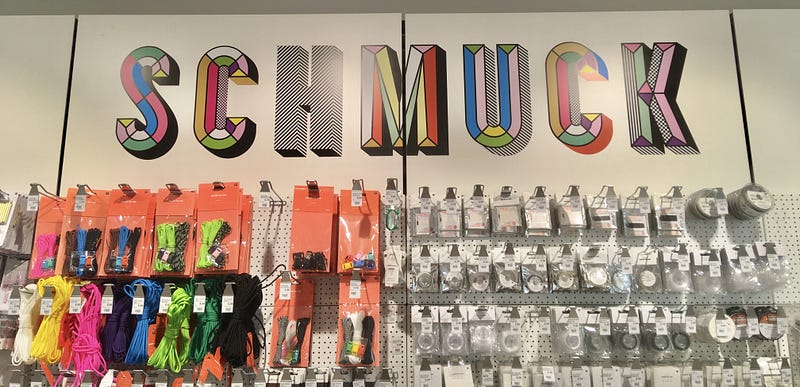
In English, “schmuck” is a fairly nasty thing to call someone, generally meaning something like “jerk” or “jackass”. The word comes from Yiddish, where it means “penis”, and has earlier roots in Old Polish: smok, meaning “grass snake”.
In German, schmuck refers to jewelry or decorations.
At first, I thought that maybe something similar was happening when I saw this “pimpstation” in a convenience store:
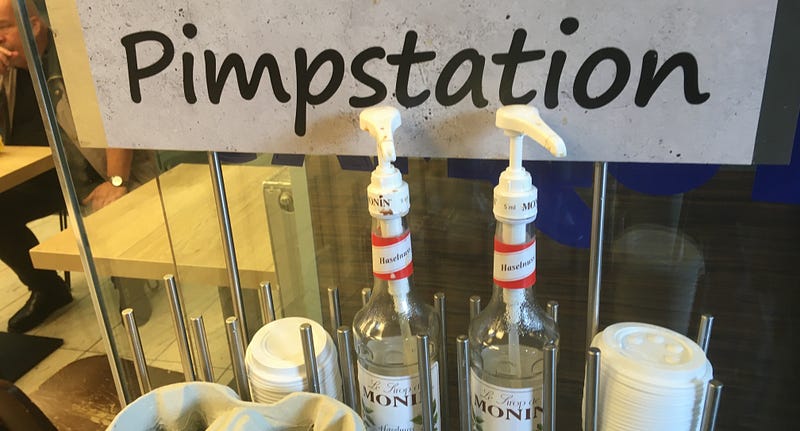
Nope. The German language has no separate meaning for “pimp”.
Sometimes, a pimpstation is just a pimpstation.
For more musings on the English language, read:


