
Americans & Their Nigerian DNA
What it reveals about U.S. society
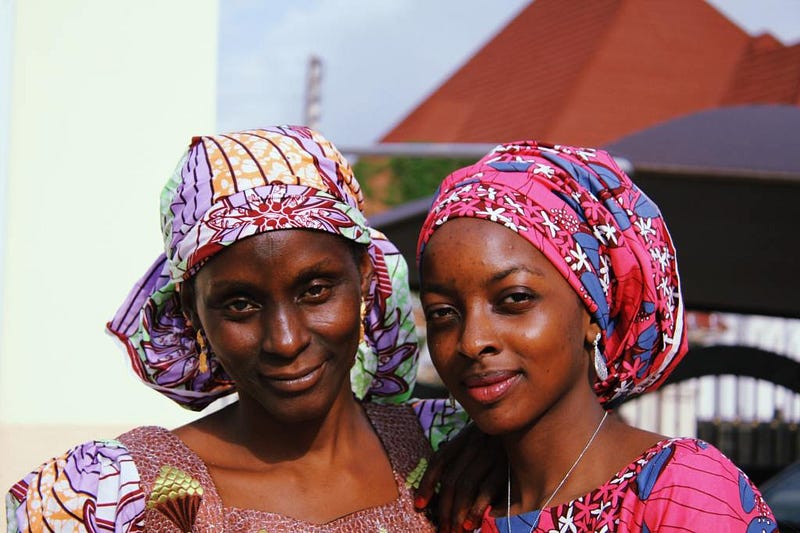
The story of Nigeria in America’s ancestry…
As you might be aware, the “craze” of DNA testing has swept the globe. Organizations like Ancestry and 23andMe have been on the receiving end of millions of spit samples for a time now. I sent mine in, you can believe it. One of the most interesting parts of doing a test like this is learning your ethnic backstory. And not just of one family, but of the entire world. Since several centuries ago, there’s been this whole global exchange happening, and the world’s never been the same.
Now, I know these tests aren’t perfectly accurate and they might misrepresent certain peoples and countries. But my question is: What does our ancestry reveal about American history and identity? Nigerian ancestry, in this case.
Before we get started, I just want to lay out a disclaimer; I am not a geneticist or DNA expert. Besides analyzing the science or validity of testing, I want to look more at the context.
How did Nigerian ancestry even get to America? And why is there so much Nigerian ancestry in so many black people? Now obviously, most Americans don’t have Nigerian DNA — or do they? Nah, but it’s still a significant part of the ancestry and history of one particular ethnic group: black folks. The focus here will not be on DNA itself, but on the story that ancestry tells about American history and identity. That’s because the story of my ancestry is the story of many people, by default. Let’s take a look, shalt we?!
Sorry about that.
How Nigerian ancestry got to America
Well, that one’s quite obvious, isn’t it? Unless you’re living on an alternate time plane, we trust that most African heritage in the New World was brought under terms of slavery.
Now, slavery was already being practiced in West Africa before Europeans showed up. I only mention that because when the Portuguese arrived in what is now Nigeria in the 15th century, they initially set up contracts with African leaders to trade local slaves across the region. (BTW, where’d you think the name “Lagos” came from? Portuguese!)
That is to say, traders already had a system set up with regional leaders. Soon after, they began to take some of those slaves for themselves to Brazil. Of course, England followed suit.
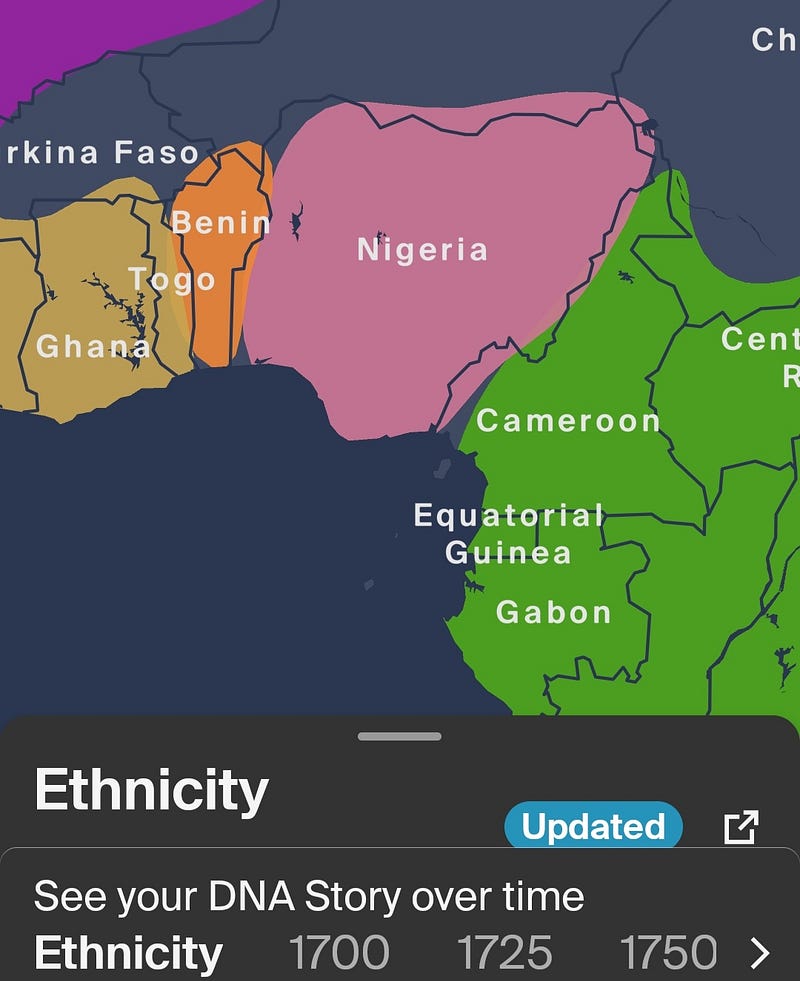
Nigerian ancestry (in America and elsewhere) comes mostly from a few groups, either the Yoruba, Igbo, Edo, or Fulani. That’s despite modern Nigeria being home to over 250 ethnic groups. The Hausa are a very large group too, but they weren’t sent as much to the Americas. Throughout the Trans-Atlantic slave trade, most of those sent to the 13 British Colonies (baby USA) were of Yoruba or Igbo origin.
The Igbo captives, in particular, were known for being rebellious, violent, and even suicidal in revolt against captivity. This bad rep probably led to fewer of them being brought to the colonies over time. The ones that did make it were mostly held around the Mid-Atlantic (Virginia, Maryland, North Carolina), according to records.
Nigerian impact on American culture
People of West African origin, including today’s Nigeria, would make a profound impact on the musical and culinary styles of the places they were sent to. In the United States, these manifested into ragtime, jazz, soul, funk, blues, rock, R&B, hip-hop, and more. Think of them as intensely Americanized versions of African music. Remember, Nigeria was not a country at the time of American colonialism and many West African cultures extended beyond their present borders.
Modern music from Nigerian artists such as the Afrobeat genre is also becoming hugely popular in the U.S. The origins of Afrobeat, however, lie elsewhere ...
It’s important to note that there have been a couple waves of Nigerian immigration to the U.S., especially Igbo, since the times of abolition. One of those immigration spikes is happening right now, actually. Most have them have made a home in states like Texas, Maryland, New York, or California. Nigerians as an immigrant group are some of the best-educated with strong family values.
Nigeria today is the most populous nation in Africa, and its ancestry is highly present in many black Americans, whether for more recent or historical reasons. But there’s just one “problem”: Many black people have too much Nigerian ancestry.
Nigerian DNA’s overrepresentation in black America
So, there’s a bit of a mystery when it comes to black American ancestry — well, a lot actually, but let’s look at this one thing. I’m what most people call “mixed” or “light-skinned(ed)”. But the African ancestry I do have (from one modern country) is mostly Nigerian. By now we understand how arbitrary that is. I mean, how much of that is Yoruba, Edo, or any of those other 250 ethnicities? The point is, this scenario seems to be similar for many Americans with African ancestry — at least those that have been here for many generations.
What happened was that most slaves from today’s Nigeria were sent to the Caribbean or South America. North America … not so much. Those brought to today’s U.S. were mostly from Senegambia (Senegal, Gambia, Guinea) or Central Africa (the Congo, Angola, Cameroon), so the records say. If that’s true, then where did all these Nigerians come from?
There are a couple of theories and explanations. One is that Nigerian ancestry shows up more on DNA tests because a higher proportion of Nigerians partake in DNA studies compared to other African nations. They are one of Africa’s top economies, and many of the people have migrated to more wealthy nations. So, that could boost your “Nigeria” score.
Another motive could be the abolition of Trans-Atlantic slave trading, when it became illegal to capture and bring slaves from Africa anymore. That happened in 1808 in the USA. The weird thing is that part of the pressure to do this, besides moral and economic, was to put a hold on the black population which actually outnumbered whites in the South. In order to get more black slaves later on, the U.S. had to import them from other New World colonies, particularly those in the Caribbean. This continued to happen even after slavery was totally abolished in America.
It seems that there was a much higher death rate with the Senegambia slaves since they were among the first to arrive. It’s like the Europeans didn’t really know what they were doing yet, and so a lot of the slaves ended up dead. There were higher death rates for the Caribbean and South American slaves, but once brought to the U.S., they usually did a little better. That could be because weather conditions were slightly more favorable, and the British/American colonists did treat their slaves slightly better than most other colonies did (still, it’s slavery, so that’s not saying much).
Many were probably second-generation by this point and were already used to the hard life on plantations. It’s thought that they intermarried with the established black population or even outnumbered them in places, enough so that their gene pool would become dominant.
In reality though, high Nigerian ancestry could be due to a mix of many other factors too.
Takeaway
As a black-ish American, it is fascinating to learn about my African heritage. There’s a lot to be proud of and a lot to feel crappy about. The idea that Nigerian ancestry could be so dominant due to Caribbean slaves being brought into the States really demonstrates how linked together black people of the New World are. We don’t have our old languages, customs, or religions, but we do have our own new dialects, our own new customs, and a rich culture that has taken the world by storm!
As I said before, I’m mixed, so I’ll be going over the different European, African, and whatever-else ancestry I have in the future. It is all a part of a quest to understand the history of this country. What shows up on our DNA tests, whether exact or not, reveals not only how America was made. It shows how the world made America.
Thanks for reading! As always, take care out there.
*I wrote this originally on my website Culture Surf if you want to check that out.
Further reading & resources
- Abolishing African slave trade
- African-American music
- Nigeria country profile
- So much Nigerian ancestry
- Lots of Americans with Nigerian ancestry
- Overrepresentation of Nigerian genes
- Ancestry profile of Nigeria
- Nigerian-Americans
Read more from Neboh!


