
American School Dress Codes: A (Brief) History of Racial and Gender Oppression through Clothing
by Erica Murphey and Dr. Benjamin Drury
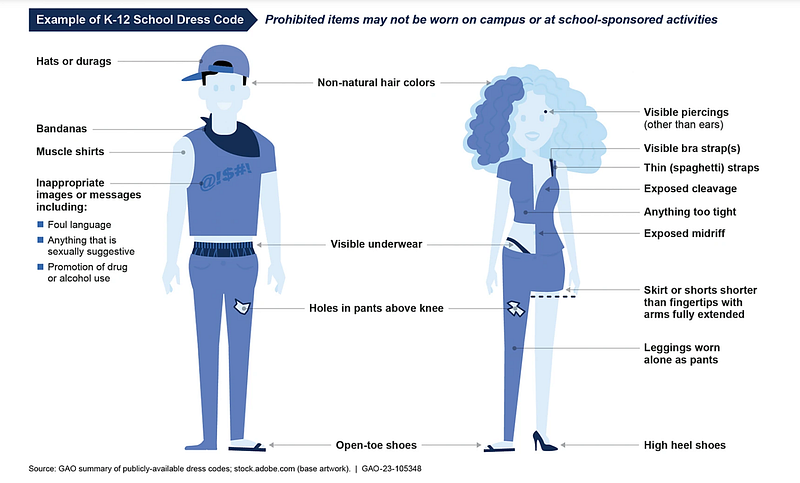
Dress codes in American schools have been a contentious issue for decades. According to usnews.com, forty-four percent of public schools enforced a “strict” dress code in the 2019–2020 school year. While many schools claim that these policies promote learning, safety, and image, there are concerns about their impact on oppressed people.
The history of dress codes in American schools is rooted in a desire to control students’ behavior and promote conformity. In the landmark case of Tinker vs. Des Moines in 1969, several students wore black armbands to school to protest the Vietnam War. The school’s principal threatened to suspend the students, citing concerns that the protest could disrupt the learning environment. The Supreme Court ultimately ruled in favor of the students, establishing that students do not lose their constitutional rights to free speech in a school setting. This case established an important precedent for students’ rights to express themselves through their clothing choices.
Despite this ruling, many schools continue to enforce dress codes that limit students’ clothing choices. Girls are often targeted in these policies, with many school officials claiming that certain clothing options are “distracting” to male students. However, it is crucial to note that dress code policies cannot discriminate against protected classes such as gender or race. For instance, boys cannot be legally limited to wearing suits to formal events, and non-white students should not be punished for wearing hairstyles that are part of their culture. Such policies are rooted in a history of American racism and sexism. They also perpetuate harmful stereotypes about marginalized groups.
Black children have been targeted throughout history when it comes to dress code policies. Certain hairstyles, such as braids, have been banned in schools, with many administrators claiming that they are “unprofessional” or “distracting.” However, these policies ignore the cultural significance of these hairstyles and perpetuate harmful stereotypes about black people. By enforcing these policies, schools contribute to the marginalization of black students and perpetuate systemic racism.
It is essential to recognize that dress code policies can have a significant impact on students’ emotional well-being and self-esteem. Students who are forced to conform to strict dress codes may feel like their identities are being erased. Moreover, dress code policies that disproportionately target marginalized groups can contribute to feelings of shame and exclusion. By creating more inclusive dress code policies, schools can foster a sense of belonging and community among all students.
When implementing dress code policies, it is crucial to consider their impact on marginalized groups. Students’ rights to self-expression should be respected, and policies that disproportionately impact certain groups should be reconsidered. For example, Native American students who wear braids as a part of their culture should not be punished for doing so. Similarly, girls should not be blamed for their clothing choices, and boys should be taught to respect women rather than objectifying them.
We need to recognize that some methods of self-expression are harmless and should be celebrated. Rather than punishing students for their clothing choices, schools should work to create a more inclusive environment that celebrates diversity. By doing so, schools can create a sense of community that is supportive of all students, regardless of their backgrounds.
As we progress deeper into the 21st Century, the long and contentious history of dress codes in American schools is reaching a fever pitch. While many schools claim that these policies promote learning, safety, and image, there are concerns about their impact on oppressed people. By implementing more inclusive dress code policies, schools can foster a sense of belonging and community among all students. Moreover, schools should work to challenge harmful stereotypes and promote diversity and self-expression. By doing so, we can create a more inclusive and equitable educational environment for all students.


