
America On Repeat
History’s repeating itself right before our eyes and it seems there’s no stopping it

America was once set ablaze by its people due to the perceived unfair actions of its powerful and their agents against its minorities, and in recent years it’s been ablaze again for the same reason. We also learn that a hundred years ago an active Federal Reserve inflated the asset bubble which, when it eventually collapsed the ensuing depression and slow recovery were largely the same end results when the Reserve did the same thing early this century.
“The things that have happened in the past will happen again in one way or another”
If this holds true then the view that when predicting the future, first take a look at the past makes very good sense. When we pay close attention to history we see patterns of reoccurrences that reveal a cyclical nature and these cycles tell us that what was, will be again.
This idea that history repeats itself can be applied to the history of a particular political entity such as the United States of America. It can also be applied to world history, for instance, when you consider patterns in the rise and fall of empires.
The idea also applies to repetitions when you consider two specific occurrences that bear a striking similarity to each other. So, even though you discount the disproven claims of some of the incredible similarities between Presidents Lincoln and Kennedy, it still holds true that we have two American presidents who were elected 100 years apart, both were particularly concerned with civil rights and were assassinated about 100 years apart, on a Friday and both by fatal gunshots to the head.
Besides the two presidents being assassinated by southerners, each was succeeded by a southerner named Johnson, and their successors were, incidentally, born exactly 100 years apart.
Another example is found in the similar cases of the French Emperor Napoleon, born a Corsican outsider, who though unprepared for an extended winter campaign invades Russia precipitating the fall of the French Empire. Then in 1941, the German Leader, Adolf Hitler, was also born an outsider, also unprepared for an extended winter campaign yet invades Russian precipitating the fall of the German Third Reich.
The Theory
Students of history since antiquity have observed that very similar events tend to reoccur. It is therefore an idea grounded in the observance of repetitive patterns that have occupied the minds of western and eastern thinkers alike since ancient times. From there we have the theory of historic recurrence which, is simply the repetition of similar events in history.
Why does history repeat?
One view holds that it is due to the “uniformity of human nature”. This view holds that since human nature doesn’t change, the same events will naturally continue to reoccur. Then there is also the view that history necessarily passes through a fixed sequence and eventually circles back to what is believed to be the original starting point, and then begins again.
It is in line with this cyclical nature of history that William Strauss and Neil Howe theorize that history repeats itself and flows based on generations, with four generations needed to complete a cycle. Each generation, they theorize, lasts between 20 to 25 years.
“…that history repeats itself and flows based on generations, with four generations needed to complete a cycle.”
In line with the Strauss-Howe theory, Marcus Thuillier in a piece for The Daily Northwestern points out that the coming of age of the millennial generation would be in parallel with the early 20th century. He gravely posits that America, at least, in one way is moving “dangerously close to mirroring events of a century ago.”
According to him, in recent years FBI records show that hate crime reports show a steady increase (17% in 2017). Records of LGBTQ+, race, ethnicity and ancestry-motivated crimes also indicated steady increases during this time. This he surmises, mirrors the events of a hundred years ago starting with the establishment of the Nazi party in Germany in 1920 after which, an organization known as the German-American Bund was founded in 1936 in America whose main objective was the promotion of a favorable view of Nazi Germany. The Bund’s activities culminated in the holding of a 20,000 people strong “Americanization” meeting at Madison Square Garden three years later.
He gravely posits that America, at least, in one way is moving “dangerously close to mirroring events of a century ago.”
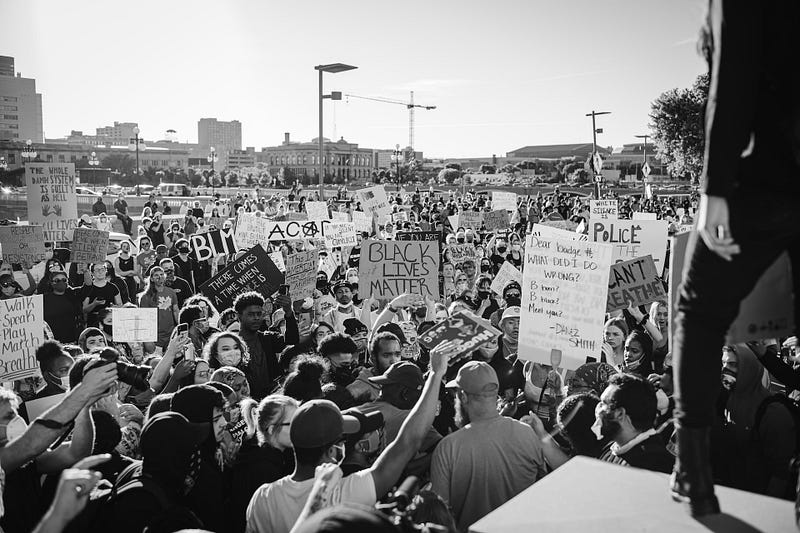
“…in recent years FBI records show that hate crime reports show a stead increase (17% in 2017). Records of LGBTQ+, race, ethnicity and ancestry-motivated crimes also indicated steady increases in this time.”
Other comparisons of American history between the early 20th century and the 21st draw several parallels that lead us to believe we have come full circle once again. For instance, Stephan Drew, Editor of The News & Press points out among other things that:
- just recently cities across America have been set ablaze by people protesting the unfair treatment of minorities by law enforcement officials, the justice system, and other people in positions of power. The early 20th century saw similar protests in major American cities for the same reasons. One of which was a violent, 8-day-long racial conflict known as the Chicago race riot which was considered the worst of the riots that swept America in the “Red Summer” of 1919; and
- in the 1920s old, tried, and tested ways of doing things were severely questioned, and younger, new progressive leaders were emerging and gaining power, and thus “old vs. young”, “male vs. female”, “rich vs. poor”, etc. were common themes. And now, we have a new and younger group of liberal progressives reviving the “share the wealth” mantras of a century ago.
According to another commentator, the Federal Reserve, at the turn of the century, flooded the economy with new liquidity inflating the asset bubble which eventually collapsed. At the time of its collapse, the country had a Republican President who intervened with regulation and increased deficit spending but the economy only got worse. A Democrat was subsequently elected and his interventions made things even worse and slowed down recovery. Likewise, in the 1920s there was also an active Federal Reserve which inflated the asset bubble which eventually collapsed, America also had a Republican President who increased government spending, ran deficits, signed regulatory bills (even before the collapse), and intervened heavily in the economy in efforts to aid recovery from the ensuing depression, but ended up actually causing it with his interventions. He too was voted out of office and his successor, a Democrat, also ended up worsening the depression and slowing recovery.
Are those who don’t remember history condemned to repeat it?
It could be argued that perhaps the main reason why we never seem to learn from history is that we forget it, or any lessons that we should have learned from it. However, it still looks like even those who do remember the events of the past still repeat the “mistakes” of that past.
An example is given of European leaders who in 1914 permitted an assassination in a far-off corner of Europe to become a catalyst for the start of World War 1 (a.k.a the Great War). This war would eventually consume millions of lives. Yet those European leaders, as rightly pointed out, were indeed aware of their history. Specifically, how another war (Peloponnesian War) began over a relatively insignificant event in a far-off part of the Greek world. The war, avoidable as it was, was the most destructive war in Greek history fought between an alliance of Greek states led by Athens and an alliance of Greek states led by Sparta.
Why do we keep repeating the same mistakes?
“Insanity is doing the same thing over and over again, but expecting different results.”
Why do people keep doing the same things over and over? Perhaps it is because they find it difficult to admit that they indeed made mistakes in the past and humble themselves. In the alternative, it is always easier to blame others for undesirable outcomes and not accept those outcomes as direct results/consequences of our own actions.
The answer again could lie in the lack of historical thinking. An ability that would otherwise enable us to take lessons from the past and make better decisions in the present and for the future.
“If American political and business leaders thought historically, American troops would no be fighting in Afghanistan and Iraq. The financial crisis would not have happened.” — J. Rufus Fears, American historian.
Other reasons put forward why we don’t seem to learn from history include that we often don't really have a good understanding of it, or because we deem it irrelevant for our times.

Conclusion
In the words of Fredric Schlegel, “the historian is a prophet with his head turned backward”.
A prophet by definition is a wise guide leading us forward toward a desirable destination. He is able to foresee the pitfalls along the way and he steers us clear, or at the very least warns us of them. Moreover, as his head is turned backward he is also so focused on the events of the past that he can foresee their recurrence as he guides us on our journey.
Many people generally believe it is important to study the past because it can help us understand why things happen, or are bound to happen and we can thus avoid repeating the mistakes. And since history repeats or, at least rhymes, in the words of Mark Twain then that is one great advantage we will enjoy. The ability to recognize tendencies and aptly use the knowledge/lessons of the past so as not to repeat the follies and suffer the consequences would be a great advantage indeed.
To enjoy unlimited access to all stories on Medium.com you can sign up using my referral link. It’s $5/month and at no extra cost to you, you support me and all the other writers you read.


