
HEALTH AND WELLNESS
American Medicine Saved Kevin’s Life But Cut Off the Therapy He Needed to Walk Again
Kevin returned to Vietnam for accessible, affordable healthcare
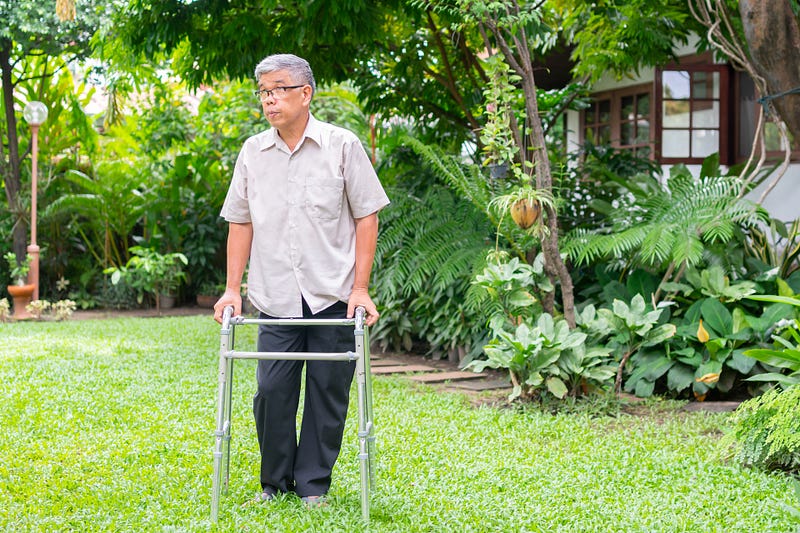
At the end of 2022, my friend Thuy’s 66-year-old father collapsed. Kevin, Thuy’s previously healthy father, had suffered a massive brain bleed.
Most people don’t survive that type of brain bleed. But American medicine pulled Kevin through.
That was the beginning of a long year for Thuy and her family.
After the stroke, Kevin was partially paralyzed. He developed life-threatening infections and shuttled in and out of hospitals and rehab.
When he got home, Thuy’s family struggled to take care of Kevin. Kevin isn’t a huge man. But he could do very little for himself, so family members had a hard time moving him. And the kids had to work and take care of their own kids.
Fortunately, a friend of the family, whom they’d met in refugee camp, was between jobs and was willing to be Kevin’s aide. The aide worked for room, board, and $500 a month. He was a Godsend.
The family bought a van to transport Kevin to his various appointments. That was paid for by a family member who picked up other tabs. Another Godsend.
One of the biggest out-of-pocket costs was $225 for each twice-weekly physical therapy session. That expense hurt, but the family willingly paid it in hopes that Kevin would walk again.
By the fall of 2023, Kevin’s condition had stabilized. But since he wasn’t making much progress, doctors wanted to discontinue the twice-a-week therapy sessions.
Kevin’s kids were happy that he was still alive. Still, everyone wanted to see Kevin walk again and be able to take care of himself.
Even though American doctors said Kevin would never walk again, his kids didn’t buy that. They thought he could walk if he had more physical therapy.
But they couldn’t get more PT approved. And they also couldn’t afford it.
So Thuy and her brother and sister started talking to their parents about going back to Vietnam for therapy.
Kevin and his wife May had fled Vietnam as refugees decades before, but many of their relatives still lived there. May was close to her sister, who had a large compound an hour from Saigon.
May’s sister urged them to come to Vietnam. Therapy cost $5 per visit, and Kevin could go 5 times a week.
So not only was therapy cheap, but nobody would tell Kevin he couldn’t go.
$5 per therapy visit. Lots of therapy. Kevin might walk again. He and May had a free, comfortable place to stay, surrounded by supportive extended family, while they were in Vietnam.
Those were enticing reasons to resettle, at least temporarily, in Vietnam.
The generous family member who’d paid for the van also paid for Thuy’s sister, a friend, and Thuy’s parents to fly to Vietnam in November of 2022. Thuy’s sister and her friend stayed 3 weeks. Then Thuy and her family visited for Christmas.
Thuy’s parents’ living space in Vietnam is luxurious by Vietnamese standards. Kevin is getting therapy 5 times a week. And it’s already helping.
Kevin’s doctor is cautiously optimistic Kevin will be walking inside of 6 months.
Quite the contrast to the American doctors.
Of course, Vietnam isn’t all rainbows and roses for Thuy’s parents. Spoiled by decades of air conditioning, Thuy’s mom complains about how hot Vietnam is. She wants to head back to the US as soon as possible.
Another challenge has been finding a home healthcare aide. It’s easy and affordable to hire household help in Vietnam, so you’d think hiring an aide wouldn’t be an issue.
But the cultural belief that disability is punishment for personal or ancestral sins or bad karma is alive and well in Kevin’s area. So people aren’t lining up to be Kevin’s aide.
Kevin’s third aide recently quit. That means Kevin he hasn’t been to therapy for more than a week. Aides or family members need to do a lot more of the work in therapy sessions in Vietnam than they do in the US.
Hopefully, the family can hire a caring, competent aide who will stay and help Kevin take advantage of cheap, plentiful therapy sessions. Those sessions offer Kevin his best chance to walk again.
A renewed chance to walk again — which may eliminate or reduce the need for an aide — is certainly worth a stay in the homeland.


