
LIVING IN JAPAN
American Kids Deal With Japan’s Rigid English Education
From assisting English teachers to enduring discrimination, the range of treatment was wide
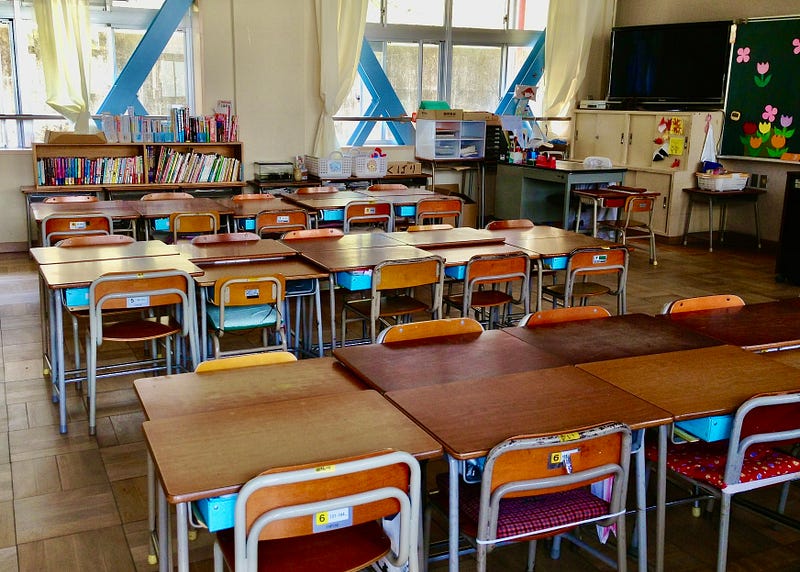
Five of my children attended Japanese public schools. Naturally, each child was different and therefore experienced school in different ways, yet they were all faced with the same challenge of dealing with Japanese English classes.
English Education at Home
I knew that once my children started school, the Japanese language would overwhelm their minds. Wanting to give them a strong foundation in English before they entered that all-Japanese environment, I taught them reading, writing, science, and basic math at home. Although a few of my children hardly spoke any Japanese before entering first grade, within a year they were on par with their peers.
I knew that the struggle for me, as a mother, would be to keep their English level on the same level as their counterparts in the US. So throughout their school years, I continued their English schooling at home, with a focus on language arts, spelling, and reading comprehension.
This plan worked, but it was not without its challenges.
Junior High School English Classes
Today, Japanese students from third grade have occasional English classes to familiarize them with English and to prepare them for later studies. But in the years that my children attended school, English education started in junior high school.
These English classes were mind-numbingly boring for my fluent children, so I had hoped that they would be allowed to use their class time more profitably.
At the beginning of the school year in Japan, homeroom teachers visit each of their students’ parents. They do this to establish a link of communication, to see the kind of environment in which the children are being raised, and to listen to any concerns the parents may have.
In my case, the homeroom teacher was usually accompanied by my child’s English teacher, as a courtesy to me and to facilitate communication. During this meeting, after explaining my fair-skinned children’s need for sunscreen and water during outside sports times — a very foreign request — I would ask that my kids be allowed to work on the school books I would provide during their English classes. I shared my concern about my children remaining on level with their American counterparts. Naturally, I said, my children would still take their teachers’ tests and do any other essential assignments. Many teachers consented.
Unfortunately, one teacher, after initially consenting, changed her mind. I will call her Ms. Tanaka.
My youngest son had Ms. Tanaka as both his homeroom teacher and his English teacher for his three years of junior high school. It was unusual to have the same teacher for so long, and it turned out to be very unfortunate for my son.
Unlike all of my other children’s English teachers who welcomed a chance to practice their English with a rare native speaker (me), Ms. Tanaka never spoke a word of English to me. This led me to wonder if she actually could speak English. I still wonder.
Ms. Tanaka became the bane of my existence, and worse, she had a terribly suffocating effect on my once happy and enthusiastic son.
A few of the things that she insisted were:
- My son must be given a “handi,” meaning a “handicap,” when he was graded. He would never be given the highest marks he deserved because he was an American. Following that logic, all the Japanese students should have been graded poorly in their Japanese classes because they were Japanese. Of course, that would be absurd.
- She nitpicked his natural and correct English, insisting that the only correct responses were the exact words used in the answers she created.
- He was given a zero on one of his first tests in her class, because his answers, although all correct, were written in cursive. There was no way he could have known before the test that cursive was unacceptable.
- She would not let him do the junior high school level English assignments I gave him, but rather insisted he do what the rest of the class did. This led to pages and pages of his notebook filled with sentences like, “This is a pen. This is a pen,” and hours of time wasted during class and at home, doing the busywork assigned as homework.
In spite of how infuriating it was to see my son treated in this way, he insisted I say nothing to Ms. Tanaka knowing that he was the one who would be faced with any fallout.
To assuage my frustrations, I wrote Ms. Tanaka a letter — in English — explaining to her the damage she was doing to my son and requesting change. I gave the letter to my son and left it up to him whether or not to give it to his teacher.
He chose not to, remaining in submission to her tyranny until graduation day.
Although he entered junior high school a cheerful, enthusiastic, and curious boy, he emerged three years later with head hanging low, shy, quiet, and lacking in confidence.
Incorrect English Taught as Correct
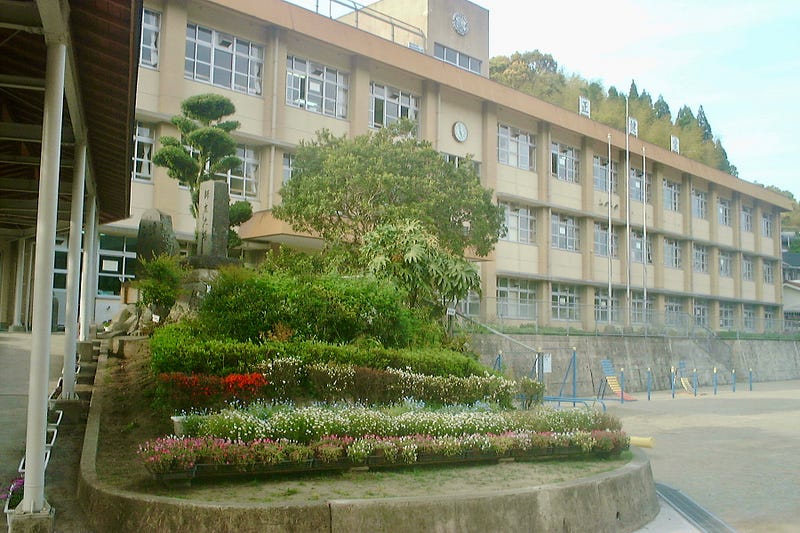
As an example of the type of English that can be found in Japanese schools, I have taken the following sentences from third year high school English homework from three different schools, both public and private. Mind you, these sentences are considered correct:
- “I wish there were no earthquake in Japan. But for earthquake, what a great number of historic buildings there would remain!”
- “I like baseball. Because I like the moment of hit ball.”
- “I met a woman whose name is unusual at the party.”
- “Is to read comic books interesting?”
And finally, from a test:
- “Everyone is in this classroom having lunch.” This is marked incorrect.
- “Everyone in this classroom is having lunch.” This is the correct answer.
But how is one to know, you might wonder? These are its follow up sentences which were given as the hint:
“I’m hungry. I also want to have with them.”
In too many cases, getting good grades in English amounted to memorizing whatever answers that the rigid teachers deemed correct.
Assistant Teachers
All of my children were used as assistant language teachers in their English classes. They were called upon to stand and read passages in English, to demonstrate correct pronunciation, and to explain grammatical rules in Japanese to their peers.
I have to say, this practice did improve their oral reading skills.
Higher Education
The school system in Japan is hierarchical, particularly at the higher levels. There are various levels of high schools — which is not part of compulsory education — from the highest levels where graduates shoot to attend Tokyo University, to very low levels where graduates would probably work as delivery men or gas station attendants, and everything in between.
A student is allowed to test for just one public and one private school each year on one set day for each test. If he flunks those examinations or is sick on that day and cannot attend, he must wait until the next year to try again to pass one of the entrance exams for the school of his choice.
Because of this strict entry test system, students are usually advised to test at a school where their chances of passing the entry exams are high.
My youngest son, against the advice of the unpleasant Ms. Tanaka, took the entrance exam to get into a difficult engineering school. He passed.
During his first day of English class at this high-level school, my son’s new English teacher came to his desk, knelt down beside him, and said, “I know my English is poor, so if I make mistakes, I hope you will help me.”
Imagine the relief that washed over my son to hear those words from such a kind and humble teacher!
Once again, Alvin T. has inspired me to write, this time by his article on “Why Japan Fails at English.” I hope sharing this small bit of my experience helps to shed further light on the issues Alvin highlighted.
If you want to join Medium to get access to all stories, using the link below will provide me with a small commission at no extra cost to you. Thank you!