
American Culture Goes Against Everything We Know About Human Happiness
We should look to hunter-gatherer tribes and Denmark for inspiration
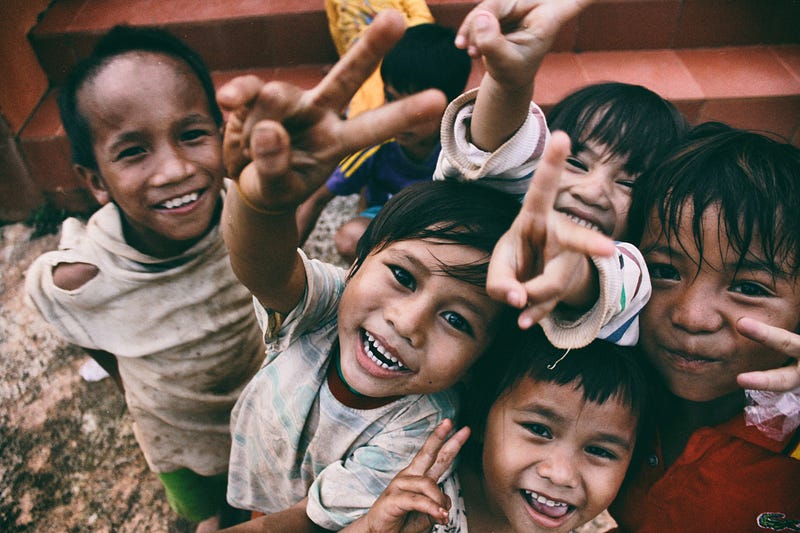
Modern Western culture may be safe and comfortable in ways that were not possible in earlier parts of human history, but our current focus on individualism that is centered around attaining wealth and power has taken a huge toll on us. We have a society that has perfected the art of making people not feel necessary to each other, and our emotional health and happiness suffers because of it.
The evidence that this is hard on us is overwhelming. Although happiness is notoriously subjective and difficult to measure, mental illness is not. Numerous cross-cultural studies have shown that modern society — despite its nearly miraculous advances in medicine, science, and technology — is afflicted with some of the highest rates of depression, schizophrenia, poor health, anxiety, and chronic loneliness in human history. As affluence and urbanization rise in a society, rates of depression and suicide tend to go up rather than down. Rather than buffering people from clinical depression, increased wealth in a society seems to foster it.
Junger, Sebastian. Tribe (p. 19). Grand Central Publishing. Kindle Edition.
Stratification, as part of a dominance-based social hierarchy like the one that we live in, has many people striving for the apex of a pyramid-shaped structure, at the expense of those around them. We are told that it’s a dog-eat-dog world and that in order for us to win, other people have to lose. We have been tricked into believing that once we have affluence and power that we can then buy happiness, despite the overwhelming evidence to the contrary.
Human beings are hardwired for connection at the biological level. A desire for cooperation and interdependence is in our genes. Organisms that work well in groups tend to have an evolutionary advantage and we have evolved as a highly social species, in part, because it kept us alive. Hunter-gatherer tribes, which were how most humans lived up until about 10,000 years ago, were highly cooperative and egalitarian. Modern hunter-gatherer societies still are. Most early agricultural societies were also classless and very interdependent. One such ancient culture that thrived for two thousand years in what is now Turkey has been examined extensively from an archeological and anthropological perspective.
Çatalhöyük has strong evidence of an egalitarian society, as no houses with distinctive features (belonging to royalty or religious hierarchy, for example) have been found so far. The most recent investigations also reveal little social distinction based on gender, with men and women receiving equivalent nutrition and seeming to have equal social status, as typically found in Paleolithic cultures. Çatalhöyük
This community and others like it were eventually overtaken by northern nomadic tribes that had a more stratified and warlike culture. They brought with them what we would eventually call patriarchy, with not just a social power differential between men and women, but a larger system of classes and stratification. This is the beginnings of a shift towards the acquisition of personal wealth and power at the expense of those around you.
Ten thousand years later, we have perfected this culture. We do not need each other except in the most nominal ways in order to eat or to stay alive. We are surrounded by other people but we rarely participate in things that contribute to the good of the greater society. Our focus is on our own status and security, which we then hope to pass along to our immediate heirs. Even being a part of a family is not the same as being part of a larger group that shares resources and experiences everything collectively. Our trade-off for increased comfort, affluence, and individualism is crippling social isolation, something that has been shown to negatively affect both mental and physical health.
Self-determination theory says that human beings need three basic things in order to be motivated and content: they need to feel competent at what they do, they need to feel authentic in their lives, and they need to feel connected to others. These qualities are considered “intrinsic” to human happiness and far outweigh “extrinsic” qualities such as beauty, money, and status. Although American culture pays lip-service to these intrinsic qualities, it is non-the-less overly focused on the extrinsic ones.
Our only significant modern experiences of relinking wholesale with the meaning and connection that we so crave manifests during times of war or disaster. We have seen time and again how people come together in times of crisis, for the moment forgetting about the stratification of class, race, or income. A person’s status is derived from what they are willing to do in support of the group and the sense of community it brings boosts morale.
During World War II, cities that were heavily bombed, such as London and Dresden, had a spirit of camaraderie and shared purpose that many residents later missed, even if they did not miss the death and devastation. One of the hardest aspects of returning from deployment for American service members is the isolation and disconnection from a larger shared purpose where safety and wellbeing are literally in each other’s hands.
Denmark is considered one of the happiest countries in the world by the UN World Happiness Report. One of the reasons may be that Danish schools teach empathy as a part of the regular curriculum, and provide weekly opportunities for students to help each other work through problems with the assistance of the teacher, based on listening to and understanding each other.
A key element of Danish culture is hygge, which could be defined as “intentionally created intimacy”. “In a country where it gets dark very early in the year, it rains, it’s gray, hygge means bringing light, warmth and friendship, creating a shared, welcoming and intimate atmosphere.” One of the elements of this is discouraging competition between individuals. Instead, students are asked to strive to do their best, using only themselves as a metric for improvement.
Cooperative learning amongst people of different skill levels fosters a sense of support and caring. For example, students who are better at one subject help teach those who are less proficient, and they may, in turn, be on the receiving end of that kind of tutoring in another subject. This approach reduces bullying and helps to build a stronger sense of community, but it also teaches the relational skills necessary for successful management and entrepreneurship.
Crisis may indeed be an effective way of creating the close social bonds that human beings crave, but countries like Denmark have demonstrated that they are not the only way to do so. Making the wellbeing of the group central contributes to a better functioning society but also leads to greater individual happiness. Anthropologist Christopher Boehm’s research has led him to conclude that group pressure is the evolutionary basis for moral behavior.
Not only are bad actions punished, but good actions are rewarded. When a person does something for another person — a prosocial act, as it’s called — they are rewarded not only by group approval but also by an increase of dopamine and other pleasurable hormones in their blood. Group cooperation triggers higher levels of oxytocin, for example, which promotes everything from breast-feeding in women to higher levels of trust and group bonding in men. Both reactions impart a powerful sensation of well-being.
Junger, Sebastian. Tribe (p. 28). Grand Central Publishing. Kindle Edition.
In other words, we have the capacity to alter the kind of society that we live in by encouraging a movement away from self-serving individualism and the constant climb up the social hierarchy in favor of behaviors that bring about better interpersonal connection and cohesion. Helping each other in the pursuit of a common goal is something that humans are genetically predisposed to do. It makes us feel a part of something and as the Danes have shown, is something that can be taught and cultivated.
Hunter-gather tribes like the !Kung counter domineering behavior from senior males by forming coalitions within the group. They are intolerant of hoarding or selfishness and social order is maintained through ridicule, banishment, and sometimes even execution. What would happen in our culture if instead of approving and admiring selfish and domineering behavior, we refused to tolerate it? What would happen if we prioritized contributing to our tribe, even if only the one in our neighborhood or community? If history and current examples are any indication, we would be a culture with lower levels of violence, depression and mental illness — a much happier society.