
America Protects Witnesses, Not Victims
How we shield ourselves from the ugliest parts of our society
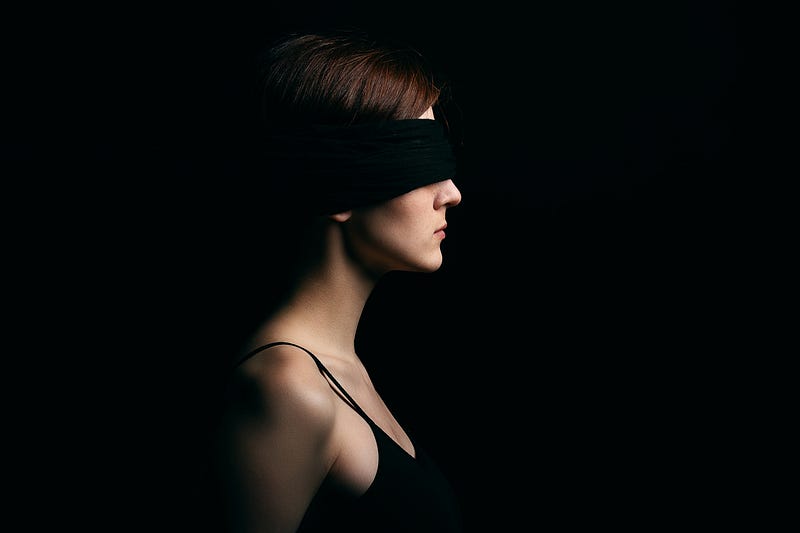
I’ve been thinking quite a bit about Elizabeth Bruenig’s recent article in The Atlantic about the death of a man named Joe Nathan James. It’s something you should read if you haven’t because it’s useful to be reminded from time to time of the way this country treats people.
James murdered a woman in the 1990s, and, because he did it in Alabama, he could be sentenced to death. He was killed in July using the “humane” method of our enlightened age — lethal injection. But in James’ case, and possibly in most cases, lethal injection was not particularly humane.
Though state officials have been very tight-lipped about what happened, something terrible seems to have happened to James in the lead-up to his death. His execution was delayed for hours, and when he was wheeled into the death chamber, he could not say the customary last words of the condemned. A later autopsy found that his arms had been hacked at, possibly without anesthetic, in an attempt to find veins in which to inject the lethal cocktail — and that he had struggled mightily against his restraints while this was happening.
None of this was visible to the witnesses at the execution — one of whom, a female reporter, was sent to change clothes because her skirt was too short for this dignified occasion. All they knew was that the execution was delayed, that James seemed out of it before the drugs were injected into his system behind a curtain, and that officials didn’t want to talk about it afterward.
The death penalty is something we’ve decided to live with in America. We seem to be done fighting over it; it’s not as live an issue as, say, abortion or guns. Though a network of activists still works to bring awareness to the issue, few really expect the practice to change in the red states that regularly kill prisoners.
One of the reasons that we can and do live with the death penalty is that states have learned how to hide the realities of what is happening from the public. “Lethal injection” sounds much less awful than hanging or firing squads or the electric chair. But who is it less awful for?
It turns out that lethal injection may not be the humane alternative we would like to believe it is. Autopsies of executed prisoners have shown that they likely suffered quite a bit as they died, but the drugs paralyzed them so that they could not cry out for help. And botched executions, which are more common than many people think, can cause prisoners to suffer for an extended period of time.
Some scholars have even argued that, if we are to insist on executing prisoners, it would be better to go back to the guillotine. If used properly, the guillotine would apparently be much faster and less painful than slowly drowning in one’s own fluids.
So why don’t we use the guillotine to execute prisoners? Because it would be hard for the public to handle. A lethal injection sounds medical and scientific. A beheading is bloody and traumatic.
The truth is that we prefer that a condemned man suffer a more painful death so that we suffer less discomfort.
Now, you may say that it’s OK that James likely suffered, because he’s a criminal. You may think that he deserved what he got, even though he had apparently changed quite a bit in prison, and the family of his victim had asked for his life to be spared.
So what about a cow, or a pig? The entire meat industry is organized not to minimize animal suffering but to minimize the amount of animal suffering that we have to see.
This is why several agricultural states have passed so-called “ag-gag” laws. These aren’t designed to help the industry treat animals better — it’s widely accepted that factory farming is horrific for the animals who have the misfortune to endure it — but to make sure that information about that terrible treatment of animals doesn’t leak out.
It’s actually illegal in a number of states to show the public pictures or videos of what happens inside the facilities that produce your hamburgers and pork chops.
We could try to minimize animal suffering in the agriculture industry. In fact, many farmers would like to do so. It can’t feel good to preside over 100,000 sick and miserable chickens all day. But the big players in the industry — and the politicians and other businesses that support them — have decided that treating animals well isn’t compatible with maximizing profits. They’ve also realized that the conditions of the animals won’t bother us if we don’t have to see them. This way, we can have our cheap chicken tenders without ever having to feel sad about the consequences.
You might not care about the cows or pigs or chickens, either — they’re not human, after all (although they are capable of experiencing pain, fear, and suffering just like us).
Well, what about homeless people? Though there are many government agencies and nonprofits that work hard to take care of them, many Americans think that the main problem with homelessness is that they might have to see or interact with a homeless person.
We often treat homeless encampments and the presence of panhandlers not as signs that there’s something seriously wrong with society but as a nuisance that we’d rather not deal with.
The government of Los Angeles, for example, cleared a homeless encampment on the eve of the Super Bowl this year so that the fans (and media) at the big game would not have to encounter them. Many of the people in the encampment were separated from some of the few possessions they had, never to regain them.
Since then, the city has made sure to restrict where homeless encampments can be located, keeping them away from schools and other locations around the city. Ananya Roy, a UCLA professor, said, “It’s not an effort to alleviate poverty, it’s an effort to manage visible poverty and get it out of sight.”
San Francisco doesn’t even call these actions “sweeps” or “clearings” — they’re called “encampment resolutions.” This doesn’t make things any better for the homeless people — the real concern is for the San Franciscans who don’t want to have to think about the fact that their city has so many suffering residents.
So much of our society is organized around keeping the “good, normal” citizens of the United States insulated from the awful things we tacitly allow to happen. There are many other examples — the “collateral damage” of our wars, the conditions inside our prisons, the environmental damage that occurs to provide us with our consumer goods.
Maybe we think these awful things are necessary parts of a modern society that allows the rest of us to live in comfort (they’re not, by the way). Or maybe we just don’t mind evil as long as we don’t have to think about it very much.
Thanks for reading! If you’d like to receive an email whenever I publish an article, click here. I’d be forever grateful if you consider supporting my writing. There are two ways to do so: by buying me a cup of coffee here or by joining Medium with this link (I’ll receive a portion of your membership fee at no additional cost to you).


