
America Needs to Kick its Colossal Prescription Drug Habit
The world leader in drug prescriptions, by far, must prescribe less and “deprescribe” more, experts say
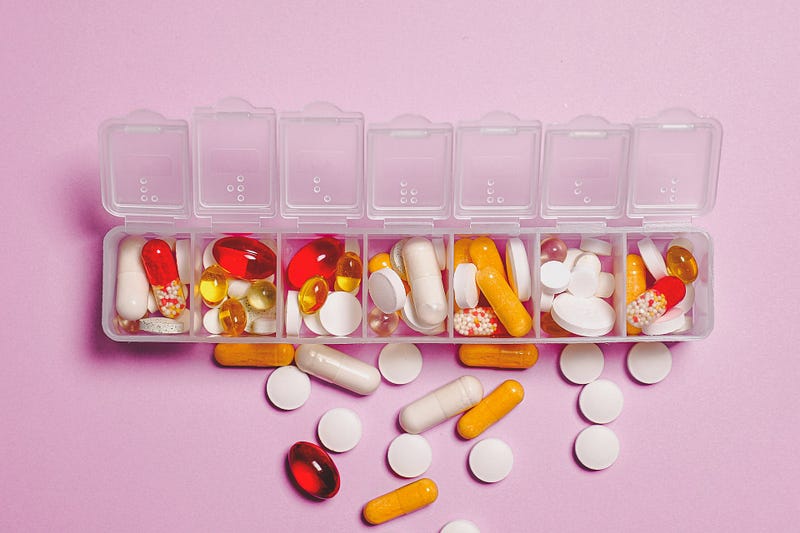
Overprescription of drugs and the ongoing use of unnecessary and harmful medications is out of control in the United States, the world’s top pill-popping country by far. Americans spend some $603 billion on prescription drugs each year, estimated at roughly 48% of the entire global market.
The vast majority of U.S. adults 50 and older use prescription drugs and over-the-counter medications and supplements on a regular basis — with an alarming number relying on several at once. Meanwhile, prescription drug abuse among teens is rising.
If you hadn’t heard the word before, now you know: America has a vast, seemingly intractable healthcare problem experts call “polypharmacy,” the use of multiple drugs at once to treat one or more conditions.
While acknowledging that many medications are vital and irreplaceable when properly prescribed, an emerging movement among doctors, researchers and pharmacists encourages everyone involved to consider “deprescribing” medications that should never have been prescribed, or are no longer necessary for a given person, and in many cases violate a physician’s Hippocratic Oath by causing harm—sometimes when medications combine to generate side effects that patients were never warned about.
The United States of Medication
A new survey out this week illustrates the scope of the United State’s legal drug problem among the group that pops the most pills, revealing how many medications adults ages 50 to 80 take:
- 82% take at least one prescription medication weekly
- 26% use three or four prescription medications
- 28% are on five or more
The survey, led by the University of Michigan and funded by AARP, involved 2,563 people, weighted to reflect the national population in their age group. Among other aspects of the polypharmacy problem:
- 60% use at least one over-the-counter medication weekly
- 11% take three or more OTC meds
- 78% take one or more supplements (vitamins, minerals, or herbal remedies)
- 38% take three or more supplements
It’s easy and obvious to suggest that the people who take medications are responsible for curbing their own drug use. That would be true in a sense, but it’d be a grossly oversimplified accusation.
A lot of folks would like to scale back their meds but have not been advised to consider doing so, the survey found. More than a quarter of the respondents said they think they’re on too many medications, and 80% said they’d be willing to stop taking one or more of their meds if a healthcare provider advised as much.
Experts say that’s just not how things work.
“Conventional pharmacologic medicine is generally focused on when and how to initiate medication therapy, with less focus on when and how to appropriately remove medications when the need no longer exists,” a group of four doctors, pharmacists and researchers concluded last year in a comprehensive analysis by the American College of Lifestyle Medicine (ACLM) published in the Journal of Family Practice. “It is increasingly well recognized that deprescribing is an essential part of prescribing.”
There’s a lot of agreement on the need to deprescribe, at least in principle.
“Polypharmacy is a clinical challenge because the healthcare system is geared toward starting medications, not reducing or stopping them,” stated a 2019 editorial in the American Family Physician journal. “Although any medication may offer potential benefit, each also has potential harm. When combined, the risk of interactions with other medications or conditions or cumulative harms can outweigh the benefits.”
Trickle-down effect on kids
Allowing that many medications are helpful and necessary, our overly drugged-up society as a whole is causing a devastating trickle-down effect that’s turned into a cascade of prescription-medication abuse among kids and teens, as an overly medicated population of adults sets an example and often outright provides them prescription drugs to abuse.
The fastest-growing drug problem among teens is not marijuana or cocaine or any other street drug but rather the use and abuse of painkillers and other legal medications they typically should not have access to.
It’s no secret that teens are prone to risk-taking. Maybe some theft here and there. Poor judgment? Absolutely.
Those are the ingredients for “pharming,” in which adolescents trade mystery pills and cough syrup and whatever they can get their hands on to experiment with, maybe to escape life for a while or simply out of boredom.
Parents, so you know: This happens everywhere, in the cities, suburbs and out in the boondocks. And young people have no shortage of methods.
“Some teens fake symptoms to get a prescription,” according to the website of Stanford Children’s Health. “Or they take someone else’s pills. Some mix medicine with alcohol. Some take more than the recommended dose of their own medicine.”
Where it all begins
You don’t have to dig much to find the roots of polypharmacy and America’s extreme addiction to legal drugs. Thanks to heavy industry marketing and arguably lax laws, prescription medications are tossed around almost willy-nilly by some physicians and other providers, almost like candy at a parade.
A nation plagued by rising obesity rates and sedentary behavior and the resulting chronic pain and other maladies scoops it all up willingly—sometimes to helpful effect, often not.
The overprescription of opioid medications is well-documented, as just one outrageous example in which 106,000 people died from overdoses in 2021. While awareness of the dangers has increased in recent years, the highly addictive drugs — which include oxycodone, fentanyl, hydrocodone, and methadone — have long been overprescribed by family doctors and other medical providers, and even by dentists, for both acute and chronic pain.
Thing is, opioids and other pain relievers — including aspirin, ibuprofen and other anti-inflammatory drugs — are largely ineffective against chronic pain, with at best questionable results, and come with serious side effects.
Experts say opioids should be “used at the lowest dose possible, usually for just a few days.”
But that’s not what happens.
A telling 2019 study reviewed prescription patterns for four of the 10 most commonly prescribed medications: opioids for chronic pain, proton pump inhibitors for indigestion, levothyroxine for subclinical hypothyroidism, and antidepressants for subsyndromal levels of depression (subclinical and subsyndromal mean the conditions are shy of a full-blown diagnosis — the sort of situation that can often be remedied without drugs).
“These medications, grouped by their most frequent indication along with polypharmacy, have experienced major prescription increases in recent years, particularly among older patients,” the study concluded. “Most concerning is that they have been frequently prescribed for extended periods, usually with inadequate evidence of benefit.”
That’s medical-speak for “people stay on them a long time even though they might not work.”
Based on the latest data, the reliance on opioids has barely abated, and overdose deaths continue at historically high levels.
Do no harm?
There are other, lesser-known dangers in relying on drugs as the first and only go-to treatment for anything that ails us. While it can be challenging to weigh the benefits and risks of any given medication, side effects are often phenomenally underappreciated.
Here’s a doozie:
Nearly every U.S. adult 65 and older — a whopping 93% — has been prescribed at least one drug that raises the risk of falling, which—and here’s the rub—is the №1 cause of fatal and non-fatal injuries in older people. It’s a classic case of sticking a finger in the dike and causing another breach.
Another: Common sleep medications, both over-the-counter and prescription, are well known to be largely ineffective over time, and they pack serious risks that range from drowsiness to depression and even death.
We’re just getting started.
Drug ads often include sneaky references that encourage people to seek drugs they should not take. Social media can spread the message like wildfire.
Thanks in part to celebrity influencers on TikTok, the diabetes drug Ozempic is being asked for, and prescribed by doctors, for weight loss, all owing to the fact that it was a side-effect of the drug, not the intended effect. Such off-label prescription of drugs for conditions they’re not approved to treat is common, making up somewhere between 12% and 38% of all prescriptions, according to the Congressional Research Service.
Here’s one doctor’s opinion of off-label prescriptions, in this case and generally:
“Drug ads often urge you to ask your doctor if a treatment is right for you. But we already know a key piece of the answer for Ozempic: If you don’t have diabetes, don’t ask for a diabetes medicine to help with weight loss,” said Robert Shmerling, MD, a senior editor with Harvard Health Publishing. “There are better ways to get the help you need to reach a healthy weight if you are overweight or obese. Talk to your doctor about a full range of treatment options. And if your weight is already in a healthy range, it’s not a good idea to take a medication to become thinner.”
Much of what you just read may not surprise you. So I submit this insidious little secret of the pharmaceutical industry:
Women are being “widely overmedicated,” because drug dosages are based on research done mostly on men, a 2020 study in the journal Biology of Sex Differences determined. The documented effects of this overmedication include everything from headaches and nausea to seizures.
“These drugs are optimized from the beginning to work on male bodies,” said study team member Brian Prendergast, PhD, a University of Chicago psychologist. “We need to immediately reevaluate the widespread practice of prescribing the same doses to men and women.”
The often-ignored alternative
Lifestyle medicine proponents argue, usually from a very small pulpit and to little avail, that Americans on average are highly overmedicated. They are 100% correct, and they offer an excellent set of suggestions that should be part of any set of solutions.
The overall healthcare system — going well beyond just doctors to include insurers as well as patients themselves — focuses too little on prevention and healthy choices and behaviors, and therefore is forced to rely too heavily on medications, the thinking goes.
Doctors, pharmacists and the whole healthcare system (and we, the drugged-up public) need to focus on deprescribing, where it makes medical sense to do so, while simultaneously leaning into non-pharmacological remedies for all our ills. While not discounting the benefits of medications properly prescribed for specific conditions, lifestyle medicine focuses on six behavior changes shown by science to help prevent, treat, and even reverse many chronic ailments, from Type 2 diabetes and heart disease to cancer, autoimmune diseases, and even dementia.
Whether we embrace these remedies or not, we’ve all heard of these six lifestyle interventions, which are in fact recommended by many doctors and which I explained in more detail here:
- Plant-heavy, whole-food eating patterns
- Physical activity
- Restorative sleep
- Positive social connections
- Avoidance of risky substances
- Stress management
“There is rapidly growing demand for lifestyle medicine interventions among patients who want help making sustainable behavior changes that allow them to take control of their health and live their healthiest, fullest lives,” ACLM President Cate Collings, MD, said in a statement accompanying the group’s analysis.
Can this problem be solved?
Fixing America’s colossal prescription drug problem will take an unprecedented shift in communication and actions among patients, doctors, pharmacists, caregivers, children and teens, and also families of older patients who are most susceptible to polypharmacy and may not know how to break the cycle.
“Deprescribing, which can include prescription medications, over-the-counter medications, and dietary supplements, should be based on dialogue between patients and providers, and sometimes family members,” said Sarah Vordenberg, an associate professor and clinical pharmacist at the University of Michigan who worked on the new survey cited above.
The challenge is a chicken-or-egg type. But change has to start somewhere, and certainly we the people need to take responsibility for what we put in our bodies and what are kids have access to.
But pharmacists, it turns out, could play an important role.
A test of deprescription approaches last year found that pharmacists were successful in helping older patients deprescribe from anticholinergics, drugs used to treat conditions as disparate as depression and urinary incontinence.
“Tackling deprescribing has not been easy. That pharmacist-centric deprescribing models work so well does not surprise me because pharmacists are well suited for the task,” said Noll Campbell, a doctor of pharmacy and professor at Purdue University. “They are knowledgeable about medications, often have a close relationship with the patients and are well trained to communicate with providers.”
Doctors will need to get on board too, of course, by prescribing fewer medications in the first place, and then following up to make sure whatever drugs they do dish out remain effective over time.
“To maximize a life worth living for older patients, the focus should be as much on when and how to stop medications as on starting them,” the American Family Physician editorial argued. “Family medicine is ideally placed to rise to this challenge.”
The rest of us can be more inquisitive and skeptical about any drugs we’re prescribed, ask about non-pharmaceutical alternatives, seek second opinions, and overall lean into healthy behaviors whenever practical. Polypharmacy has made an expensive, sometimes dangerous mockery of our healthcare system, and we need a new prescription.
Your support makes my health and wellness writing possible. You can sign up for emails when I publish on Medium, or join Medium to directly support me and gain full access to all Medium stories. You can also find me on Mastodon, or check out my book: Make Sleep Your Superpower: A Guide to Greater Health, Happiness & Productivity. — Rob


