
America is Reexamining the Story It Tells Through Its’ Symbols: How Do We Decide What Must Go?
The true story matters a lot
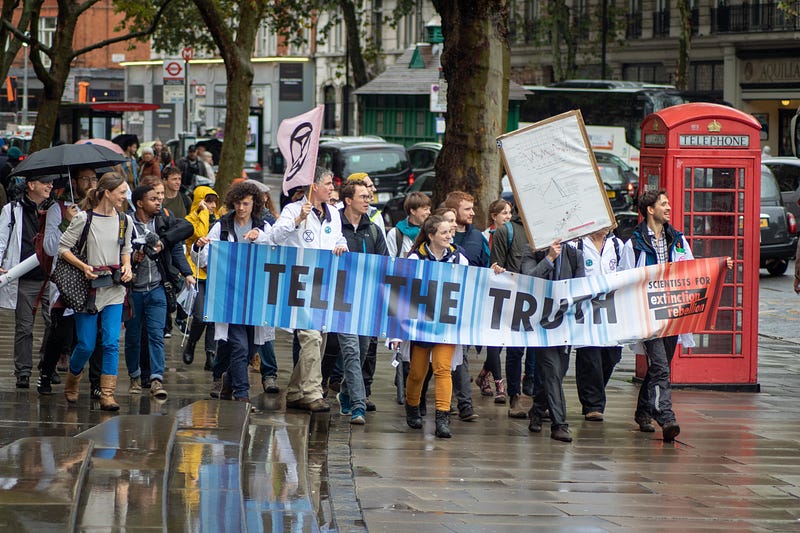
Where are all the statues going? Why did Rhode Island just change it’s name? Is a name just a name or a symbol of racism? Are historical symbols a means of documenting and remembering our past or underpinning racism. As with most things, the context is critical.
Like many people, my mind has been a bit boggled lately, by the rash of radical changes to the symbols of our American history. Some of them have been years in coming, after long drawn out campaigns to make changes. But others were a complete surprise to me. I had to do some quick thinking to get on board with this change. Because I definitely don’t want to be left behind in the antiracist movement underway right now.
Thinking about this reminded me of a ”cute dog picture” I posted on Facebook a few years ago. I was really surprised-and defensive, I might add- by many of the responses I got to my picture.
What happened?
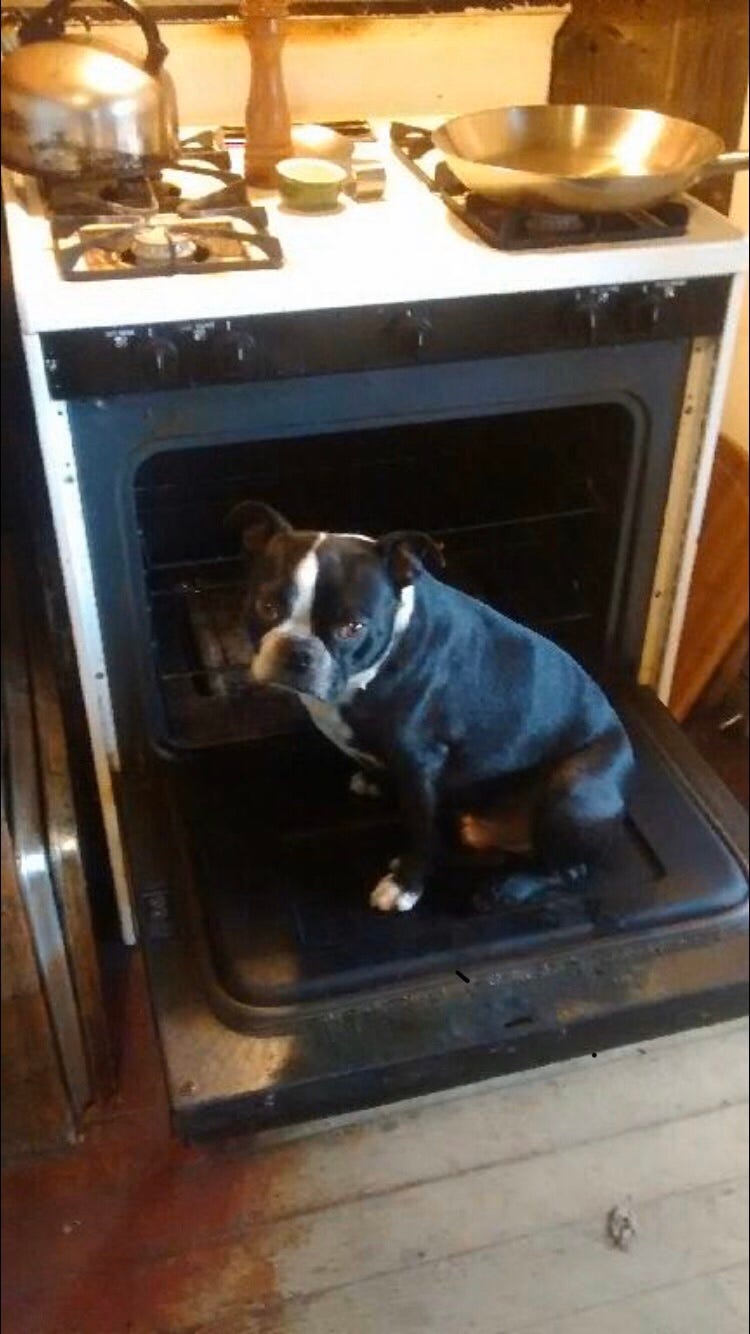
I posted this picture of my daughter’s Boston Terrier ”Fatty” on Facebook. I got all kinds of criticism about the dog on the oven door and also because I called him “Fatty”. Someone said ”you shouldn’t even joke around with pictures like that because it is cruel and gross”. I’m posting it below instead of as the headline because, well, you’ll see at the end of the article…
I was surprised and annoyed by all the people assuming I was joking about baking the dog. It never crossed my mind that someone might interpret it that way.
The Context
I thought it was great when I captured this shot of ”Fatty” jumping onto the oven door. It was so FATTY, so like the particular character of this dog. He loves finding the warmest spots to curl up in. He plunks himself in front of the woodstove or drags a dog bed over closer. He noodles his way under a pile of blankets on the couch so that you don’t even see him until the pile starts undulating. He oozes his way from the pillows down to the bottom of the covers in bed and curls up against your feet.
When he jumped up on the oven door, his instincts were right. In fact, I can often be found sitting on a stool with my feet on the oven door and a cup of coffee in hand. We live in Maine. Some people’s houses are drafty and the winter can be very cold. So warming yourself by the open oven door, with the heat turned low, is normal behavior here.. But I hadn’t said all that.
And ”Fatty” is just his name
This little dog was named by the 7 year old daughter of the breeder when he was a tiny puppy. We don’t know what she was thinking but Fatty came to my daughter’s house with that name and it stuck. Even after he slimmed down and “even has a waist now”, my daughter claims, he is still “Fatty”.
I was surprised and annoyed by all the people assuming I was joking about baking the dog. It never crossed my mind that someone might interpret it that way. Yet, maybe the thought was underneath all along. Wasn’t I trying to surprise the audience with an incongruous image so that they would read my story? And then, isn’t that what art often tries to do? Show something in a way that makes you think of it differently? I didn’t see it as offensive, yet several readers had serious objections.
People often jump to conclusions-sometimes with disastrous results. Why not just ask “why is that dog on the oven door? (Or, in more serious situations, “is that a gun you’re holding or a cell phone”) Why can’t we have more conversations before making decisions? The context is critical.
The negative comments got me thinking about “When is a name more than a name?” Is it always more than a name or can it be a name in some situations and a racist or sexist or weightist comment in another? I’m not sure.
The bigger picture
This brings me smack into the middle of the furious movement raging in our country right now to dig up institutional racism at its’ foundations. The very public murder of George Floyd catapulted the Black Lives Matter movement into international prominence, rightly so.
With it the movement in America to end the glorification of slavery, to tell the whole story about the destruction of the Native American people and their culture as well as many other historic atrocities has created a flurry of changes. Just in the last few weeks names of athletic teams and food products and buildings and even the state of Rhode Island have been scrutinized to root out racist references,
People around the world have been inspired to begin to throw racist statues into the river, behead them, or quietly relegate them to “storage”. Politicians are moved to hurriedly change offensive language, in a rush to keep up with the anger of the populace.
As citizens grapple with all the changes, experts are trying to come up with criteria for making these kinds of decisions easier. There are varying opinions. My first thought is to ask yourself, does the use of that word or picture or the presence of that particular statue in that place cause harm to anyone?
But it’s more complex than that. There are different perspectives about discarding all the remains of our history without careful thought.
A piece by Phillip Morris in National Geographic (June 29, 2020) addresses this problem. Are we making a mistake in hiding or destroying the symbols of the past, or is this an acknowledgment of wrongdoing and a necessary first step in making it right? George Santayana warned:
Those who forget the past are condemned to repeat it.
Here is Louise Richardson, Vice-Chancellor of Oxfotd talking to the BBC:
“My own view on this is that hiding our history is not the route to enlightenment. We need to understand this history and understand the context in which it was made and why it was that people believed then as they did. This university has been around for 900 years. For 800 of those years, the people who ran the university didn’t think women were worthy of an education. Should we denounce those people? Personally, no — I think they were wrong, but they have to be judged by the context of their time. (bold is mine)
From another perspective, Mitch Landrieu, former Mayor of New Orleans writes in his book In the Shadow of Statues: A White Southerner Confronts History, former New Orleans Mayor Mitch Landrieu talks about the reasons he felt it necessary to remove four Confederate monuments from the city in 2017, despite highly charged emotions around the proposed action.
Symbols matter. We use them in telling the stories of our past and who we are, and we choose them carefully. Once I learned the real history of these statues, I knew there was only one path forward, and that meant making straight what was crooked, making right what was wrong. It starts with telling the truth about the past,” wrote Landrieu.
Perhaps that’s where the statues to Christopher Columbus and General Robert E. Lee belong, in a place such as a museum of history or university library where we can expect the whole story to be told.
I find myself agreeing with both of these folks. it seems we have to have a way to remember what happened, to tell the truth about the past as well as to correct our mistakes and begin to heal as a country. How do we do all of this?
I think it needs to be done carefully and thoughtfully. Tossing the statues into the river sounds like fun but a bit impulsive. Can we tell the truth about the past without denouncing all of our ancestors or ignoring the very real struggles they faced themselves?
One good example of this kind of thoughtful approach to history and truth-telling is the Holocaust Museum. I believe that a thoughtfully told story, taking into account the multiple sides of the story and the complex of variables involved is the right approach.
So, back to my problem with the picture of Fatty sitting on the oven door.
I guess if I were to have a statue made of Fatty on the oven door and put it in a public square where anyone could view it and try to decide what it meant I would risk causing harm to people. I even decided not to use the picture as the headline picture of my story so there was no chance of anyone thinking I wanted to hurt the doggie — and this is key — UNTIL I TOLD THE WHOLE STORY.
The context is so important. That’s why I decided to put Fatty’s picture in the body of the story, sort of the same place other potentially problematic pictures would go. Perhaps that’s where the statues to Christopher Columbus and General Robert E. Lee and belong, in a place such as a museum of history or university library where we can expect the whole story to be told.
Jean Anne Feldeisen is a licensed. clinical social worker, hypnotherapist and relationship coach. She writes about mental health, self-esteem, relationships and couples retiring together. Jean has been reading and writing poetry since age 5. The memoir Dear Milly is her first book. Jean is seventy plus years old.


