
Ame-Lia Tamburrini of Hum Consulting On How To Listen Effectively To Succeed Personally And Professionally
An Interview With Doug Noll

Effective listeners have less conflict in their life and more harmonious, interesting relationships. When we walk into a conversation with curiosity instead of a need to share our knowledge or prove that we’re right, we dissolve the separation and the illusion of difference. For example, if I was a Democrat and you were a Republican and we were both trying to prove our points about why our party is the best, the outcome is going to be predictable, unsatisfying and boring. But if you walk into that conversation with curiosity and a desire to understand what it is I like about the Democratic approach then there is potential that we’ll discover we both value the same things — we’re just getting those needs met through different channels. The result is less divisiveness and stronger connections. We all need that right now.
It’s hard to be a good listener. We are programmed to want to talk, and to share. It takes effort to stop and to listen. But anyone who has achieved great success will tell you that listening is such an important quality to have. What are some ways that influential people have learned to listen, to succeed both personally and professionally? As a part of this series, I had the pleasure of interviewing Ame-Lia Tamburrini.
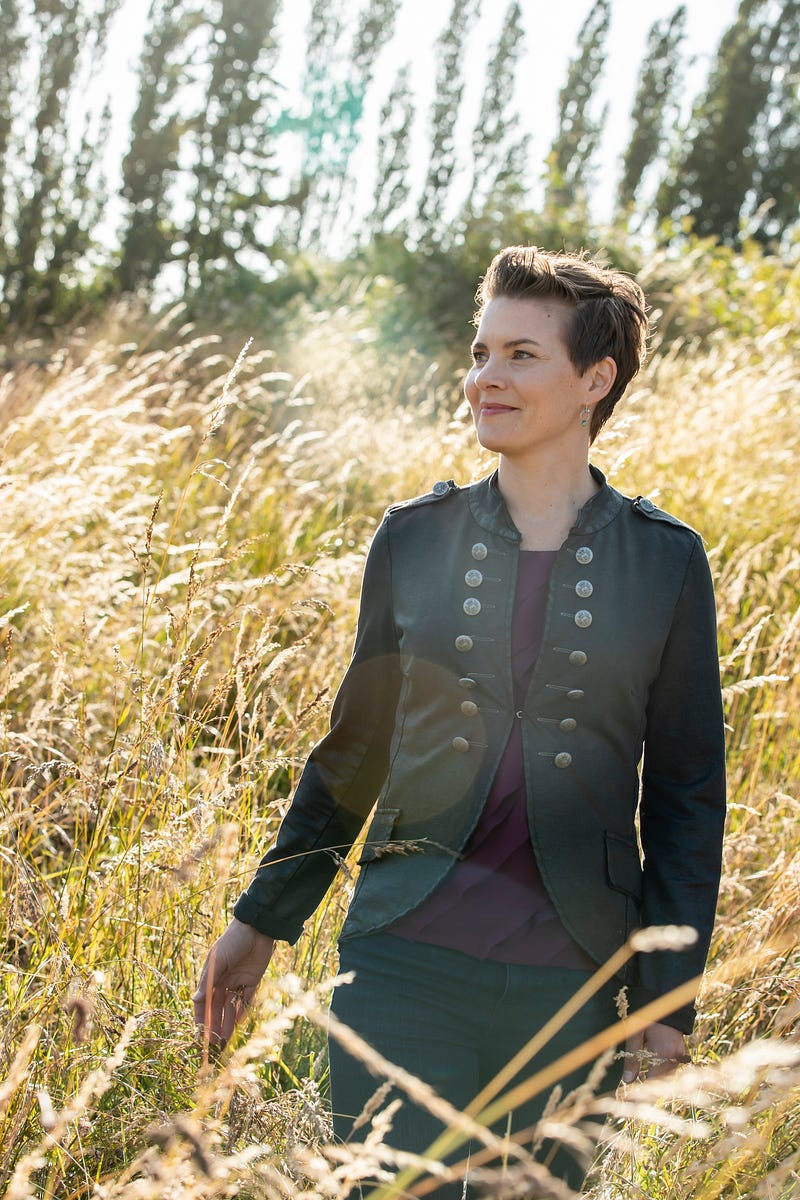
Ame-Lia is an international speaker, writer and master facilitator who has the gift of elevating the voices and issues that need to be heard so new solutions can emerge. She is the founding CEO of Hum Consulting and host of the Circle of Change podcast. With over 20 years engaging with rural, remote and Indigenous communities around the world she has honed her skills of bringing people together to have conversations that heal. She specializes in decolonizing behaviours and mindsets to create cultures of belonging and loves gathering change-makers together to strengthen their impact in the world.
Thank you so much for doing this with us! Before we start, our readers would love to “get to know you” a bit better. Can you tell us a bit about your childhood backstory?
I grew up in a small rural community on Georgian Bay raised by women — my Mom, a nanny and my grandmother. Although there was a lot of love in my family of origin there was also a lot of fighting, addiction, and an ongoing message that it was better for me as a girl to be seen than heard. My parents separated when I was 5 years old and from that point on, I took on a shy persona. I never raised my hand, I hated public speaking and in relationships, I became the peace-keeper, doing anything I could to keep the waters calm. This meant I rarely expressed my needs but on the inside, I built up a lot of resentment. It was decades later that I realized this way of being — holding in my truth — was harmful to my spirit and all my relationships. Over time, I learned how to communicate my needs, to let go of old stories that my voice was not important and now I get to create spaces where all voices are heard. I know from personal experience how healing it is to be listened to and I am honoured that I get to teach others how to give that gift to others in their life.
Can you please give us your favorite “Life Lesson Quote”? Can you share how that was relevant to you in your life?
Be the change you want to see in the world. I first heard this quote in high school. At that point in my life, I took Gandhi’s words to mean bringing voice to what needed to change. So, in my head, and sometimes vocally I pointed fingers at politicians, leaders, my parents, and my partners and let them know how they needed to be different so that me and the world would be better off. This continued until a pivotal moment that changed everything. I was in my mid-thirties. My father had just passed, I was leaving another long-term relationship and my heart was drowning in grief. I was lonely and exhausted and knew I wanted to feel something different, but I didn’t know what that was or how to get it. With one Google search “how do I trust my intuition?” I was fatefully connected with Gary Zukav and the course of my life changed forever. Over two years, Gary and his partner, Linda Francis taught me that true power — authentic power — comes with taking responsibility for my life experiences. If I wanted something to be different in the world or in my relationships or in how I felt, the starting place was looking inside. That was a hard pill to swallow at first, but over time with practice and a lot of support, I began to feel something different. Connected. Supported. Empowered. Energized. Today, I’m clear that being the change is not about making others be, do or say certain things, it’s about embodying what I want to see in the world and showing up as that. Gandhi wanted peace and agency for his country — so he demonstrated that with non-violent acts that he had control over. In the process he began the process of dismantling colonization around the world. That’s authentic power. If we all realized we too had this power, the world would look and feel very different.
Is there a particular book, podcast, or film that made a significant impact on you? Can you share a story or explain why it resonated with you so much?
The Power of One — it’s a story of the power that one person has to make a difference in the world. It’s set in South Africa during apartheid. I watched this movie repeatedly when I was a kid and the soundtrack played constantly on my walkman. The scenes of Africa are beautiful, and the scenes of how mean people can be to each other when they are scared are heart wrenching. I knew back then that I didn’t want to contribute to that level of harm. I started reading about Malcolm X, Martin Luther King, and Nelson Mandela and my world opened up. Not only was I seeing a world that I had no exposure to in my rural white community, I was seeing the power that one person has to change the course of history and help people come together. Today, the message in the Power of One is the message I take to all change-makers and communities I work with. In every moment each of us is throwing pebbles into the ocean of life. Each pebble creates a ripple of impact that spreads throughout the world. That pebble can be infused with love and kindness or with hatred and fear. The ripple works just the same. So, we have a choice in any moment to decide what we want to contribute to the world. When we recognize that and make it our priority to create what we most want to see, each of us becomes a powerful agent of change for the betterment of all. A few weeks ago, my brother wrote this quote on LinkedIn referring to me, “I never really believed that one person could change the world, but she’s proven me wrong and I’m now a true believer”. That touched me deeply and, in this moment, I see how that movie has become part of who I am.
Let’s now shift to the main part of our discussion. Let’s begin with a definition of terms so that each of us and our readers are on the same page. What exactly does being a good listener mean?
You know you are in the presence of a good listener when you leave the conversation feeling seen and understood. You can recognize them because they tend to have a lot of curiosity, they ask questions, and often share with you what they heard underneath the words you spoke. Good listeners have presence. They are not distracted by other people or devices, and they are not worried about fixing your problem, giving you advice or interrupting you to give voice to the thoughts in their head. Good listeners aren’t concerned about any of that — they are focused on understanding what you’re saying. We tend to focus a lot on the skills of being a good listener — reflecting back what people say, body language, and eye contact. But being a good listener is more than that — it’s an intention to be present with someone.
Why is effective listening such an important quality? Can you give a story or example to explain what you mean?
We live in a world that is electronically connected but emotionally isolated. This disconnection has been harmful to our health and we can see that through the extremely high rates of depression, suicide, drug overdoses and other addictions. These crises are here in large part because our emotional needs are not being met. Effective listening is important because it meets a core emotional need of all humans — to be seen and understood. I facilitate conversations between diverse groups of people in community settings, restorative justice, and leadership development. The circle is a beautiful model that is centred around listening. One person at a time shares their story. When they speak, others in the circle listen. When that person has completed their thought, they pass the talking piece to the next person. There are two powerful components at play here. The speaker has time and space to share a complete thought without being interrupted. Sometimes there is a pause, and it is not filled with other people talking. When we allow that space for whatever is inside to come out it is amazing what people learn about themselves. Nine times out of ten, whatever issues they were having they solved themselves through the act of listening to their own wisdom. As the listeners take in the story they are doing the same thing — learning about themselves and their own challenges through the lens of someone else. It’s sometimes hard to see how we are contributing to our own problems — but when someone else shares what’s true for them we realize that we aren’t alone, and we see the situation through a lens that we couldn’t see before. That often leads to greater compassion and understanding. This way of being — creating spaces to hear one another is literally relaxing to the central nervous system. To heal depression, loneliness, addictions and division, we need those spaces for that to happen. In this way, listening is the route to connection and healing.
From your experience or perspective, what are some of the common barriers that hold someone back from being a good listener?
In my experience, the biggest barriers to being a good listener are a lack of awareness about what is actually happening when we are in conversation with people. Unbeknownst to most of us, there are a myriad of unchecked stories running through our heads when people are talking. Our minds immediately begin to analyze the situation with a series of thoughts and questions — Why is this person talking to me? Do I have the answer this person is looking for? What is in this conversation for me? Am I in trouble? How can I help? Who do I need to connect this person with? When will they stop talking, I really need to get somewhere? I have the answer! Our minds go on and on like this which takes us away from the words being spoken and may have us interpret words in a way that will benefit us — mostly by keeping us safe. If we have the answer, if we can make this person’s day or solve their problem, if we can escape without being wrong — then we are accepted, liked, still in good standing and ultimately, from our brain’s perspective, we get to survive. The first step to becoming an effective listener is to recognize that this is going on and find ways to presence ourselves in the moment.
What are some practical techniques that have helped you become a more effective listener?
I set an intention before I walk into a conversation to connect and understand. Immediately that piques my curiosity and instead of focusing on what I want to say or am going to say, I focus on what is being said. Sometimes it’s helpful to write that intention down on a sticky note and keep it in front of me. Another technique I’ve been using recently is checking in with my expectations. If I’m fearing a bad outcome, I come into a conversation tense and already on the defensive. If I flip that on its head and walk in expecting something really interesting to unfold, everything changes. I am more open, curious and relaxed and willing to listen. During the conversation, keep checking in with what your body is feeling. If you’re activated — feeling agitated or distracted or wanting to interrupt — take a breath, recommit to your intention and try saying “tell me more”. So much of being a good listener happens before you walk into a conversation. It’s worth the few minutes it takes to set yourself up for success.
Here is the central question of our discussion. What are five ways that listening effectively can help someone succeed personally and professionally? If you can, please share a story or an example for each.
1 . Effective listeners have less conflict in their life and more harmonious, interesting relationships. When we walk into a conversation with curiosity instead of a need to share our knowledge or prove that we’re right, we dissolve the separation and the illusion of difference. For example, if I was a Democrat and you were a Republican and we were both trying to prove our points about why our party is the best, the outcome is going to be predictable, unsatisfying and boring. But if you walk into that conversation with curiosity and a desire to understand what it is I like about the Democratic approach then there is potential that we’ll discover we both value the same things — we’re just getting those needs met through different channels. The result is less divisiveness and stronger connections. We all need that right now.
2. Effective listeners have more clarity and better health. When we talk about listening, we usually imagine being in conversation with someone else; however, this skill is essential to apply to ourselves. Most people are avoiding listening to themselves by overworking, social media, and consumption of products. I did that for decades until I received a cancer diagnosis. That stopped me in my tracks and forced me to turn inward. When I shut out the distractions, I gained a lot of clarity about what was working and not working in my life. I still had to have the courage to make changes, but awareness was the beginning. Now, I teach people how to listen to themselves — in particular the body cues that are always communicating with us. Some people call this intuition. For me, trusting and listening to my intuition has restored my wellbeing and uncovered clear steps forward in all areas of my life.
3. Effective listeners experience more intimacy. Listening well is a game changer for relationships taking them from distrusting, surface-level transactions to meaningful, connecting, trustworthy partnerships. Think of the trajectory of a romantic relationship. In the honeymoon period, there is an abundance of curiosity. You’re deep in the practice of getting to know each other and being genuinely interested in why a person holds a certain view. Over time however, that curiosity fades away. Instead of truly listening, we make up stories and draw conclusions before the person has even opened their mouth because we think we know them and can predict their response. That’s harmful because it doesn’t allow the person or the relationship to evolve and expand. What if instead, you walked in with an intention to see your partner for the first time, every time. Intimacy builds in that circumstance because you’re creating a space for that person to be who they truly are in that moment, not who you knew them to be 5 years ago or even 2 minutes ago.
4. Effective listeners are agents of change. The best coaches, therapists, doctors and healers are effective because they can hear what is going on underneath what people are saying and turn conversations into transformational moments. We all have that skill within us. For example, someone may talk on and on about an event in the news and get really heated about it. Most people respond to the topic and feed into that negative energy. Effective listeners notice through words and actions that this issue is important to the other person and get curious about that instead of the topic. They may say “I notice this is really important to you. What is it about this issue that lights you up?” They may pause and look at you strange, but you’ll notice a shift in their energy. Now the conversation is not about the issue, it’s about them which is something they have control over. The news story becomes an opportunity for transformation because you listened for a more empowering conversation.
5. Effective listeners will be the leaders of tomorrow. Creating safe spaces for people to be heard is a core leadership quality for 2023. At least three of the 12 characteristics Forbes Magazine lists in their recent article “12 Leadership Skills for Growing Teams in 2023” require effective listening skills — a) promoting psychological safety, b) embracing diversity, equity and inclusion, 3) building empathetic 1–1 relationships. Selective listening has contributed greatly to our biggest social challenges. By only listening to a few core people who look and talk a certain way we’ve oppressed whole population groups and made it difficult for many people to thrive. We’ve also reduced diversity of ideas and our ability to innovate solutions to complex problems. Strong leaders must listen more than they talk and listen to more diverse groups of people to succeed today. They will be noticed by the waves of change they create.
You are a person of great influence. If you could inspire a movement that would bring the most amount of good to the most amount of people, what would that be?
I’d create a movement of radical responsibility. So many of the issues in our world are caused by a collective acceptance of blaming others for the problems in our lives. Social media has perpetuated that one-way form of communication. It’s so easy to blame politicians, God, our parents, the neighbours, but ultimately, there is no satisfaction or power in that. When we can look at the situations around us that are causing harm and ask the question — how am I contributing to this or how is this a reflection of my own behaviours, we gain our power back and become agents of change. The key to this work is radical acceptance which is the act of loving ourselves no matter what. When we embrace that way of being, we create cultures of belonging around us. That’s how we change the world.
Is there a person in the world whom you would love to have lunch with, and why? Maybe we can tag them and see what happens!
Besides Oprah, Nelson Mandela and the Dalai Lama, I’d like to have lunch with Bradley Cooper. His approach to directing A Star is Born and the messages he brought forward in that movie gave me the strength I needed at a critical time in my career to step more authentically into my role as a leader and change-maker. I’d love to let him know the ripple of impact he’s had in the world through me listening to his interviews and the movie script. See, listening — it can change your life.
How can our readers continue to follow your work online?
You can find me at www.humconsulting.ca. There you can sign up for my monthly newsletter and receive my free guide — 3 principles to move conversations from division to action. The newsletter gives tips on effective communication and how we can challenge old patterns to create connection wherever we show up. Also, please tune into my podcast, Circle of Change. It’s a space for change-makers to be inspired and challenged to be the change the world needs right now. People love the calm energy and what they learn about themselves in the listening.
Thank you so much for sharing these important insights. We wish you continued success and good health!
About the Interviewer: Douglas E. Noll, JD, MA was born nearly blind, crippled with club feet, partially deaf, and left-handed. He overcame all of these obstacles to become a successful civil trial lawyer. In 2000, he abandoned his law practice to become a peacemaker. His calling is to serve humanity, and he executes his calling at many levels. He is an award-winning author, teacher, and trainer. He is a highly experienced mediator. Doug’s work carries him from international work to helping people resolve deep interpersonal and ideological conflicts. Doug teaches his innovative de-escalation skill that calms any angry person in 90 seconds or less. With Laurel Kaufer, Doug founded Prison of Peace in 2009. The Prison of Peace project trains life and long terms incarcerated people to be powerful peacemakers and mediators. He has been deeply moved by inmates who have learned and applied deep, empathic listening skills, leadership skills, and problem-solving skills to reduce violence in their prison communities. Their dedication to learning, improving, and serving their communities motivates him to expand the principles of Prison of Peace so that every human wanting to learn the skills of peace may do so. Doug’s awards include California Lawyer Magazine Lawyer of the Year, Best Lawyers in America Lawyer of the Year, Purpose Prize Fellow, International Academy of Mediators Syd Leezak Award of Excellence, National Academy of Distinguished Neutrals Neutral of the Year. His four books have won a number of awards and commendations. Doug’s podcast, Listen With Leaders, is now accepting guests. Click on this link to learn more and apply.


