
Amazon vs. Etsy: Should You Sell On Amazon or Etsy?
Etsy vs. Amazon. Because they’re both popular among ambitious entrepreneurs wanting to start an online business, we’ll go through the platforms’ advantages and disadvantages in this story.

ETSY
Etsy is an online marketplace with a thriving community of artists, designers, and craftsmen who sell their one-of-a-kind handcrafted or antique items. On Etsy, you can only purchase this, unlike Amazon, where you can sell almost anything. That is, as long as it is legal…
Etsy’s products are divided into two categories: arts and crafts, jewelry, homeware, and baked foods. Etsy encourages sellers to carry ‘vintage’ things, which Etsy defines as items at least 20 years old. Selling on Etsy would be pointless unless you sell any of these since it is what visitors to Etsy stores seek.
Etsy is constantly growing in popularity, with more and more online shoppers realizing that it is a great platform to find unique products and gifts that aren’t sold anywhere else. With over 1,000,000 shops, Etsy is a constantly rising popularity platform, with more and more online shoppers realizing that it is a great place to find unique items and gifts that aren’t sold elsewhere.
The following are the primary benefits and drawbacks of selling on Etsy:
Pros
- Established community
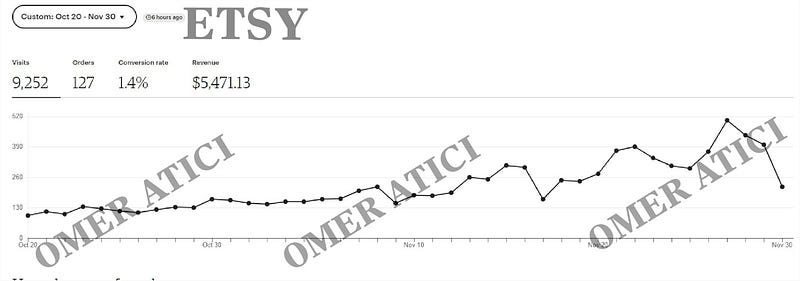
One of the most attractive aspects of selling on Etsy is that it may give you membership in a vast, well-established community. While every small company should promote itself, knowing that many individuals browse Etsy might help you get clients. Remember that traffic to Etsy is different from traffic to your business. You must continue to make your items appealing and attempt to get noticed on Etsy.
While there is an obvious advantage of utilizing Etsy, it is not exclusive to its platform since Amazon has considerably larger traffic.
2. Sell instantly
Etsy can be the way to go if you want to sell your things as soon as possible. It provides a simple and quick sign-up procedure and a ‘Sign Up With Facebook’ option. You might start selling in as little as a few hours after you have your account. That is if you have your product photographs and descriptions prepared. This is especially useful if you want to start selling during the busiest shopping seasons of the year.
When you consider the options for sellers of one-of-a-kind things, such as Not On The High Street or having a custom website established and built for you, neither can match Etsy’s speed to market. Not On The High Street takes a long time to assess your application for selling on their platform, and site design might take several weeks.
Amazon also offers a speedy sign-up procedure, but unlike Etsy, it does not provide a Facebook sign-up option.
3. Offer discount codes and shipping
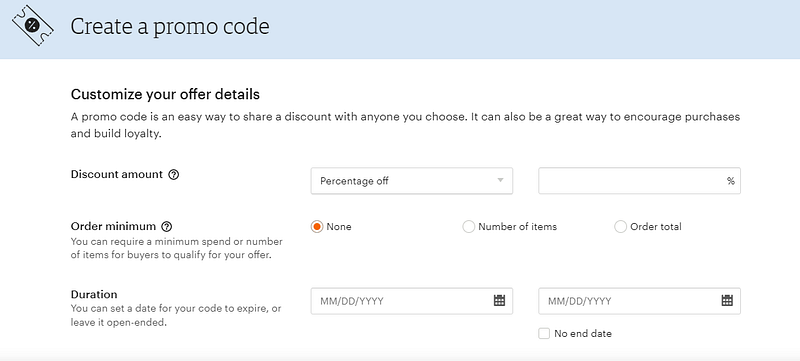
A loyalty bonus is one of the most excellent methods to keep consumers returning to your online store. One of the best things about Etsy is its simple use of several discount coupons and split shipping expenses for the same consumers. It’s a powerful marketing tool that may help get consumers back to your store and increase repeat purchases.
You can establish ‘Promotions’ on Amazon, but there are limitations, and they are difficult to oversee and maintain since anybody may use discount coupons. Some Amazon vendors see this as a fault in their system.
4. Low cost to get set up
It doesn’t cost much to start selling on Etsy, particularly when you consider the options accessible to sellers of one-of-a-kind items: Not On The High Street or your custom website. Not On The High Street costs £199 + VAT (about £240) as a membership fee and takes a 25% commission on every sale you make, with a website design costing even more. On the other side, Etsy allows you to open a store for free. On the other hand, Etsy charges $0.20 to list an item and takes a 3.5 percent fee, so although it is inexpensive, it is not free.
Etsy is much less expensive than Amazon. Etsy’s commission rates are substantially lower — and consistent across categories — and it doesn’t charge a monthly fee to keep your store running as Amazon does.
Cons
- Expansion has damaged its support service.
Etsy used to provide live chat to all of its merchants; however, due to the platform’s rapid growth, they were forced to discontinue the service in 2011 due to a lack of resources to meet the needs of their sellers. Many users on Etsy’s site had voiced their dissatisfaction with this, noting that the live chat option was their lifeline when they first launched their online store and that their issues are no longer being resolved as quickly as they previously were. Etsy seems unprepared for the surge in users and has been forced to dilute its current resources to make them stretch.
2. Oversaturated
The fact that there is just too much competition is something that everyone who sells on Etsy complains about. This is alarming enough on its own, but then you find that there are more vendors on Etsy than there are consumers. The number of vendors is likewise steadily increasing. It may be difficult for you to stand out and earn many sales on Etsy since so many of your rivals sell on the same platform as you.
Amazon is likewise oversaturated, with significantly more active sellers than Etsy. However, it also has roughly ten times the traffic and customer demand, so although it is still a concern, it is less common.
You may overcome this by investing more time and money in marketing and polishing and perfecting the various aspects of your marketing mix, which we go over in further depth in our Etsy review.
3. They take some of your profit
Each item costs $0.20 to list on Etsy and is only available for four months. When a product sells, they additionally take 3.5 percent of the sale price. When you consider the prior issue, that it’s already difficult to attract clients due to the platform’s saturation, it’s annoying that Etsy gains from your success when you finally start selling.
This needs to be included in the ‘cons’ portion of this post, but you’ll discover fees anywhere you opt to sell your items online, so this isn’t a problem specific to Etsy and shouldn’t be used as a reason to avoid them. They have to generate money, giving you access to their large consumer base.
4. Not that customizable
Having your bespoke e-commerce store is much more personalized than selling on Etsy. Some personalization options are available on the site, although they aren’t substantial. You may decorate your store with a banner and post shop regulations, but your URL will finish in ‘.etsy.com,’ making your company seem less professional. Because Etsy does not allow for HTML customization, your shopfront’s customization will always be restricted.
You’ll need a website developed for you if you want your shopfront to be fully unique to your company’s brand. Etsy is a platform that caters to a wide range of vendors and does not provide the amount of customization you may need.
5. No independence
If you’re a control freak — and let’s face it, who isn’t? — being at the mercy of Etsy could be a little unsettling. They retain the power to shut down your shop or modify their costs at any time, so you can never be sure that your company will be secure. You can find yourself challenged if Etsy raises its fees and you can no longer afford to operate your company and make a profit.
This is clearly stated in Etsy’s Terms of Service.
The same right is reserved by Amazon, as stated in their Participation Agreement.
Again, creating your online store and selling separately from Etsy and Amazon is the only way to control your company’s destiny completely.
AMAZON
Amazon.com has only been operational since 1994, yet it is now the world’s biggest Internet-based enterprise. It has total control over search engines. In reality, if you type ‘Amazon’ into Google, you’ll get nine pages of sites related to Amazon.com, with just one link to the Amazon rainforest on the tenth page. The rainforest has existed for 55 million years, but the internet has only existed for 20. It’s reasonable to conclude that Amazon.com has had, and continues to have, a significant impact on e-commerce.
The firm began as a little online bookstore in Jeff Bezos’ garage — sure, it’s one of those success stories — before growing into the fully-fledged, wide-ranging behemoth, it is today.
Amazon has just entered the consumer electronics market, directly competing with Apple. Their Kindle e-book readers are the most popular, but they also make tablets, TVs, and, more lately, mobile phones.
Amazon offers two basic possibilities for individuals looking to launch an e-commerce firm. Amazon Webstore, for example, is a hosted e-commerce service. It isn’t as customizable as rivals like Shopify, and it doesn’t come with Amazon.com’s brand or prestige. If you want to sell anything on Amazon, we suggest Amazon Marketplace. It’s a fixed-price system where you may sell both new and old things alongside Amazon.com’s current listings. For example, if you wanted to purchase the Barnes & Noble version of “Romeo and Juliet,” you’d have to pay £12.99 on Amazon. However, on the same website, vendors sell the book in ‘new’ condition for £5.86.
The following are the key advantages and disadvantages of selling on Amazon Marketplace:
Pros
- It is the largest internet & e-commerce business in the world
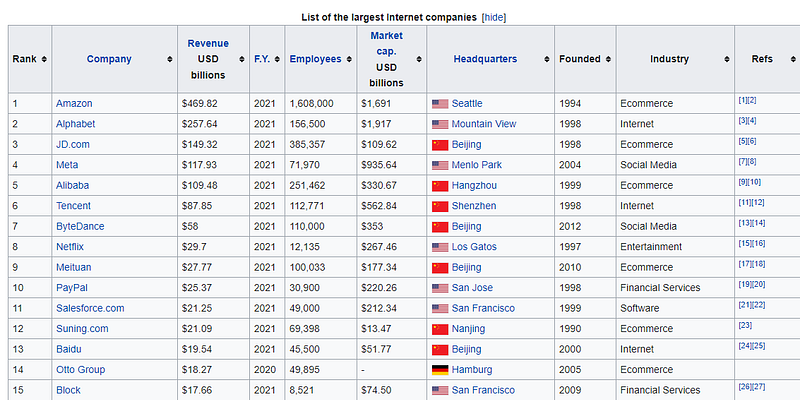
Amazon ranks first among the world’s major Internet corporations.
Etsy ranks 82nd on the list. There is no more successful platform than Amazon if you want to join an already-established e-commerce firm.
Your firm has the potential to be viewed by a significant percentage of those visitors if you have the correct marketing mix.
2. Strong SEO (Search Engine Optimization)
If a consumer uses a search engine to look for a product, an Amazon item will likely appear anywhere on the first page. This is perhaps the biggest advantage of Marketplace vendors being featured on the same product pages as Amazon; Amazon will be continually optimizing its SEO, which will result in a lot of exposure for your product listing.
Etsy’s SEO is substantially weaker in contrast. They advise merchants on optimizing their shopfronts for search engines rather than doing it themselves since they are not attempting to sell any of their items. When you sell on Etsy, you are responsible for getting your company name out there.
3. Repeat customers
Amazon’s phenomenal ability to establish and cultivate connections with consumers accounts for the company’s success. As a result, many of their consumers return to purchase other things from them in the future. Back in 1998, it was stated that two-thirds of Amazon consumers made recurring purchases.
With such high levels of client loyalty, Amazon seems to be a channel that may help you increase your sales.
Customers sometimes see Amazon Marketplace vendors as a low-cost alternative to purchasing the goods directly from Amazon, making client loyalty much more difficult to achieve. There are several options, like personalized packaging and thank you letters, but it might be challenging.
4. There is no limit on selling options
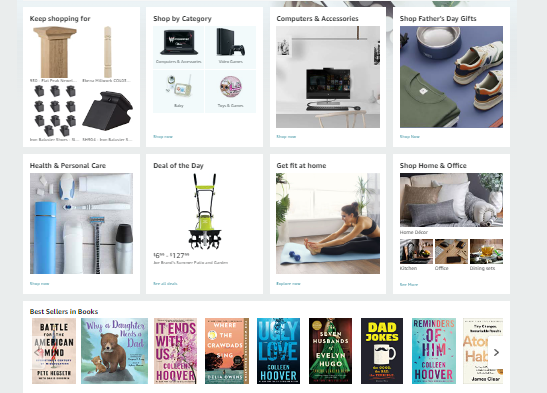
Etsy has a highly stringent list of things that are allowed to be sold on its platform. Etsy will not let you to list your items if you are not selling anything handmade, arty, creative, or antique.
On the other hand, Amazon doesn’t place any restrictions on what you can and can’t sell. Amazon, like eBay, allows you to offer items as long as they are legal to sell and are not considered dangerous.
As a result, you have much more flexibility to sell without worrying about whether or not you’re following the platform’s rules. Also, your company concept is more likely to succeed on Amazon Marketplace, where you’ll find it simpler to compete with other merchants offering a far wider choice of products.
5. Reliability

If you’re debating whether or not to run your e-commerce store, keep in mind that any servers you purchase will never be as stable as those used by Amazon. Amazon’s servers, the world’s most popular e-commerce site, are rarely down. (I say ‘rarely,’ not ‘never.’)
People often complain about how difficult it is to manage their servers and frequently have to bring in engineers when their site goes down, which is never realistic. A dependable and functional website is essential for any online company. You might be losing money if you don’t have this security in place.
However, if you establish your own business, you don’t have to host your e-commerce site on your servers. Using an e-commerce platform like Shopify allows you to operate your website without having to worry about the inconvenience of hosting it.
Cons
- Very high commission fees
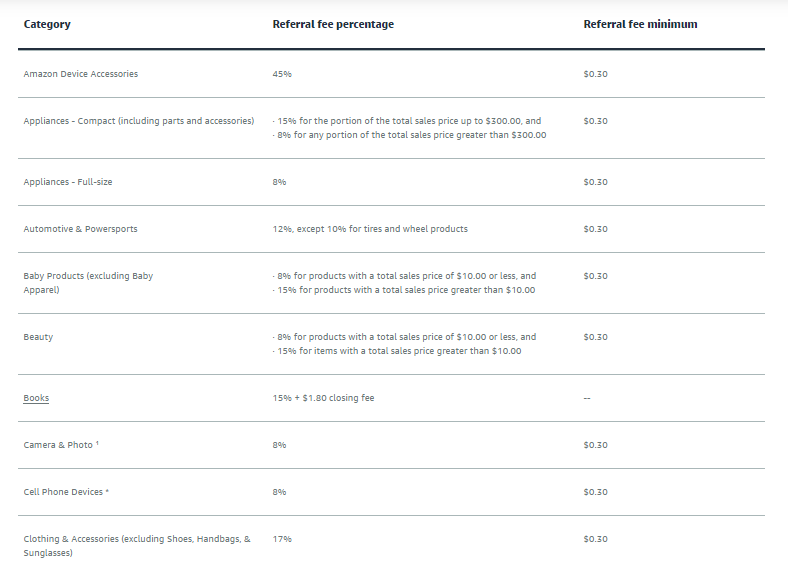
Amazon, like eBay, has variable commission rates depending on the category in which the item is sold. Each category has a percentage and a minimum charge, with the seller being required to pay more.
These costs are far greater than Etsy’s.
2. They own the customer
As previously indicated in this essay, repeat customers account for almost two-thirds of Amazon’s total orders. However, there is a drawback: these consumers are never entirely yours. Amazon makes it explicit in their terms of service that they own the consumer and that retailers are not permitted to contact them in certain circumstances.
You know almost nothing about your buyer if you utilize Amazon’s Fulfillment by Amazon delivery service, in which Amazon handles shipping for you. In this example, Amazon controls all of the data and customer relationships, but your income is the only information you can access.
3. Amazon may become your competitor
If you have a successful Amazon Marketplace business, Amazon may decide to compete with you. People frequently question why Amazon created the Marketplace since it seems to increase competition for them. However, by partnering with external merchants, Amazon can deliver specialty products to its consumers without having to have stock on hand. They become more competitive as a corporation due to their expanded product line.
If, on the other hand, your items begin to sell well and generate a profit, Amazon will use that information to determine what it should carry next. This is a significant reason Amazon allows third-party e-tailers to sell on their platform; these merchants assist Amazon in identifying market gaps and lucrative regions. This way, you’re like an Amazon guinea pig participating in a group market research study.
Conclusion
Etsy is the most cost-effective way to get your internet store up and running if you sell handmade, craft-related, or antique things. It’s just for sellers of those items, so if you’re selling something more mass-produced, Amazon would be a better fit. Also, remember that although Amazon gets far more traffic than Etsy, Etsy’s traffic is of better quality. When picking which platform to use, keep these trade-offs in mind!
Do you need an e-commerce expert? Contact me anytime!
#etsy ads #amazon sales #howtosellonline2022 #etsyseoexpert #how to increase amazon sales #why my sales down