avatarTammyTierney

Free AI web copilot to create summaries, insights and extended knowledge, download it at here

4195

Abstract

ions">24 stores</a>, stretching from Arizona to New York.</p><p id="7c11">In addition, Amazon owns <a href="https://help.goodreads.com/s/article/What-is-Goodreads-1555343061797">GoodReads</a>, which describes itself as “the world’s largest site for readers and book recommendations.”</p><p id="bc34">Amazon made the purchase in 2013, a move that drew sharp criticism at that time. <a href="https://www.theguardian.com/books/2013/apr/02/amazon-purchase-goodreads-stuns-book-industry">The Guardian</a> reported that America’s Author’s Guild called it a “truly devastating act of vertical integration” that meant “Amazon’s control of online bookselling approaches the insurmountable.”</p><p id="6166">Goodreads, which had <a href="https://www.statista.com/statistics/252986/number-of-registered-members-on-goodreadscom/#:~:text=As%20of%20the%20last%20reported,had%20accumulated%2090%20million%20members.">90 million members </a>as of mid-2019, has drawn some unfavorable reviews recently.</p><p id="c89d">“One of the biggest problems facing Goodreads is that, because of its many sections and clunky web design, it’s confusing, at times to the point of being almost unusable,” Matt Wille wrote for <a href="https://www.inputmag.com/culture/amazon-goodreads-books-alternative-the-storygraph#:~:text=One%20of%20the%20biggest%20problems,keeping%20track%20of%20book%20lists.">Input</a>.</p><p id="8b11">In <a href="https://www.newstatesman.com/science-tech/social-media/2020/08/better-goodreads-possible-bad-for-books-storygraph-amazon">The New Statesman</a>, Sarah Manavis wrote: “Goodreads today looks and works much as it did when it was launched. The design is like a teenager’s 2005 Myspace page: cluttered, random, and unintuitive. Books fail to appear when searched for, messages fail to send, and users are flooded with updates in their timelines that have nothing to do with the books they want to read, or have read. Many now use it purely to track their reading rather than get recommendations or build a community.”</p><h2 id="ea2e">Book clubs connected readers during the pandemic</h2><p id="0542">As book sales picked up during the pandemic, book clubs offered readers an important way to stay connected.</p><p id="71b2">According to <a href="https://www.npd.com/wps/portal/npd/us/news/press-releases/2021/after-a-slow-start--u-s--print-book-sales-rose-8-2-percent-in-2020--the-npd-group-says/">The NPD Group,</a> 2020 U.S. print book sales were the highest since 2010, recording 8.2 percent growth. E-book sales were up <a href="https://www.nytimes.com/2020/12/29/books/book-publishing-2020.html">more than 19 percent</a> at the end of 2020.</p><p id="6a7d">An October survey of more than 3,400 book club members found that many “persevered and found a way forward,” said Davina Morgan-Witts, publisher of <a href="https://www.bookbrowse.com/press_info/releases/index.cfm/release/45">BookBrowse</a>.</p><p id="6325">Three-quarters of those surveyed said their group continued to meet through the pandemic, and half said their group was even more important than the previous year. Among the groups that continued meeting, two-thirds got together virtually. The remainder continued to meet in person, with half of them gathering outdoors.</p><h2 id="bacc">Book clubs also generate sales</h2><p id="da4a">There’s no doubt that book clubs can have a substantial impact on sales.</p><p id="e7b9">After Oprah Winfrey debuted Oprah’s Book Club in 1996, the effect on sales was “immediate and impressive,” the <a href="https://www.latimes.com/entertainment-arts/books/story/2020-03-10/before-american-dirt-history-oprah-book-club-controversies#:~:text=Oprah%20Winfrey%20unveils%20her%20January,Dirt%2C%E2%80%9D%20igniting%20another%20controversy.&amp;text=Oprah%20Winfrey%20first%20launched%20Oprah's,talk%20shows%20in%20television%20history.">Los Angeles Times</a> reported.</p><p id="0a25">Before “The Deep End of the Ocean” by Jacquelyn Mitchard became Winfrey’s first book club selection. Its publisher, Viking Books, had 100,000 copies in print, per the Los Angeles Times. Two weeks later, the paper reported, that number soared to 640,000.</p><p id="daa0">Winfrey ended her first book club

Options

in late 2010, just ahead of the 2011 conclusion of her syndicated daily talk show. At that time, <a href="https://www.nielsen.com/us/en/insights/article/2011/the-oprah-effect-closing-the-book-on-oprahs-book-club/">Nielsen</a> reported that her program “delivered mega-sales for its selections.”</p><p id="7d1a">Oprah-branded special editions sold more than 22 million copies over 10 years, not including non-branded copies or used books, according to the 2011 report from Neilsen.</p><p id="ad4e">Oprah’s book club <a href="https://www.oprah.com/oprahsbookclub/how-oprahs-book-club-came-to-be">lives on. </a>In 2012, she introduced Oprah’s Book Club 2.0, a collaboration between the Oprah Winfrey Network and O, the Oprah Magazine. A program for Apple TV+ launched in 2019 and featured author interviews. Winfrey added Oprah’s Book Club Podcast in 2020.</p><p id="08ac">Other high-profile celebrities have followed Winfrey’s lead.</p><p id="f8c3">These days, models like Kaia Gerber and Emily Ratajkowski have become “bookstagrammers,” offering recommendations and author interviews on Instagram, the <a href="https://www.nytimes.com/2021/03/09/style/kaia-gerber-book-club-kendall-jenner-emily-ratajkowski-belletrist.html">New York Times</a> reported. Actresses Reese Witherspoon, Emma Roberts, and Sarah Jessica Parker also offer book <a href="https://www.thethings.com/celebs-who-have-book-clubs/">recommendations</a>.</p><p id="2f78"><b>The Amazon approach to launching products</b></p><p id="36bb">When launching new products, Amazon relies on a process called “working backwards,” <a href="https://www.geekwire.com/2021/working-backwards-customer-inside-amazons-strategy-launch-new-products/">Geek Wire</a> reported.</p><p id="5805">“The end result of the working backwards process is that a decision-maker has the information needed to assess the customer and business value of a product and either give it the green light or the red light,” explained long-time former employee Jennifer Cast.</p><p id="0623">Cast’s insights came during a <a href="https://www.youtube.com/watch?v=SiKyMxmfiss">video</a>, “Working Backwards From the Customer,” created by the University of Washington’s Foster School of Business.</p><p id="65c5">The customer-centered process starts with a PR/FAQ, a press release accompanied by frequently asked questions, Cast said in the video. The press release is written from the perspective of launch day and explains what the proposed product is, how it works, and its value to the customer.</p><p id="3105">The FAQ document is designed to anticipate questions from both customers and decision-makers, she said.</p><p id="1e39">Interestingly, Cast’s examples were Amazon’s debut of bookstores — for which she wrote the PR/FAQ — and the company’s unsuccessful BookMatcher service.</p><p id="f59d">BookMatcher, intended to provide personalized book recommendations based on book ratings, was developed at Amazon before the company adopted the “working backwards” process in 2004, Cast said.</p><p id="05a3">Former Amazon executives Colin Bryer and Bill Carr also detail the development process in their new book, “Working Backwards: Insights, Stories, and Secrets from Inside Amazon,” Cast said.</p><p id="a11a">So, is Amazon applying its “working backwards” strategy to book clubs? Will readers eventually be able to discuss books and interact with each other? What about Goodreads? Will the two companies become more closely aligned?</p><p id="b875">Book lovers will have to wait for the next chapter to find out.</p><div id="cead" class="link-block"> <a href="https://readmedium.com/the-pandemic-created-a-boom-market-for-booksellers-96ab3d4611f4"> <div> <div> <h2>The Pandemic Created a Boom Market for Booksellers</h2> <div><h3>Why that’s good news for your brain and your body</h3></div> <div><p>medium.com</p></div> </div> <div> <div style="background-image: url(https://miro.readmedium.com/v2/resize:fit:320/1*-nETfaR0xJ9o3b4ODooKjw.jpeg)"></div> </div> </div> </a> </div></article></body>

Amazon Takes a Look at Book Clubs

The program is in ‘early access,’ and the company says additional features are on the way
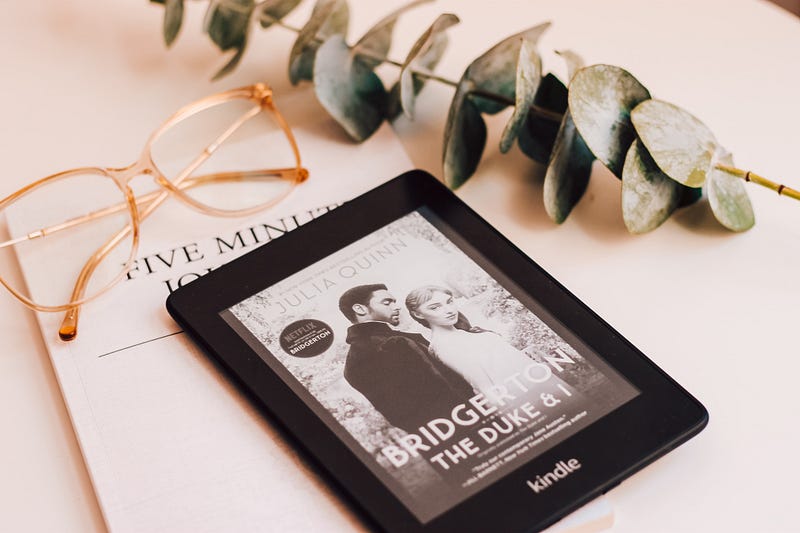
Is Amazon starting a new chapter with book clubs? Photo by Shayna Douglas on Unsplash

Amazon’s story began with book sales. Now the e-commerce giant is building on that foundation by testing book clubs.

According to the company’s website, book clubs are in “early access,” and customers with an Amazon account can join for free. The site currently says that some customers can start their own clubs and that it will extend club creation to all customers this year.

Participants who sign up for existing clubs receive book recommendations from Amazon editors. There are no forums for book discussions, though club members can suggest their favorites to others.

Amazon is inviting feedback to “inform what features we release next and to help us improve your experience.” According to the site, additional features will roll out this year.

A beginning based on books

Amazon launched in 1995 as a website that sold only books. In its first month in business, the company sold books to people in all 50 states and 45 different countries, Business Insider reported.

Books are still a healthy part of Amazon’s business. Amazon has a 42 percent share of physical books sold, the BBC reported, and has a 90 percent share of ebooks.

Amazon’s sales hit $386 billion in 2020, according to BBC research, up from $280 billion in 2019. Net profit nearly doubled to $21 billion.

TechTarget estimated that although book sales represent less than 10 percent of Amazon’s revenues, “that’s still 10 percent of a massive annual income — $280 billion and climbing.”

“Publishing experts expect more changes on the way as Amazon applies its market power and data-driven decision-making to an industry where both factors tend to be in short supply,” per TechTarget.

Direct sales aren’t the only impact Amazon’s had on publishing. It launched the Kindle e-reader in 2007.

The device “ushered in a digital reading revolution,” TechTarget wrote.

The New York Times’ Wirecutter recently named the Kindle Paperwhite its top pick among e-readers describing it as “the right choice for almost everyone.”

Amazon is also a player in retail book sales. It opened its first brick-and-mortar bookstore in Seattle in 2015.

Today, the company has 24 stores, stretching from Arizona to New York.

In addition, Amazon owns GoodReads, which describes itself as “the world’s largest site for readers and book recommendations.”

Amazon made the purchase in 2013, a move that drew sharp criticism at that time. The Guardian reported that America’s Author’s Guild called it a “truly devastating act of vertical integration” that meant “Amazon’s control of online bookselling approaches the insurmountable.”

Goodreads, which had 90 million members as of mid-2019, has drawn some unfavorable reviews recently.

“One of the biggest problems facing Goodreads is that, because of its many sections and clunky web design, it’s confusing, at times to the point of being almost unusable,” Matt Wille wrote for Input.

In The New Statesman, Sarah Manavis wrote: “Goodreads today looks and works much as it did when it was launched. The design is like a teenager’s 2005 Myspace page: cluttered, random, and unintuitive. Books fail to appear when searched for, messages fail to send, and users are flooded with updates in their timelines that have nothing to do with the books they want to read, or have read. Many now use it purely to track their reading rather than get recommendations or build a community.”

Book clubs connected readers during the pandemic

As book sales picked up during the pandemic, book clubs offered readers an important way to stay connected.

According to The NPD Group, 2020 U.S. print book sales were the highest since 2010, recording 8.2 percent growth. E-book sales were up more than 19 percent at the end of 2020.

An October survey of more than 3,400 book club members found that many “persevered and found a way forward,” said Davina Morgan-Witts, publisher of BookBrowse.

Three-quarters of those surveyed said their group continued to meet through the pandemic, and half said their group was even more important than the previous year. Among the groups that continued meeting, two-thirds got together virtually. The remainder continued to meet in person, with half of them gathering outdoors.

Book clubs also generate sales

There’s no doubt that book clubs can have a substantial impact on sales.

After Oprah Winfrey debuted Oprah’s Book Club in 1996, the effect on sales was “immediate and impressive,” the Los Angeles Times reported.

Before “The Deep End of the Ocean” by Jacquelyn Mitchard became Winfrey’s first book club selection. Its publisher, Viking Books, had 100,000 copies in print, per the Los Angeles Times. Two weeks later, the paper reported, that number soared to 640,000.

Winfrey ended her first book club in late 2010, just ahead of the 2011 conclusion of her syndicated daily talk show. At that time, Nielsen reported that her program “delivered mega-sales for its selections.”

Oprah-branded special editions sold more than 22 million copies over 10 years, not including non-branded copies or used books, according to the 2011 report from Neilsen.

Oprah’s book club lives on. In 2012, she introduced Oprah’s Book Club 2.0, a collaboration between the Oprah Winfrey Network and O, the Oprah Magazine. A program for Apple TV+ launched in 2019 and featured author interviews. Winfrey added Oprah’s Book Club Podcast in 2020.

Other high-profile celebrities have followed Winfrey’s lead.

These days, models like Kaia Gerber and Emily Ratajkowski have become “bookstagrammers,” offering recommendations and author interviews on Instagram, the New York Times reported. Actresses Reese Witherspoon, Emma Roberts, and Sarah Jessica Parker also offer book recommendations.

The Amazon approach to launching products

When launching new products, Amazon relies on a process called “working backwards,” Geek Wire reported.

“The end result of the working backwards process is that a decision-maker has the information needed to assess the customer and business value of a product and either give it the green light or the red light,” explained long-time former employee Jennifer Cast.

Cast’s insights came during a video, “Working Backwards From the Customer,” created by the University of Washington’s Foster School of Business.

The customer-centered process starts with a PR/FAQ, a press release accompanied by frequently asked questions, Cast said in the video. The press release is written from the perspective of launch day and explains what the proposed product is, how it works, and its value to the customer.

The FAQ document is designed to anticipate questions from both customers and decision-makers, she said.

Interestingly, Cast’s examples were Amazon’s debut of bookstores — for which she wrote the PR/FAQ — and the company’s unsuccessful BookMatcher service.

BookMatcher, intended to provide personalized book recommendations based on book ratings, was developed at Amazon before the company adopted the “working backwards” process in 2004, Cast said.

Former Amazon executives Colin Bryer and Bill Carr also detail the development process in their new book, “Working Backwards: Insights, Stories, and Secrets from Inside Amazon,” Cast said.

So, is Amazon applying its “working backwards” strategy to book clubs? Will readers eventually be able to discuss books and interact with each other? What about Goodreads? Will the two companies become more closely aligned?

Book lovers will have to wait for the next chapter to find out.

Business
Books
Amazon
Reading
Book Club
Recommended from ReadMedium