
Amazon Echo and Alexa really matter
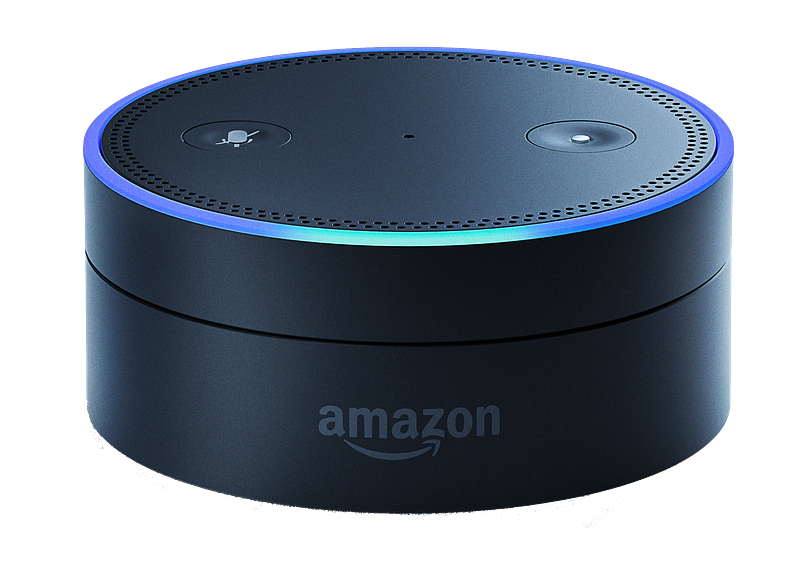
The Amazon Echo is the first smart consumer electronics product since the smartphone that’s poised to become a daily habit for millions.
There are lots of interesting things to think about when it comes to Amazon’s Echo device and the Alexa service that powers it.
- Echo works because people like and trust Amazon. Because Amazon is truly a mainstream consumer brand, there’s no reluctance to purchase the product, and very little resistance to trusting it to be reliable and useful. Similar to Kindle, it’s almost seen as not really being high-tech; iPhones are all about ultra-high-resolution Retina screens but Echo doesn’t even have a screen.
- Echo as a product doesn’t have a category name. Maybe it’s technically a “smart speaker” or something like that, but that misses the entire point about its utility and the connected services that power it. If no category name emerges, that will bode well for Amazon, who might well become synonymous with the product category.
- Apple TV is nowhere near a peer to Echo, even with a voice remote connected to Siri. That’s fascinating! Maybe connecting to a TV screen is a liability for the immediacy and utility of these kinds of products? It will be astounding in the decades of battling for control over set-top boxes end up having been a distraction.
- It’s striking how Siri is much worse than Alexa. (Even Cortana is better.) It could just be a feature lag, that Amazon is ahead on product development, or it could be that Apple’s laudable privacy stance has meaningfully disadvantaged them in this product category because they haven’t mined enough personal user data to provide a comparable experience. Hmm!
- There has been a good bit of investigation into how Echo transmits your queries back to Amazon, and it would appear the queries are insufficiently secure. And of course, the very function of Echo requires that it always be listening to everything said in your household. (Thus the question of whether it’s kosher to use the Echo on Shabbos.) When combined with completely legitimate concerns about how this data will be used by government and law enforcement, and whether Alexa data will need appropriate subpoenas or can be monitored and accessed without our knowledge, Echo’s role in enabling surveillance culture can’t be understated.
- More positively, Echo is meaningful because it’s also the first hugely popular smart device that’s connected to a place rather than a person. (Video game consoles are obviously dedicated to the living room, too, but they’re a purpose-specific device, and none have crossed over into general app platforms.) Apps for places are different than apps for people. This is summarized very well in naveen’s piece on “thereables”.
- The lights on the Echo are awesome and I wish they could do even more cool tricks.
- Dads love Echo! (I think moms may love it, too, but I can’t speak for them.) This is great, except that the device is not very good at understanding the voices of young children (or people who speak English in any voice other than the Standard American English accent).
- The Echo’s killer app for families with young kids is the timer. This sounds ridiculous — nothing could be more low-tech than a simple countdown timer, but anyone who’s ever tried to transition a pre-schooler from one task to another knows that timers can be a godsend. But while unlocking the phone, launching a timer app, and starting a countdown is impossible for young kids to do, saying “Alexa, set a timer for 5 minutes” is effortless. Another demonstration of how reducing friction on a task doesn’t just make it faster, it changes its fundamental accessibility.
- Ecommerce is just one app on Alexa. Even though Amazon made the service, and it’s great at performing Dash button-style tasks like “reorder paper towels”, all of Amazon’s commerce and retail capabilities feel like just one tiny part of what an Echo can do. It will be interesting to see how much home automation and connections to other devices supplant retail in Amazon’s promotion of the device’s capabilities.
- Being hands-free matters. Whether it’s asking Alexa about the weather while getting dressed, or telling it to set a timer while putting something in the oven, not requiring your hands and your eyes fundamentally changes when a device can be used. It turns out there are a lot of times when our hands and eyes are otherwise occupied.
- The branding tension between Alexa (the smart services that Amazon runs) and Echo (the brand name of the devices that connect to Alexa). It seems like this could be resolved by having a branding family — Alexa is the category of product, and Echo, Dot and the others are members of the family. “We have an Alexa Echo in the living room and an Alexa Dot in the bedroom” seems reasonable. I can see why Amazon is struggling with this, because in the future they want a lot of devices and apps to connect to Alexa, but until that reality comes to pass, the confusion is a barrier to both adoption and clear communication around the platform and products.
- Yes, ugh, enough with the feminine names for digital assistants.
- Alexa’s “skills” (the equivalent of apps) are not very good. One reason why is the disconnect between usage and provisioning — you talk to the Echo, but install skills by going to the Alexa app on your phone. We could also argue that it’s just too early in the maturity of the platform for the services to be very good. But there are also syntactic challenges — if a song is on Spotify and not on Amazon Music, remembering to tell Alexa to play it from within your preferred music service is not just a pain in the ass, it’s a barrier to utility. More than on any other platform, being able to seamlessly change defaults for particular functions is going to be critical.
- Building skills for Alexa is more like building a chat bot than it is like building an iPhone app. The greatest challenges in building Alexa skills will be about understanding phrasing and context, and in responding with appropriate voice and tone. Given that app/skill discovery has to evolve to happen intuitively and automatically right within the voice-controlled experience, discovery of new skills is going to require developers to do a lot more work than just listing their app in a store.
- Echo seems under-appreciated in Silicon Valley but genuinely popular in other tech communities. While everyone in the classic tech world of San Francisco and the Valley is focused on AR and VR and AI, in New York and DC and Seattle, I’m hearing a lot more enthusiasm about Alexa, particularly since it’s in the hands of millions of regular people already.
- Update: Oh, I forgot one! It’s really interesting that both Siri and Alexa fall back on using Bing (which of course, Cortana does as well). Except for Google’s own products, all the next-generation voice-activated search devices rely on Microsoft’s platform, which could be a meaningful advantage for them in the future.
There will be lots more to say about these devices and services down the road, I’m sure. But this is already a very interesting starting point.