
Am I Selfish for Wanting Kids in a Climate Crisis?
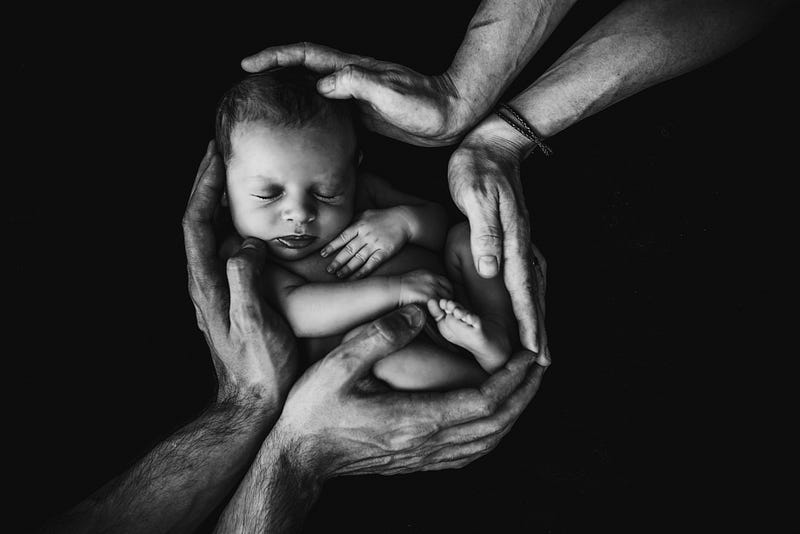
I remember ringing my mum earlier this year in May (it feels like aeons ago now), to wish her a happy Mother’s Day. She said, ‘Thank you, love. I hope I can say the same to you one day too.’ I was biting my finger nails and the metallic taste of blood made me stop — I had ripped the cuticle of my index finger. I scuttled to the bathroom for a band-aid and through the half-open window I could hear faint squeals and laughter from the neighbours’ kids playing on the street in front of our house.
‘Are you there?’ mum asked.
‘Yes, yes,’ I said quickly.
I’m a 28-Year-Old Woman and I Have Reproductive Anxiety
It’s not that I want kids right now, but as I get older and that darn ‘biological clock’ keeps ticking away, I can’t help but think of what I want in the future. To have or not to have children? That is the question. Well actually, I have a list of questions: If I have children, what will their world look like in our very real and terrifying climate crisis? Is it cruel to bring a child into the world with such a bleak future? Why do I want to have children? To make me happy? To make my parents happy? Because my friends are having them? Am I selfish for wanting children? And how is it moral to do anything but adopt in a world teeming with humans?
Pre-COVID lockdown, I was driving to my friend’s house — a 35-year-old woman with no children (yet?) — and The Suburbs, by Arcade Fire, started playing on the radio. It’s a beautifully-written song, but it prompted bittersweet nostalgia of my ex and the way we used to dream of raising a family together. I turned up the volume and sang along to my favourite line:
‘So can you understand
why I want a daughter while I’m still young?
I want to hold her hand
and show her some beauty before this damage is done’
Funnily enough, band member Win Butler said the song was written to evoke a sense of a foreboding apocalypse — and he hit the nail on the head. It’s coming, we all knew it was coming, and now we’re scared. We’re running out of time to do all the things we wanted, to show our kids the beauty of our planet.
Turn on the news, scroll through social media or just google ‘climate crisis’ — in addition to the constant pandemic panic, you’ll be faced with the blow-by-blow of global warming and the depressing depictions of our planet’s future.
2010 to 2019 Was the Hottest Decade on Record in 140 Years
The past five years have been the warmest five years in centuries. Last year was the second hottest year ever recorded and ocean temperatures were the highest they’ve ever been. Scientists confirm that these unsettling statistics are from continued global warming due to excessive carbon dioxide and other greenhouse emissions, largely contributed by human activity.
I’ve made my own observations of climate change around me in Australia, noticing how the seasons have altered over the last several years: autumn starts later; winters are harsh, but shorter; flowers bud earlier as spring approaches sooner; and summers are longer — the heat is more intense and frequently unbearable.
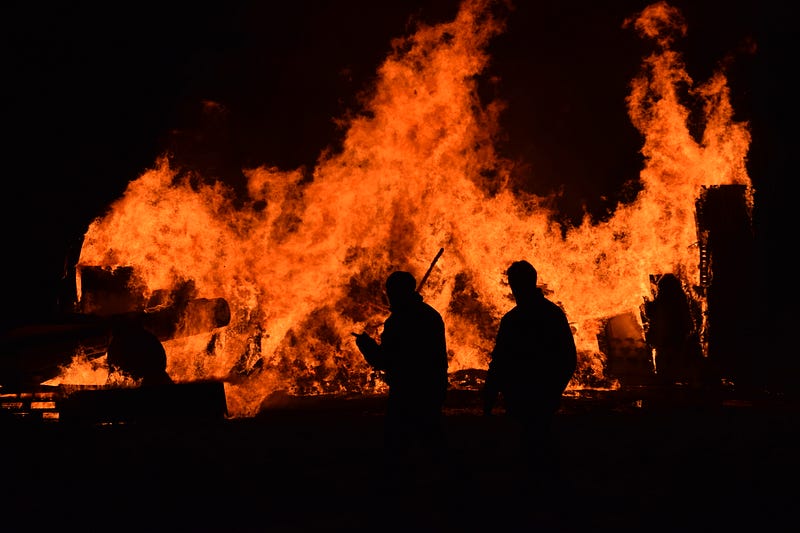
‘Mmm, this sun is so good,’ I murmured to my friend, as we lay belly-up at the beach last summer. Temperatures had reached 33 degrees at 11am that day, and by 12.30pm they crept to 39. By then, the heat wasn’t even enjoyable anymore and we hopped and winced across the sand, taking refuge in the car and blasting our faces with the air-con. When I tried to return to the beach two weeks later, I felt like I was choking on the polluted air, thick with smoke from the raging bushfires. I stared hopelessly at the sea’s horizon marred by a hazy, charcoal sky. Is this our new reality?
We’ve pushed mother nature to the brink with reckless habitat destruction and over-harvesting, pollution, introduced invasive species and overpopulation.
Writer Katie O’Reilly agonises over this loss, asking herself how she could bring a child into an increasingly uninhabitable world, knowing that ‘all their favourite picture-book animals were going extinct’. The alarming decline in global biodiversity means more than one million animal and plant species are on track for extinction in the next coming decades.
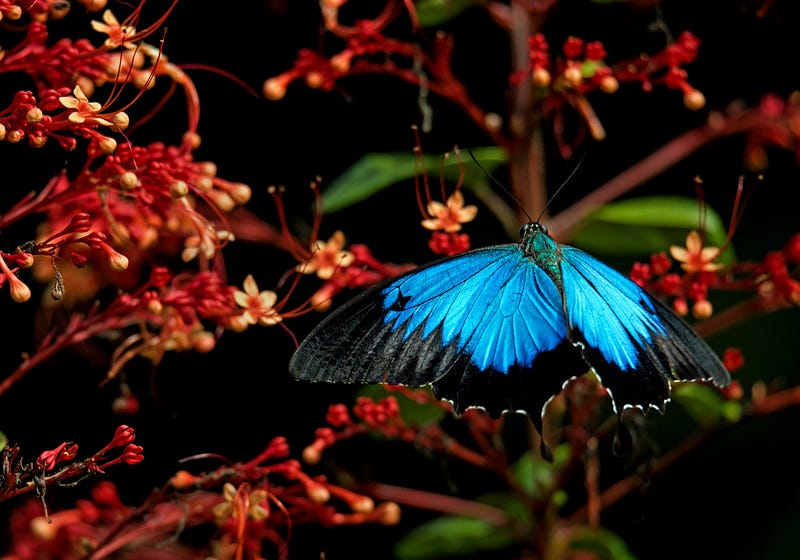
On a trip to Tropical North Queensland last year, I kept my eyes peeled for the elusive, unmistakeable electric-blue Ulysses butterfly. With breeding rates dropping to zero, it’s on the verge of extinction due to extreme temperatures and not enough wet seasons (the optimum conditions for the butterflies to lay eggs). I thought I caught a glimpse of the iconic species in the Daintree rainforest one afternoon, but perhaps it was my imagination. Perhaps we’ll only ever see them in our imaginations and museums — an ominous reminder of what we’ve lost.
It’s glaringly obvious that our Earth is diminishing in natural resources, beauty and wonder — things look pretty grim for us and future generations. My concerns are that if I bring more energy-guzzling, carbon-emitting little humans into the world, I’ll only add fuel to the wildfires, rising sea levels, food shortages and mass animal extinction. I’ll only contribute to the problem.
Millennials and Generation Zers will witness many horrors of global warming before we’re gone. Well, we already are — the recent Californian fires, mirroring the Australian Black Summer, fuelled by record-breaking temperatures and months of severe drought, is a flaming red flag we can’t ignore. Amidst the pandemic and the looming inevitable natural disasters, I’ve given up on ‘summer plans’ or ‘holidays’ this year, and maybe for years to come.
U.S. congresswoman Alexandria Ocasio-Cortez sparked controversy when she stated: ‘It is basically a scientific consensus that the lives of our children are going to be very difficult, and it does lead young people to have a legitimate question: is it OK to still have children?’
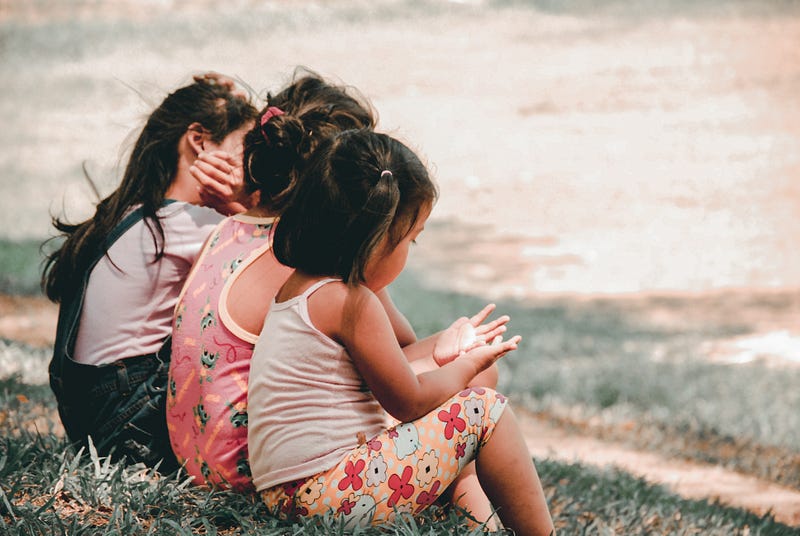
It’s Only Becoming Harder to Avoid These Questions of Morals
Refusing to have kids is like a climate strike, a desperate attempt to skid and stop at the edge of a crumbling cliff before we plummet into this man-made doom. Then there’s the ethical dilemma of making innocent children victims of our existential suicide — one that we created, one that we can’t Ctrl+Z (not immediately, anyway). How will they cope in these extreme conditions, and how will children in less fortunate, unprotected places in the world survive? In my mind I see children in third-world countries crying, starving, dying in the unlivable heat. It haunts me.
Scientists predict that carbon emissions must fall to two tonnes of carbon dioxide per person by 2050 to avoid severe effects of global warming; in Australia, emissions are currently 16 tonnes per person. One published study calculated that having one less child equated to a reduction of 58 tonnes of carbon dioxide for each year of a parent’s life.
Perhaps it’s a matter of having fewer kids with enforced birth restrictions? Or maybe I’ll just keep adopting kittens and turn into the crazy cat lady I always joked about. Ha! It ceases to make me laugh now though.
Individuals Are Not Averages and Less People Don’t Necessarily Equate to Less Emissions
Despite these depressing statistics, there are valid reasons in favour of having children (and they soothe my spiralling anxieties). The cause and solution of this crisis is extremely complex with expansive grey areas. For example, an estimated 50% of consumption emissions come from the wealthiest 10% of the world’s population, who tend to have fewer kids anyway.
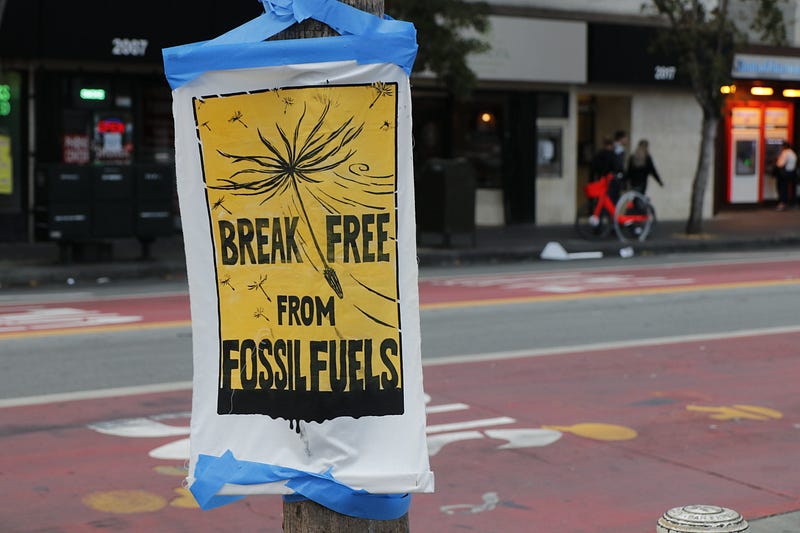
If we’re going to point fingers, shouldn’t we be flailing them at the biggest contributors? Why should ordinary young women and men sacrifice their future families instead? Besides, an anti-natalist attitude is a defeatist one.
‘Letting the climate dictate decisions about my uterus increasingly feels like a sign that I’ve acclimated to a dreary future, that I’ve stopped trying,’ says O’Reilly. And she’s right: we can’t just throw in the towel and hope that not having children will solve all our ecological woes.
A world crisis is unlikely to be solved at an individual level — we need collective change. Our focus shouldn’t be on limiting or refusing more children; this is a trivial distraction that misdirects responsibility.
Industrial and agricultural activities, such as deforestation, burning fossil fuels, landfill waste and farming, are the main culprits that got us into this mess. In the last 150 years, human industrial activities have raised atmospheric carbon dioxide levels from 280 parts per million to 412 parts per million. The reality of overcoming this crisis is much more difficult than abstaining from procreation: the whole world needs to change its course of politics and culture.
We need ‘structural, widespread changes to economic systems, business models and cultural priorities,’ says ethicist Dr Matt Beard.
Children Are Far From the Problem —They’re Driving the Solution
Last November, I attended one of the ‘Fridays for Future’ protests in Melbourne — an environmental movement started by 15-year-old activist Greta Thunberg, from Sweden. On that sweltering Spring day, my friends and I chanted and marched alongside hundreds of protesters, including children and students skipping school; pregnant women; and elderly people. It was empowering to see people from all walks of life unite to fight for change. Thousands of young people, in 7500 cities around the world, take to the streets every Friday to strike against the lack of climate change action from local governments. The bulk of this fast-growing movement is led by young children and teenagers; they’re seriously concerned for their future and they’re doing something about it.
‘By encouraging people not to become parents, we’re eliminating a potentially powerful ally in the efforts to fix the world as much as we can,’ Dr Beard explains.
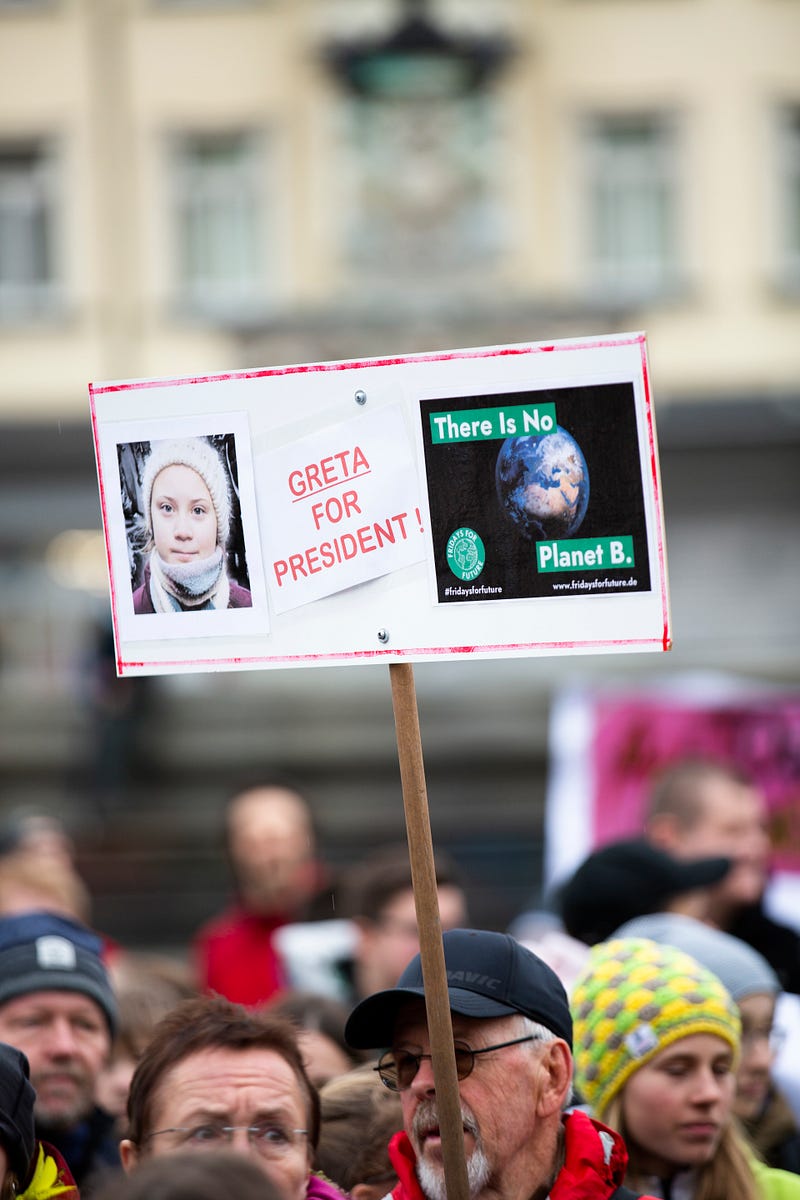
In Australia, we are privileged to choose whether we want to have children. Although I’ve always been ambivalent about my choice, I cannot deny that innate desire, that little pang in the heart (or the ovaries?) of ‘cluckiness’ for motherhood; a possibility of bringing new life into the world. I don’t want this possibility to be ripped away and I don’t wanted to feel guilty for wanting it either.
Irrespective of environmental, economic and political factors, future generations bring profound hope and change for a better world. US Senator Mike Less put it simply when he stated: ‘More people mean bigger markets for more innovation. More babies mean forward-looking adults, the sort we need to tackle long-term, large-scale problems’.
Throughout history, there have been periods of war, famine and unimaginable terror creating hostile conditions that weren’t ideal for children. Yet, as journalist Matthew Taylor writes:
‘…even in the most horrific circumstances — people have continued to have children. It is a profoundly human act’.
As I wrapped up my bleeding finger and the phone conversation with my mum, I paused at the window for a moment, looking out at the kids playing hopscotch on the street.
‘I hope I’ll be a mum one day too,’ I said. ‘If it’s meant to be.’


